Shape Recognition Rhyming Words Worksheets for Ages 4-9
3 filtered results
-
From - To
Explore our fun and engaging Shape Recognition Rhyming Words Worksheets designed specifically for children ages 4-9! These carefully crafted worksheets blend essential early literacy skills with exciting activities that foster shape recognition. Perfect for young learners, our worksheets help kids build vocabulary, enhance phonemic awareness, and develop critical thinking as they match rhyming words and identify various shapes. Ideal for home or classroom settings, these printables cater to diverse learning styles, ensuring every child enjoys the learning process. Boost your child's confidence and academic growth with our Shape Recognition Rhyming Words Worksheets today!
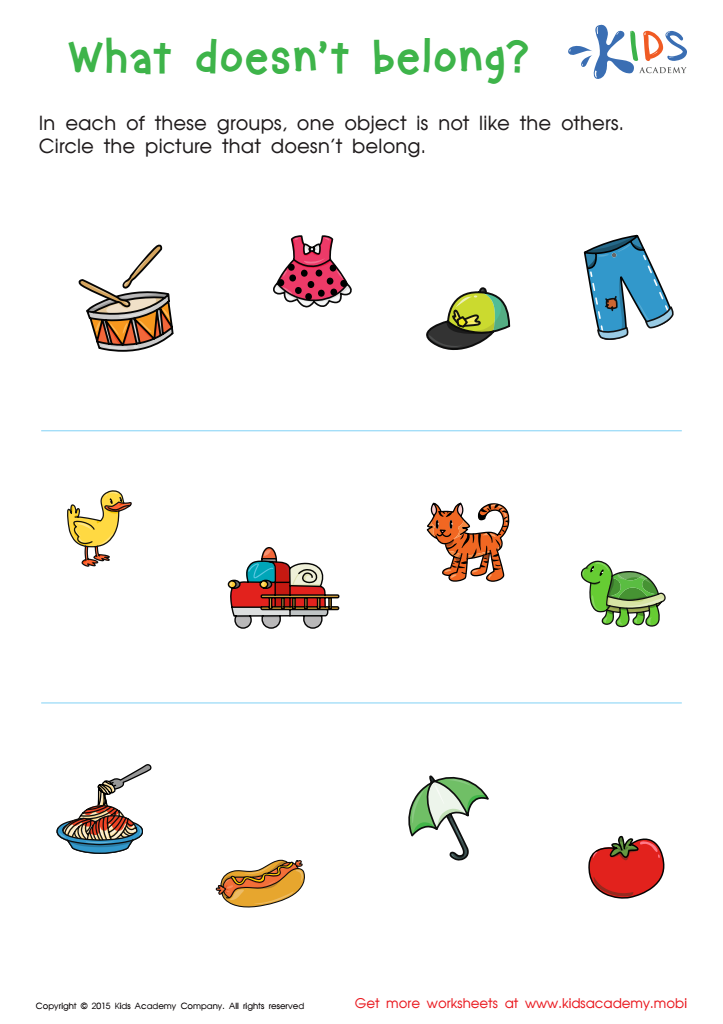
First Words: What Doesn't Belong Worksheet
 Assign to My Students
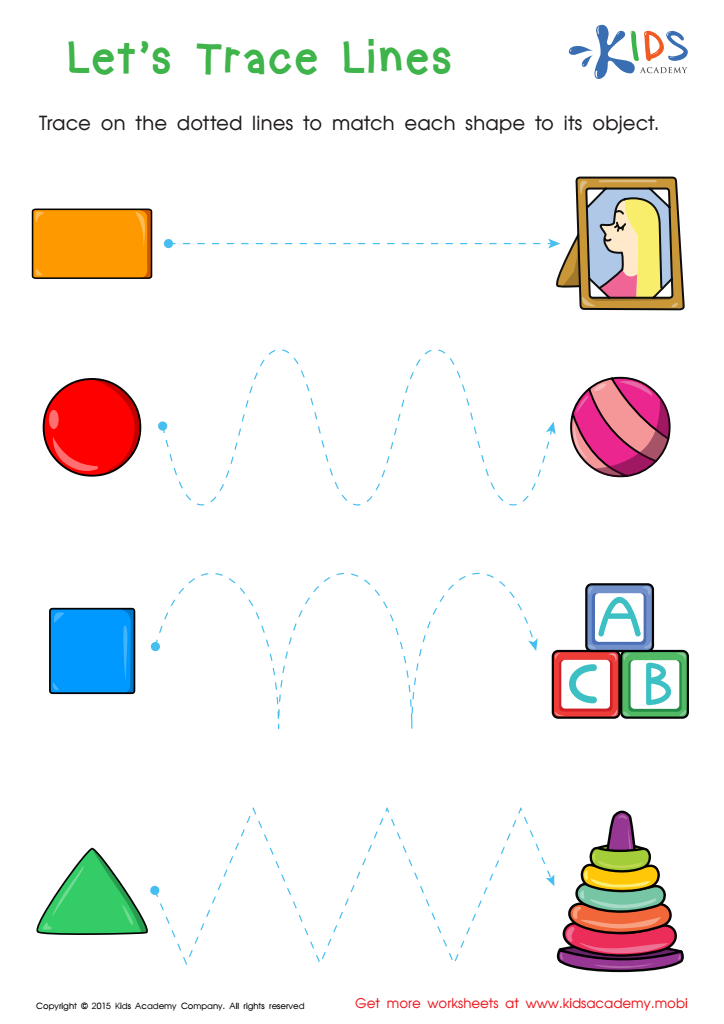
First Words: Let's Trace Lines Worksheet
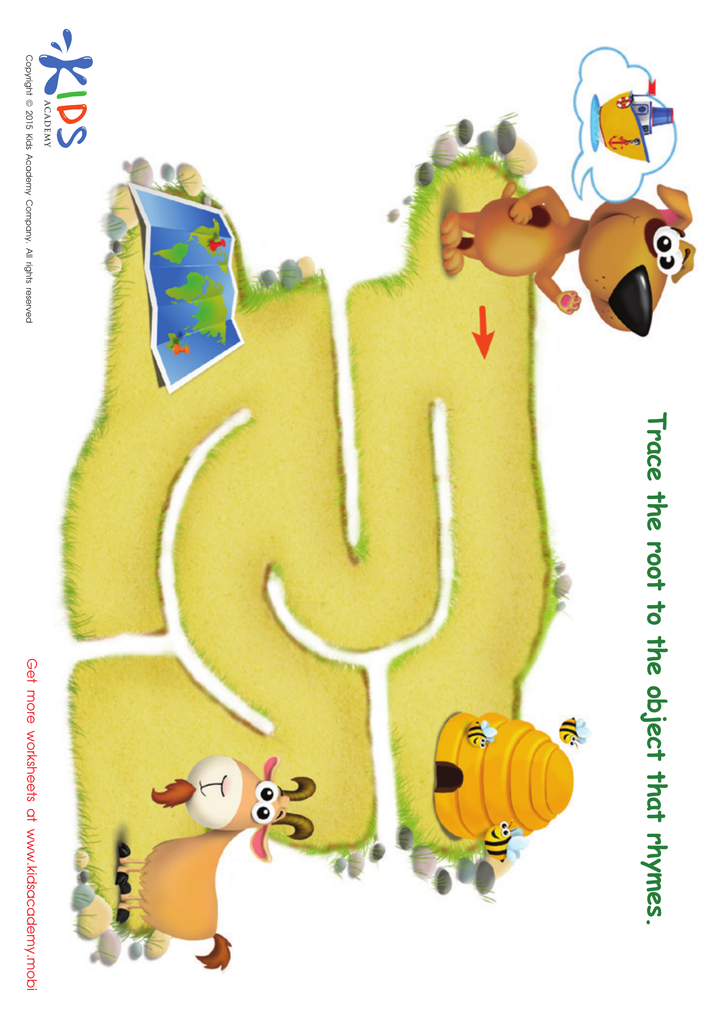
Boat Rhyming Words Worksheet








Parents and teachers should care about shape recognition and rhyming words for children aged 4-9 because these skills form the foundation for early cognitive development, literacy, and mathematical understanding. Shape recognition helps children identify and understand the world around them. Recognizing shapes paves the way for more complex geometry concepts which are critical in subjects like math and science. When children differentiate shapes, they enhance their visual-spatial reasoning, allowing them to create mental images and solve problems better.
Rhyming words contribute significantly to phonemic awareness—a key component of reading proficiency. When children engage with rhyming words, they learn to recognize patterns in sounds, which helps them decode new words more easily. This phonological awareness is essential for future reading and spelling skills. Moreover, rhyming enhances memory and aids in the development of verbal and listening skills.
Both of these skills also promote cognitive flexibility and creativity. For example, recognizing that a triangle and square belong to the category of shapes, and cat and hat belong to a category of rhyming words helps children categorize and bucket information, supporting logical reasoning.
Integrating shape and rhyming activities in the curriculum or daily routines fosters a fun and enriching environment where children can develop holistically. Building these skills early on sets children on a path for academic and personal success.








