Categorization skills Science Worksheets for Ages 4-9
5 filtered results
-
From - To
Boost your child's critical thinking with our Categorization Skills Science Worksheets for ages 4-9! These engaging activities help young learners identify and sort items based on attributes like color, shape, size, and purpose. Our carefully designed worksheets not only develop problem-solving and analytical skills but also enhance their understanding of basic science concepts. Suitable for preschoolers to third graders, these fun and educational printables make learning about the world exciting and interactive. Give your child a head start in science and cognitive development with our expertly crafted resources — perfect for home or classroom use!
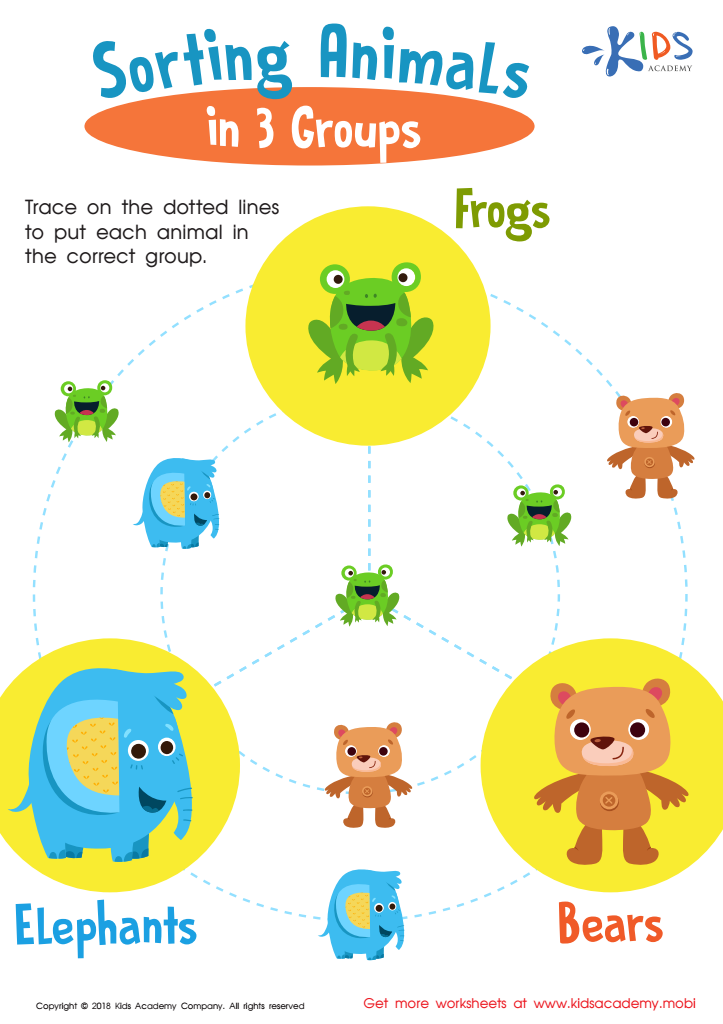
Sorting Animals in 3 Groups Worksheet
 Assign to My Students
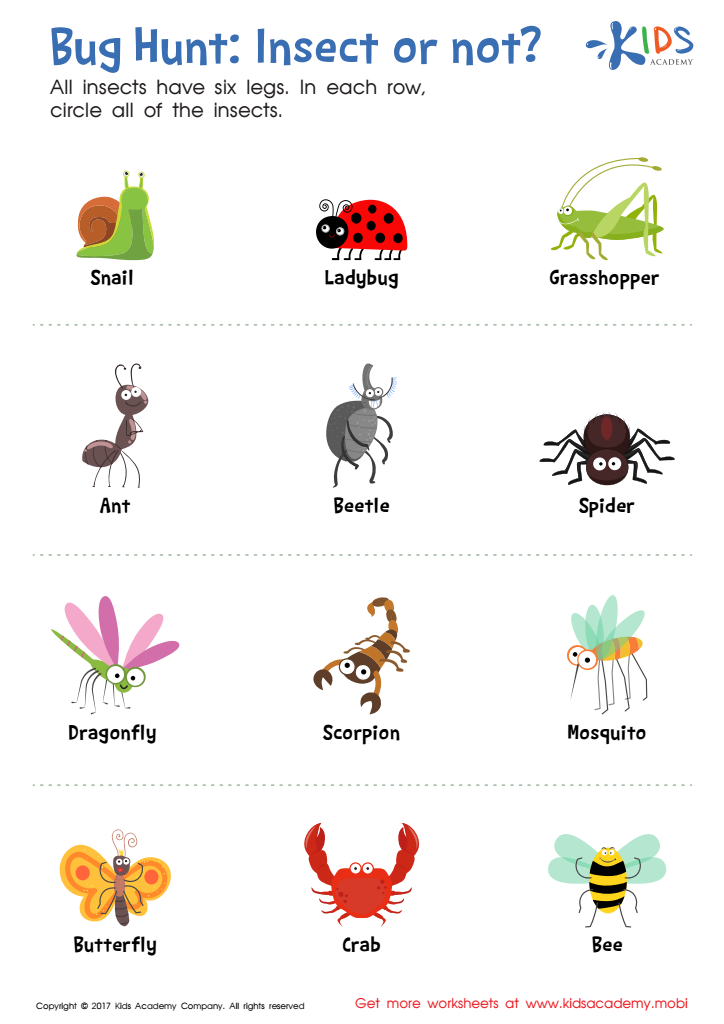
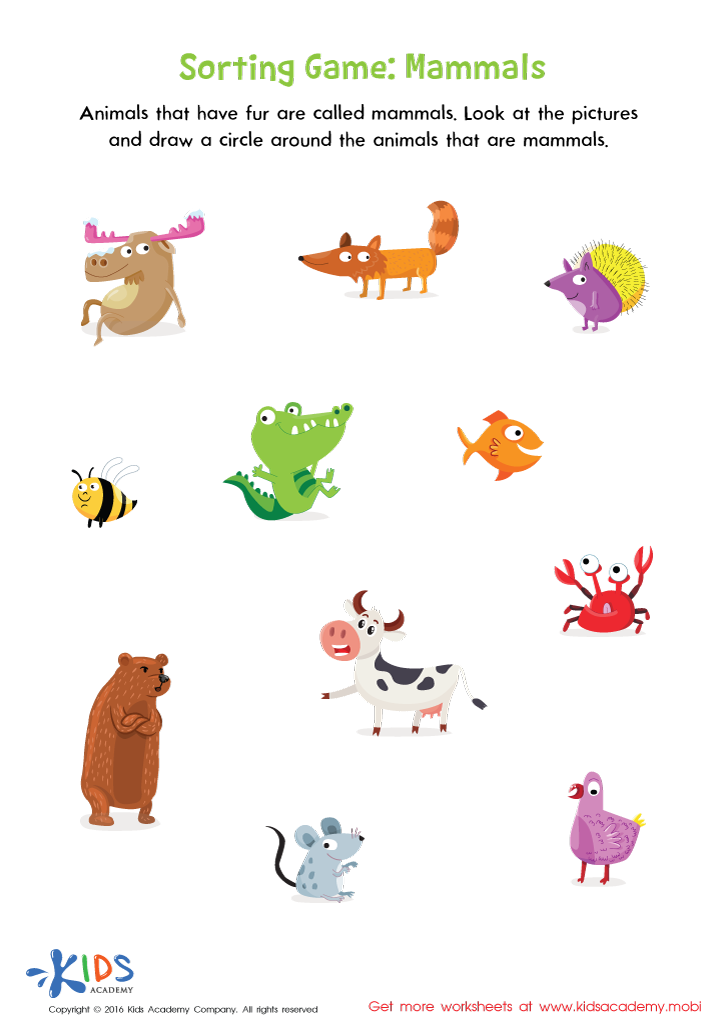
Mammals Sorting Worksheet
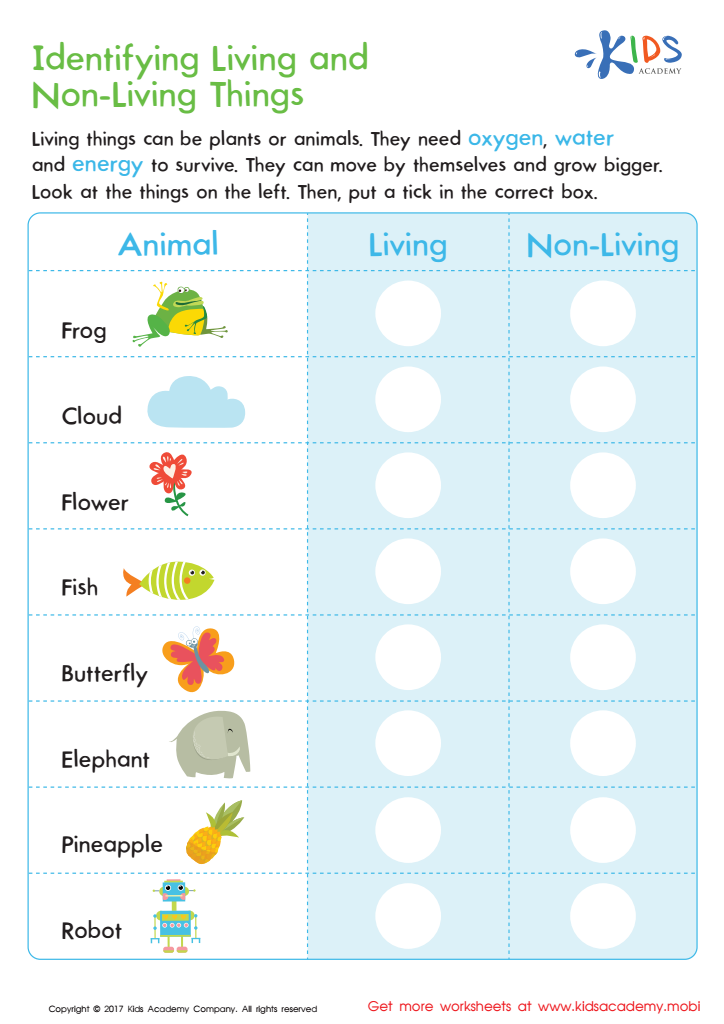
Identifying Living or Non–living Worksheet
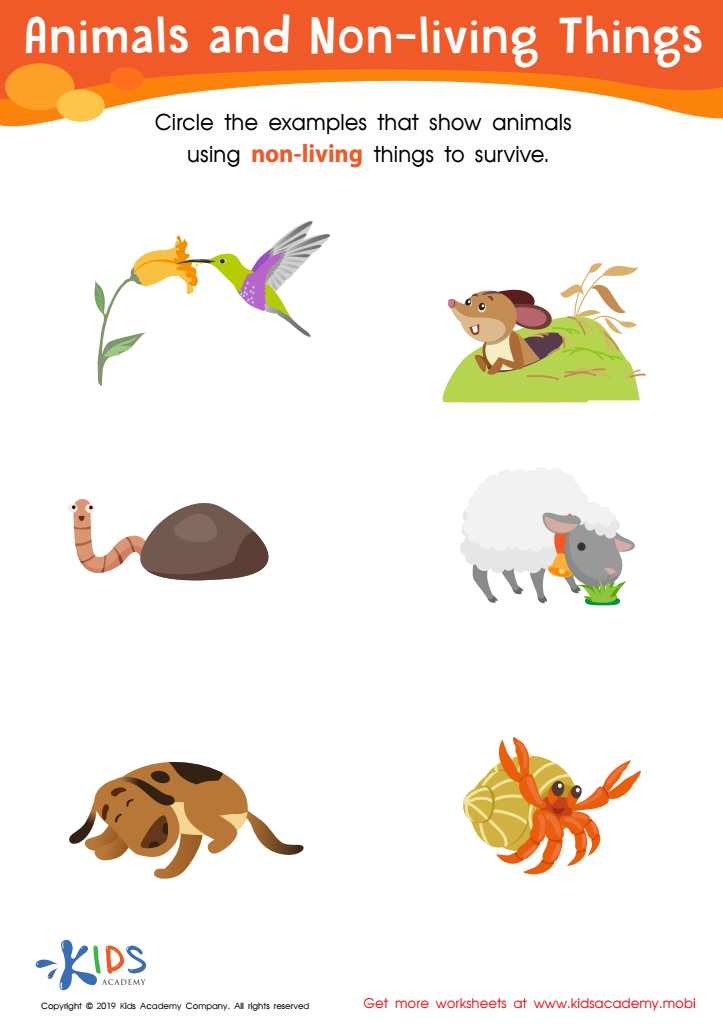
Animals and Non-Living Things Worksheet








Categorization skills are vital for young children, especially between ages 4-9, as they form the foundation of effective cognitive development and academic success. By classifying objects, ideas, and information into distinct groups, children learn to navigate and make sense of their environment more efficiently.
In science education, these skills are particularly crucial. Categorization helps children observe similarities and differences, recognize patterns, and develop critical thinking abilities. For instance, sorting animals by habitat or classifying elements by their physical states (solid, liquid, gas) teaches children to understand and organize complex information in a manageable way. This not only enriches their scientific understanding but also nurtures problem-solving and analytical reasoning, which are essential across all subjects.
Moreover, strong categorization skills aid language development and literacy. Understanding how words and concepts fit into various categories enhances vocabulary and comprehension. Socially, children who can organize and interpret social cues effectively are likely to exhibit better interpersonal skills and empathy.
Teachers and parents play a pivotal role in nurturing these abilities through engaging activities like sorting games, grouping exercises, and thematic discussions. Encouraging children to ask questions and explore different categories actively fosters a lifelong curiosity and love for learning, making categorization skills a critical focus in early childhood education.







