Categorizing animals Science Worksheets for Ages 4-9
3 filtered results
-
From - To
Explore our engaging "Categorizing Animals Science Worksheets" designed for children aged 4-9! These worksheets provide an interactive and fun way for young learners to discover the fascinating world of animals. Kids will enhance their understanding of animal classification by working with various categories such as mammals, reptiles, birds, and amphibians. Each worksheet promotes critical thinking, fine motor skills, and a love for science through colorful illustrations and simple activities. Ideal for parents and educators, these resources help reinforce lessons learned in the classroom while making learning an enjoyable experience. Unleash your child’s curiosity as they categorize and learn about different animals!
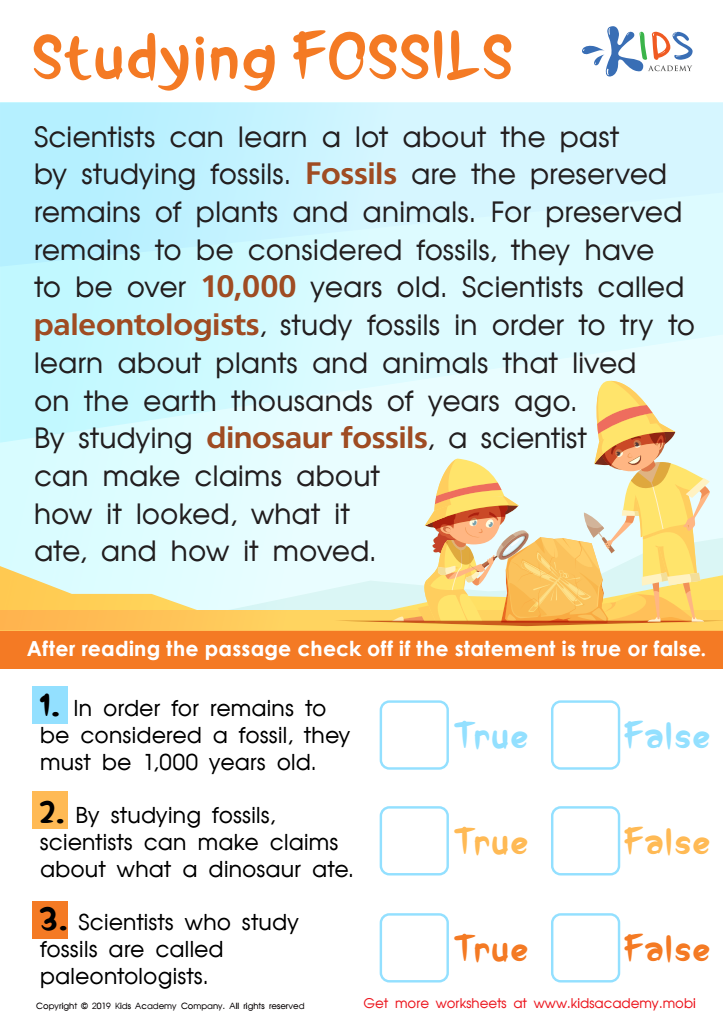
Studying Fossils Worksheet
 Assign to My Students
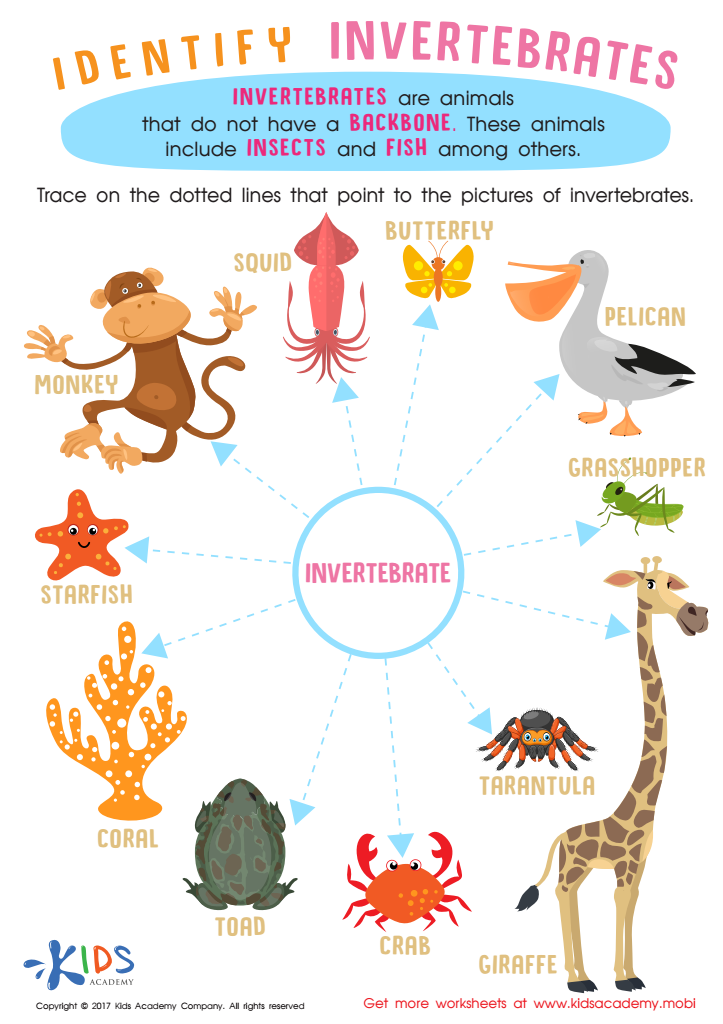
Invertebrates Worksheet for Grade 3
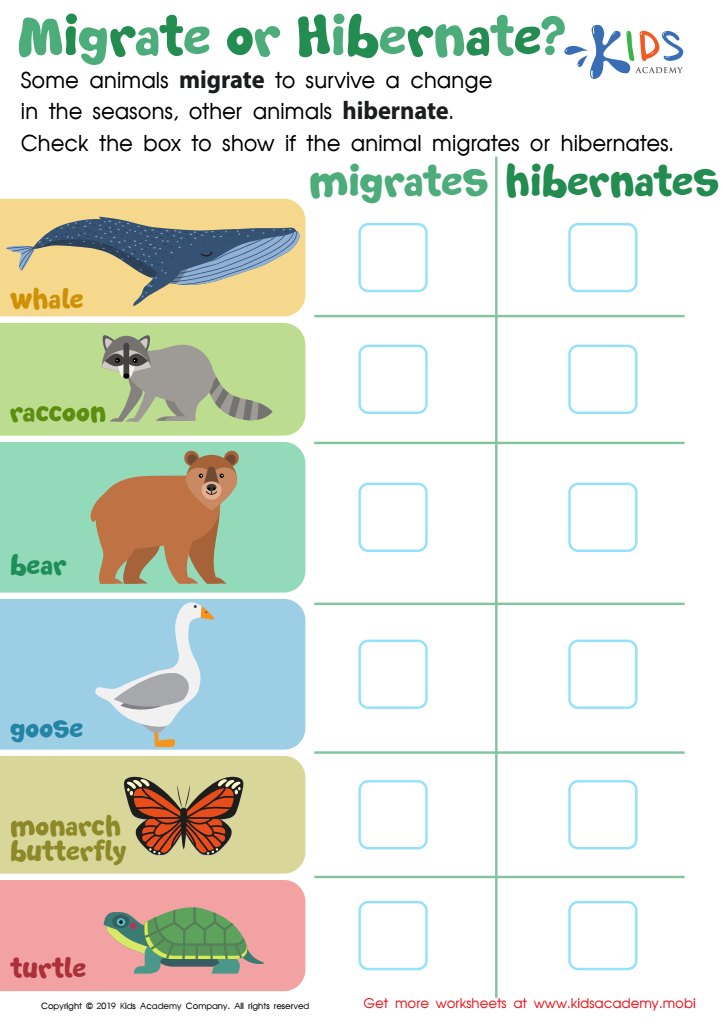
Migrate or Hibernate? Worksheet








Categorizing animals is an essential part of science education for children aged 4-9, and it plays a vital role in their cognitive and emotional development. For parents and teachers, understanding animal classification fosters curiosity and encourages critical thinking skills. When children learn to categorize animals, they engage with the natural world, enhancing their observational skills and fostering a sense of wonder about biodiversity.
Moreover, this education helps children understand concepts such as habitats, characteristics, and behaviors, promoting empathy and respect for living beings. It lays the groundwork for future scientific learning, enabling students to make connections between various species and their environments. By engaging in activities like grouping animals by size, diet, or habitat, children also develop their communication and collaboration skills through discussion and teamwork.
Incorporating categorization into play-based learning also enhances memory retention and spatial reasoning, benefiting their overall academic growth. For parents and teachers, supporting this exploration means nurturing a child’s innate curiosity, encouraging them to become lifelong learners. Ultimately, conveying the importance of categorizing animals helps children build a strong foundation in science, fostering an awareness of the connectedness of all living organisms and their environments, which is crucial for their development as responsible citizens.







