
Comprehension skills Science Worksheets for Ages 4-9
6 filtered results
Difficulty Level
Grade
Age
-
From - To
Subject
Activity
Standards
Enhance your child's understanding of science with our comprehensive comprehension skills worksheets, tailored for ages 4-9. Designed to ignite curiosity and foster critical thinking, these interactive resources cover essential science topics, encouraging young learners to read, interpret, and analyze information. Our engaging activities feature captivating illustrations and relatable themes that not only reinforce comprehension but also make learning fun. Perfect for classroom use or homeschooling, these worksheets support early literacy skills while exploring the wonders of science. Help your child develop a solid foundation in comprehension today, equipping them with the tools to succeed in both science and literacy!
Favorites
With answer key
Interactive
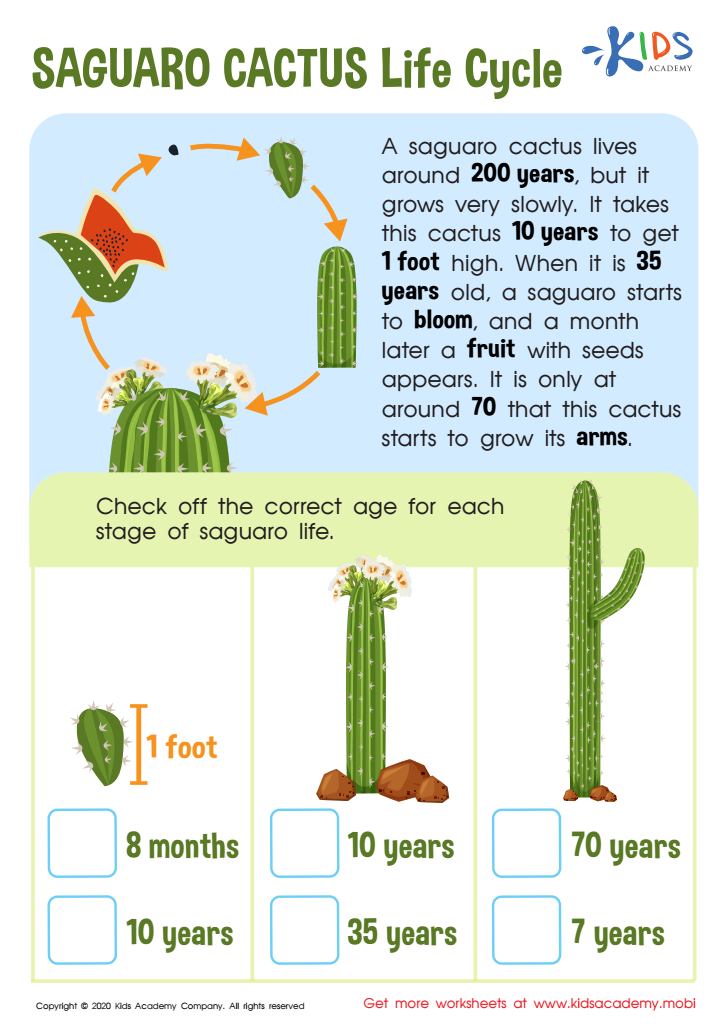
Saguaro Cactus Life Cycle Worksheet
Teach your child about the saguaro cactus, which takes 35 years to bloom and can live up to twice the lifespan of a human! Print this free PDF worksheet to engage learners with an interesting passage. Check off the correct answers to reflect their learning!
 Assign to My Students
Saguaro Cactus Life Cycle Worksheet
Worksheet
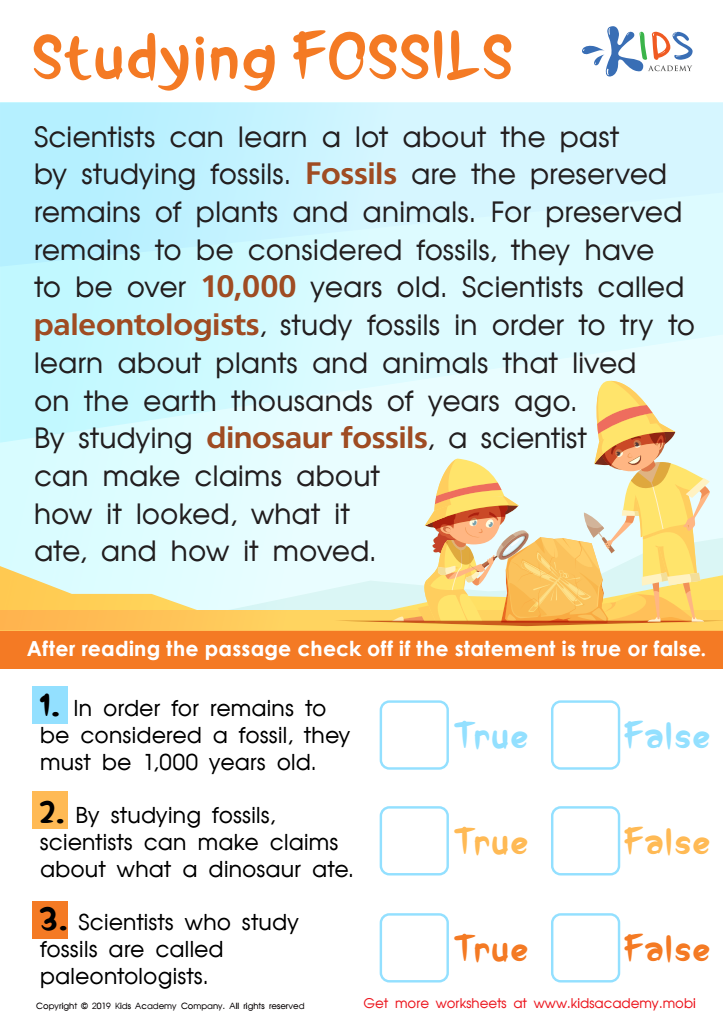
Studying Fossils Worksheet
Fossils captivate children! It's no wonder why; when we learn about them, we are getting a glimpse into history and uncovering old mysteries! With this free download, kids will understand what a paleontologist is and how they use fossils to learn about long-gone plants and animals. They'll discover that old bones are priceless and that exploring ancient history can be exciting!
Studying Fossils Worksheet
Worksheet
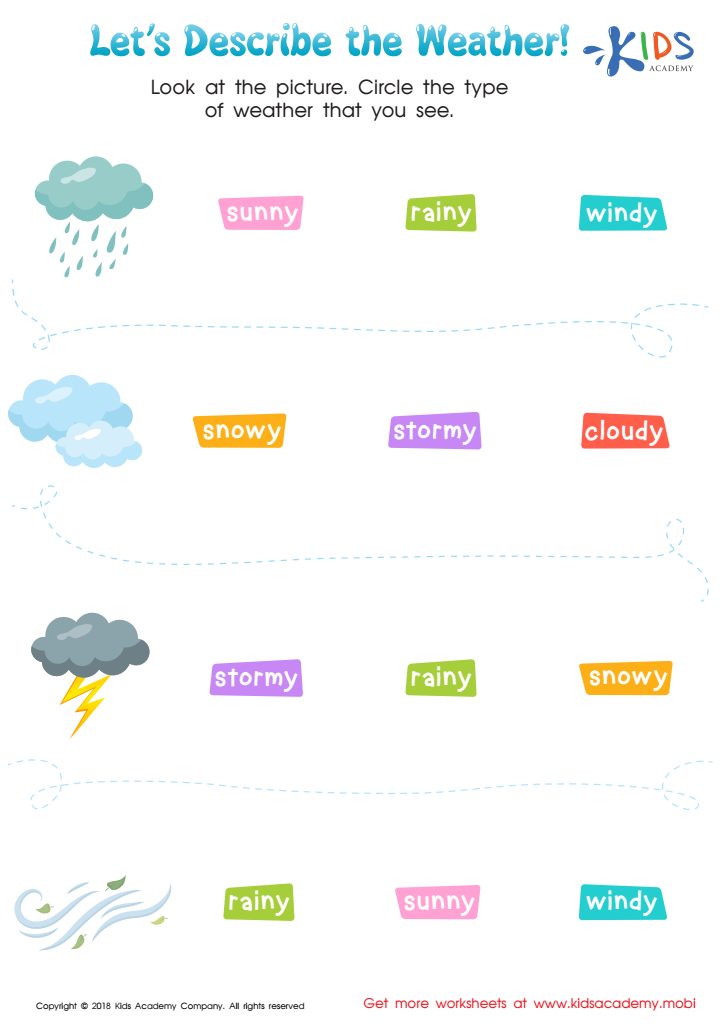
Let's Describe the Weather! Worksheet
Test your child's knowledge of weather with this fun worksheet. Ask them to look at the pictures and identify the type of weather. Then, have them select the correct answer from the options on the right. See how well your kids have been paying attention to the weather forecast!
Let's Describe the Weather! Worksheet
Worksheet
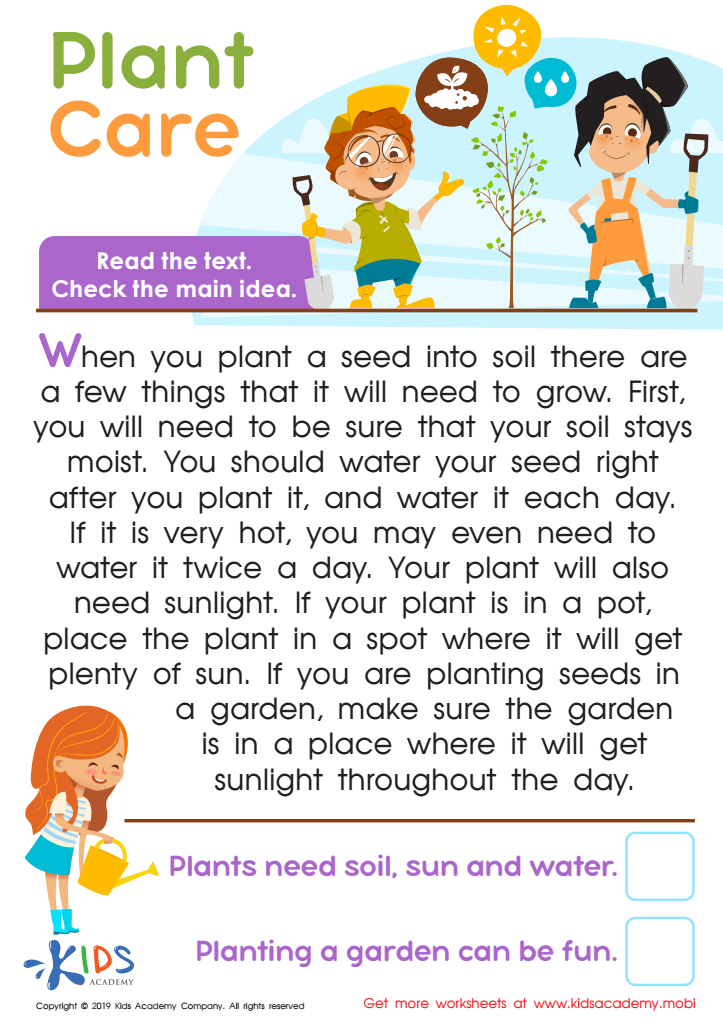
Plant Care Worksheet
Encourage your children to read by helping them practice. Print out the worksheet and read the text with them. Help them understand the words and find the main idea. This will improve their reading skills and prepare them for school.
Plant Care Worksheet
Worksheet
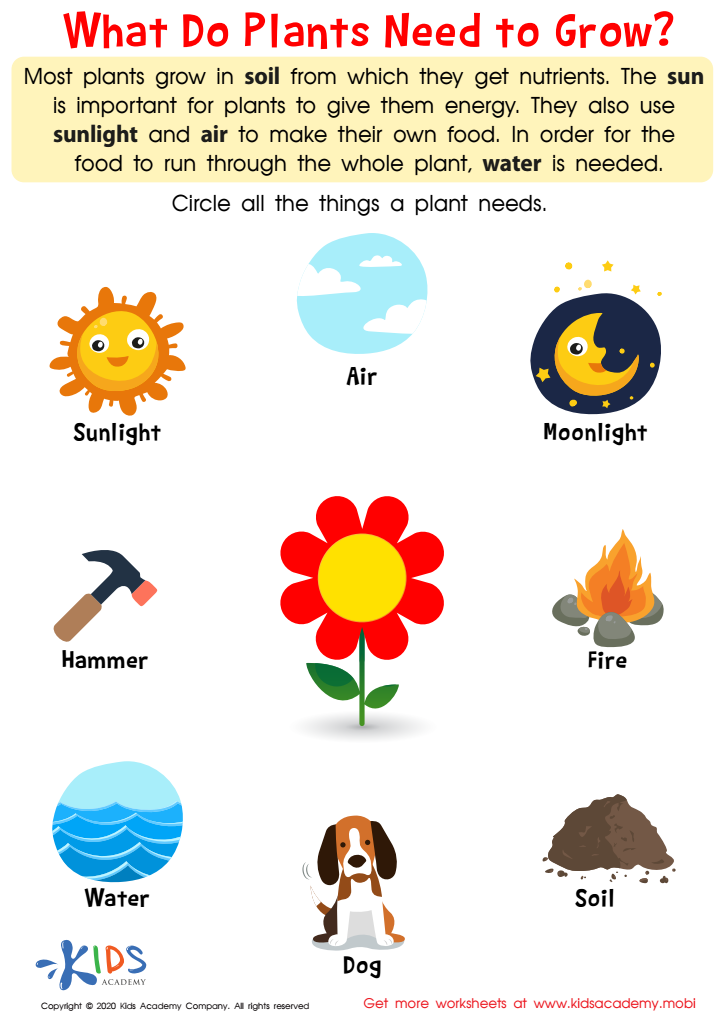
What Do Plants Need to Grow Worksheet
Help your child explore and discover the world of plants with this fun how do plants grow worksheet! They'll gain knowledge, sharpen problem solving skills, and build science foundations as they identify what plants need to grow. Afterward, plant a seed together and watch it sprout right before their eyes!
What Do Plants Need to Grow Worksheet
Worksheet
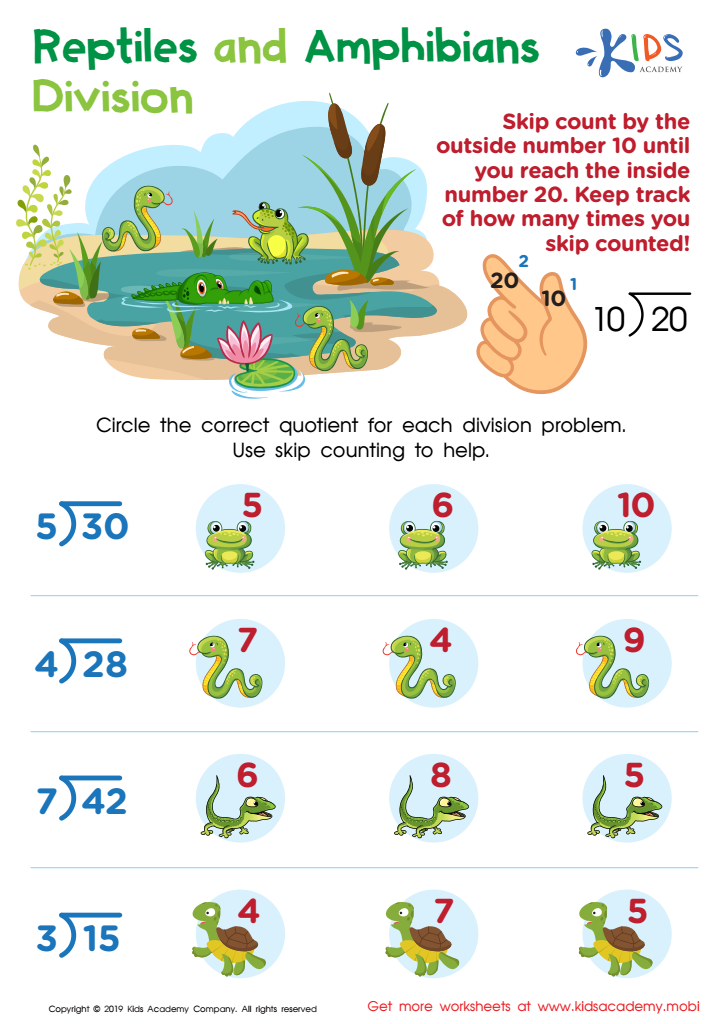
Reptile and Amphibians Division Worksheet
Skip counting is key in division. This PDF worksheet helps children practice this skill with fun reptile and amphibian friends. They must circle the right quotient among the choices given to reinforce their pattern recognition. Perfect for mastering division!
Reptile and Amphibians Division Worksheet
Worksheet
Join Kids Academy for Free
Who is primarily going to use this learning content?








Parents and teachers should prioritize comprehension skills in science for children ages 4-9 because these skills lay the foundation for lifelong learning and critical thinking. At this young age, children are naturally curious about the world around them, and fostering their comprehension skills helps them make sense of complex scientific concepts. By enhancing their ability to understand instructions, stories, and factual content, we empower them to engage deeply with various scientific themes—be it biology, chemistry, or environmental science.
Moreover, comprehension skills encourage discussions and questioning, promoting an interactive learning environment. When children can articulate their thoughts and inquire about scientific phenomena, they not only gain knowledge but also develop logical thinking and problem-solving abilities. Furthermore, early comprehension skills are linked to academic success in later years; a solid grasp of scientific language and concepts can enhance performance in more advanced subjects.
In addition, promoting these skills fosters a lifelong interest in science, making learning enjoyable and relatable. Engaging children in scientific discussions and activities cultivates critical dialogues and an appreciation for nature and technology, ensuring they grow into informed and responsible adults. Thus, prioritizing comprehension in science is crucial for developing well-rounded and inquisitive learners.







