Logical thinking development Science Worksheets for Ages 4-9
3 filtered results
-
From - To
Boost your child's reasoning skills with our engaging Logical Thinking Development Science Worksheets, designed for ages 4-9. These worksheets offer a variety of fun, interactive activities that promote critical thinking and problem-solving abilities through scientific concepts. Kids will engage with puzzles, sorting games, and exercises that encourage observation and inference. Fostering logical reasoning from an early age not only enhances a child's academic success but also nurtures their creativity and curiosity about the world around them. Explore our carefully crafted worksheets to inspire your young learner and watch them thrive as they unravel scientific mysteries and develop essential thinking skills!
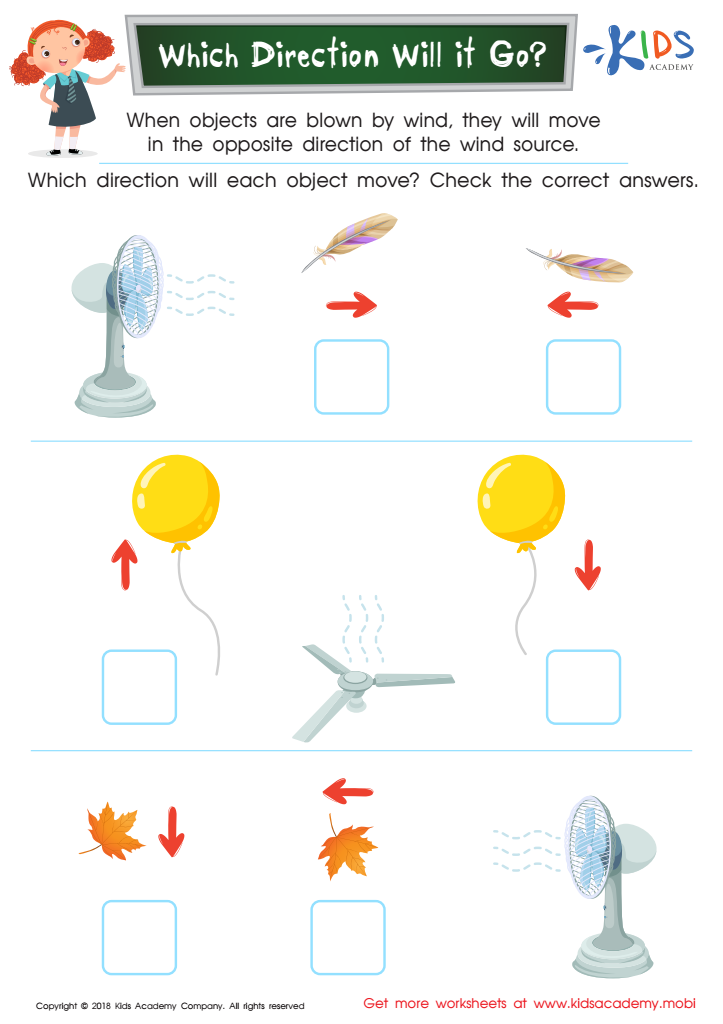
Which Direction Will it Go? Worksheet
 Assign to My Students
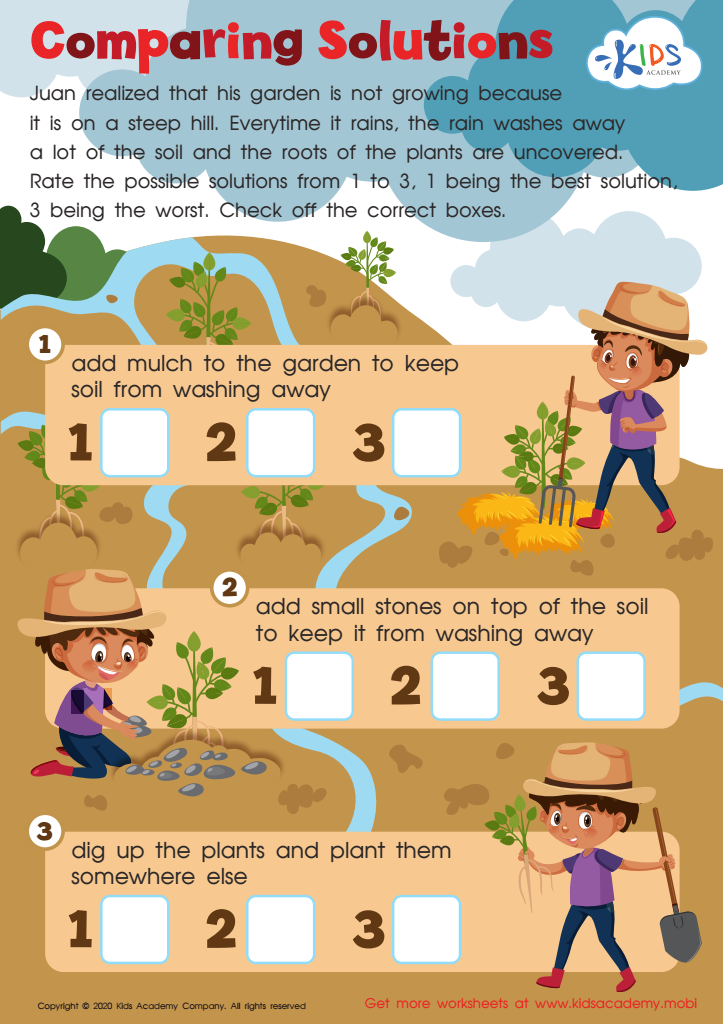
Comparing Solutions Worksheet
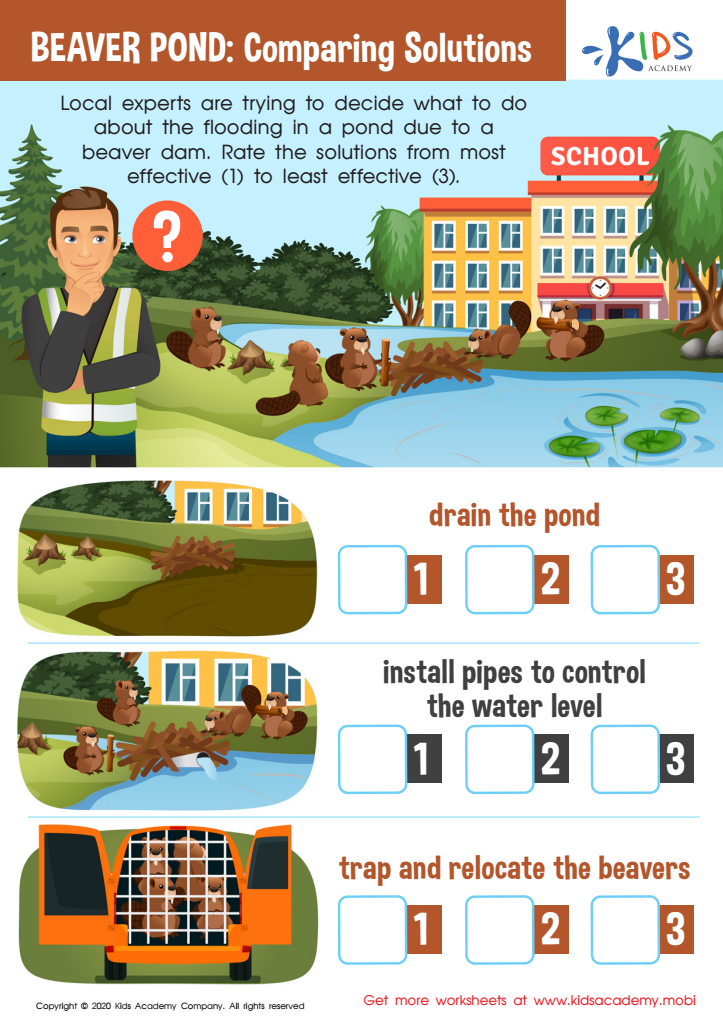
Beaver Pond: Comparing Solutions Worksheet








Logical thinking is a crucial skill that forms the foundation for problem-solving and critical thinking, both essential for academic success and everyday life. For children aged 4-9, engaging in activities that promote logical thinking fosters cognitive development and creativity. Parents and teachers should prioritize this skill because it equips young learners with the ability to analyze situations, make reasoned decisions, and think sequentially.
During these formative years, children's brains are highly receptive to new concepts. Introducing scientific thinking—such as hypothesis formulation, experimentation, and evaluation—nurtures a natural curiosity about the world. Through guided experimentation and inquiry-based learning, children learn to identify patterns, recognize cause and effect, and draw conclusions based on evidence.
Moreover, logical thinking enhances children's academic performance across subjects, particularly in mathematics and science, where reasoning skills are directly applied. It also supports social-emotional learning by helping kids negotiate, share ideas, and collaboratively solve problems with their peers.
In ultimately fostering a logical mindset, we prepare children to navigate a complex world with confidence, creativity, and resilience, making it vital for parents and teachers to incorporate logical thinking development into early education strategies.







