
Reading thermometers Science Worksheets for Ages 4-9
3 filtered results
Difficulty Level
Grade
Age
-
From - To
Subject
Activity
Standards
Discover our engaging "Reading Thermometers Science Worksheets" designed for children ages 4-9! These worksheets help young learners build essential skills in understanding temperature measurements using thermometers. With fun activities such as temperature comparisons, matching insights, and hands-on practice, your child will explore both Celsius and Fahrenheit readings. Ideal for home or classroom use, our printable resources offer an effective way to make science enjoyable and accessible. Foster a love for learning while enriching your child’s scientific vocabulary and critical thinking skills. Visit our website to access these valuable tools and ignite your child’s curiosity about the world around them!
Favorites
With answer key
Interactive
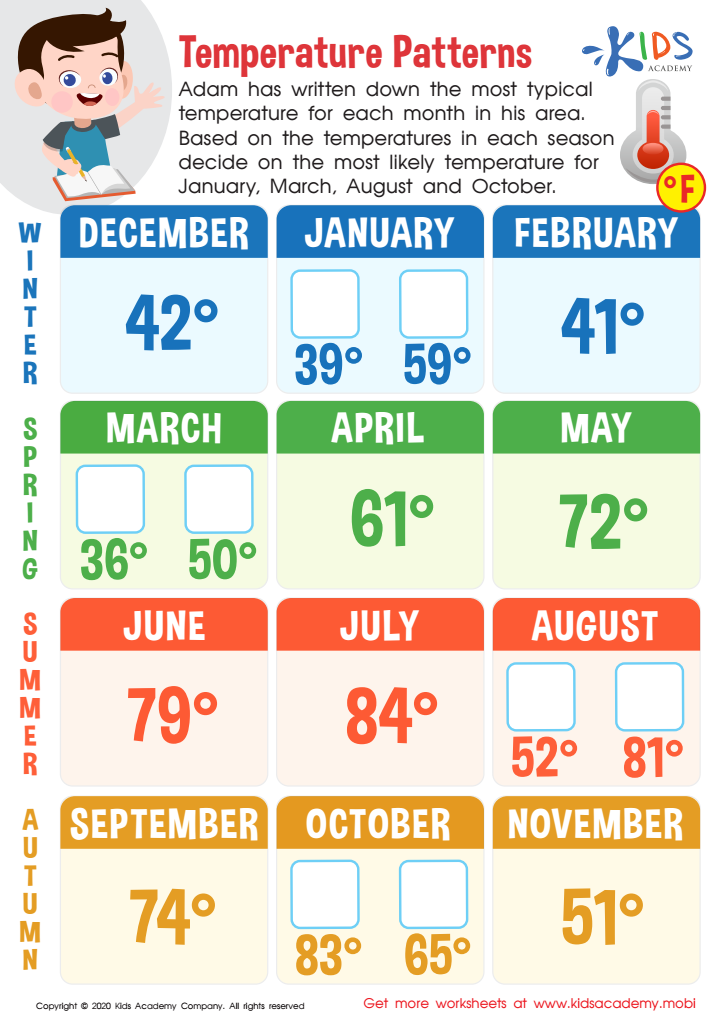
Temperature Patterns Worksheet
Adam has recorded temperatures in his area. Help your child use the data to predict temperatures for one month in each season. Check the box next to the correct temperature for each row in this worksheet. In America, temperatures vary by climate and season - colder in winter, hotter in summer.
 Assign to My Students
Temperature Patterns Worksheet
Worksheet
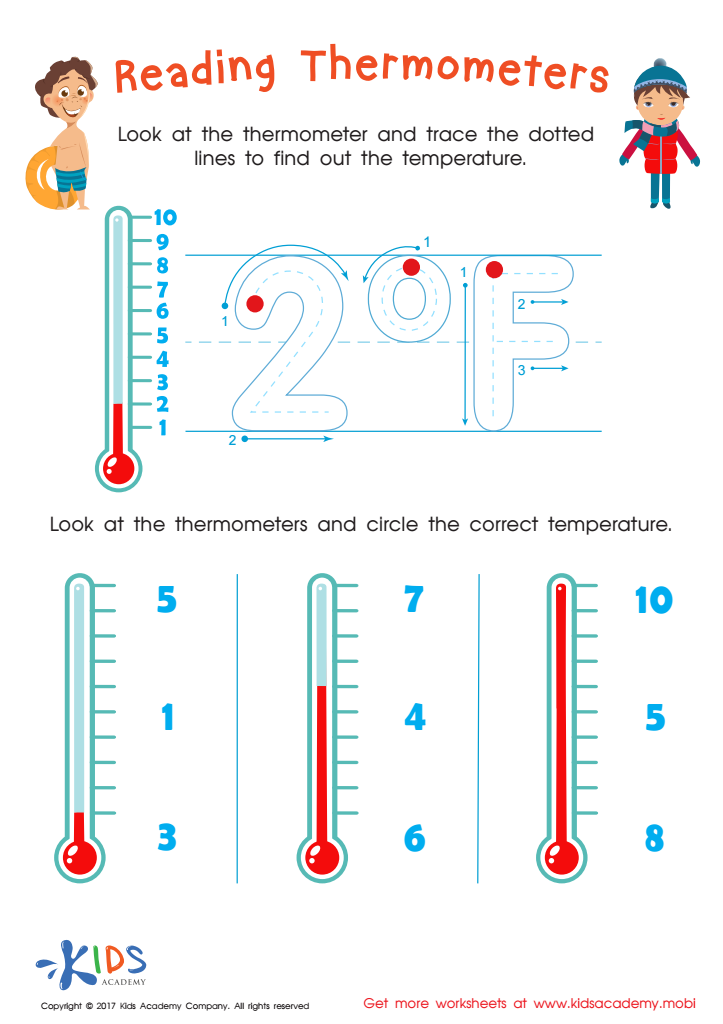
Reading Thermometers Printable
For kids to grasp temperature, they need to learn how to read a thermometer. Use this worksheet to teach them early on - whether they're sick or in the cold. It's an important life skill!
Reading Thermometers Printable
Worksheet
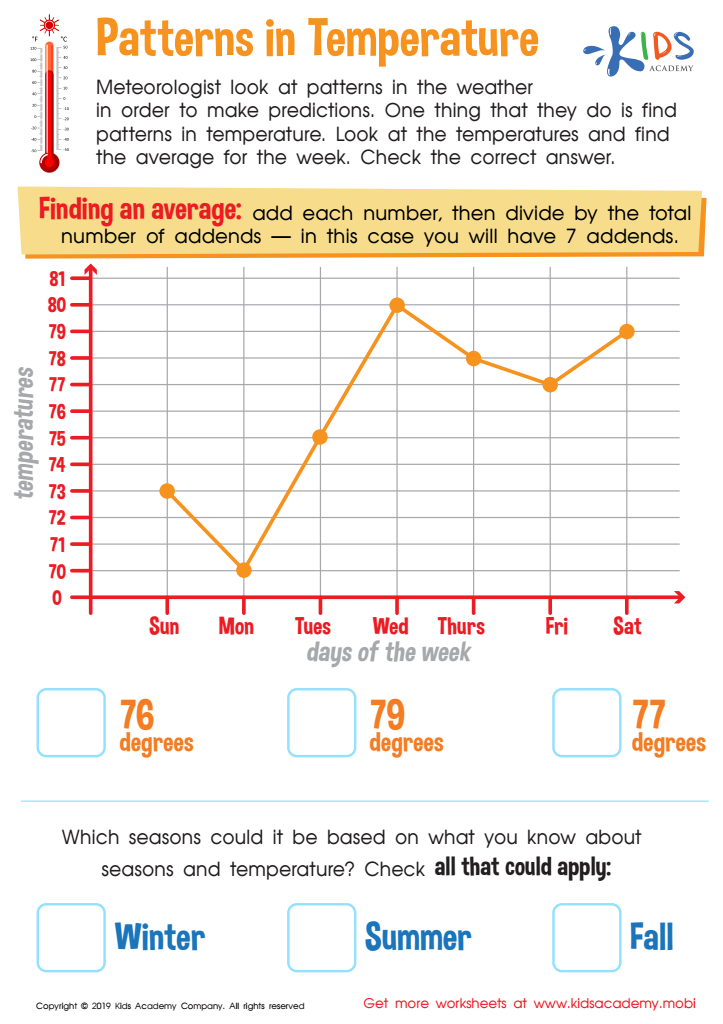
Patterns in Temperature Worksheet
Kids need to learn how to read and interpret data from graphs and charts. This free worksheet on temperature patterns helps them to do just that. They'll practice finding averages and answer questions in multiple-choice format. Plus, it provides a great learning experience!
Patterns in Temperature Worksheet
Worksheet
Join Kids Academy for Free
Who is primarily going to use this learning content?



.jpg)



Parents and teachers should care about introducing reading thermometers to children ages 4-9 because it lays a foundational understanding of essential scientific concepts. At this age, kids are naturally curious and eager to learn about the world around them. Engaging with tools like thermometers fosters not only scientific literacy but also critical thinking and inquiry skills.
Learning to read thermometers helps children grasp important concepts such as temperature, measurement, and data interpretation. This knowledge is vital for understanding weather patterns, environmental changes, and health-related concepts, such as recognizing fever. Moreover, the hands-on experience of using a thermometer encourages active learning and aids in the development of fine motor skills.
Teaching temperature reading can also lead to interesting discussions about the importance of science in everyday life, promoting a lifelong enthusiasm for learning. It cross-links with various subjects, including math (measuring degrees), and science (understanding states of matter), making it a multi-faceted learning opportunity. Furthermore, this early literacy in reading instruments sets the stage for more advanced scientific education in the future. Ultimately, reading thermometers creates opportunities for bonding between parents, teachers, and children while making learning fun and relevant.







