Understanding landforms Science Worksheets for Ages 4-9
3 filtered results
-
From - To
"Understanding Landforms Science Worksheets for Ages 4-9" offers engaging and educational worksheets tailored for young learners. These activities help children explore and identify various landforms such as mountains, valleys, plateaus, and plains, enhancing their understanding of the natural world. With colorful illustrations and age-appropriate content, the worksheets cater to children aged 4-9, promoting critical thinking and observational skills. Perfect for classroom use or at-home learning, these resources make geography fun and accessible. Foster a love for science in your child with our printable worksheets and watch their curiosity about the Earth's landscapes grow.
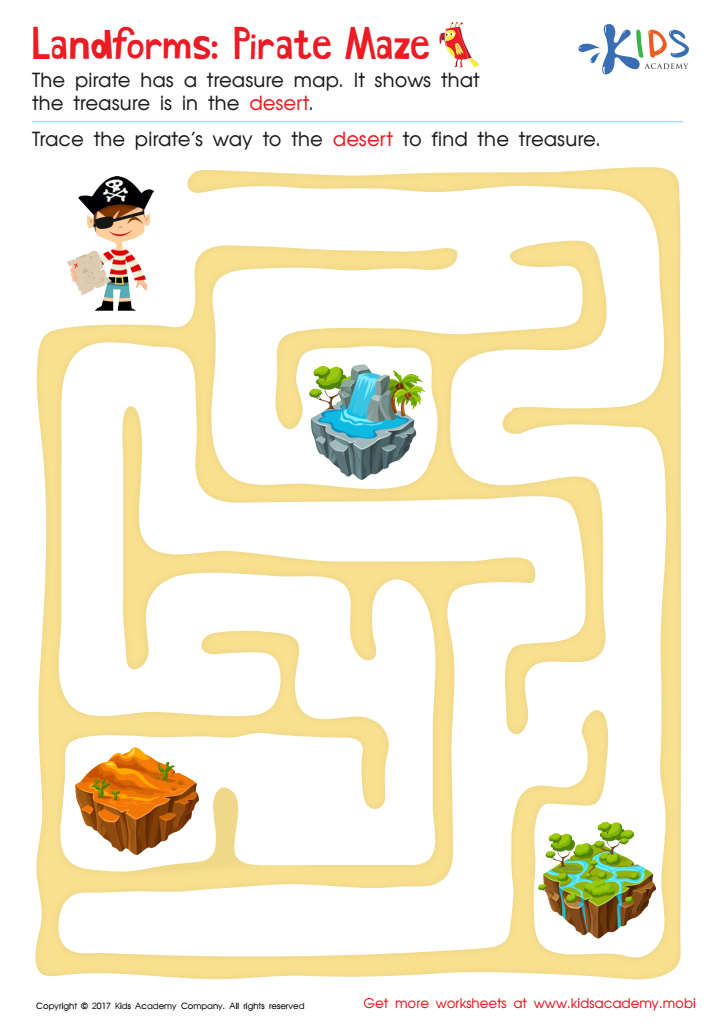
Landforms: Pirate Maze Printable
 Assign to My Students
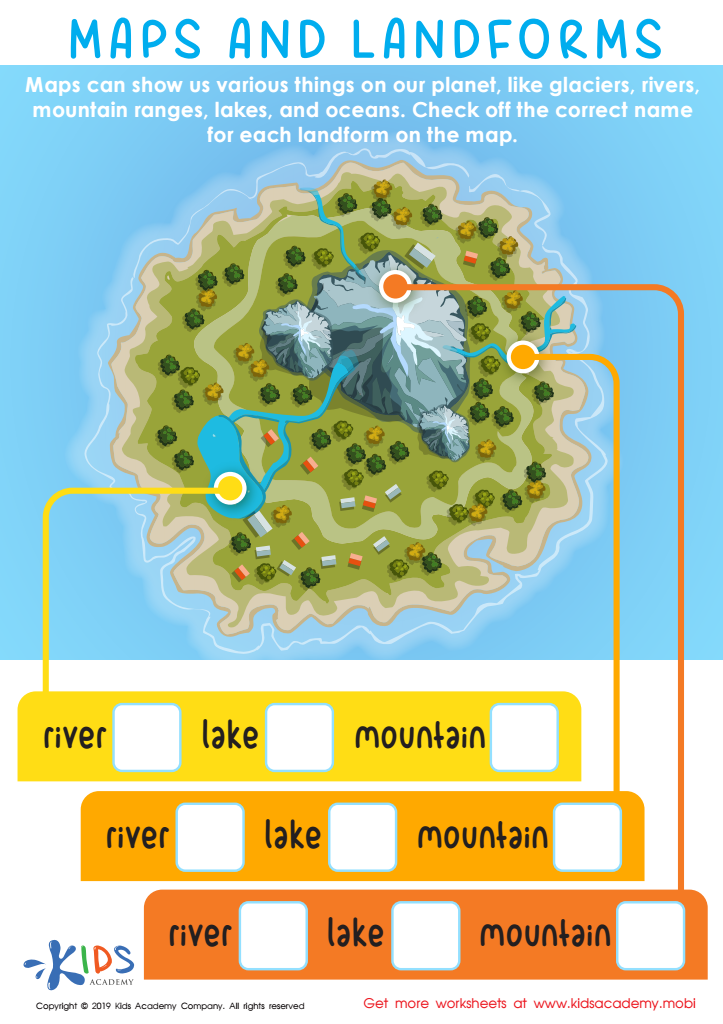
Maps and Landforms Worksheet
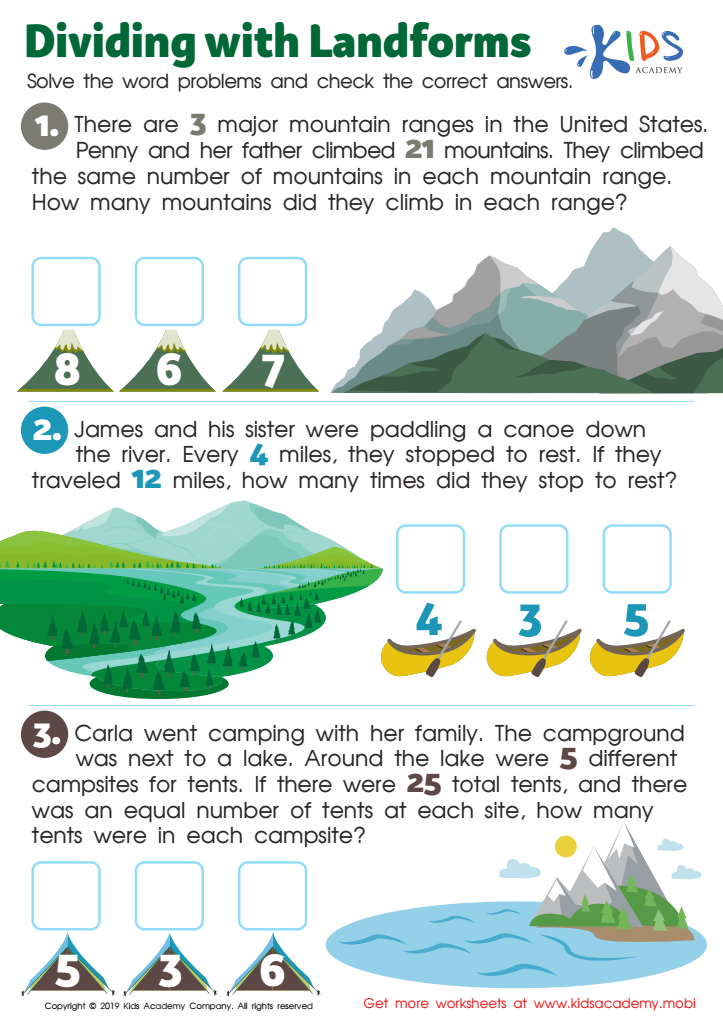
Dividing with Landforms


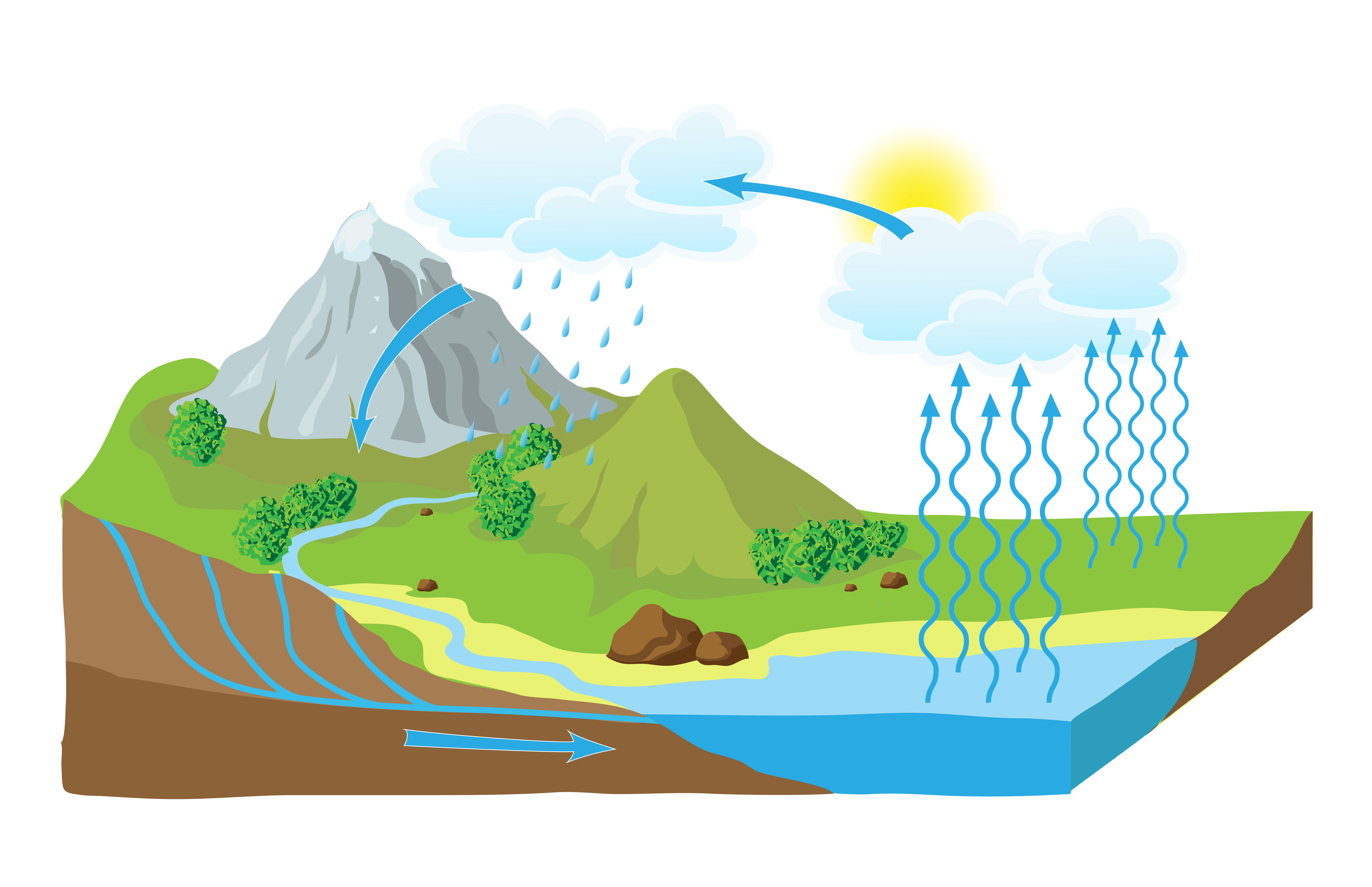





Parents and teachers should care about understanding landforms in the science curriculum for ages 4-9 because it forms a foundational concept that opens children’s minds to the natural world. Introducing young learners to landforms such as mountains, valleys, plains, and rivers stimulates early curiosity and fosters a sense of wonder about the Earth. These fundamental geological features become building blocks for more complex scientific concepts learned later.
Comprehending landforms encourages observational skills, critical thinking, and vocabulary development. Activities like creating models of mountains or drawing river systems involve children in hands-on and visual learning, catering to diverse learning styles. Learning about landforms can also be integrated into other subjects—reading books about nature, mathematical measurement exercises of heights and depths, and art projects that depict various landscapes.
Additionally, understanding landforms is crucial for real-world awareness. Children can better grasp the importance of conservation, the impact of human activities on our environment, and natural disaster preparedness. This early knowledge can teach them the interconnectedness of ecosystems and culturally diverse habitats, broadening their world perspective. Engaging young children in landform studies not only enriches their present learning experience but also instills responsible stewardship towards Earth as they grow. Responding to their natural curiosity about the world around them lays the groundwork for lifelong learning and appreciation.







