Understanding pollination Science Worksheets for Ages 4-9
3 filtered results
-
From - To
Introduce your young learners to the fascinating world of pollination with our "Understanding Pollination Science Worksheets for Ages 4-9." Perfectly tailored for curious minds, these engaging worksheets inspire kids to explore how plants reproduce and the crucial roles bees, butterflies, and other pollinators play in our ecosystem. Packed with vibrant illustrations and interactive exercises, children will enjoy learning about flower anatomy, the pollination process, and the importance of biodiversity. Ideal for classroom activities or homeschooling, these resources make science come alive, fostering a love for nature and instilling essential ecological awareness in your little scientists.
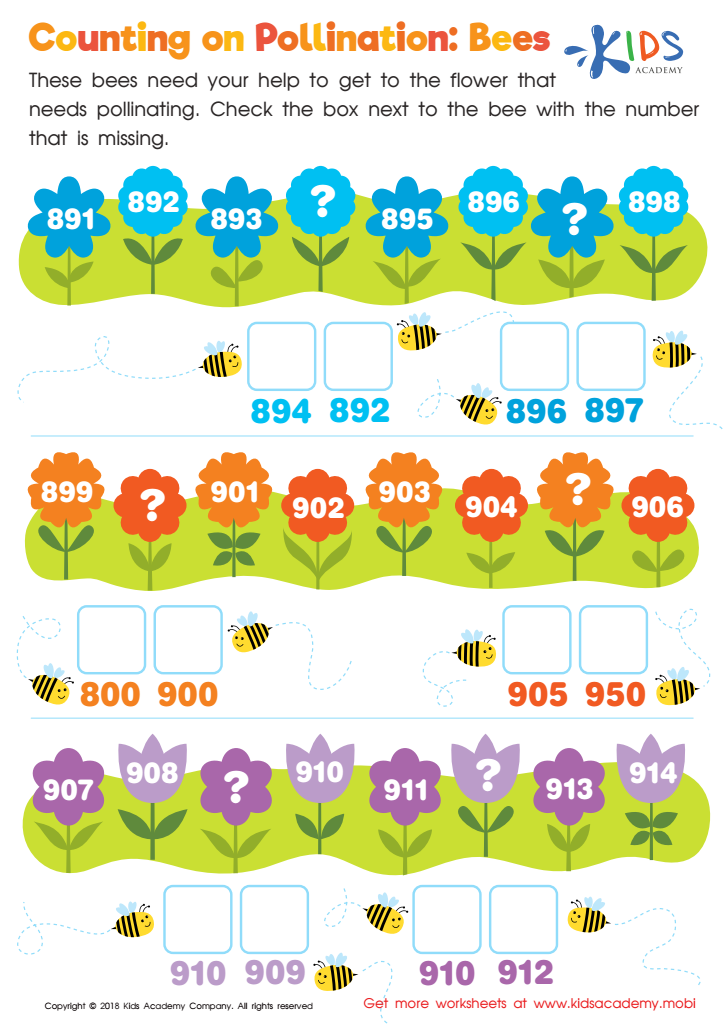
Counting on Pollination: Bees Worksheet
 Assign to My Students
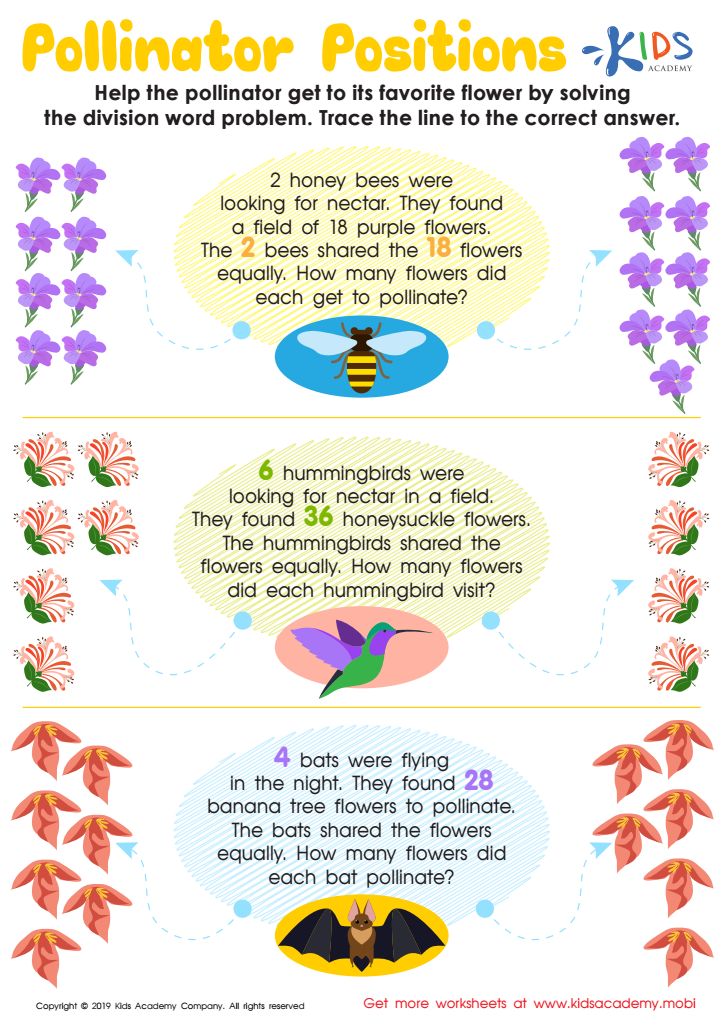
Pollinator Positions Worksheet
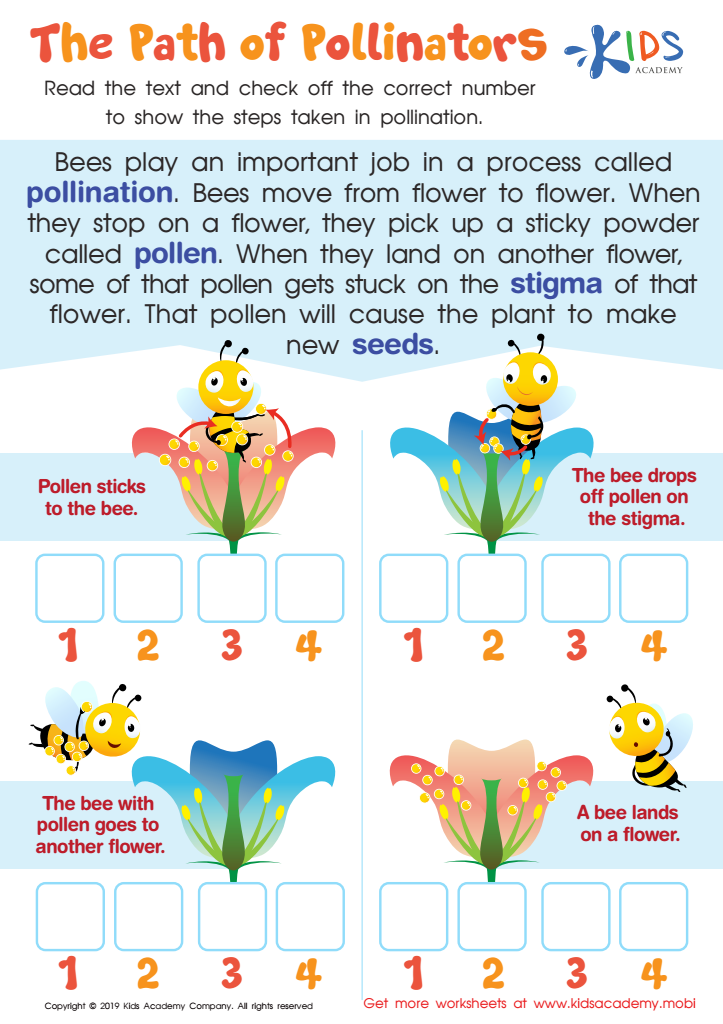
The Path of Pollinators Worksheet





Understanding pollination at a young age is crucial for several reasons, and parents and teachers should certainly prioritize this topic for children aged 4-9. First, it fosters an early appreciation of nature and the environment. When kids learn about how flowers and plants reproduce, they gain a basic understanding of ecosystems and the interconnectedness of all living things. This foundational knowledge can lead to a lifelong commitment to environmental stewardship.
Second, teaching pollination science enhances observational and critical thinking skills. Children naturally enjoy exploring and asking questions, and lessons about pollination can turn everyday observations into scientific inquiries. For example, watching a bee visit a flower becomes a fascinating phenomenon rather than a random event.
Moreover, it integrates cross-disciplinary learning. When discussing pollination, kids touch on biology, chemistry (nectar and pollen composition), and even math (patterns in nature and counting petals or seeds). Engaging varied interests can help children see the value in multiple academic subjects.
Lastly, understanding pollination can have practical, health-related ramifications. Kids who know how food is grown—from pollinated plants often leading to fruits and vegetables—might be more inclined to make healthy food choices.
In sum, teaching pollination science to young kids helps establish a strong foundation for environmental awareness, cognitive skills, interdisciplinary interest, and healthy living habits. Parents and teachers are helping build future generations that care about and understand the world they inhabit.







