
Understanding ecosystems Our Planet and Environment Worksheets for Ages 4-9
4 filtered results
Difficulty Level
Grade
Age
-
From - To
Subject
Activity
Standards
Explore the wonders of ecosystems with our engaging "Understanding Ecosystems" worksheets, designed for children ages 4-9. These educational resources introduce young learners to the delicate balance of nature, emphasizing the interdependence of living organisms and their environments. Through fun activities and colorful illustrations, kids can discover various ecosystems, from forests to oceans, while developing essential skills in observation, critical thinking, and environmental awareness. Our worksheets are perfect for classroom use or at-home learning, encouraging children to appreciate the richness of our planet and their role in preserving it. Start nurturing young eco-warriors today with our interactive materials!
Favorites
With answer key
Interactive
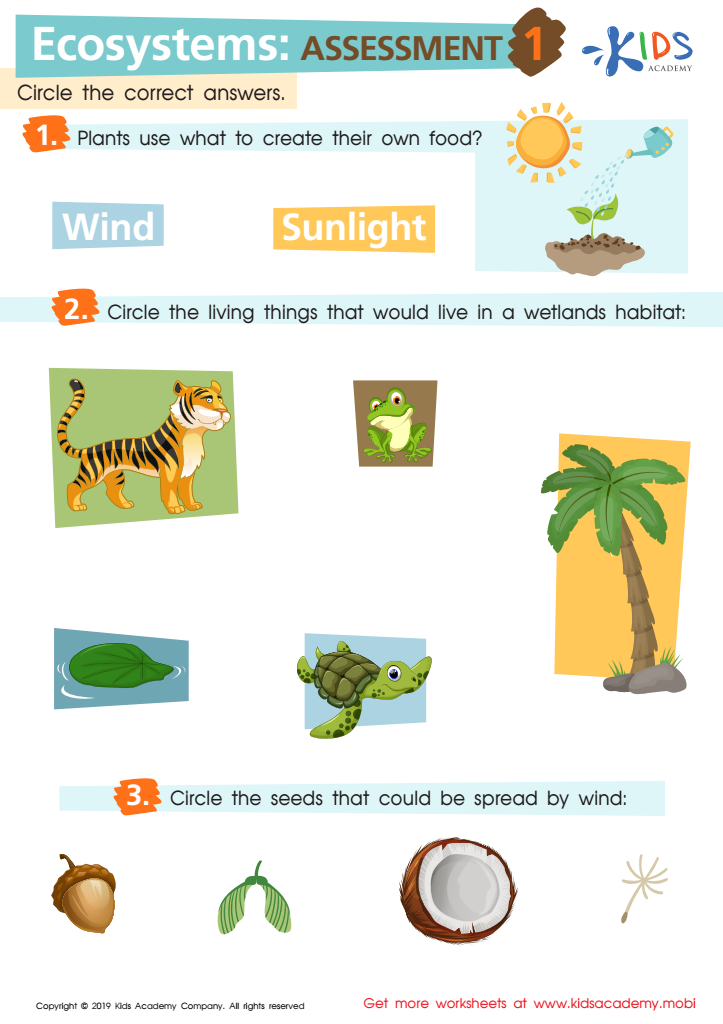
Ecosystems: Assessment 1 Worksheet
Before starting the worksheet, remind your child of the basics of the ecosystem, e.g. plants need light and winds carry small seeds. Encourage them to identify the images in the colorful printout. Ask them the questions and help them circle the correct answers.
 Assign to My Students
Ecosystems: Assessment 1 Worksheet
Worksheet
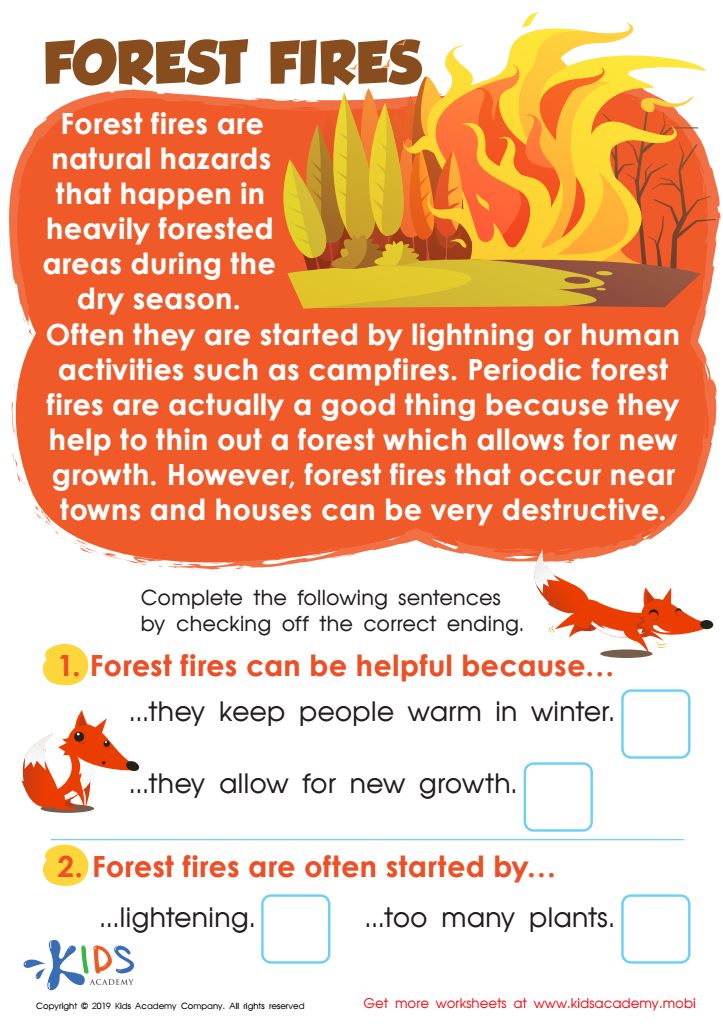
Forest Fires Worksheet
This free worksheet helps kids learn about forest fires. It encourages critical thinking by allowing them to answer multiple-choice questions. It is an important opportunity for children to develop reading skills, as understanding text is essential for further academic success. Download the PDF to give them the chance to practice comprehension and strengthen their knowledge.
Forest Fires Worksheet
Worksheet
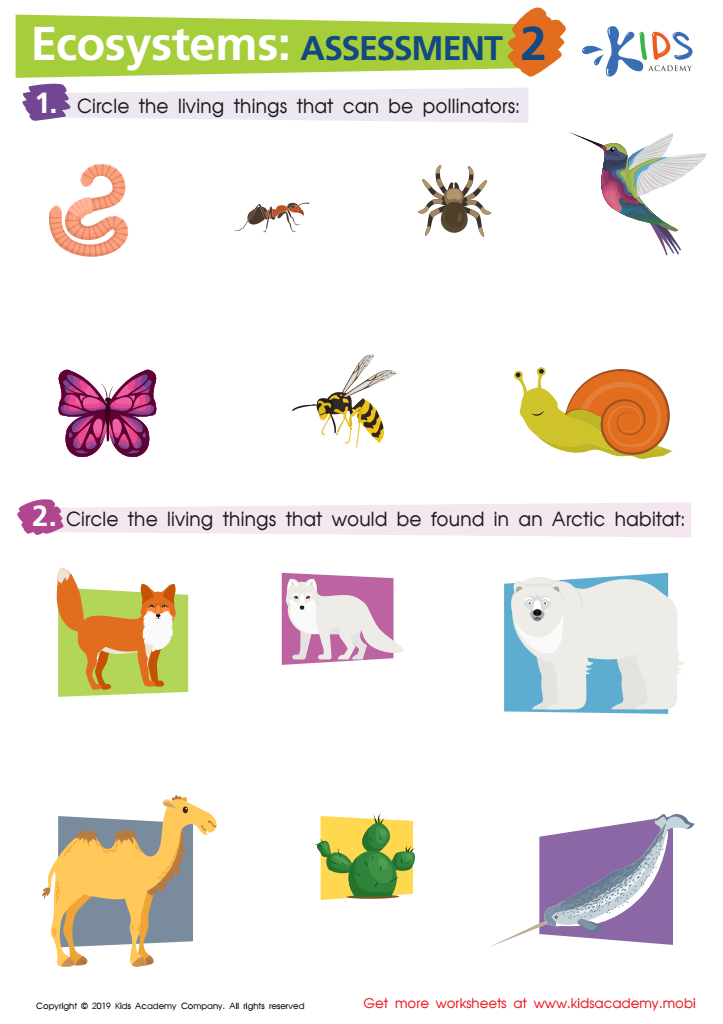
Ecosystems: Assessment 2 Worksheet
Pollinators are living or non-living things that help pollen spread. Test your child's knowledge of the ecosystem with this worksheet. Point out animals in the picture, then ask the simple questions. Help your child circle the right answers.
Ecosystems: Assessment 2 Worksheet
Worksheet
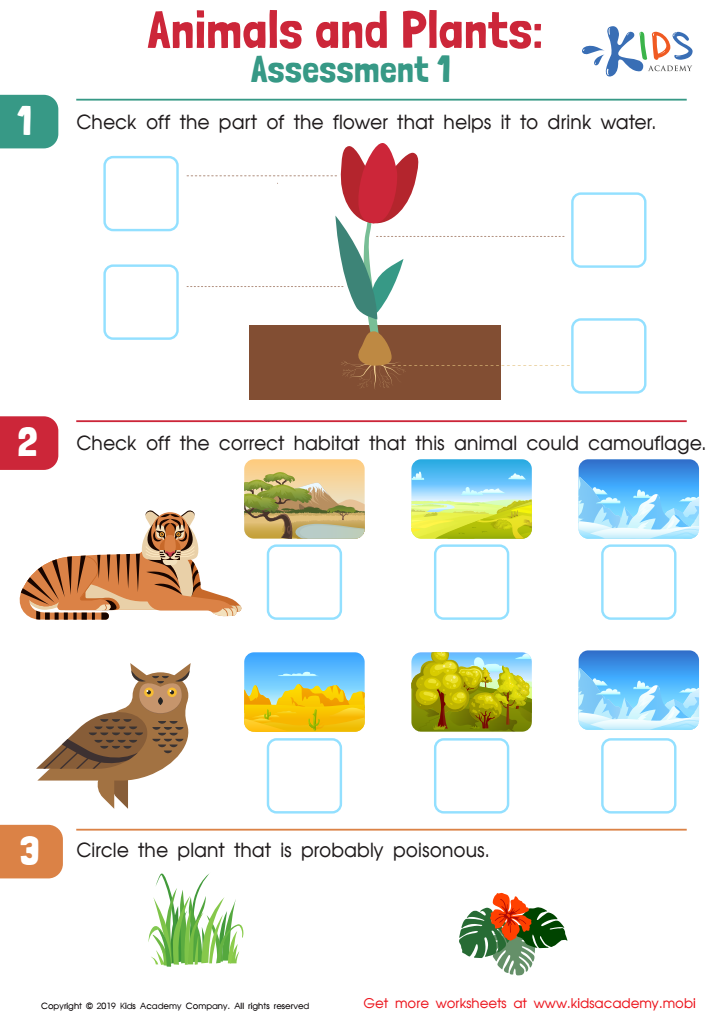
Animals and Plants: Assessment 1 Worksheet
Do you want to easily assess your child's understanding of basic science concepts? This colorful PDF offers a free opportunity for them to test their knowledge about parts of a flower, poisonous plants, animal habitats and more! Bright pictures make it fun and easy for you to see what they know.
Animals and Plants: Assessment 1 Worksheet
Worksheet
Join Kids Academy for Free
Who is primarily going to use this learning content?




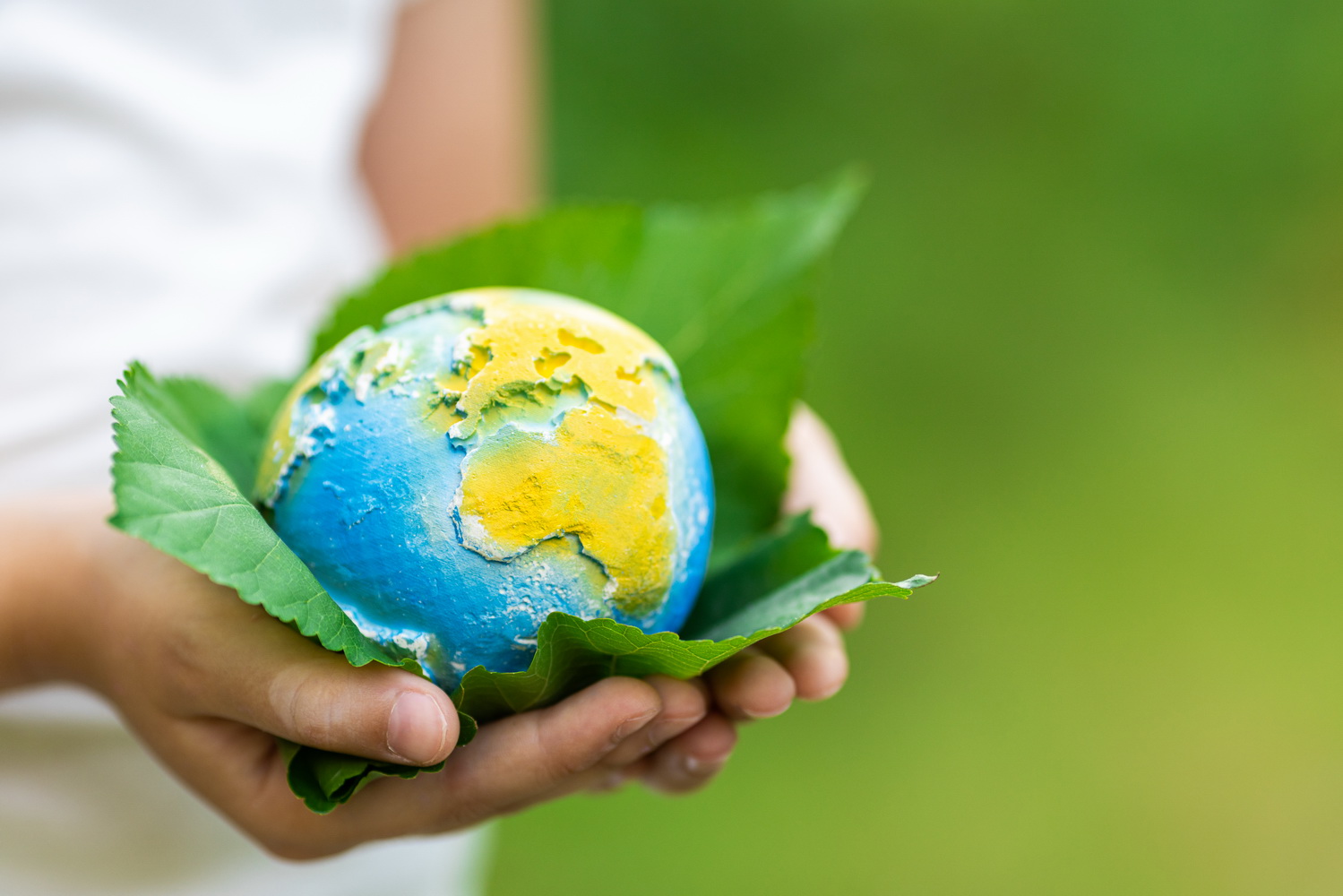


Understanding ecosystems and our planet's environment is crucial for children aged 4-9, as these foundational ideas shape their views toward nature and sustainability. At this age, children are naturally curious and absorb information rapidly. Teaching them about ecosystems instills a sense of wonder and respect for the world around them. It cultivates environmental stewardship, encouraging them to care about living things and understand their roles in the community.
Parents and teachers play a critical role in this educational journey. By engaging children with activities related to ecosystems, they foster critical thinking and problem-solving skills. Exploring concepts like food chains, habitats, and the interdependence of organisms allows youngsters to grasp complex ideas in a tangible way. Moreover, an early understanding of environmental issues promotes responsible behavior, such as recycling, conserving water, and protecting wildlife.
Beyond individual benefits, establishing eco-conscious values in young children leads to a generation that prioritizes sustainability and planetary health. This proactive approach helps combat climate change and environmental degradation in the long term. Essentially, caring about ecosystems education is an investment in a child’s future and the future of our planet. When children understand their place within these systems, they’re more likely to contribute positively as informed citizens.







