Observational skills Physical Science Worksheets for Ages 4-9
4 filtered results
-
From - To
Discover our engaging "Observational Skills Physical Science Worksheets" designed for children ages 4-9 at Kids Academy. These printable resources help young learners hone their ability to notice details and make connections by observing the world around them. Through fun activities and experiments, kids develop critical thinking and scientific inquiry skills. Perfect for both classroom and home use, our worksheets cover various topics such as matter, energy, and simple machines. Boost your child's curiosity and understanding of physical science with these expertly crafted materials. Visit us today to ignite a passion for learning through observation!
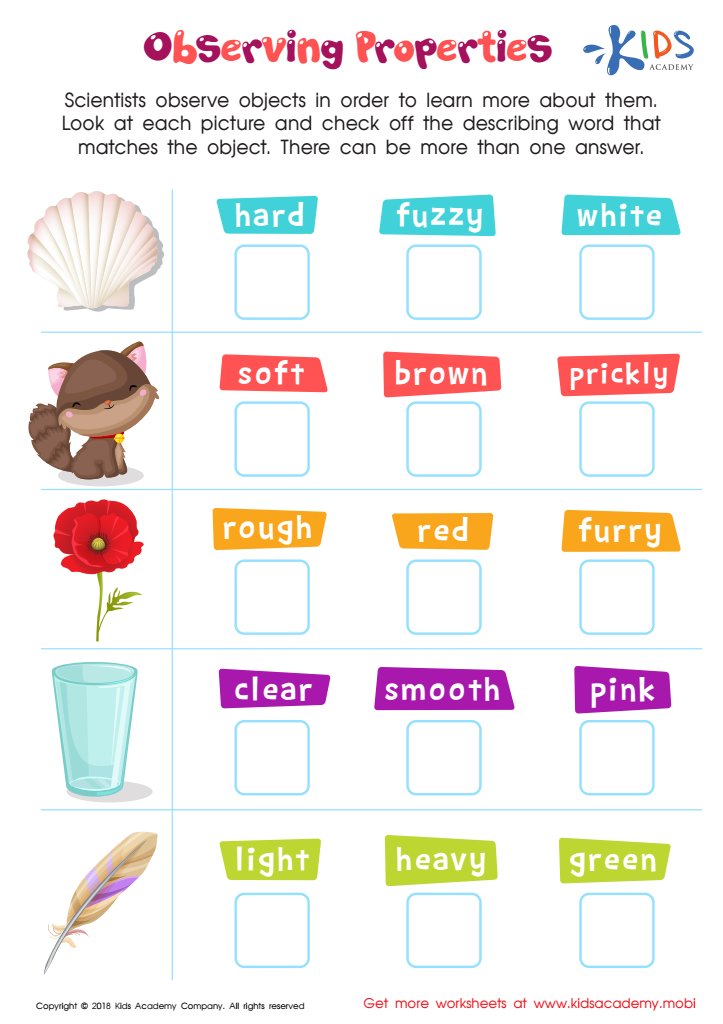
Observing Properties Worksheet
 Assign to My Students
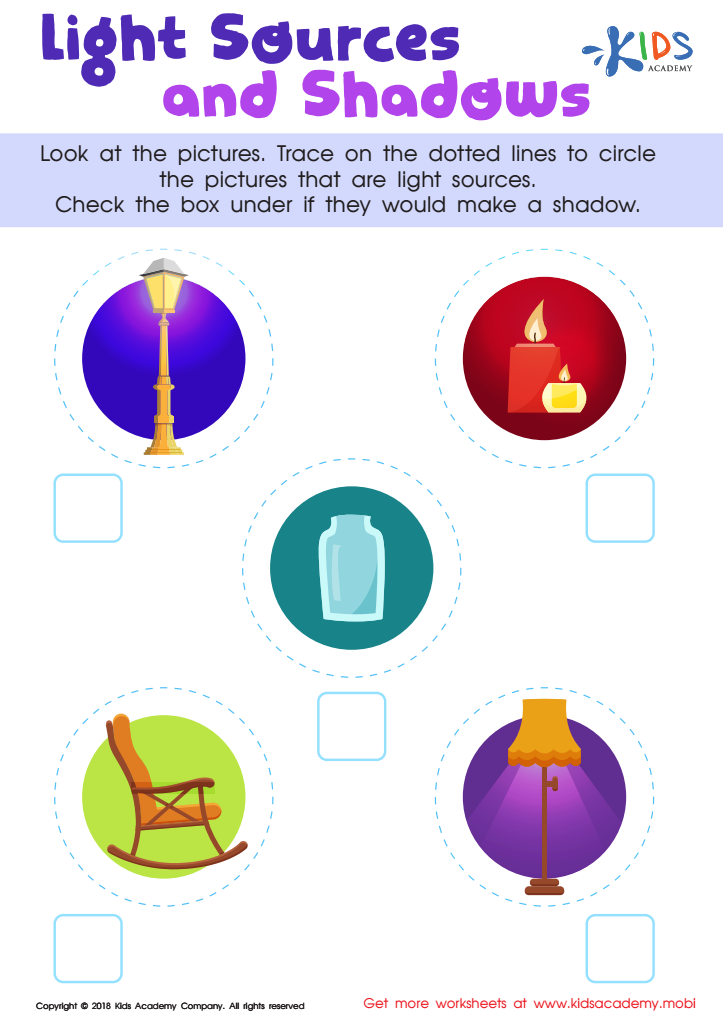
Light Sources and Shadows Worksheet
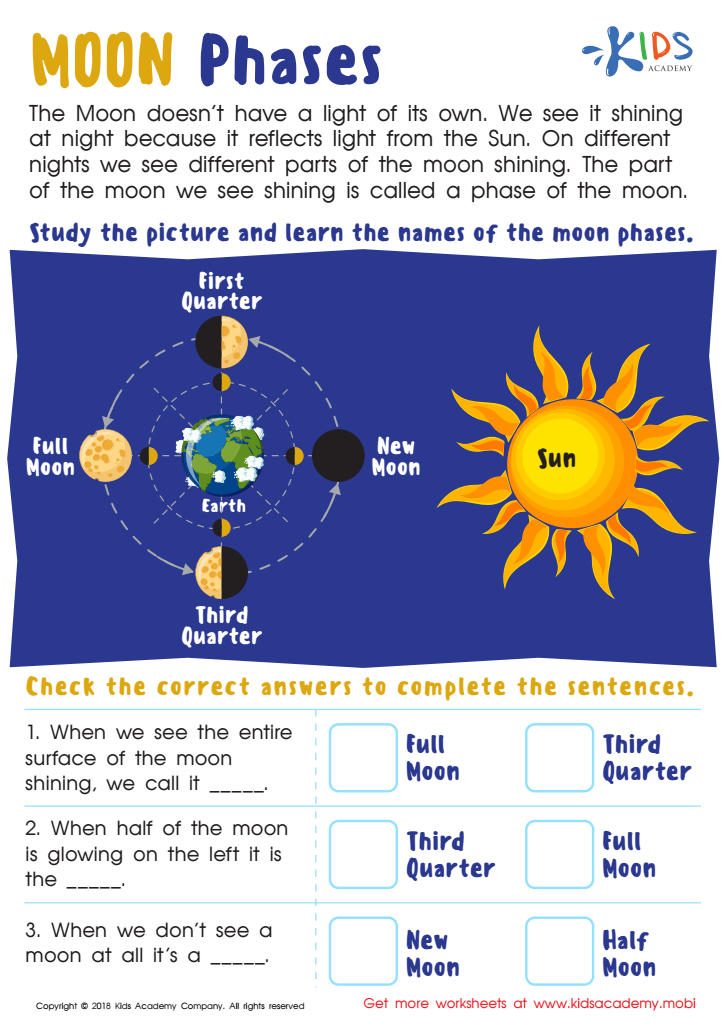
Moon Phases Worksheet
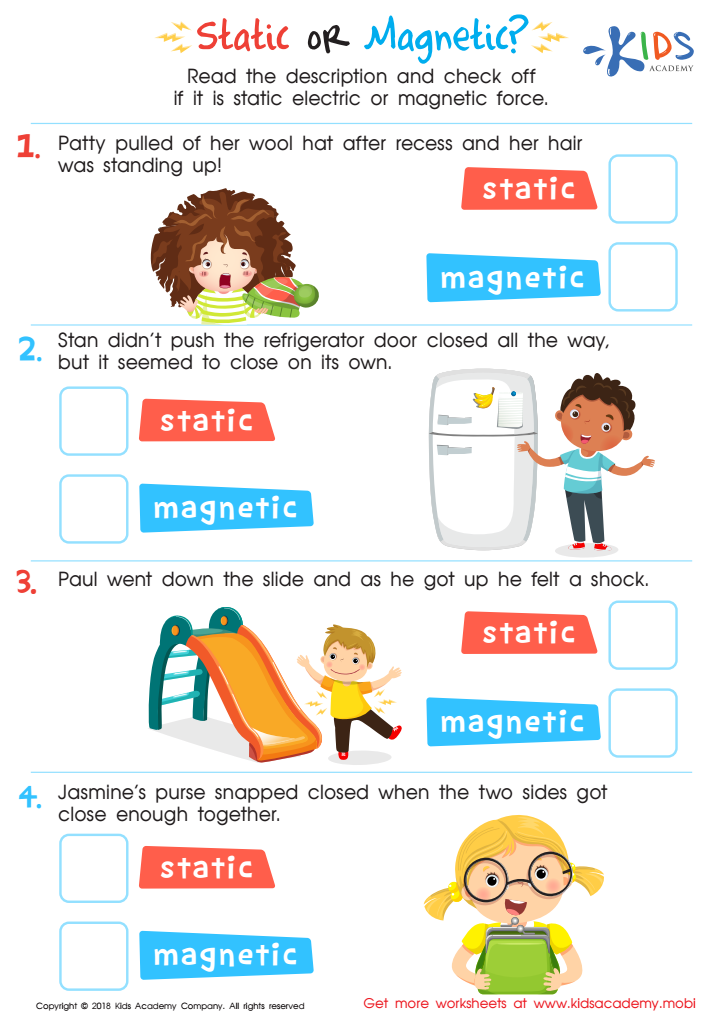
Static or Magnetic Printable Worksheet








Observational skills in physical science are foundational for young children aged 4-9 for several reasons. These skills can significantly enhance their cognitive development, help cultivate their curiosity, and lay the groundwork for scientific thinking.
Firstly, developing observational skills enables children to engage directly with the world around them. Whether it's noticing the shapes of leaves, the way water flows, or the colors in a rainbow, these observations foster a sense of wonder and curiosity. Curiosity is a powerful motivator, encouraging kids to ask questions and seek answers, igniting a lifelong love for learning.
Secondly, honing these skills helps children to develop critical thinking and problem-solving abilities. Observing requires attention to detail and the ability to focus, organize information, and draw conclusions, thus enhancing cognitive functions like memory and reasoning.
Thirdly, physical science concepts such as gravity, magnetism, and simple machines are much easier to grasp through hands-on observation and experimentation. When children see and interact with these concepts in real-time, they can better understand and retain the information.
Lastly, these skills promote a growth mindset. When children learn that they can discover and learn about their environment through observation, they understand that learning is a continuous process fueled by exploration and inquisitiveness.
By prioritizing observational skills, parents and teachers provide children with essential tools for intellectual growth and a profound appreciation for the natural world.







