Critical thinking development Plants and Animals Worksheets for Ages 4-9
3 filtered results
-
From - To
Unlock your child's potential with our "Critical Thinking Development Plants and Animals Worksheets" designed for ages 4-9. These engaging and educational printable worksheets foster critical thinking skills through stimulating activities focused on the wonders of plants and animals. Children explore the natural world, identify patterns, and solve problems while expanding their knowledge and cognitive abilities. Perfect for homeschooling or additional practice, our worksheets combine fun and learning seamlessly. Enhance your child's curiosity and analytical skills today with these expertly designed resources from Kids Academy. Start their adventure in learning now and watch their confidence and abilities blossom!
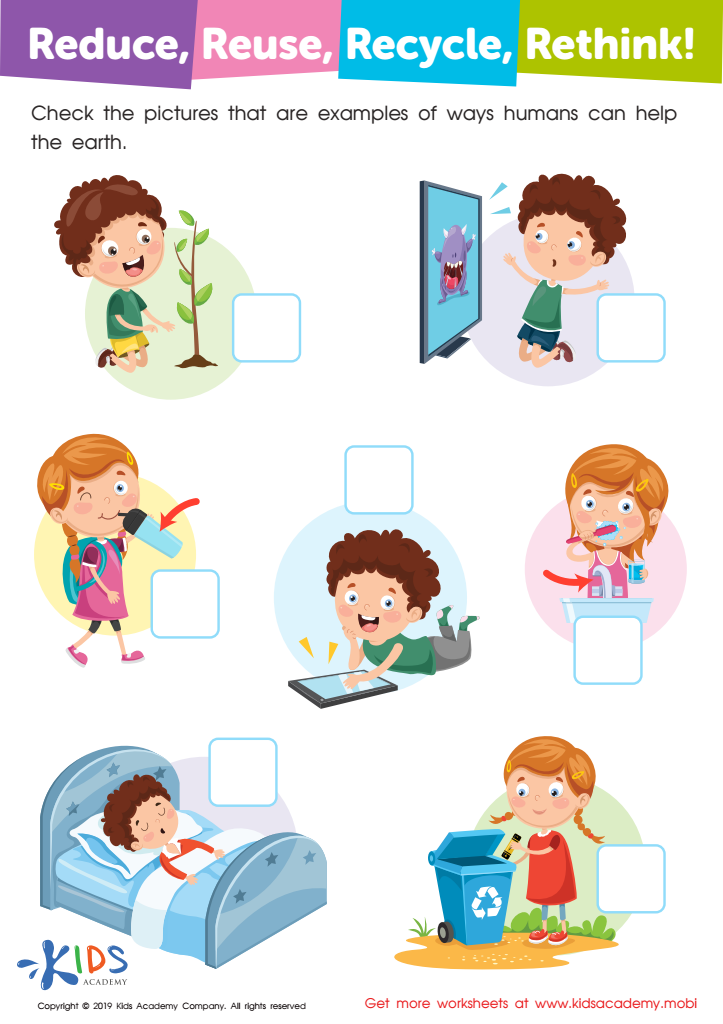
Reduce, Reuse, Recycle, Rethink Worksheet
 Assign to My Students











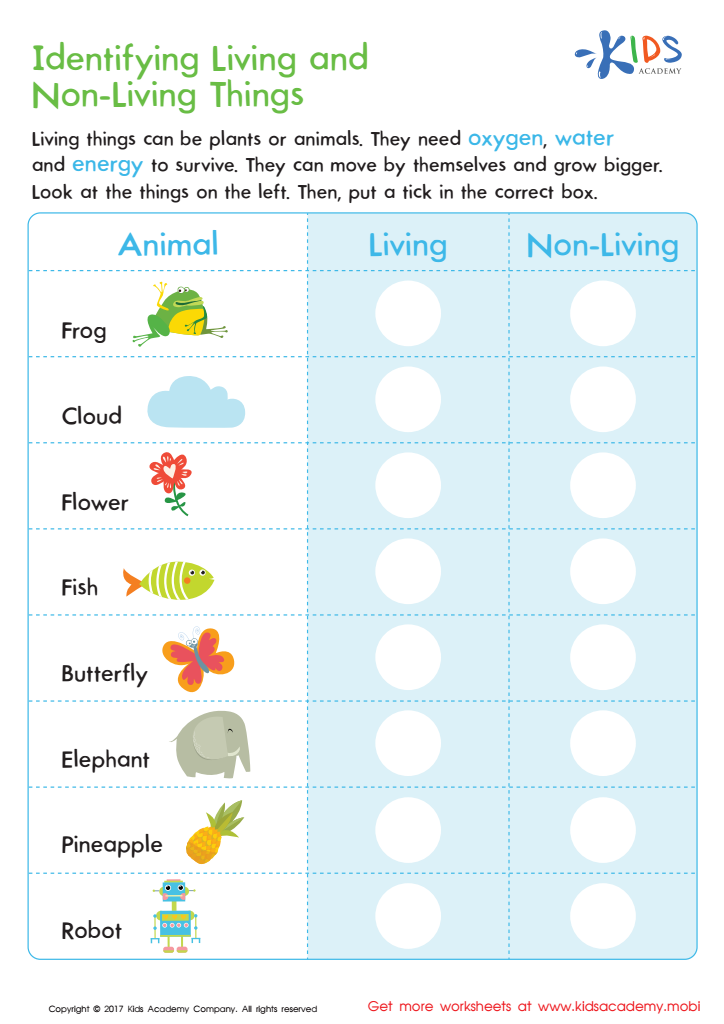
Identifying Living or Non–living Worksheet
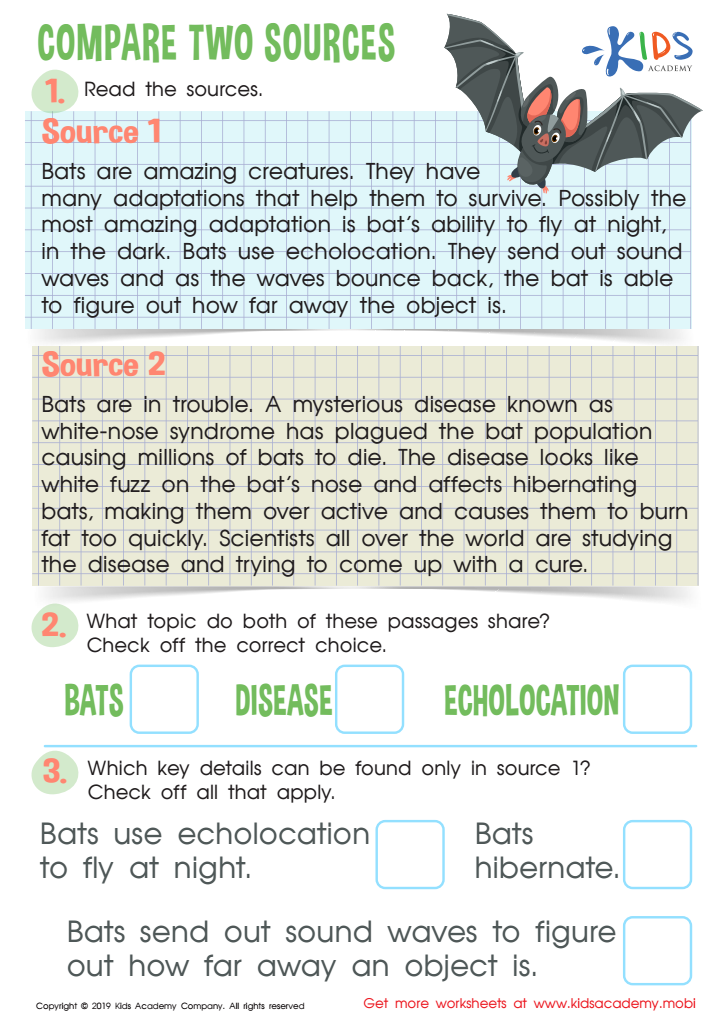
Compare Two Sources Worksheet








Critical thinking development during early childhood is essential, as it lays the foundation for future learning and decision-making abilities. Focusing on plants and animals within this age group, approximately 4 to 9 years, provides several unique benefits. Firstly, observing and exploring nature fosters curiosity, engagement, and a love for the environment. By asking open-ended questions about how plants grow, why animals behave in certain ways, and the interdependence of ecosystems, children develop observation and reasoning skills that are integral to critical thinking.
Secondly, the concepts of life cycles, habitats, and ecosystems naturally introduce problem-solving and analytical thinking. Children learn to categorize and compare different species, formulate hypotheses, and think logically about cause and effect. For instance, understanding why certain plants need sunlight or why animals migrate can stimulate deeper thinking about biological processes and foster scientific literacy from a young age.
Furthermore, introducing these topics in a hands-on, inquiry-based manner—involving outdoor exploration, experiments, and storytelling—not only keeps children engaged but also ignites their imaginations. This active approach to learning builds a foundation for critical thinking by encouraging questions, promoting perseverance through trial and error, and fostering an inquisitive mindset. Investing in this aspect of development during these formative years prepares children for more complex cognitive challenges and instills a lifetime of curiosity and respect for the natural world.








