Enhancing observation skills Community Worksheets for Ages 4-9
3 filtered results
-
From - To
Enhance your child's observation skills with our engaging Community Worksheets designed for ages 4-9. These thoughtfully crafted activities encourage young learners to explore their surroundings, improving their attention to detail and critical thinking. Each worksheet promotes active learning through fun exercises that foster curiosity about the community. Children will develop essential observation skills as they identify various elements in their environment and make connections to their daily lives. Perfect for home or classroom settings, these worksheets provide a structured way to experience the world, encouraging discussions about community roles and responsibilities. Empower your child's learning journey with our enriching resources today!
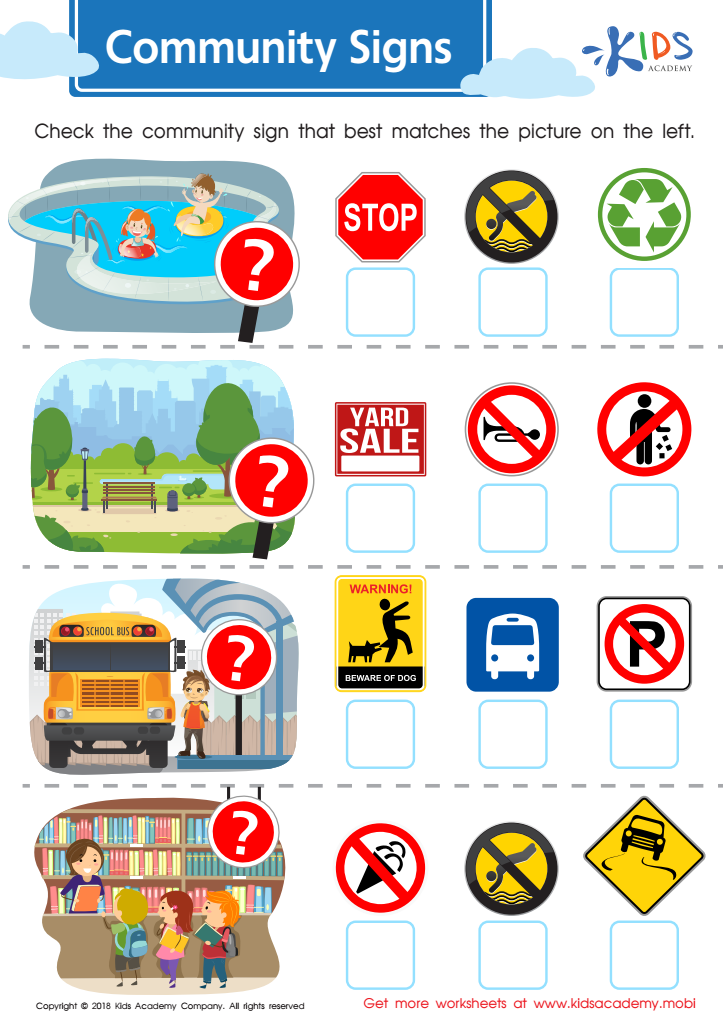
Community Signs Worksheet
 Assign to My Students
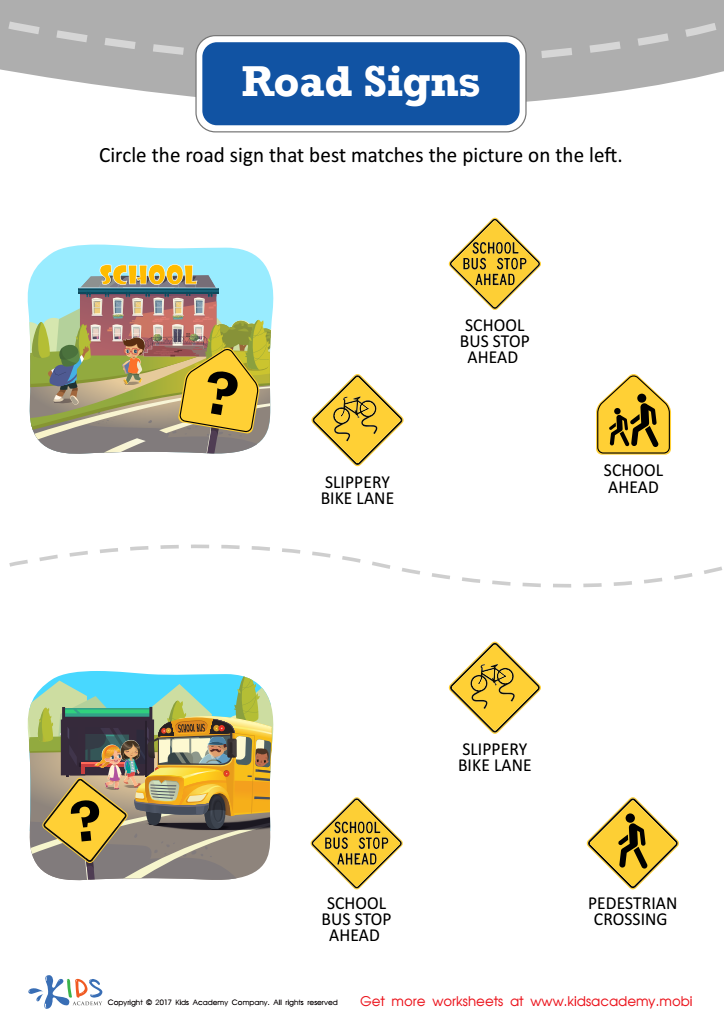
Road Signs (Part 1) Worksheet
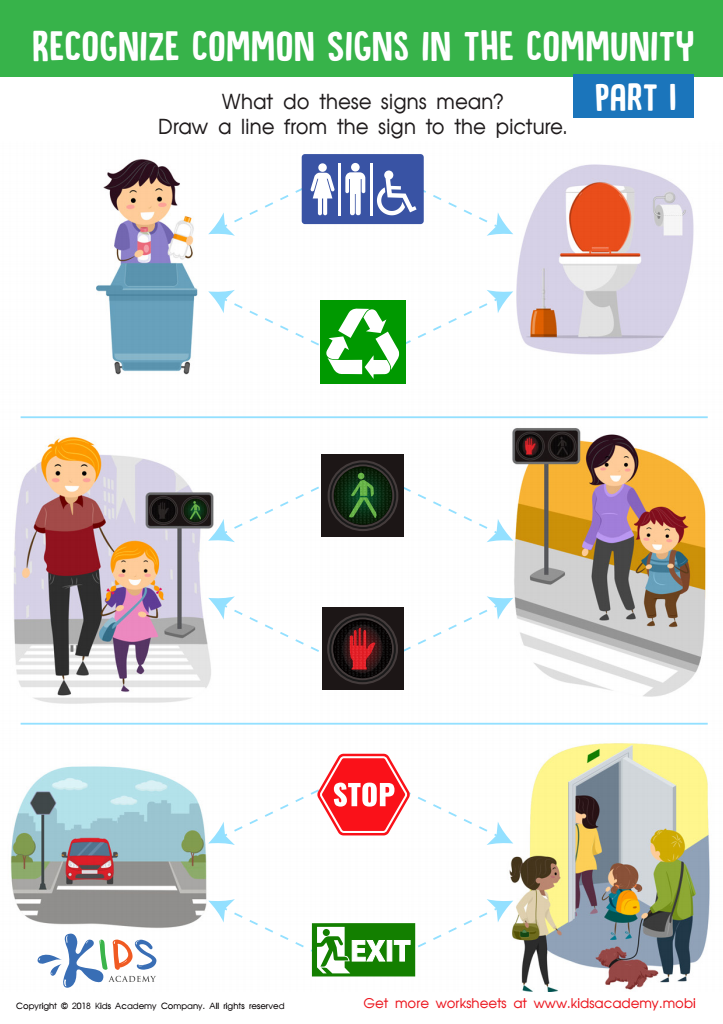
Recognize Common Signs: Part 1 Worksheet








Enhancing observation skills in children aged 4-9 is crucial for their development, and parents and teachers play a key role in fostering this ability. At this age, children are naturally curious and keen to explore their environment. By honing their observation skills, they learn to attentively notice details, patterns, and changes in their surroundings, laying the foundation for critical thinking.
Strong observation skills support academic success across various subjects, as children learn to analyze information and form conclusions. For instance, in scientific exploration, observing changes in materials or animal behavior leads to improved inquiry and problem-solving abilities.
Moreover, developing these skills can enhance social awareness and emotional intelligence. Children who observe social cues are better equipped to interact positively with peers, recognize feelings, and respond appropriately in various situations.
For parents, engaging in activities that promote observation—nature walks, storytelling, and interactive play—creates cherished bonding moments while reinforcing learning. Teachers can incorporate structured observations through games, discussions, and creative projects in the classroom.
Ultimately, fostering observation skills cultivates more engaged, empathetic, and critically thinking children, preparing them for future challenges and lifelong learning. Thus, investing in these skills is essential for holistic childhood development.








