Vocabulary development Community Worksheets for Ages 4-9
7 filtered results
-
From - To
Introducing our Vocabulary Development Community Worksheets for Ages 4-9, designed to enhance language skills through engaging and interactive activities. These worksheets focus on familiarizing young learners with essential vocabulary related to their community, fostering a deeper understanding of their environment. With colorful illustrations and relatable scenarios, children will enjoy exploring words associated with professions, places, and everyday experiences. Our resources promote reading comprehension, critical thinking, and effective communication. Ideal for both home and classroom engagement, these worksheets support early education objectives and inspire creativity in learning. Join our vibrant community and help your child build a strong vocabulary foundation today!

Let's Go to the Library! Worksheet
 Assign to My Students

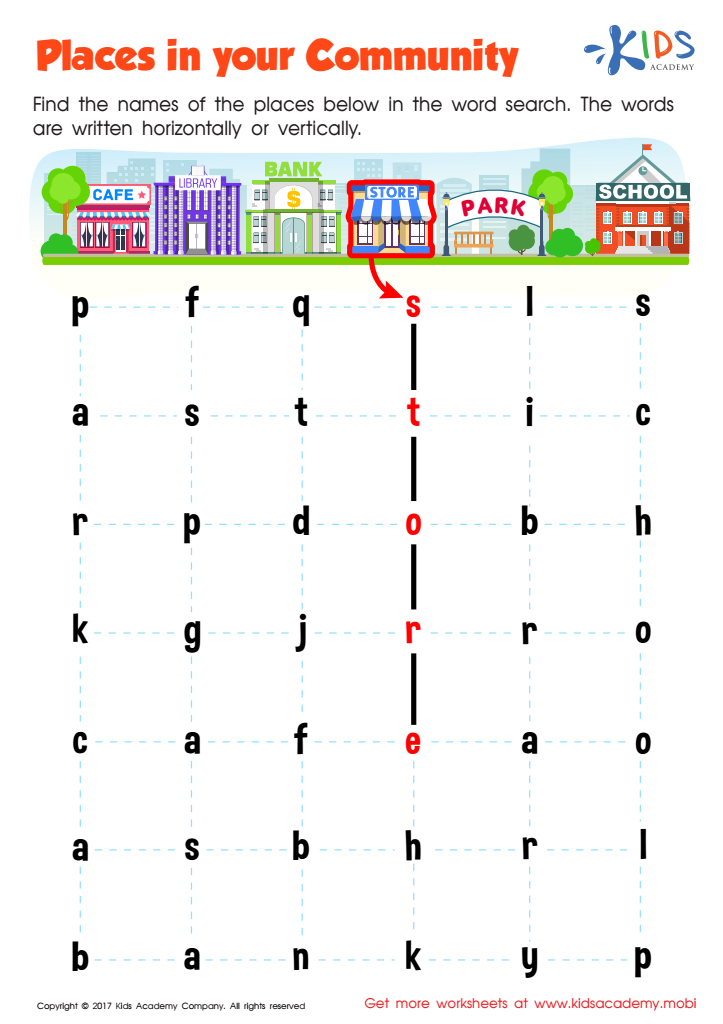
Places in Your Community Worksheet
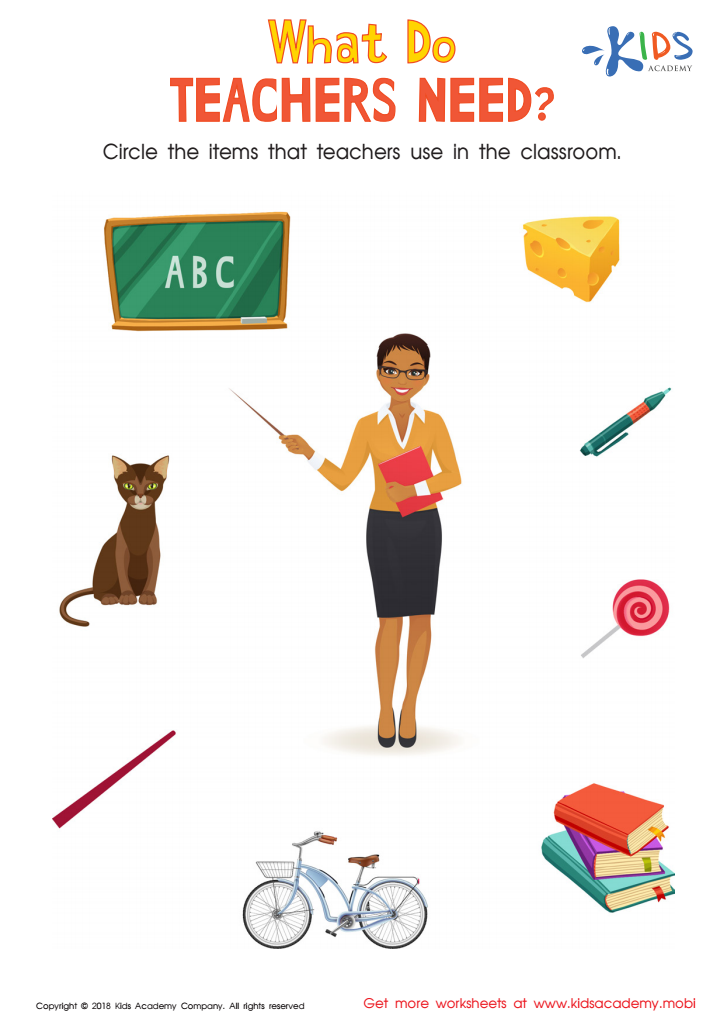
What Do Teachers Need Worksheet
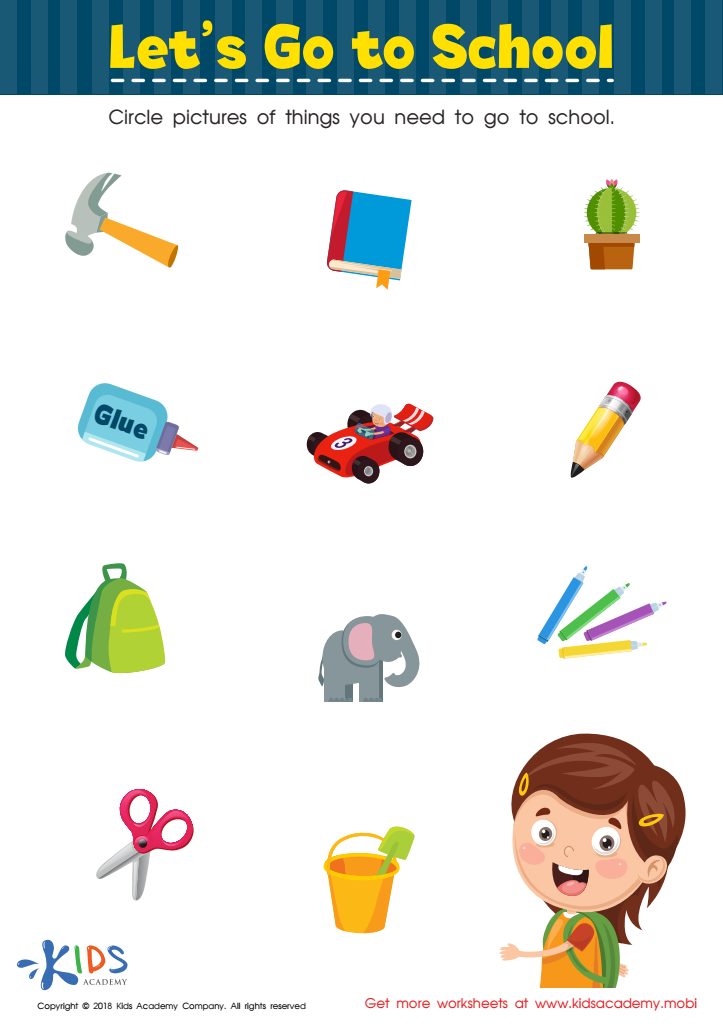
Let's Go to School! Worksheet
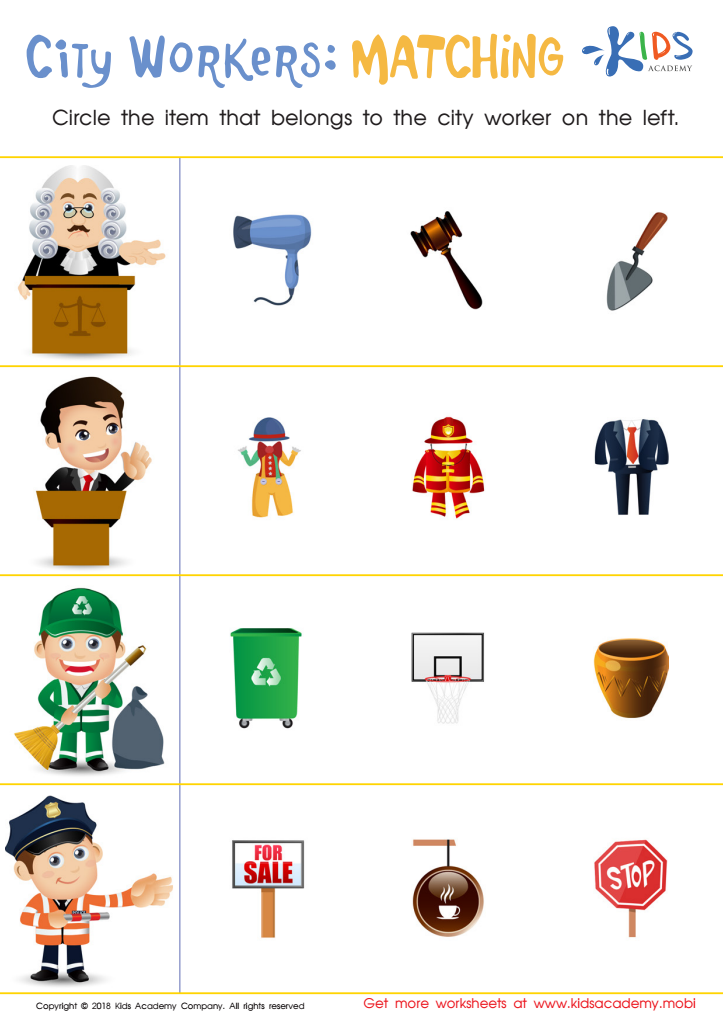
City Workers: Matching Worksheet
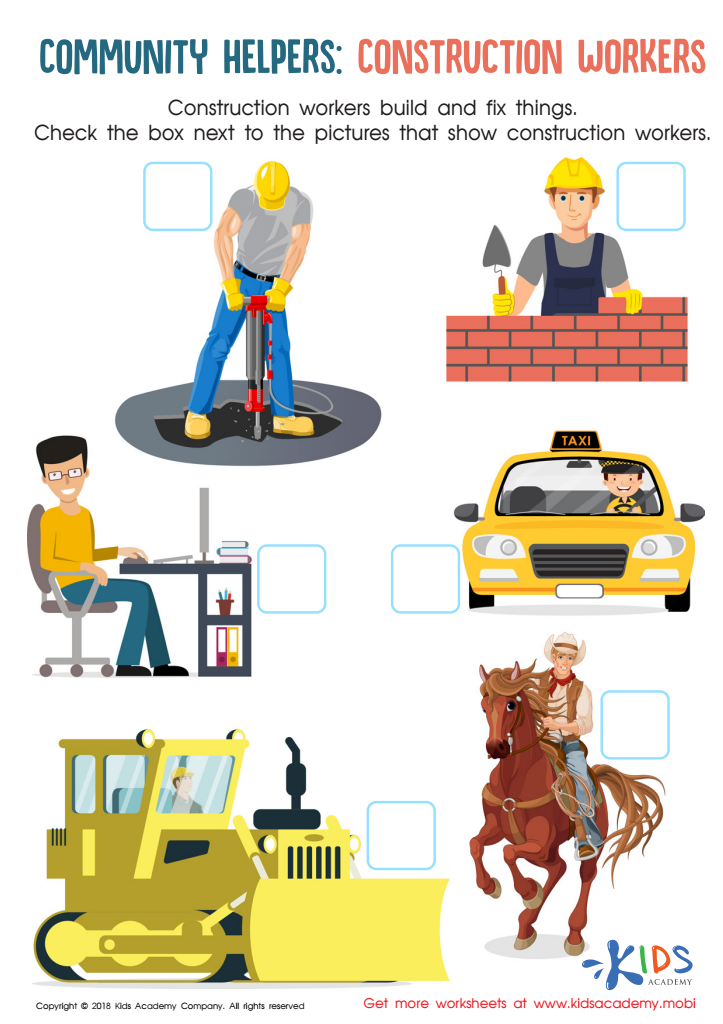
Construction Workers Community Helpers Worksheet








Vocabulary development is crucial for children ages 4-9, as it forms the foundation for their reading, writing, and overall communication skills. During these formative years, an expansive vocabulary enhances children’s ability to understand and express their thoughts and feelings. When parents and teachers prioritize vocabulary growth, they empower children to engage more meaningfully with their environment, improve their academic performance, and foster critical thinking abilities.
A strong vocabulary also supports children’s social-emotional development by enabling them to articulate their experiences, share ideas, and engage in conversations with peers and adults. This dialogue facilitates relationships and builds confidence. Moreover, vocabulary acquisition is linked to future literacy success; children with robust vocabularies tend to perform better academically, as they can comprehend texts more effectively.
Creating a vocabulary development community offers support through collaboration among parents, teachers, and caregivers, allowing for shared strategies and resources like storytelling, word games, and interactive reading activities. Such a community diminishes learning disparities and creates a more inclusive environment for all children. In sum, by investing in vocabulary development together, parents and teachers cultivate a generation of effective communicators ready to navigate their world.








