Event sequencing Social Studies Worksheets for Ages 4-9
3 filtered results
-
From - To
Discover engaging event sequencing social studies worksheets designed for children ages 4-9. These interactive sheets help young learners understand the logical order of events, fostering essential thinking and comprehension skills. Each worksheet presents relatable scenarios, encouraging children to identify and arrange events sequentially. Perfect for enhancing early learning in history and daily routines, these resources also support literacy development. Ideal for classroom and home use, our worksheets make learning fun and effective. Equip your child with tools to succeed and build a solid foundation in social studies with our event sequencing activities.
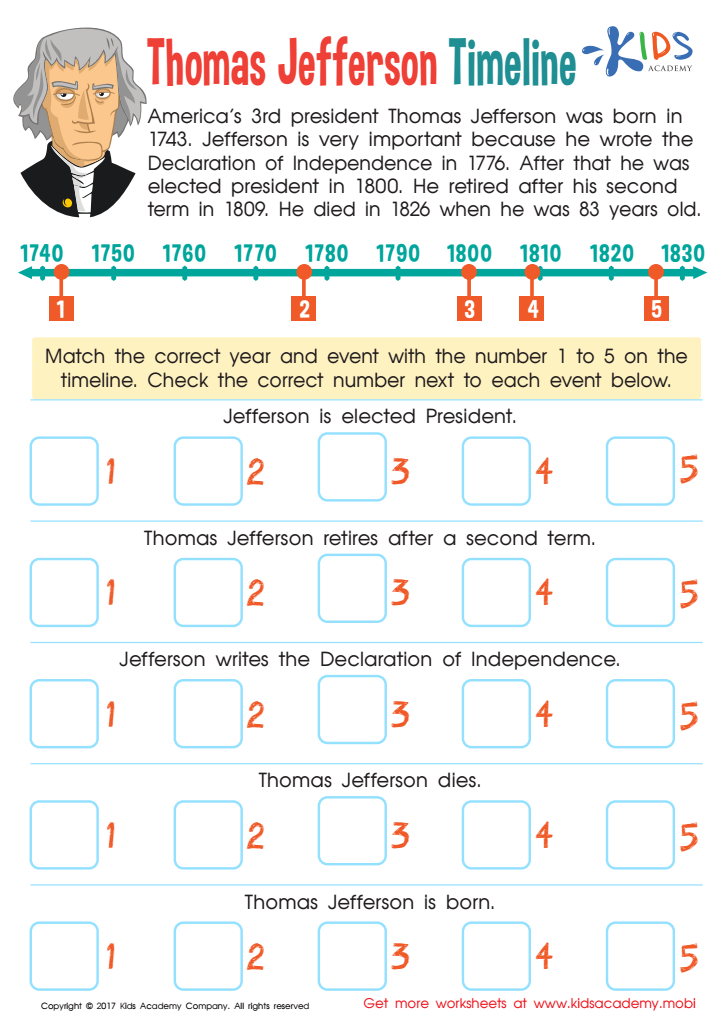
Thomas Jefferson Timeline Worksheet
 Assign to My Students
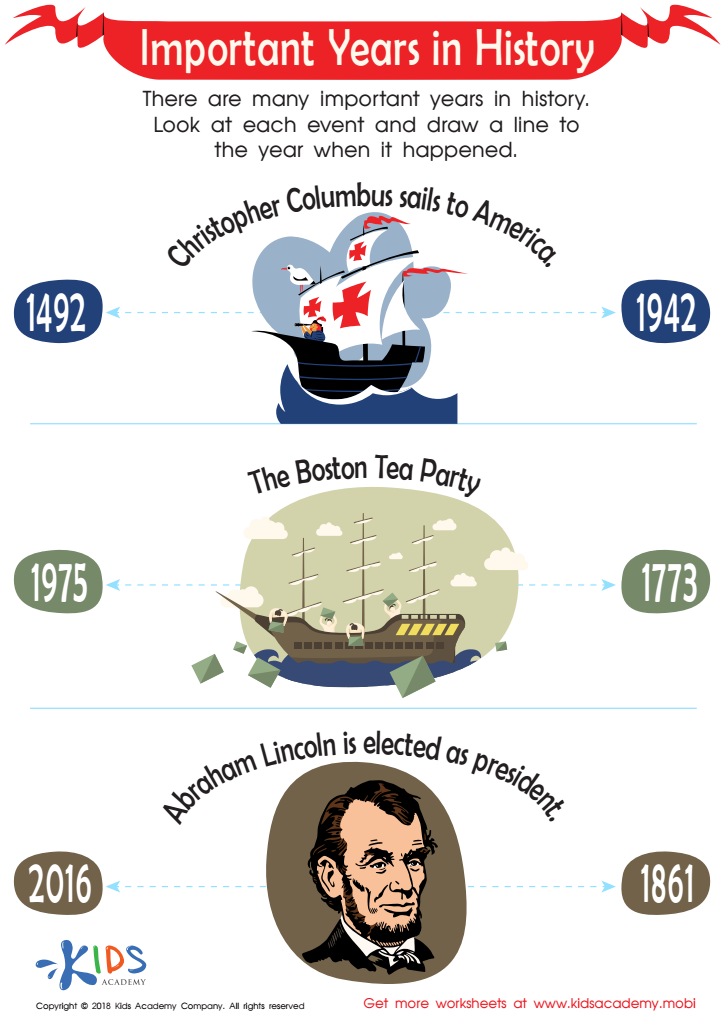
Important Years in History Worksheet
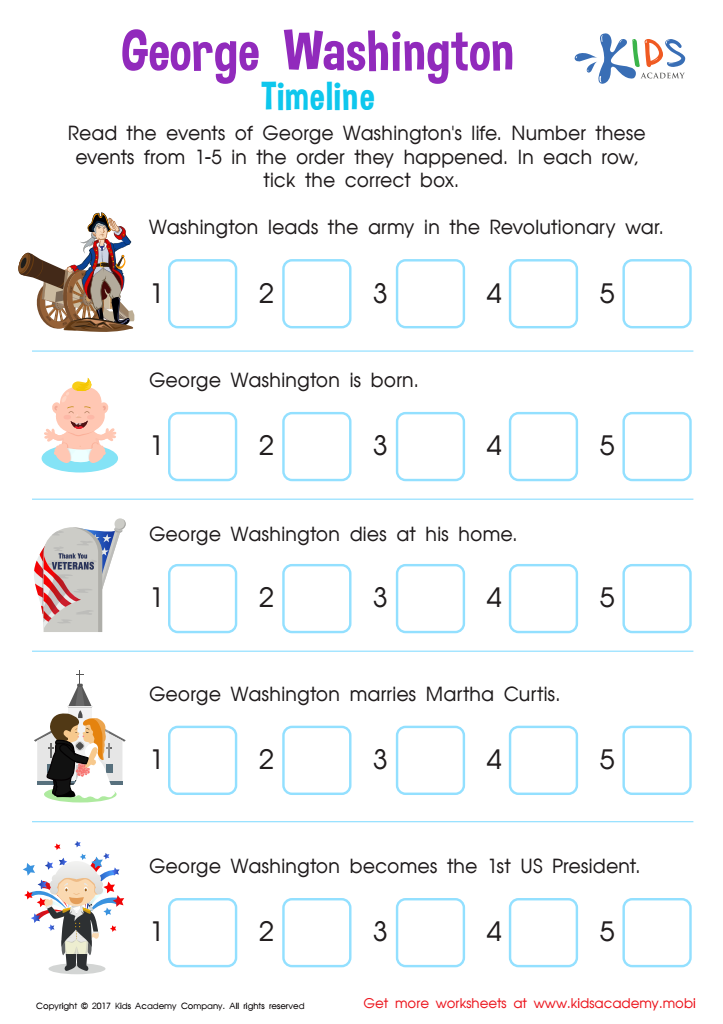
George Washington Timeline Worksheet








Event sequencing in Social Studies for ages 4-9 is vital because it lays a fundamental building block for cognitive and social development. At this young age, children's brains are rapidly developing; understanding the concept of sequencing helps build crucial cognitive skills such as reasoning, logic, and the ability to comprehend cause and effect.
When kids grasp the sequential order of historical events or everyday activities, they learn to appreciate the flow of time and the impact of past actions on the present and future. This understanding helps them make sense of not just historical stories but also their daily routines and the world around them. Moreover, sequencing events fosters skills like organization and planning which are essential for academic success.
Additionally, social studies sequencing enhances emotional and social growth. For example, by discussing historical events in chronological order, children can empathize with people’s experiences and learn from moral lessons. It helps in cultivating a sense of justice and responsibility from observing historical consequences.
Teachers and parents must invest time in this aspect of learning; they set the stage for a child’s ability to think critically, understand their environment, interact empathetically with peers, and eventually become informed and conscientious citizens. Thus, event sequencing isn't just academic—it's an all-encompassing developmental need.