Understanding citizenship Social Studies Worksheets for Ages 4-9
6 filtered results
-
From - To
Unlock the world of civic understanding with our "Understanding Citizenship" Social Studies worksheets for ages 4-9. Discover engaging, age-appropriate activities designed to teach young learners about community roles, rights, responsibilities, and the importance of active participation. These worksheets foster a sense of belonging and help children recognize their impact on society. From fun coloring pages to interactive question prompts, our resources make learning about citizenship both educational and enjoyable. Equip your child with essential life skills and empower them to become informed, responsible citizens from a young age. Ideal for classroom use or homeschooling!
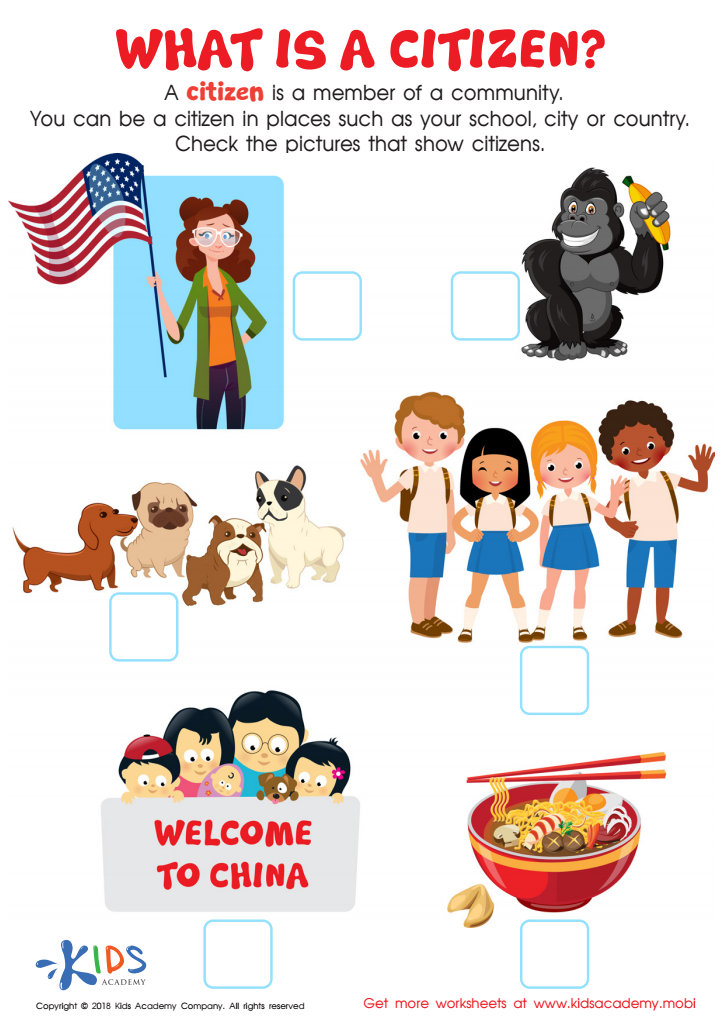
What is a Citizen? Worksheet
 Assign to My Students
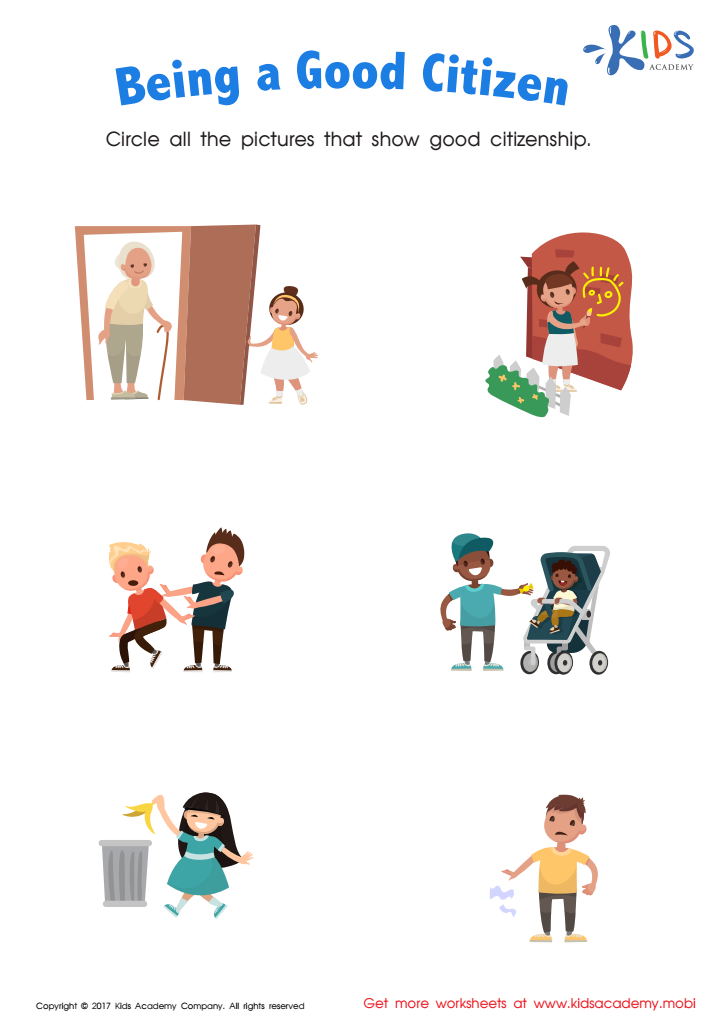
Being a Good Citizen Printable
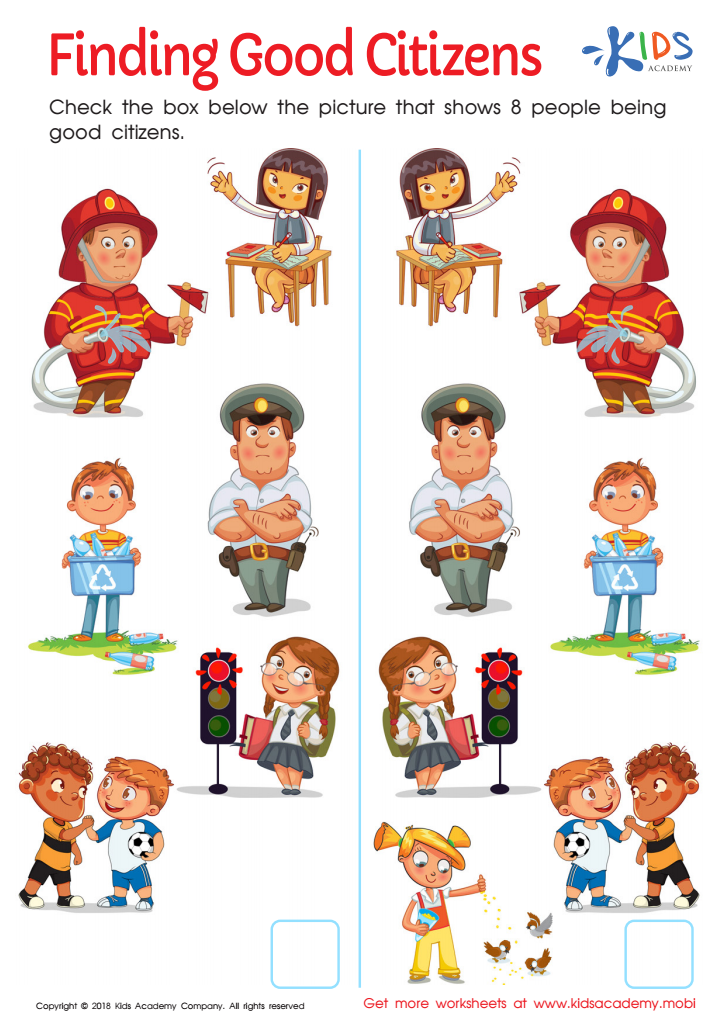
Finding Good Citizens Worksheet
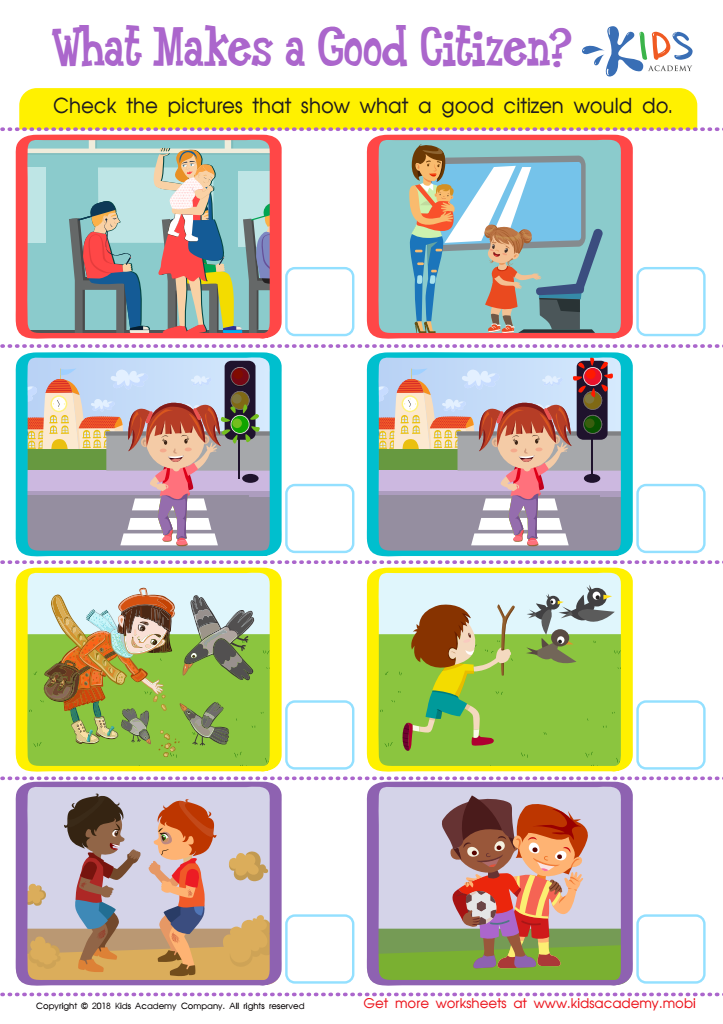
What Makes a Good Citizen? Worksheet
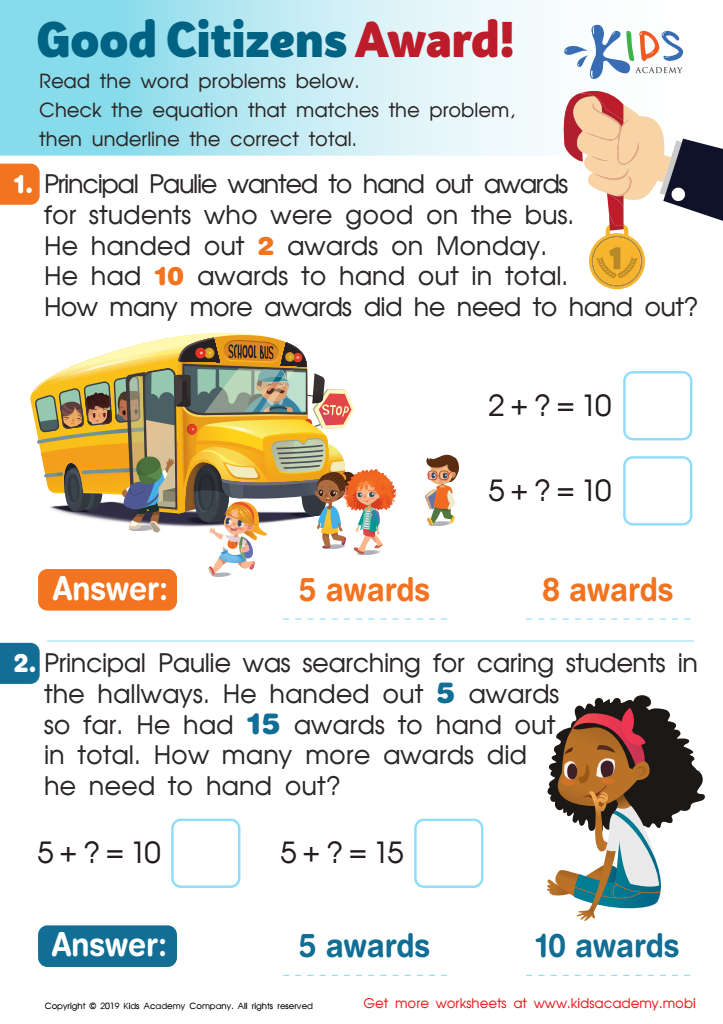
Good Citizens Award! Worksheet
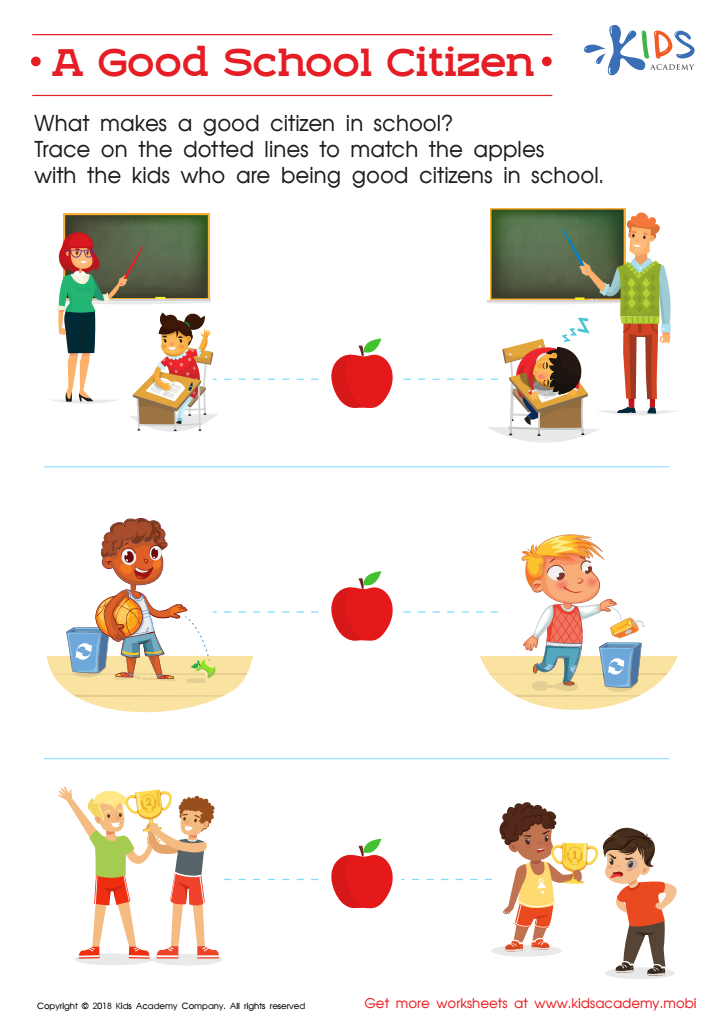
A Good School Citizen Worksheet




.jpg)



Understanding citizenship in social studies for children ages 4-9 is crucial for several reasons. Firstly, it lays the foundation for young children to grasp the concepts of community, responsibility, and participation. At this developmental stage, children are naturally curious and learn from their surroundings, making it the ideal time to introduce ideas about how societies work and their role within them.
Learning about citizenship helps children develop a sense of identity and belonging. It fosters an understanding that they are part of bigger social structures beyond their family, which can boost their self-confidence and social skills. This understanding promotes empathy, teaching them to respect others' rights and opinions, laying the groundwork for a more inclusive, respectful society.
For parents and teachers, instilling these values early helps cultivate responsible citizens. As children understand the importance of rules and contributing positively to their community, they are more likely to grow into adults who value civic engagement and societal contribution. This, in turn, can lead to a more informed, proactive population that is better equipped to tackle communal and global challenges.
Furthermore, an early introduction to the principles of democracy, justice, and equality encourages critical thinking and ethical decision making. Thus, caring about these foundational concepts isn't just about teaching social studies; it's about building the pillars of a cohesive, enlightened, and engaged society.








