Word identification Grammar Worksheets for Ages 4-9
8 filtered results
-
From - To
Boost your child's reading and writing skills with our Word Identification Grammar Worksheets! Designed for ages 4-9, these fun and engaging worksheets help young learners recognize, read, and write new words confidently. Our expertly crafted activities focus on fundamental grammar skills, including phonics, sight words, spelling, and more. Perfect for classroom or home use, these worksheets make learning interactive and enjoyable. Tailored to meet educational standards, they support your child’s development at each stage, paving the way for literacy success. Discover our extensive collection today and watch your little wordsmiths thrive!
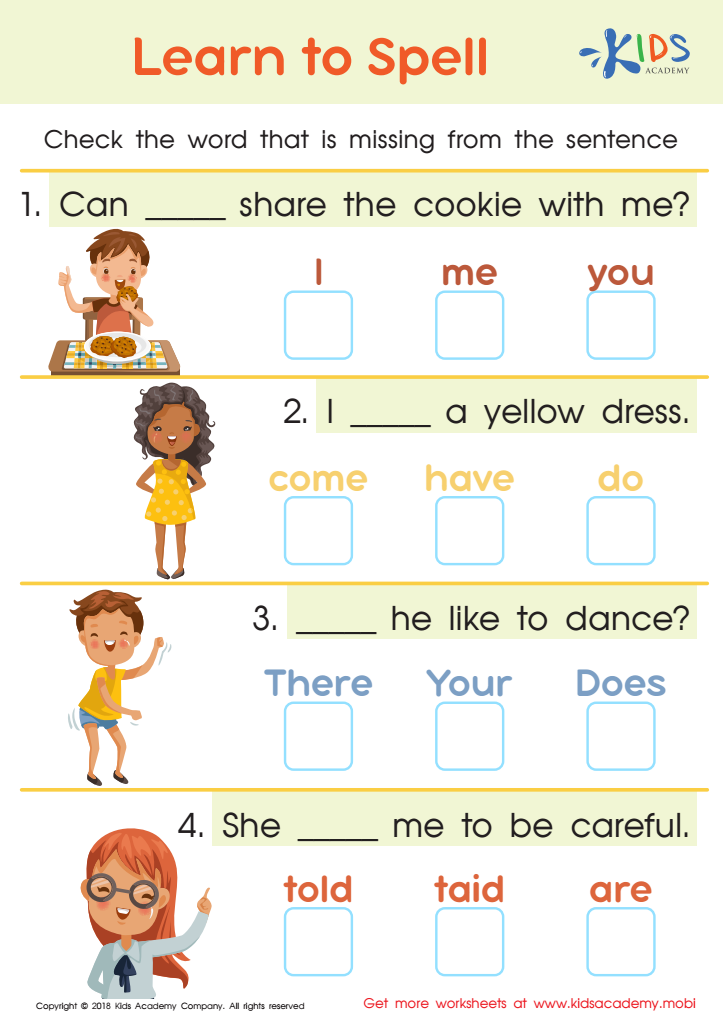
Learn to Spell Worksheet
 Assign to My Students
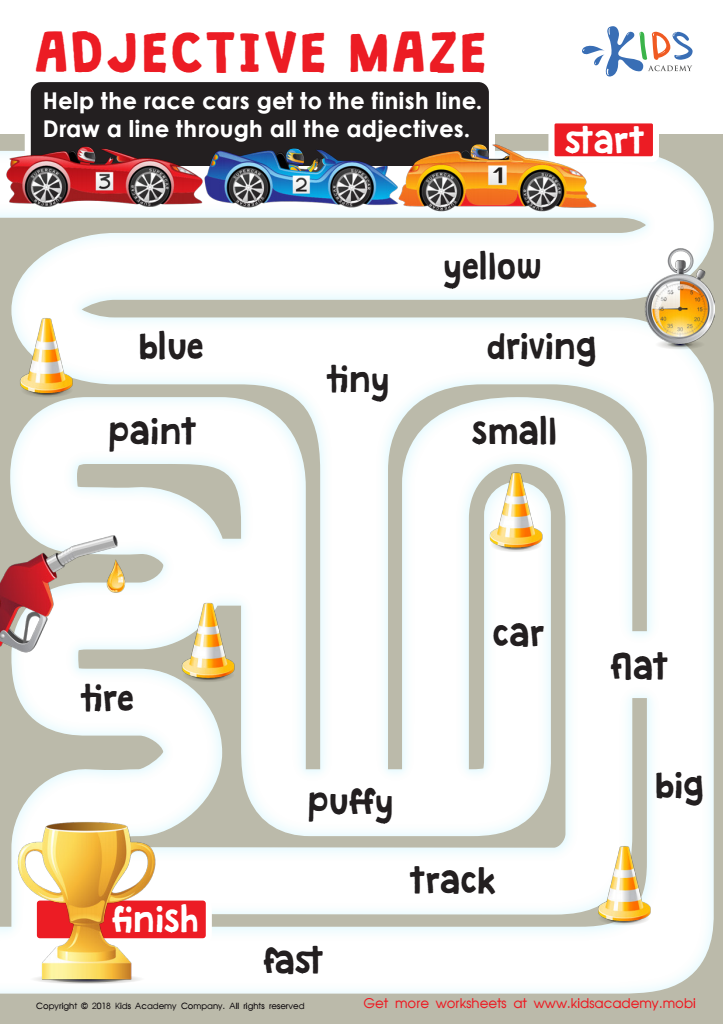
Adjective Maze Worksheet
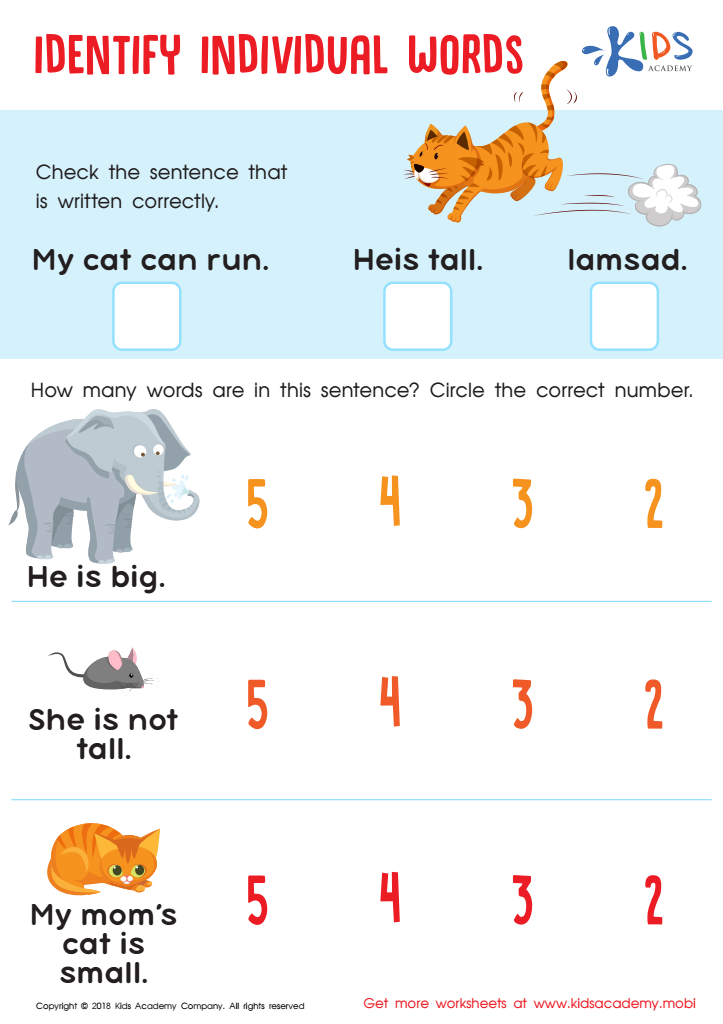
Identify Individual Words Worksheet
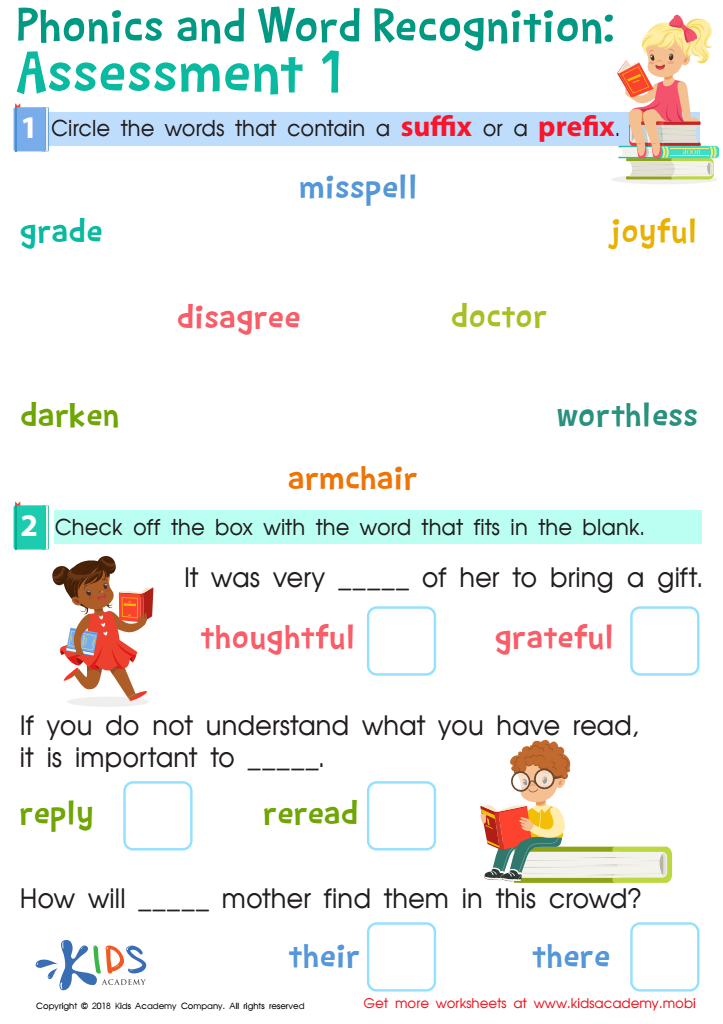
Phonics and Word Recognition: Assessment 1 Worksheet
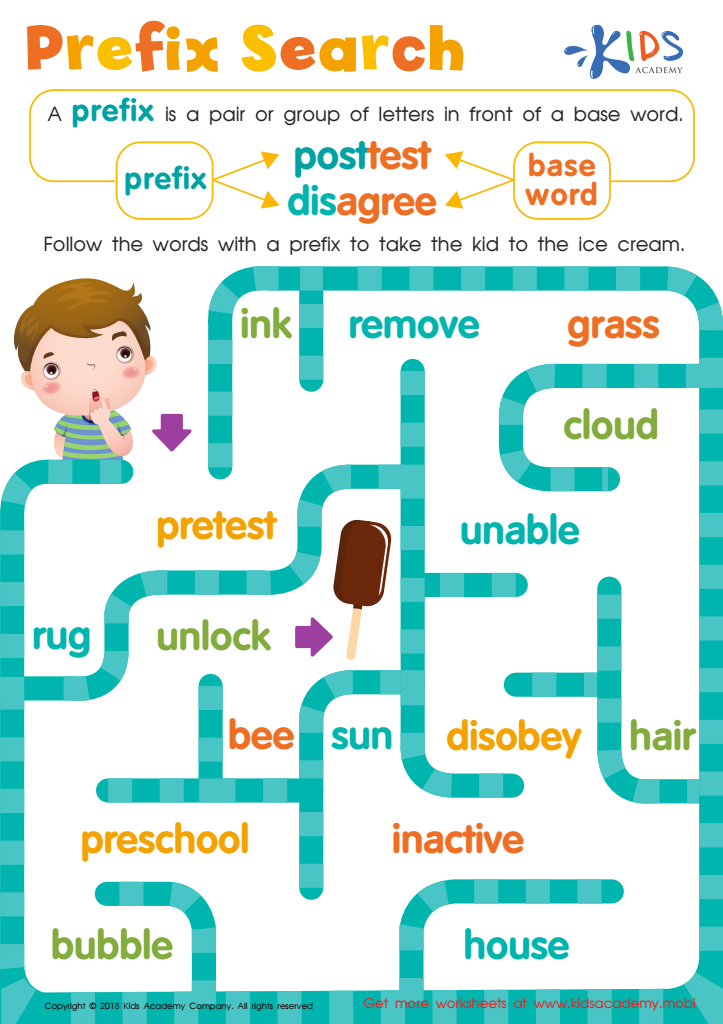
Reading: Prefix Search Worksheet
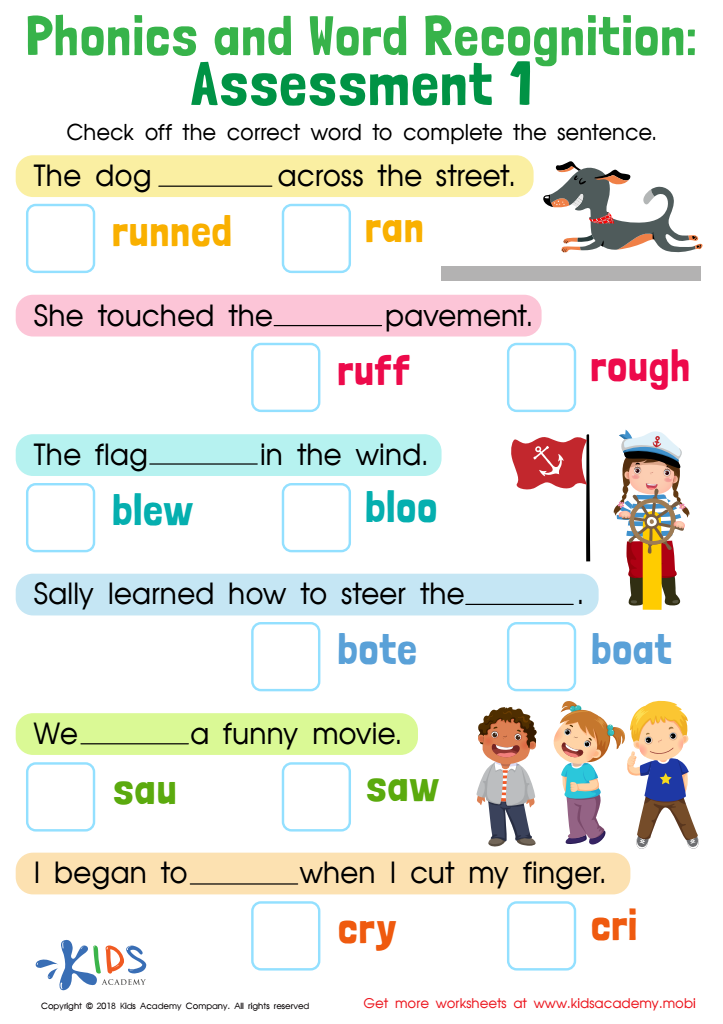
Phonics and Word Recognition: Assessment 1 Worksheet
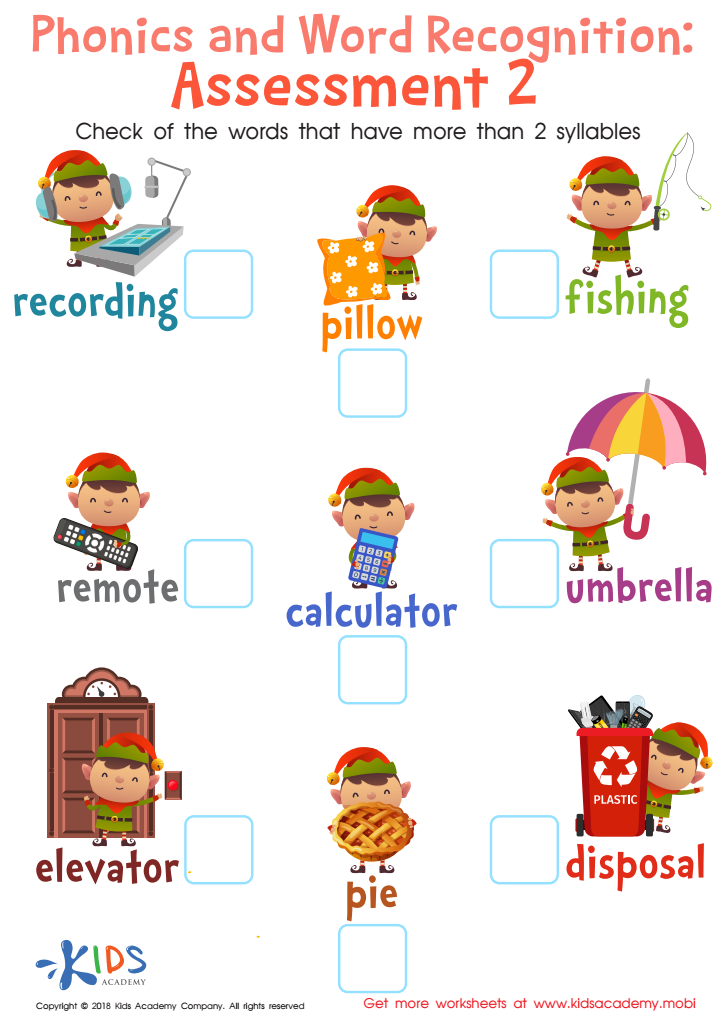
Phonics and Word Recognition: Assessment 2 Worksheet
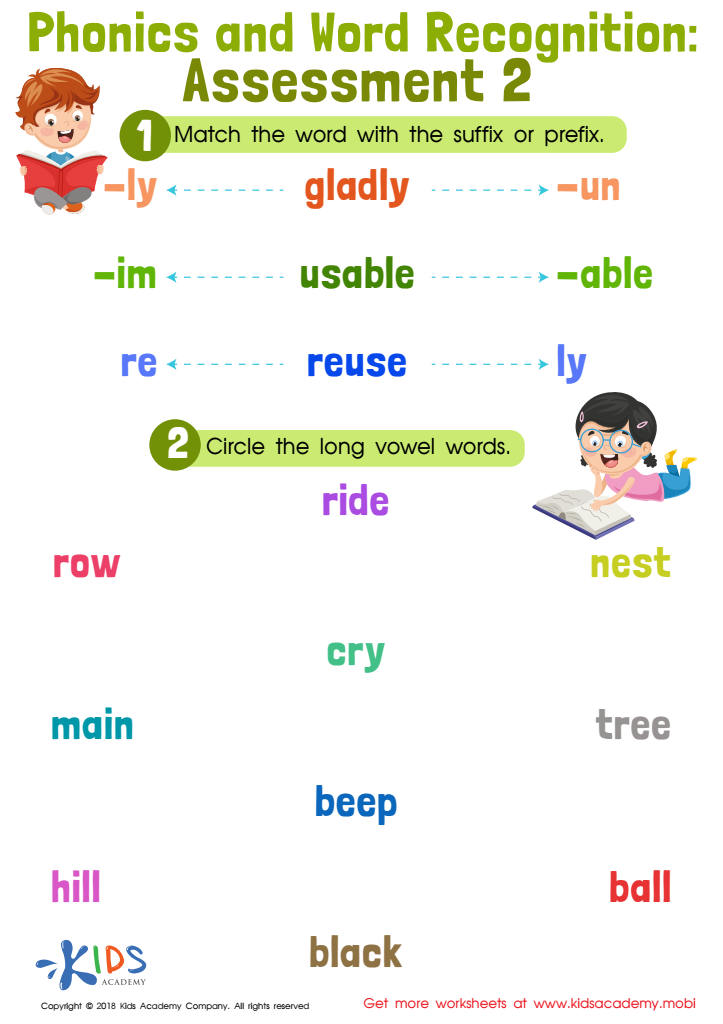
Phonics and Word Recognition: Assessment 2





Effective word identification and grammar skills during the early years, particularly ages 4-9, lay a crucial foundation for a child's overall language development and academic success. At this formative age, children are like sponges, ready to absorb new information rapidly. These skills directly affect their ability to read fluently, comprehend what they are reading, and engage in creative and constructive communication.
Strong word identification enables children to recognize words quickly and effortlessly, which is essential for fluent reading. When kids recognize words without struggling, they can focus more on comprehending the text rather than decoding it. This builds their confidence and nurtures a love for reading, opening up a wealth of knowledge and imagination.
Understanding basic grammar helps kids make sense of how words work together in sentences to convey precise meanings. It teaches them to write clearly and correctly, fostering effective written and verbal communication skills. This solid groundwork is necessary for reading comprehension, enabling children to understand more complex texts as they grow older and transition to higher grades.
In sum, a focus on word identification and grammar equips children with essential literacy skills that can positively impact their educational trajectory and future learning experiences. Parents and teachers play a critical role in supporting these early language development milestones, paving the way for a child's lifelong success.








