
Comprehension skills Writing Worksheets for Ages 4-9
4 filtered results
Difficulty Level
Grade
Age
-
From - To
Subject
Activity
Standards
Enhance your child's reading and writing journey with our Comprehension Skills Writing Worksheets designed for ages 4-9. These expertly crafted worksheets make learning fun by combining engaging stories with critical thinking exercises. Our resources aim to improve your child's ability to understand and interpret text, a crucial skill for their academic success. Each worksheet is designed to bolster reading comprehension, vocabulary, and writing abilities in a structured yet delightful manner. From answering questions about the text to creatively composing their own ideas, students will build strong literacy foundations. Explore our collection for an enriching, educational experience today!
Favorites
With answer key
Interactive
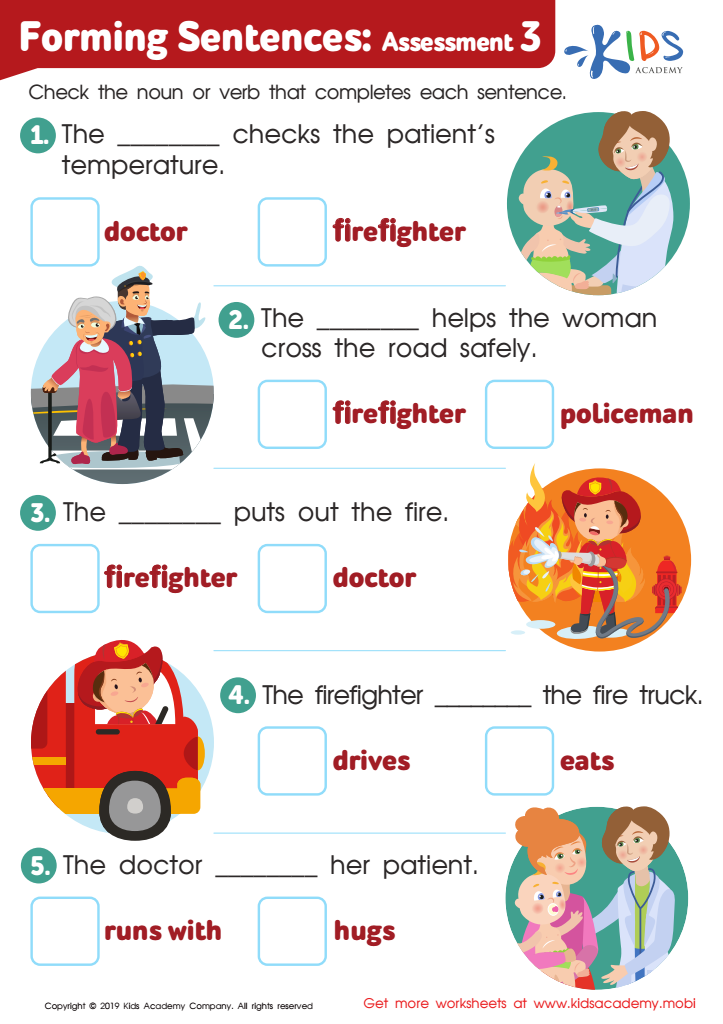
Forming Sentences: Assessment 3 Worksheet
Students must master sentence formation to be successful English learners. After grasping the ABCs and basic words, the next step is to construct sentences using those words. Worksheets like this one can help teach kids how to make sentences; they need to look at the pictures and select the correct noun or verb to complete each sentence.
 Assign to My Students
Forming Sentences: Assessment 3 Worksheet
Worksheet
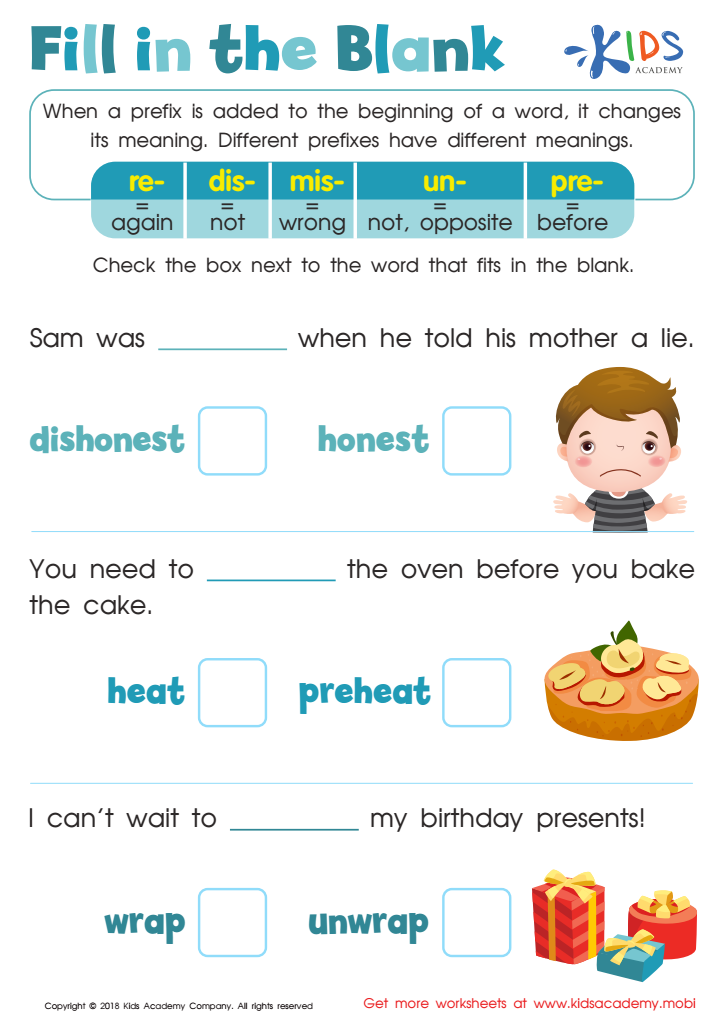
Reading: Fill in the Blank Worksheet
Students can practice understanding the meaning of common prefixes with this worksheet. They read sentences and pick the correct word with the appropriate prefix to complete it. Downloadable and a great addition to reading and vocabulary resources, this helps improve comprehension with mastery of the skill!
Reading: Fill in the Blank Worksheet
Worksheet
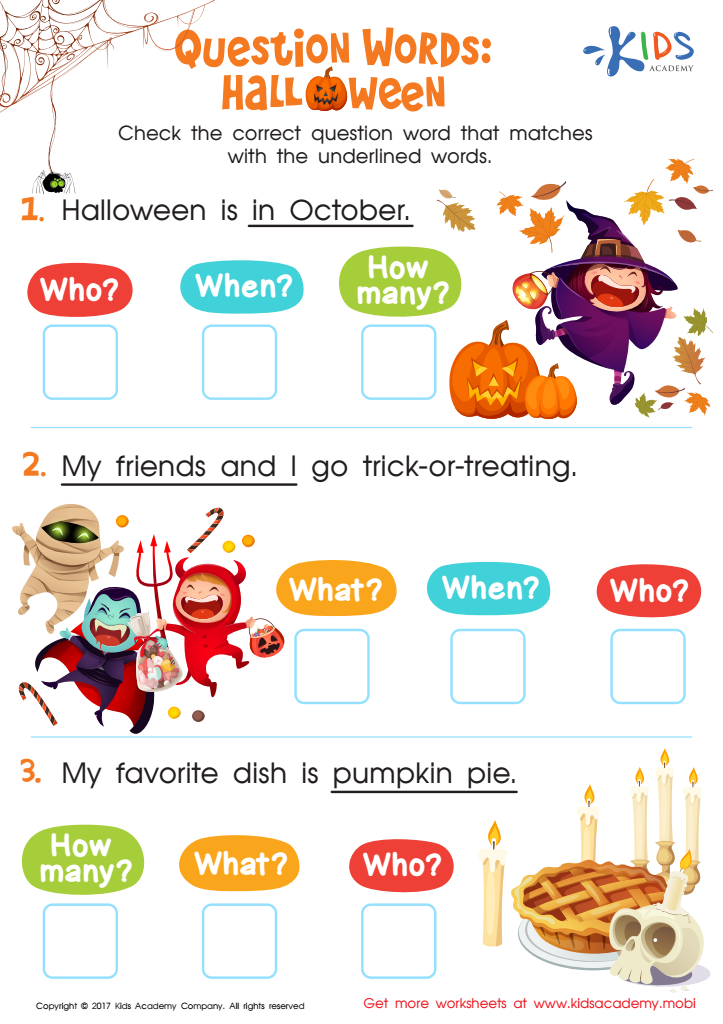
Question Words: Halloween Worksheet
Questions lead to answers, so it's important to use the right words. This Halloween-themed worksheet helps kids learn to use precise language when writing or asking a question. Just read each sentence, noting the underlined phrases, and pick the question word that fits. Have spooky fun!
Question Words: Halloween Worksheet
Worksheet
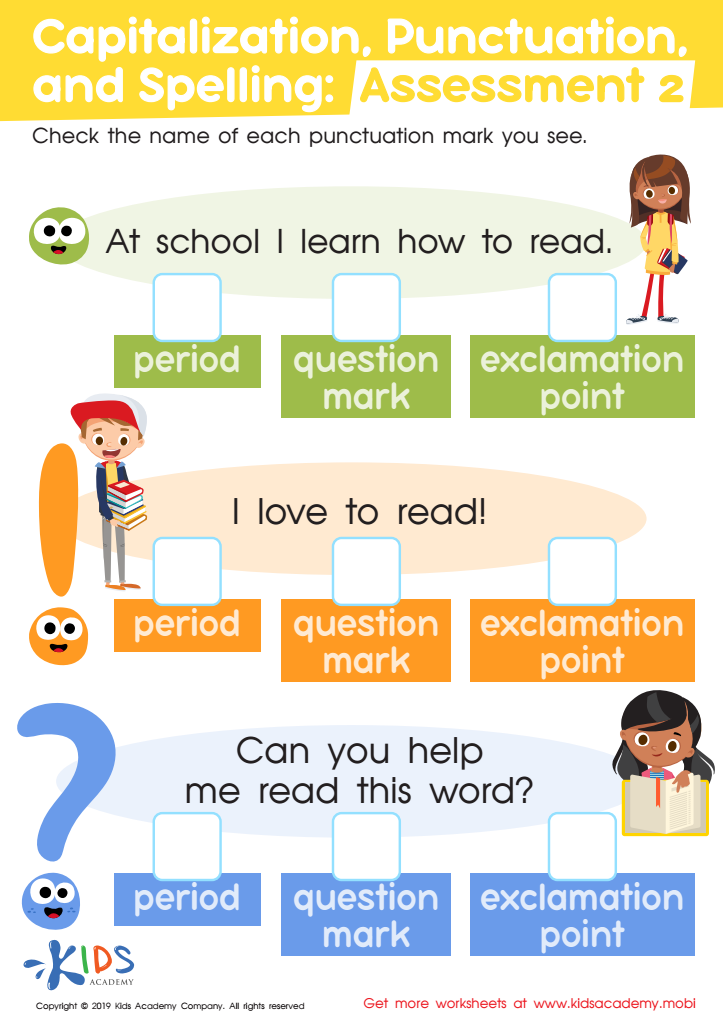
Capitalization. Punctuation. Spelling: Assessment 2 Worksheet
Teach your kids the basics of punctuation. Ask them to name the punctuation marks they know and review a worksheet together. Start with the full stop, question mark and exclamation mark. Show them examples and explain the differences between a comma and semi colon. Teaching proper use of punctuation marks is key to their development.
Capitalization. Punctuation. Spelling: Assessment 2 Worksheet
Worksheet
Join Kids Academy for Free
Who is primarily going to use this learning content?







Comprehension skills in writing are crucial for children aged 4-9 because they form the foundation for successful communication and academic achievement. During these formative years, children transition from learning to read and write to using these skills to express their ideas and understand information.
Firstly, strong comprehension skills enable children to construct meaningful sentences and narratives. They learn to identify main ideas, sequence events logically, and use descriptive language, which enhances their ability to convey thoughts clearly. This not only boosts their writing abilities but also positively impacts their speaking skills and overall self-expression.
Secondly, comprehension is essential for academic success. As children progress in school, they encounter more complex texts in subjects like science, history, and math. Understanding and interpreting these texts are critical for following instructions, solving problems, and engaging with new concepts.
Finally, fostering comprehension skills supports a lifelong love of learning. When children can confidently comprehend and articulate their thoughts, they become more engaged and curious learners. They develop critical thinking skills, which are crucial for problem-solving and innovation.
Therefore, parents and teachers play a key role in nurturing these skills early on. By creating a supportive and stimulating environment, they help children build a strong foundation that underpins all future learning and communication.








