Letter recognition Writing Worksheets for Ages 4-9
5 filtered results
-
From - To
Enhance your child's literacy skills with our engaging Letter Recognition Writing Worksheets, specially designed for ages 4-9. These worksheets provide fun and interactive activities to help young learners identify and write letters confidently. With vibrant illustrations and age-appropriate exercises, children will enjoy practicing their handwriting while developing essential letter recognition skills. The curriculum aligns with educational standards, making it perfect for both homeschoolers and classroom settings. Our worksheets encourage creativity and reinforce learning through repetition and active engagement. Help your child build a strong foundation in reading and writing—explore our collection today and watch their skills grow!
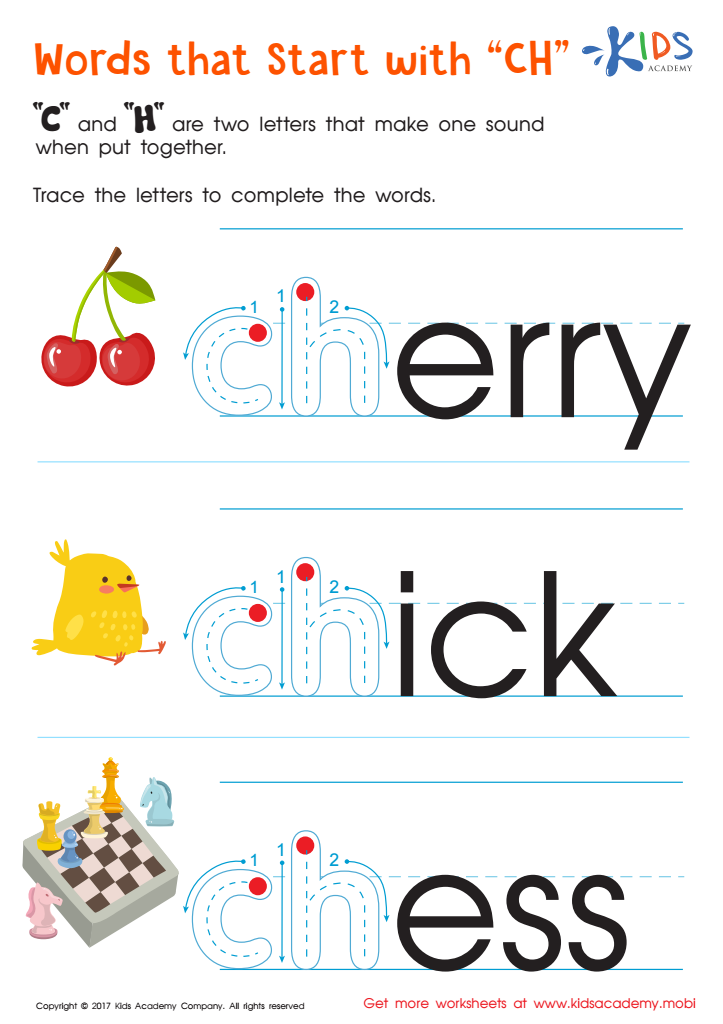
Words That Start with "ch" Spelling Worksheet
 Assign to My Students
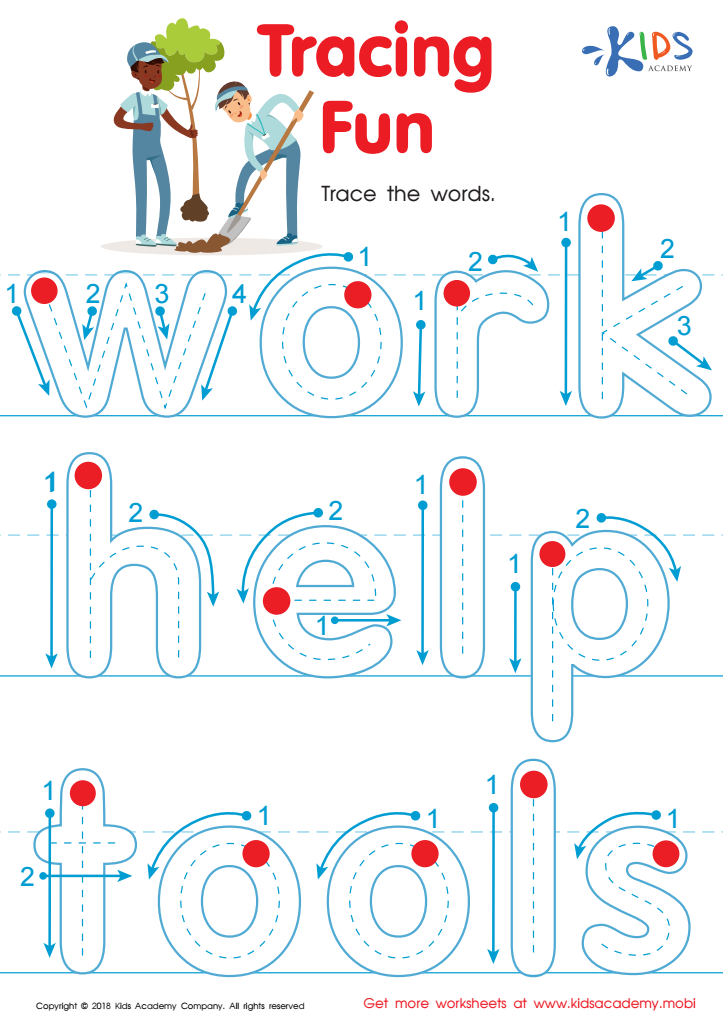
Tracing Fun Worksheet
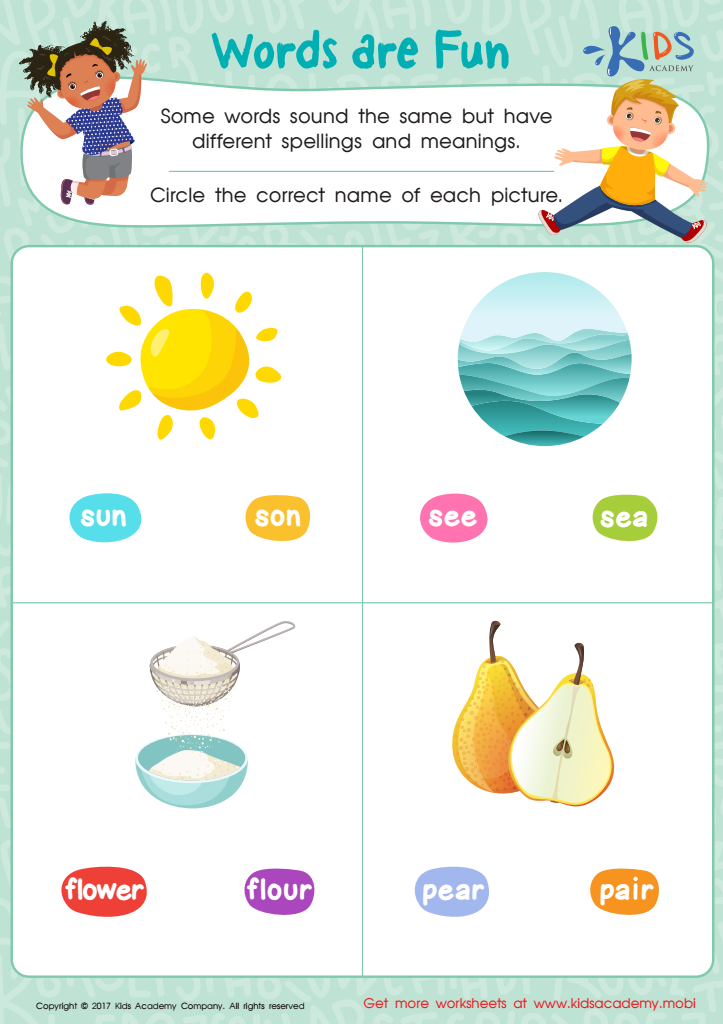
Words Are Fun Worksheet
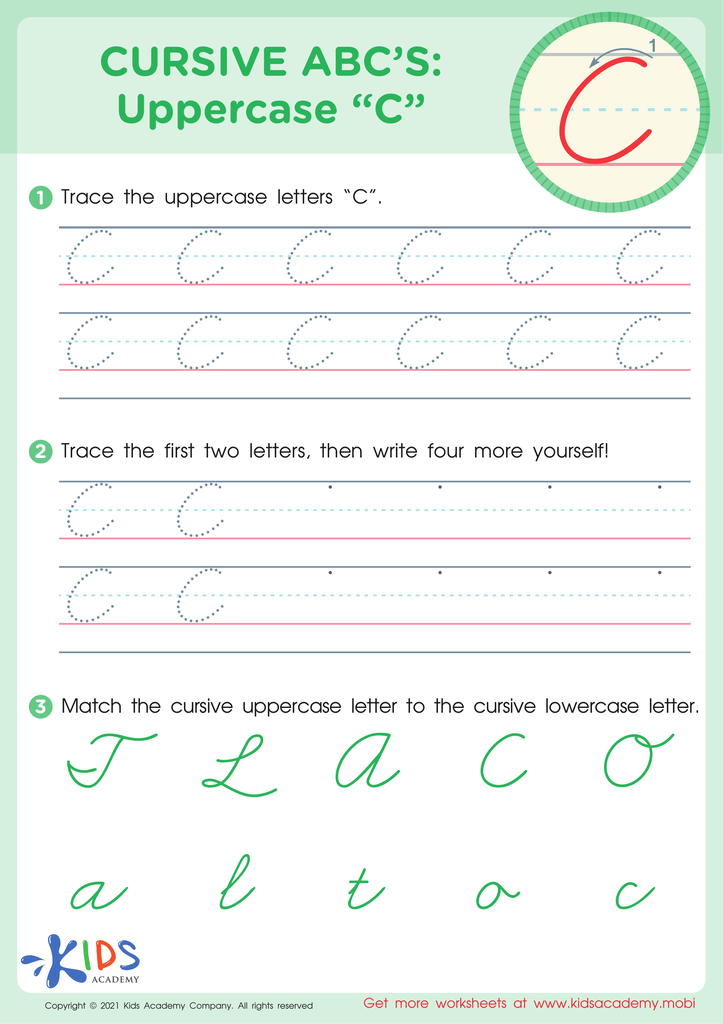
Cursive ABCs: Uppercase C
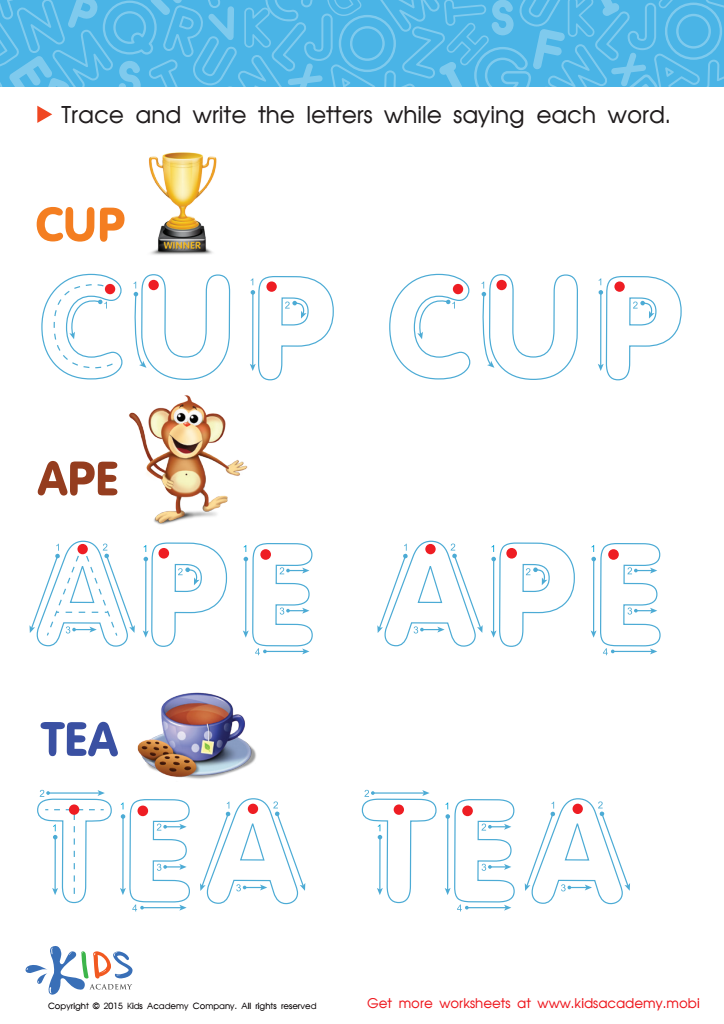
A Cup, an Ape and Tea Spelling Worksheet







Letter recognition and writing are fundamental skills for children ages 4-9, forming the bedrock for literacy development. During these formative years, children are introduced to the world of letters, which serves as a gateway to reading and writing. Recognizing letters helps children identify the sounds that correspond to each letter, a skill that is essential for phonics and early reading proficiency.
Furthermore, developmentally appropriate letter writing not only hones fine motor skills, but also enhances cognitive development. When children practice writing letters, they enhance their hand-eye coordination, dexterity, and overall muscle control. This practice ultimately plays a critical role in later writing capabilities, enabling them to express their thoughts and ideas clearly.
Additionally, early letter recognition builds confidence. As children master letters, they become more enthusiastic about learning and more engaged in classroom activities. This engagement lays a strong foundation for their educational journey, influencing their ability to succeed in literacy and other academic areas.
For teachers and parents, fostering letter recognition and writing skill is essential to creating confident, capable learners who are prepared for the complexities of communication in a literate society. It is an investment in a child’s academic future and lifelong learning.








