Understanding adjectives Writing Worksheets for Ages 4-9
5 filtered results
-
From - To
Enhance your child’s vocabulary with our “Understanding Adjectives Writing Worksheets for Ages 4-9”. Tailored for young learners, these engaging worksheets introduce kids to descriptive language, helping to refine their writing skills. Each worksheet is designed to make learning fun and interactive, encouraging kids to identify and use adjectives properly. Ideal for both classroom and home use, our exercises promote critical thinking and creativity. Watch your child’s confidence grow as they master the crucial components of writing. Dive into a colorful world of adjectives with Kids Academy and lay a strong foundation for your child’s learning journey!
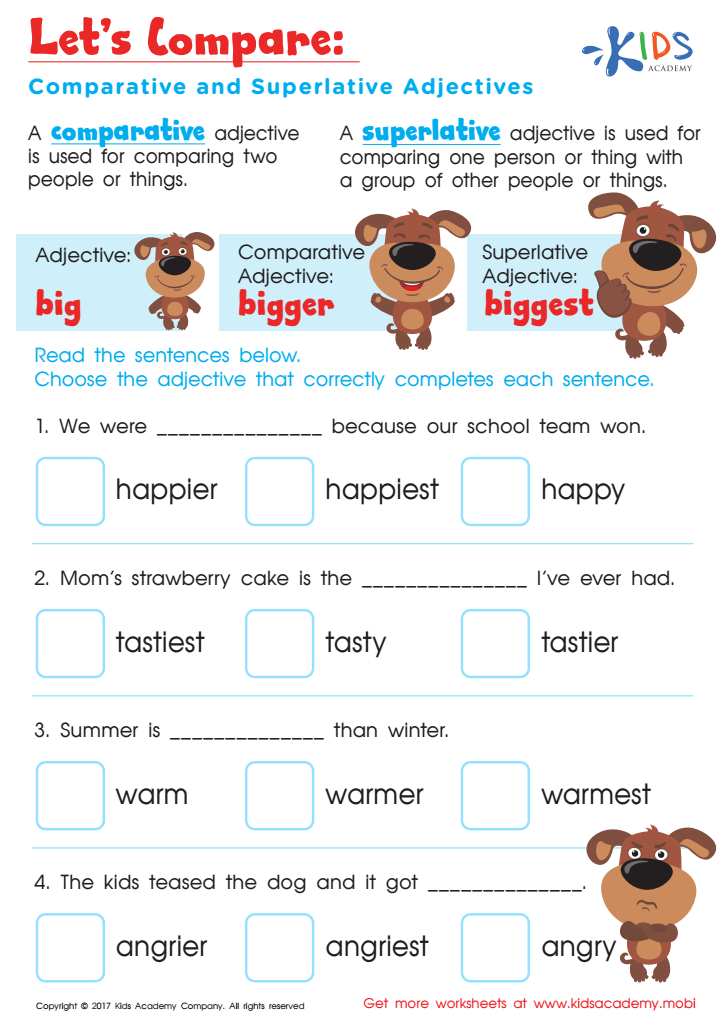
Comparative and Superlative Worksheet
 Assign to My Students
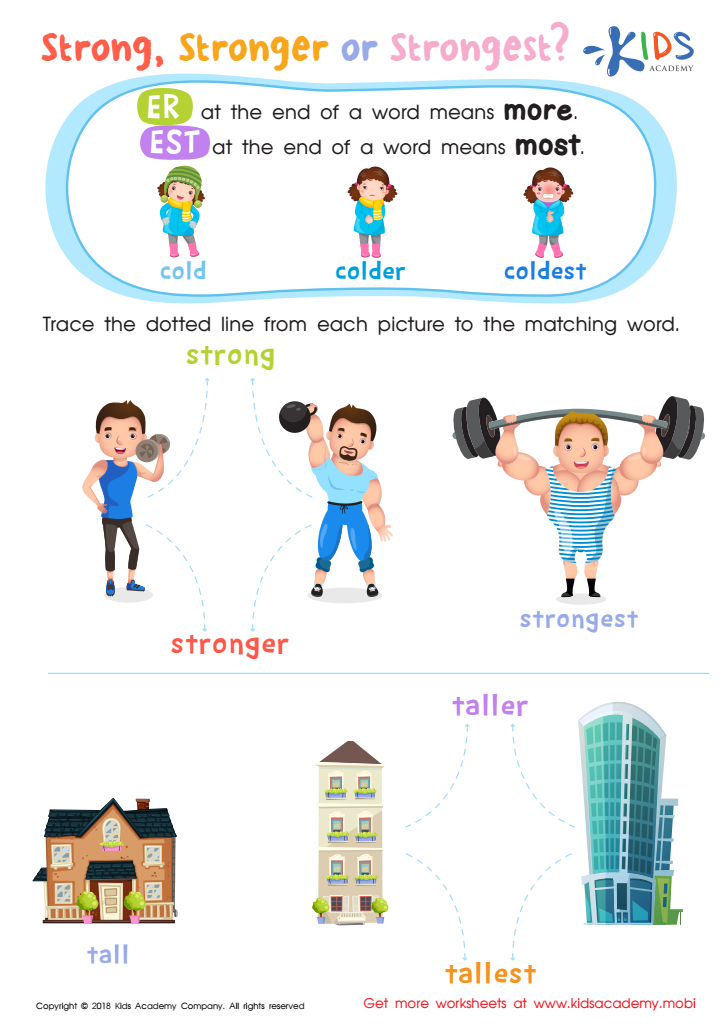
Strong or Stronger? Worksheet
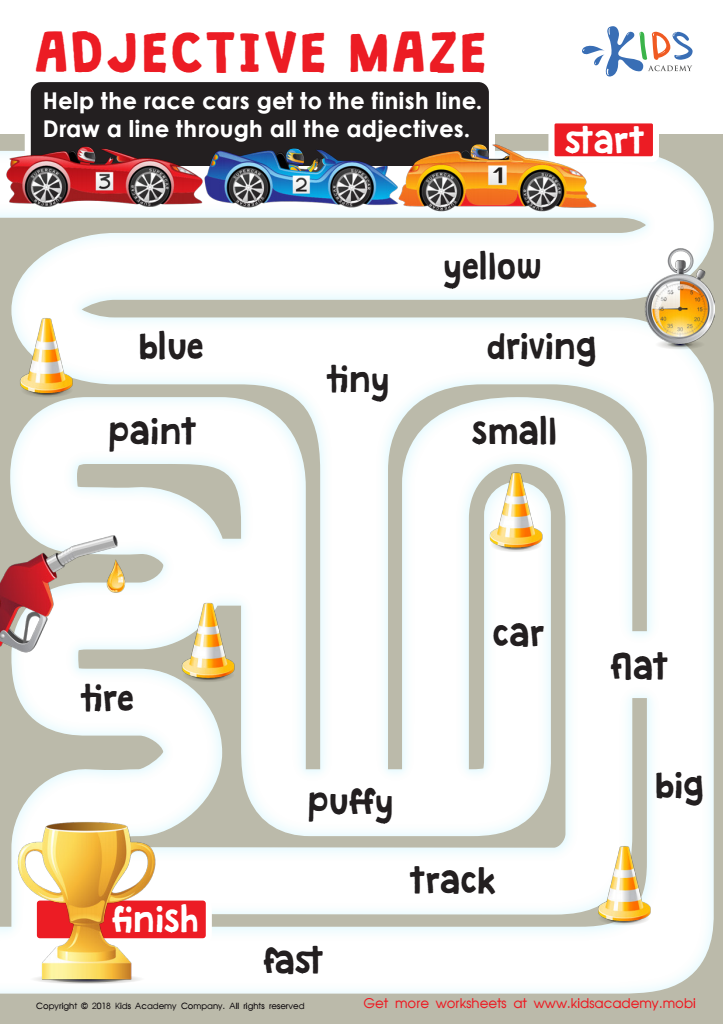
Adjective Maze Worksheet
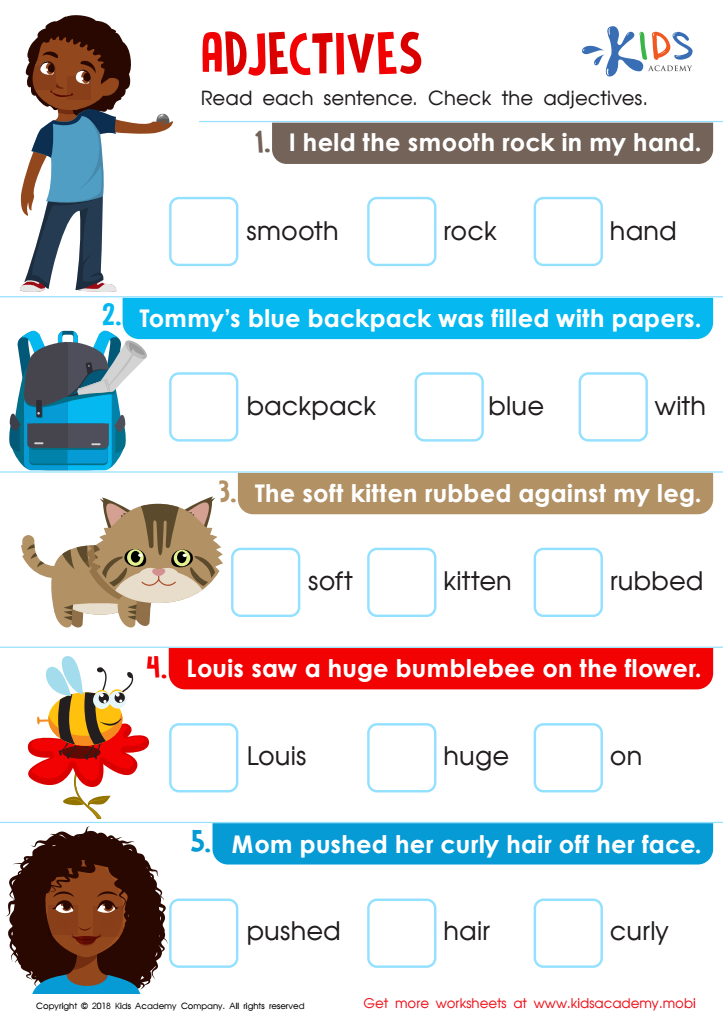
Adjectives Worksheet
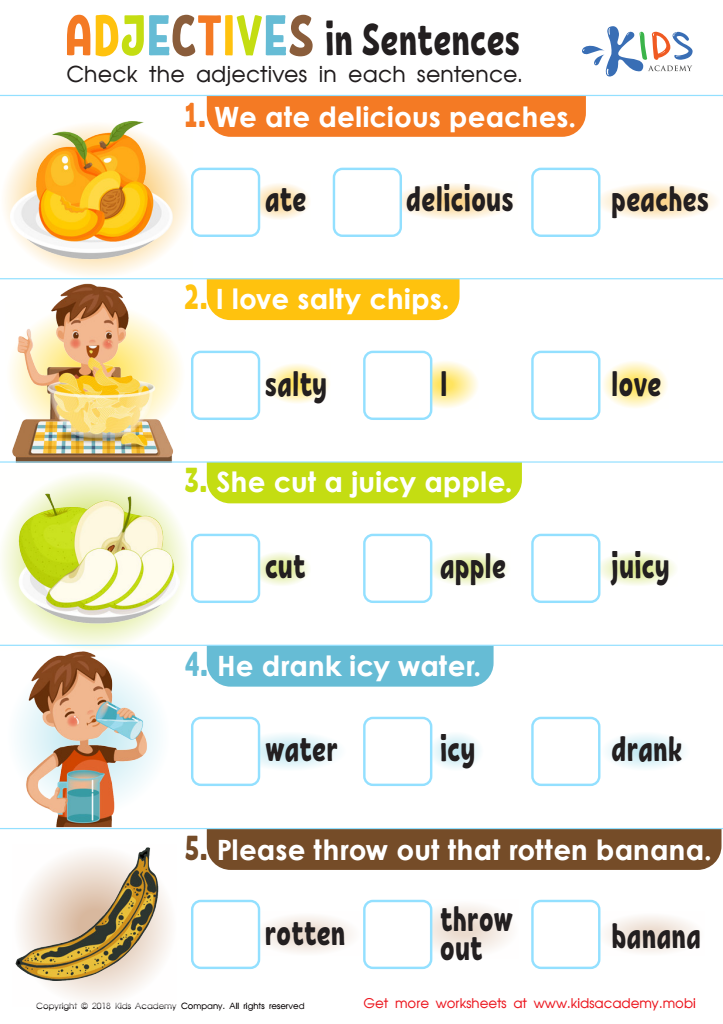
Adjectives in Sentences Worksheet








Understanding adjectives is crucial for young children, ages 4-9, as it significantly enhances their linguistic and cognitive development. Parents and teachers should care about this skill to support their child's communication abilities, promoting richer and clearer expression. By learning descriptive words, children become better able to describe objects, emotions, and experiences, expanding their vocabulary and fostering effective storytelling skills.
Moreover, using adjectives bridges the gap between basic sentence structure and more sophisticated writing. When children start writing with rich vocabulary, their ability to perform well academically improves, as they are better equipped to meet language arts standards. Adjectives also play a role in reading comprehension. When children understand and can use descriptive words, they more easily make sense of these words in reading materials, building better connections between textual elements.
Another important benefit is that it assists children in social interactions. They learn to provide and gather more detailed information from their conversations, enhancing their ability to cooperate and communicate with peers and adults.
Ultimately, understanding adjectives prepares children to articulate their thoughts and feelings more precisely, enriching their overall learning and social experiences. It empowers them to engage both imaginatively and functionally with the world, providing a solid foundation for lifelong learning and development.








