Understanding punctuation Writing Worksheets for Ages 4-9
3 filtered results
-
From - To
Discover the fun of learning punctuation with our "Understanding Punctuation Writing Worksheets" designed for ages 4-9! These engaging activities introduce essential punctuation marks, including periods, commas, question marks, and exclamation points, fostering early writing skills. Each worksheet is carefully crafted to be interactive and age-appropriate, encouraging children to recognize and correctly use punctuation in their writing. With colorful illustrations and varied exercises, these worksheets make mastering punctuation enjoyable and effective. Perfect for at-home practice or classroom use, our resources support young learners in becoming confident writers. Start your punctuation journey today and watch creativity flourish!
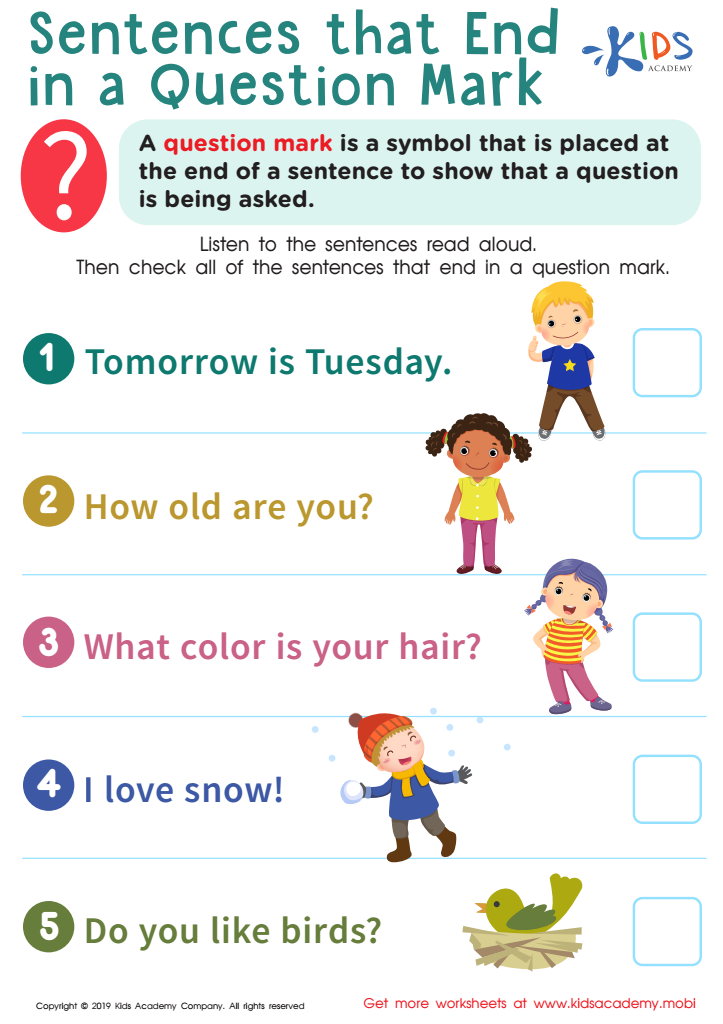
Sentences That End in an Question Mark Worksheet
 Assign to My Students
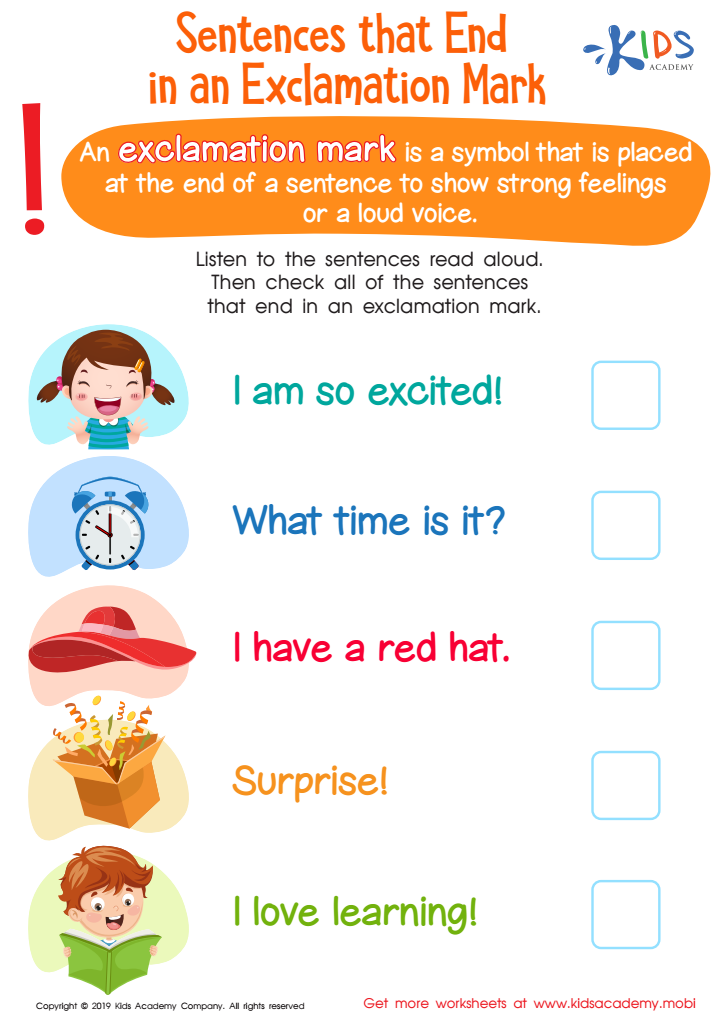
Sentences That End in an Exclamation Mark Worksheet
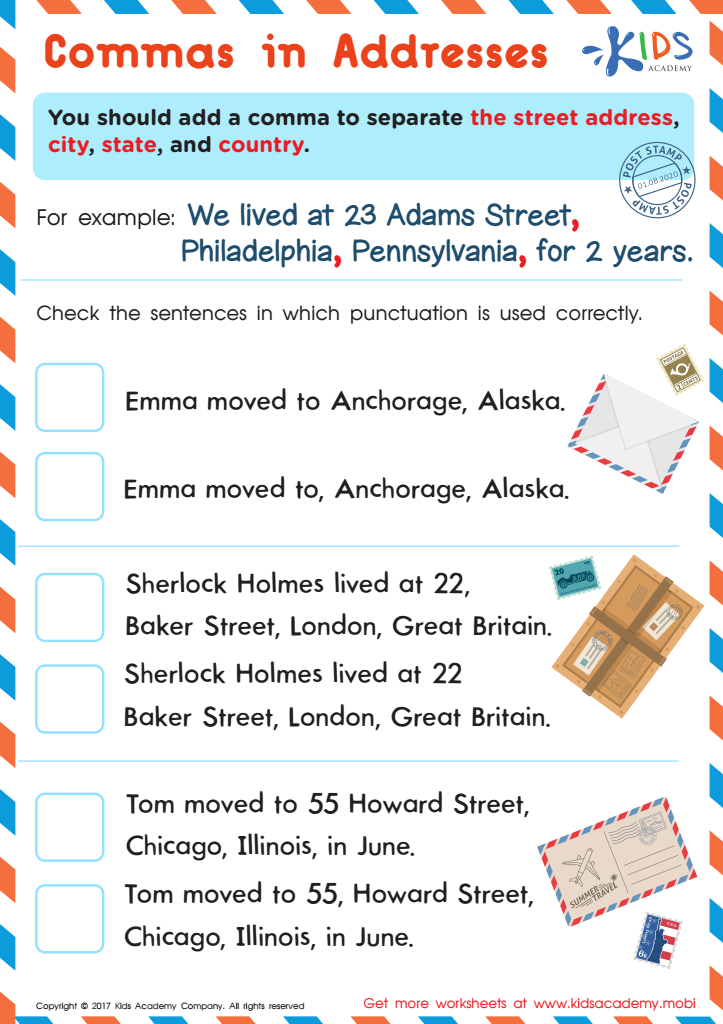
Commas in Addresses Worksheet








Understanding punctuation is crucial for children aged 4-9 as it serves as the roadmap for their writing journey. At this developmental stage, children begin to explore their thoughts, emotions, and stories through writing. Punctuation marks—like periods, commas, and question marks—play an essential role in conveying meaning and clarity. When children learn to use punctuation correctly, they can express themselves more effectively, ensuring their readers comprehend their messages.
Moreover, punctuation aids in developing reading skills. When children recognize punctuation while reading, they learn to pause, inflect, and intonate correctly, which reinforces their comprehension and engagement with the text. Additionally, early mastery of punctuation can boost confidence in writing, enabling children to articulate their ideas more freely.
For parents and teachers, supporting literacy development means fostering a love for writing and reading. By prioritizing punctuation education, they equip children with the foundational tools needed for effective communication. In an increasingly text-driven world, strong writing skills enhanced by proper punctuation are vital for academic success and beyond. Ultimately, giving children the skills to punctuate their ideas empowers them to share their voices, fostering their self-expression for years to come.








