Basic geometry understanding Geometry Worksheets for 4-Year-Olds
6 filtered results
-
From - To
Introduce early learners to the exciting world of shapes with our "Basic Geometry Understanding Geometry Worksheets" designed specifically for 4-year-olds! Perfectly tailored to young minds, these fun and interactive worksheets help children identify, trace, and match basic geometric shapes like circles, squares, and triangles. Through colorful and engaging activities, kids develop critical early math skills, enhance their pattern recognition, and improve fine motor coordination. Give your child a strong mathematical foundation and build their confidence with our expertly crafted geometry worksheets - a perfect blend of play and learning for your little one! Start their geometry journey today!
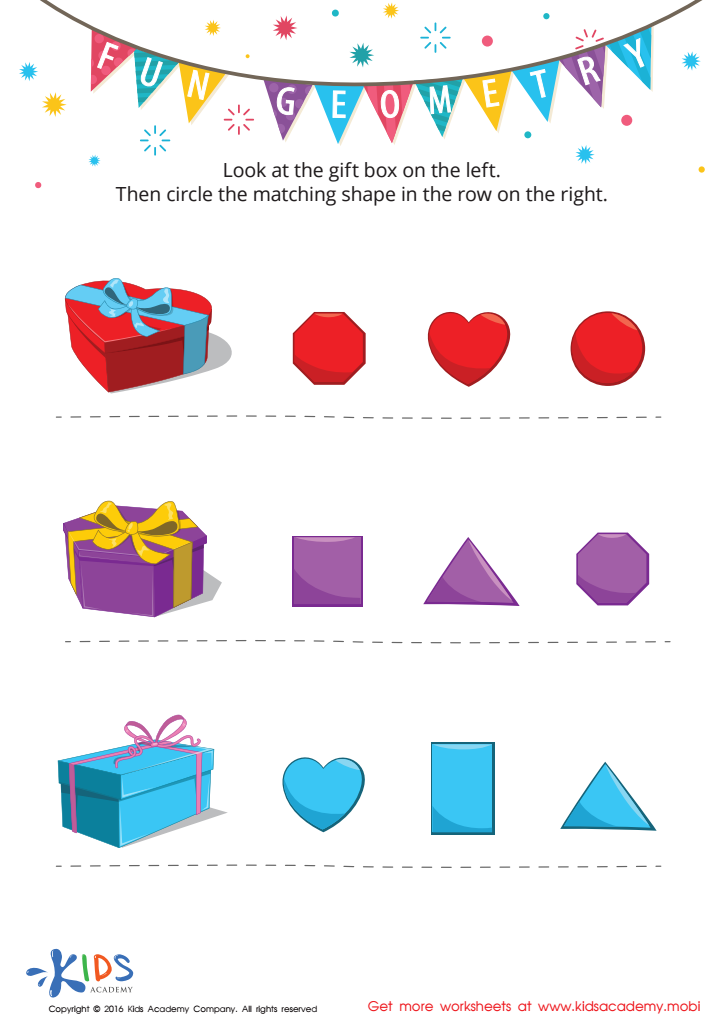
Fun Geometry Worksheet
 Assign to My Students











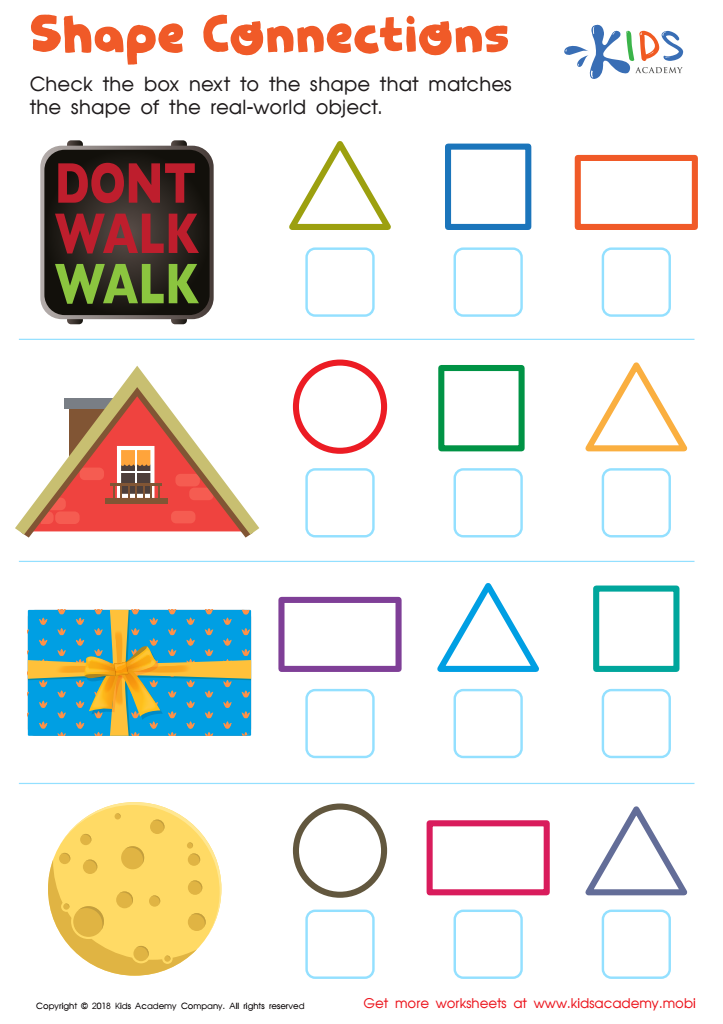
Shape Connections Worksheet
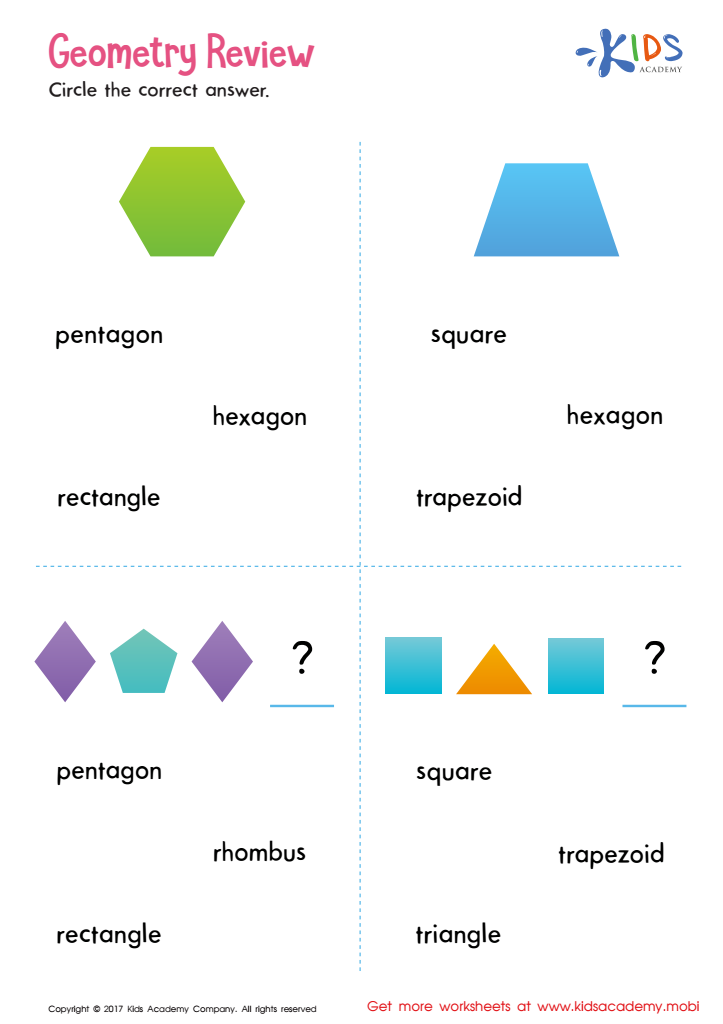
Geometry Review Printable
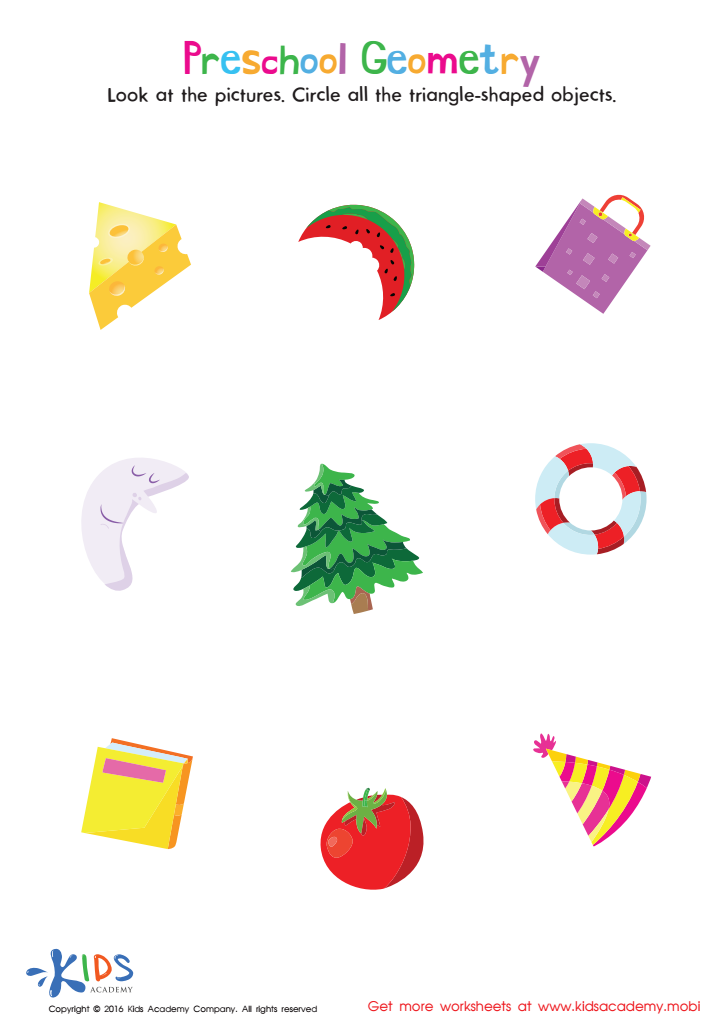
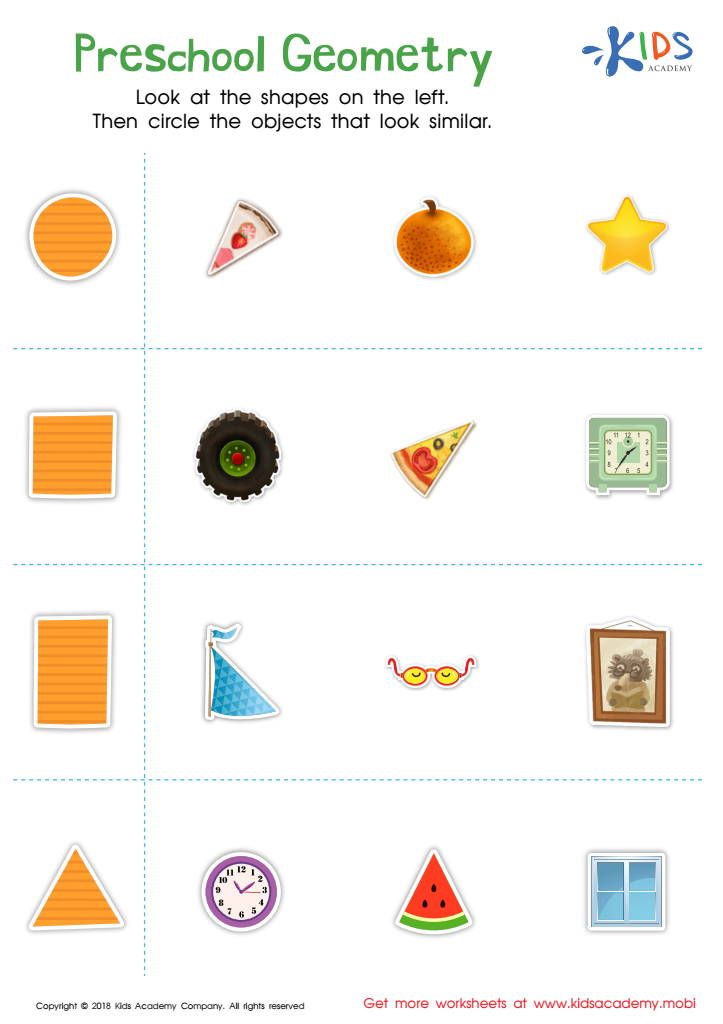
Preschool Geometry Worksheet
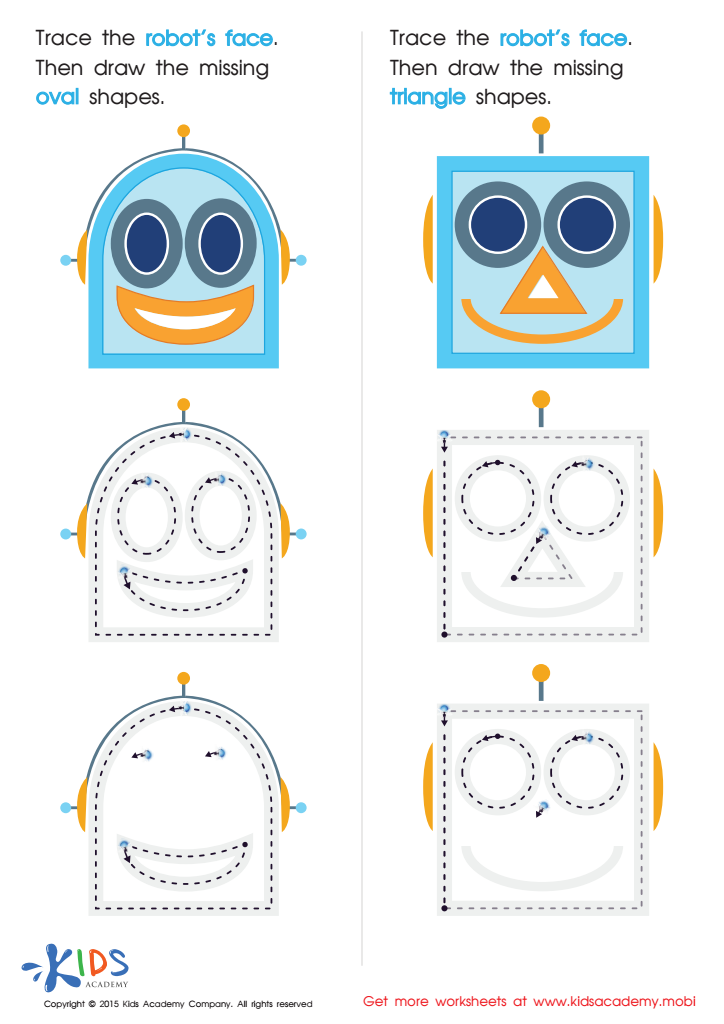
Drawing Ovals And Triangles with Fun Printable








Parents and teachers should care about fostering an understanding of basic geometry in 4-year-olds because it lays the foundation for important cognitive and motor skill development. Geometry introduces young children to shapes, sizes, spatial relationships, and patterns, which are crucial for their overall cognitive development. These concepts build critical thinking and problem-solving skills as children learn to identify, compare, and classify different shapes and forms in their environment.
Additionally, basic geometry helps to enhance fine and gross motor skills. For instance, manipulating different geometric shapes improves hand-eye coordination and dexterity. Engaging with geometric puzzles or drawing shapes aids in the development of precision and control in fine motor movements.
Understanding geometry also supports mathematical learning in later years. Familiarity with shapes and spatial reasoning prepares children for more complex math concepts, fostering confidence and a positive attitude towards the subject. Geometry encourages children to observe and explore the world around them more analytically, fostering curiosity and a sense of discovery.
Moreover, early geometry learning involves interactive and playful activities that strengthen social skills, such as teamwork and communication when children solve problems together. Therefore, parents and teachers should actively integrate basic geometry in early education to support holistic, mathematical, and social development in 4-year-olds.








