Subtraction practice Subtraction Worksheets for 4-Year-Olds
23 filtered results
-
From - To
Boost your child's early math skills with our engaging subtraction worksheets designed specifically for 4-year-olds! These fun, interactive activities make learning subtraction enjoyable and accessible. Each worksheet is tailored to young learners, focusing on foundational subtraction concepts using vivid illustrations and relatable scenarios. Children will develop critical thinking and problem-solving abilities as they learn to subtract small numbers through hands-on practice. Parents and teachers can easily print these worksheets for home or classroom use, providing a seamless blend of education and entertainment. Start your child's journey to math mastery today with our subtraction practice resources!
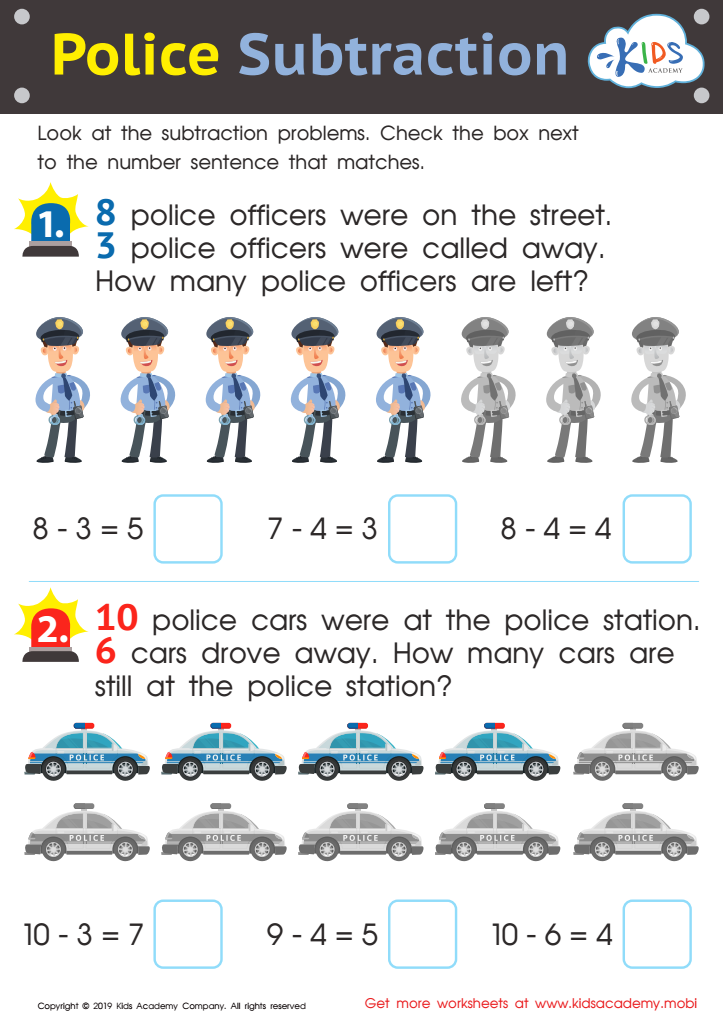
Police Subtraction Worksheet
 Assign to My Students
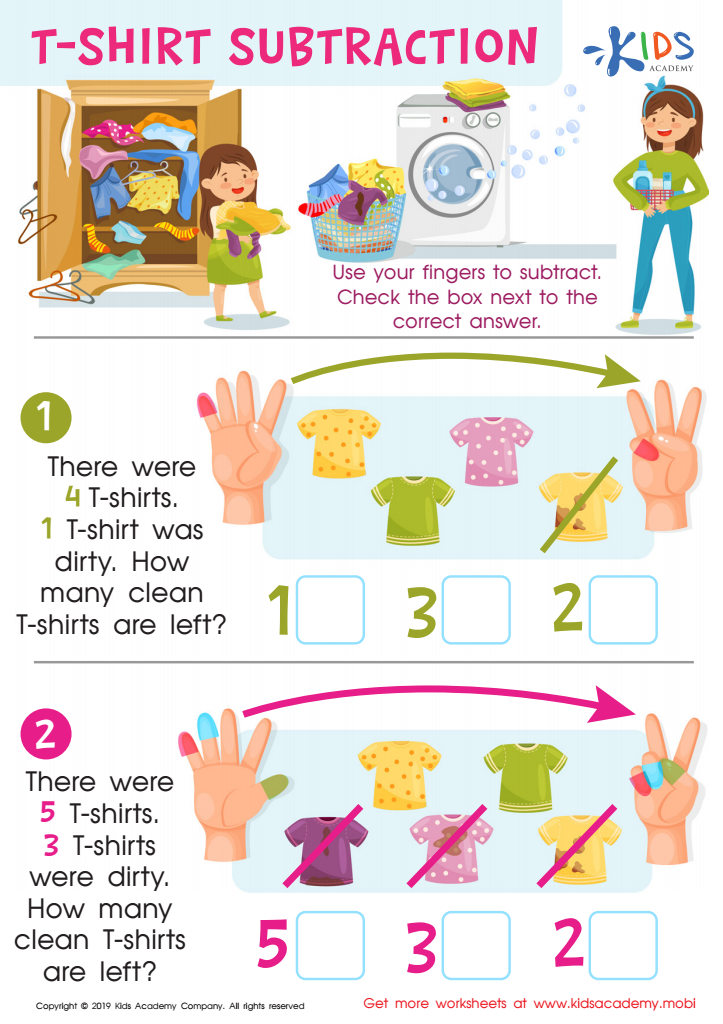
T-shirt Subtraction Worksheet
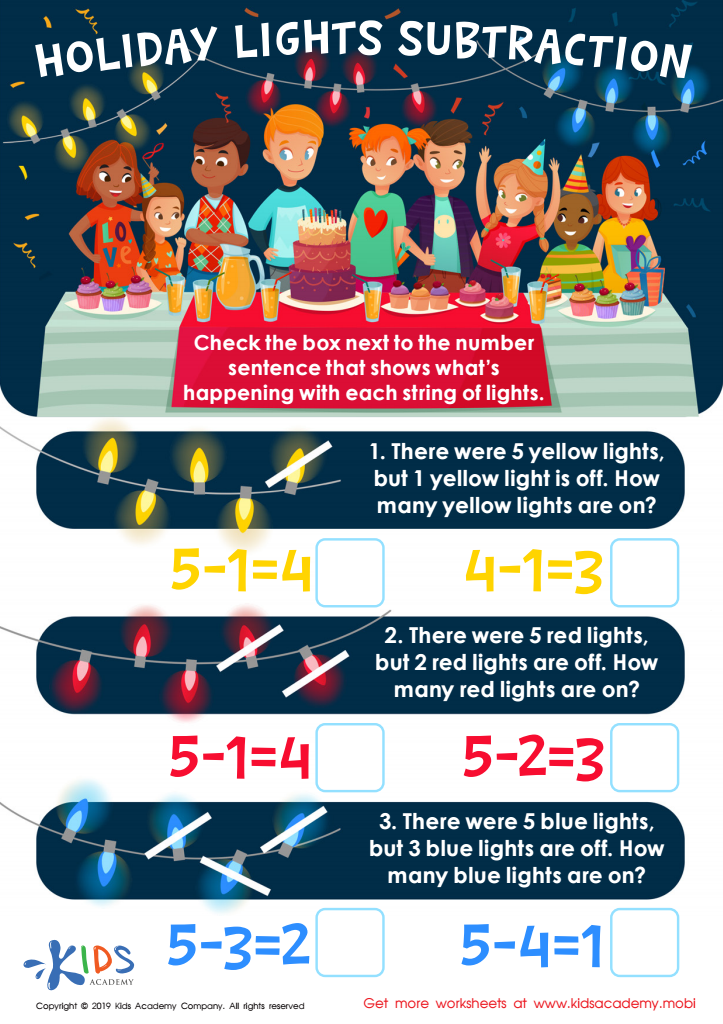
Holiday Lights Subtraction Worksheet
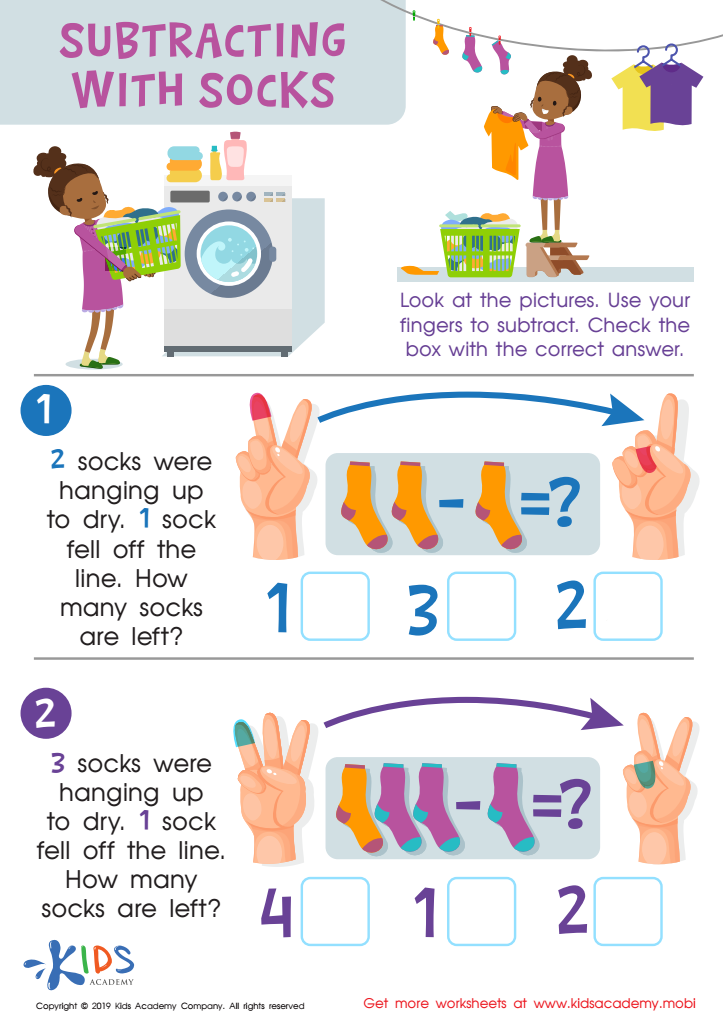
Subtracting Socks Worksheet
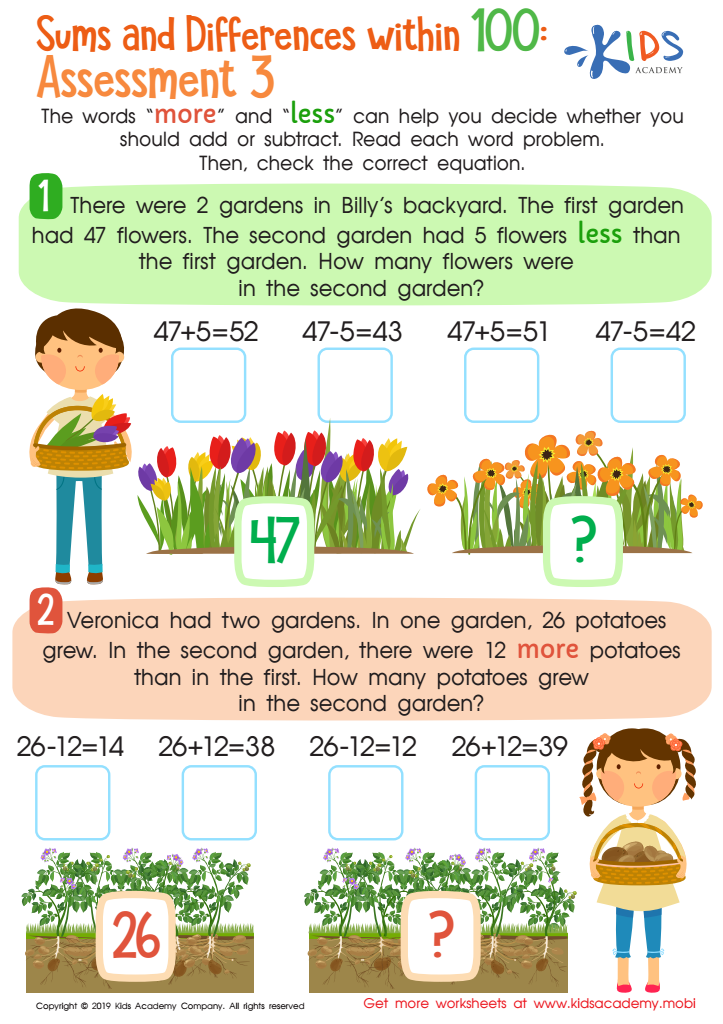
Sums and Differences Within 1 - Assessment 1 Worksheet
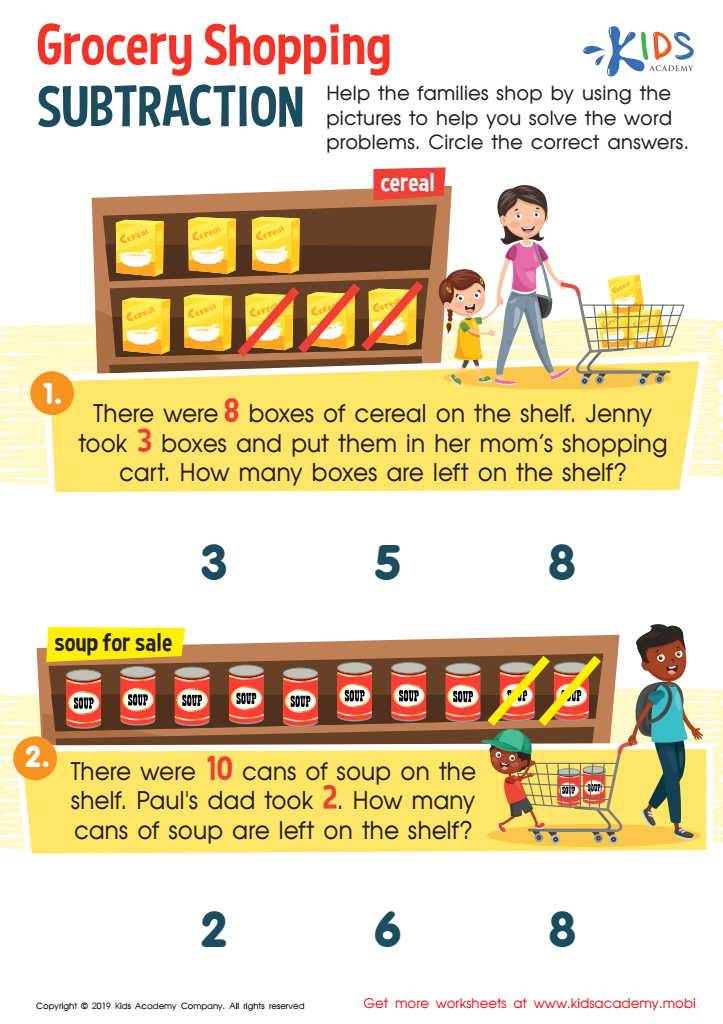
Grocery Shopping Subtraction Worksheet
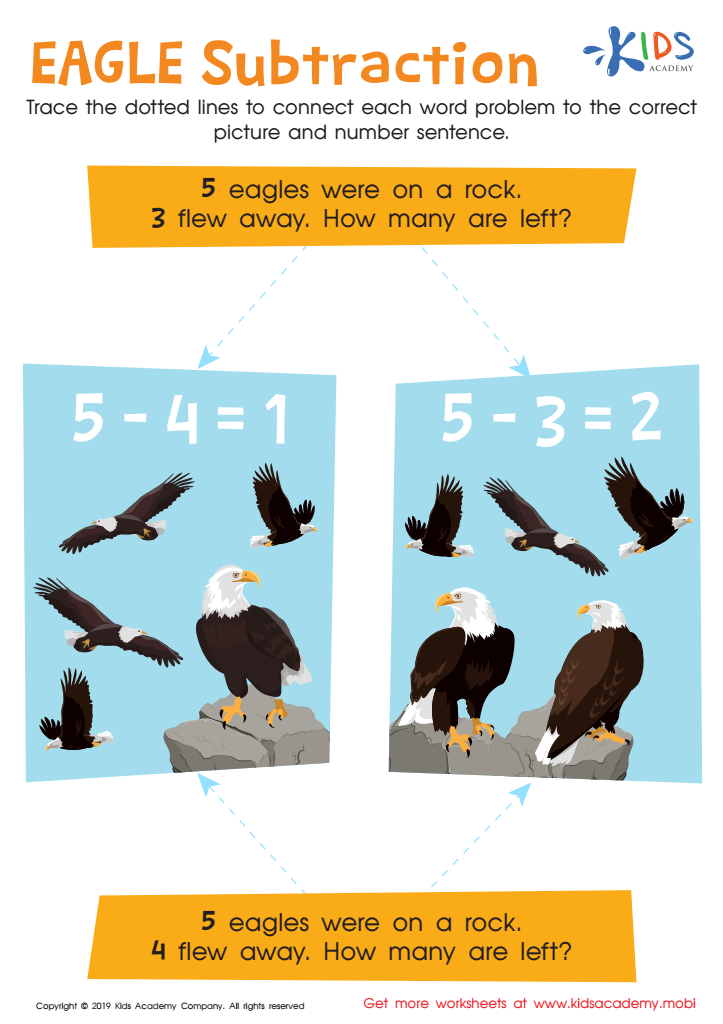
Eagle Subtraction Worksheet
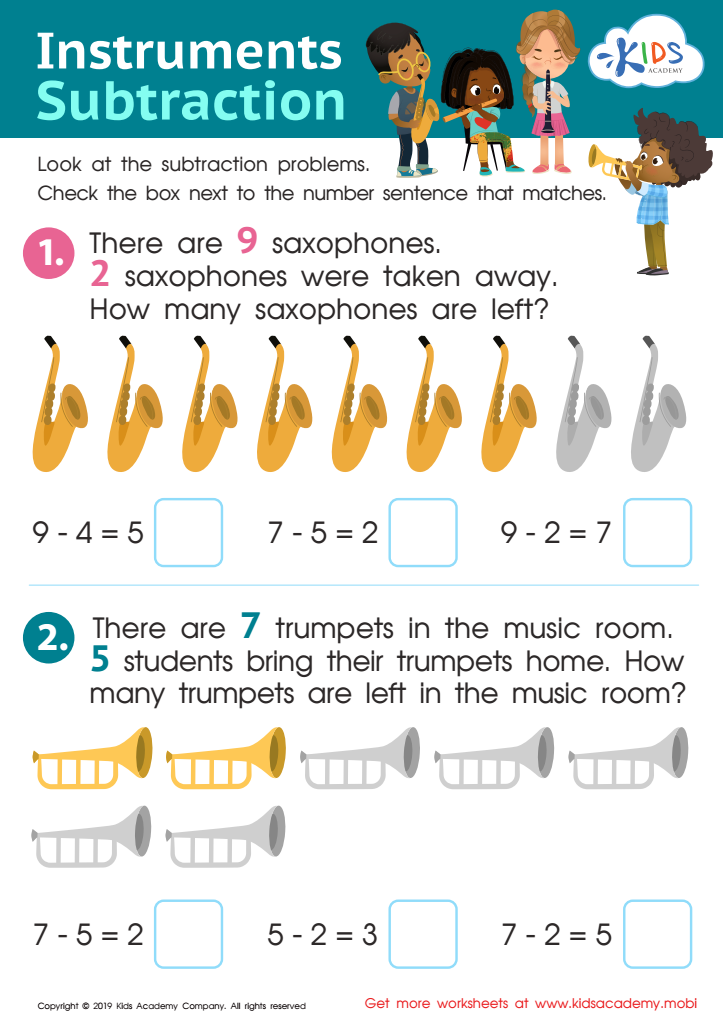
Instrument Subtraction Worksheet
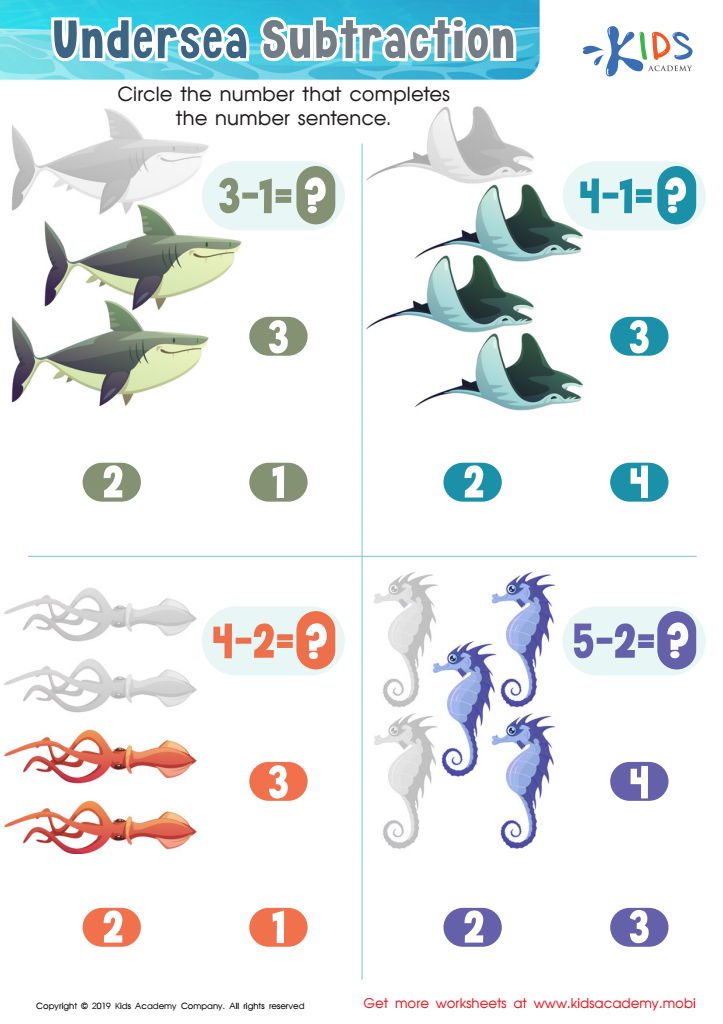
Undersea Subtraction Worksheet
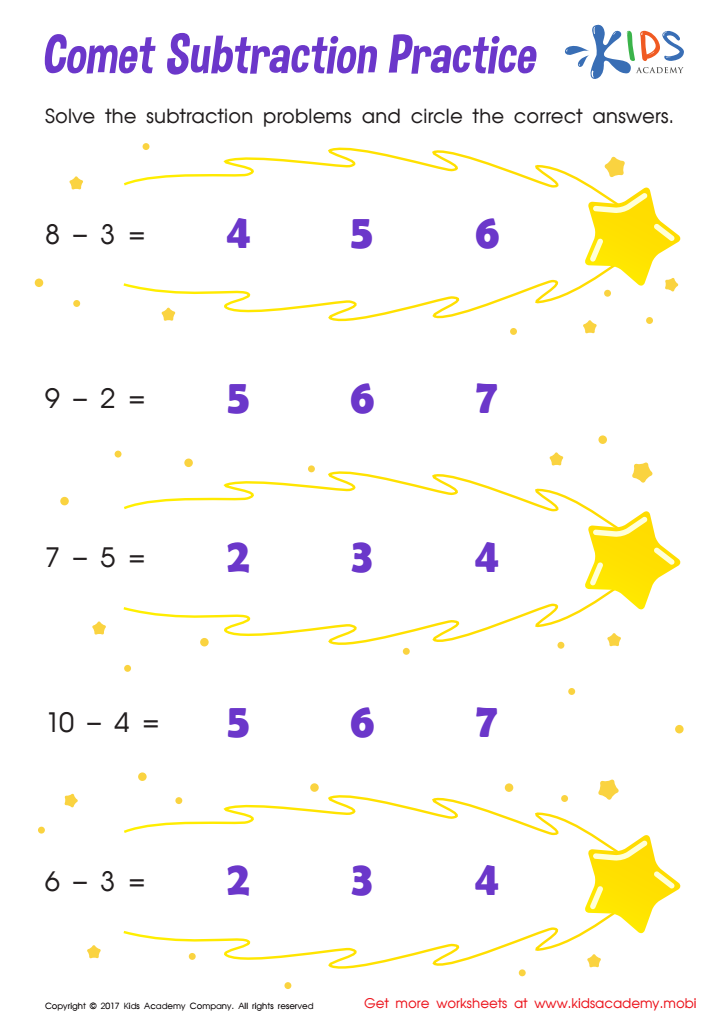
Comet Subtraction Practice Substraction Worksheet
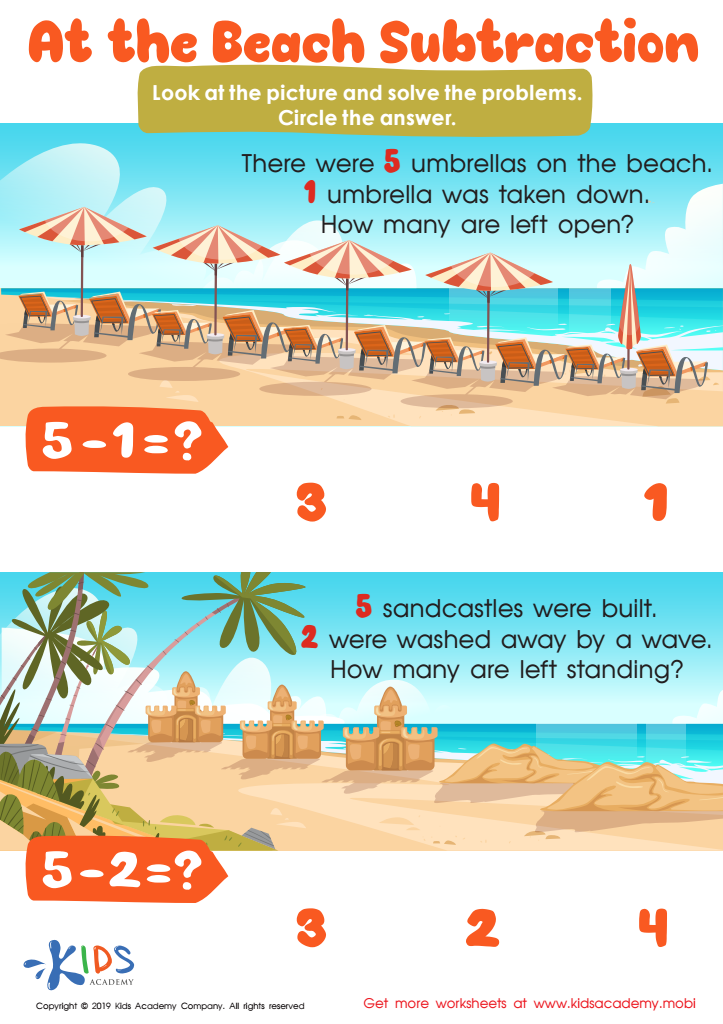
At the Beach Subtraction Worksheet
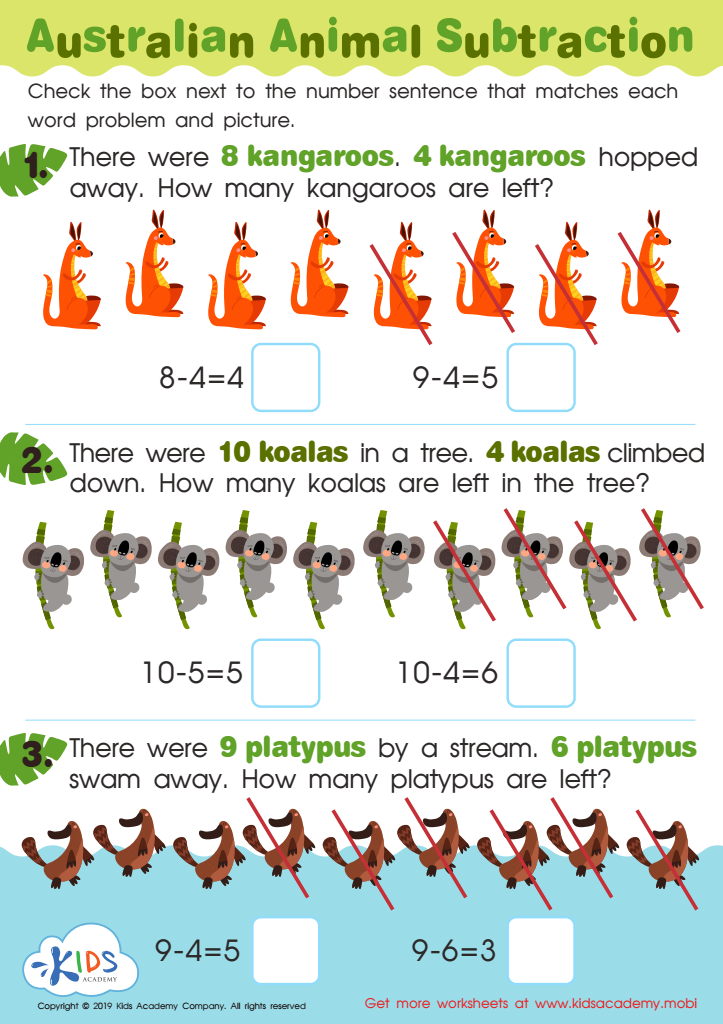
Australian Animal Subtraction Worksheet
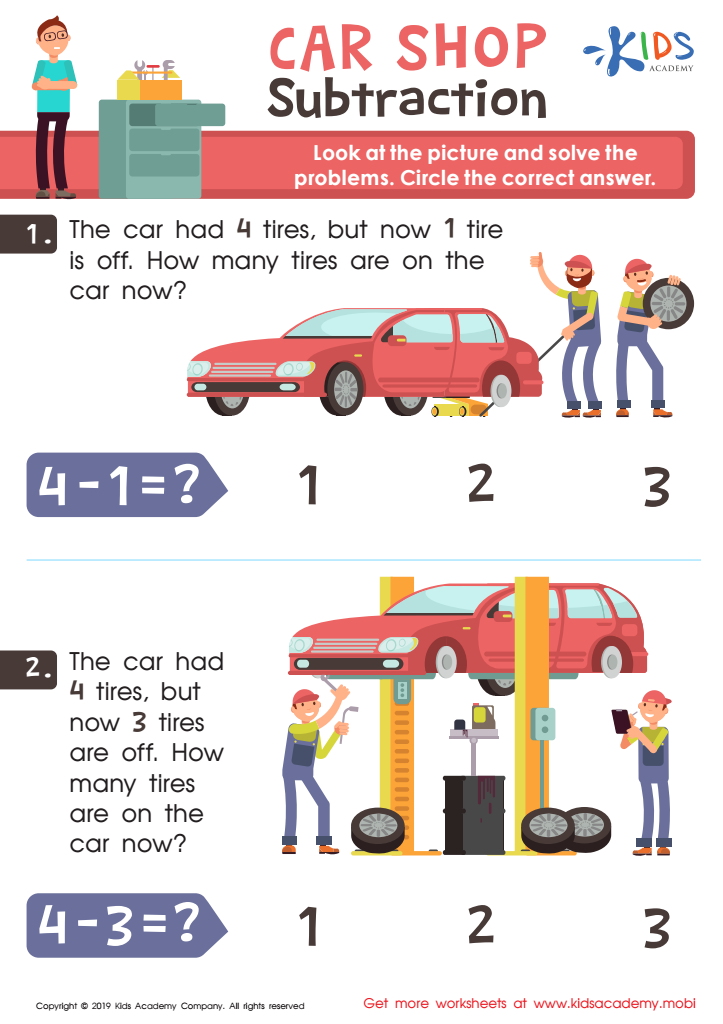
Car Shop Subtraction Worksheet
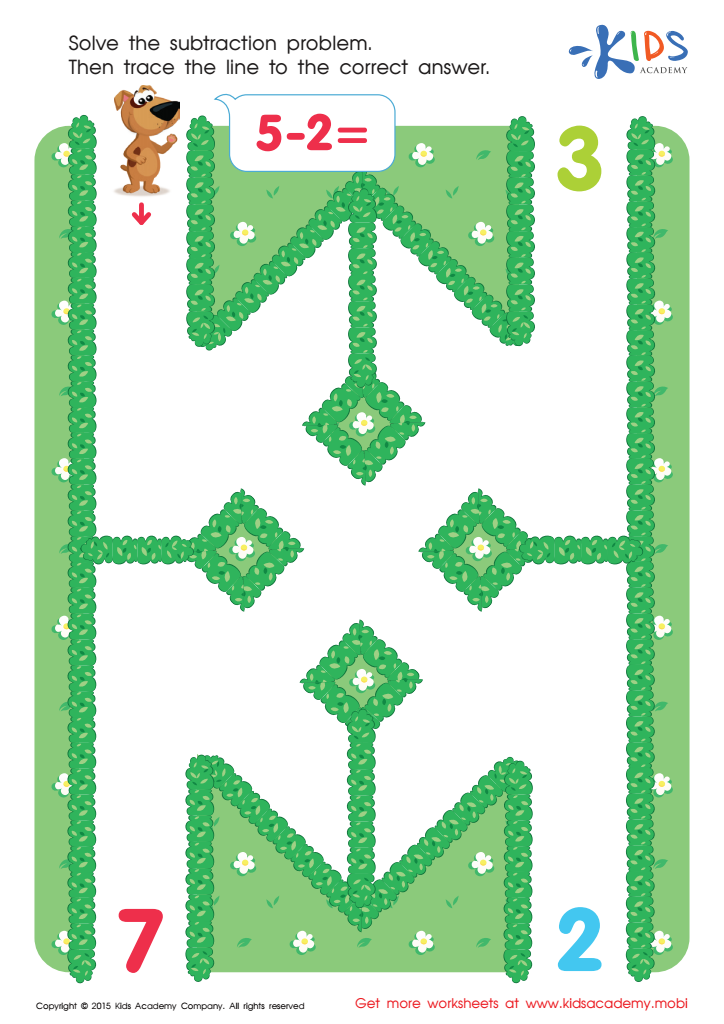
Five Minus Two Worksheet
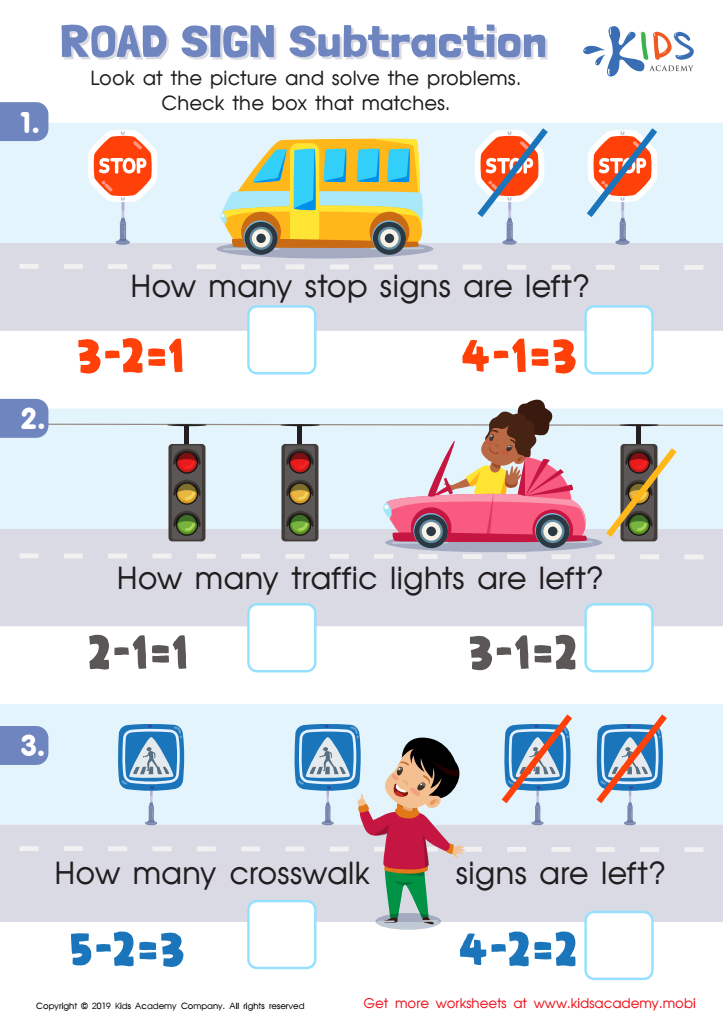
Road Sign Subtraction Worksheet
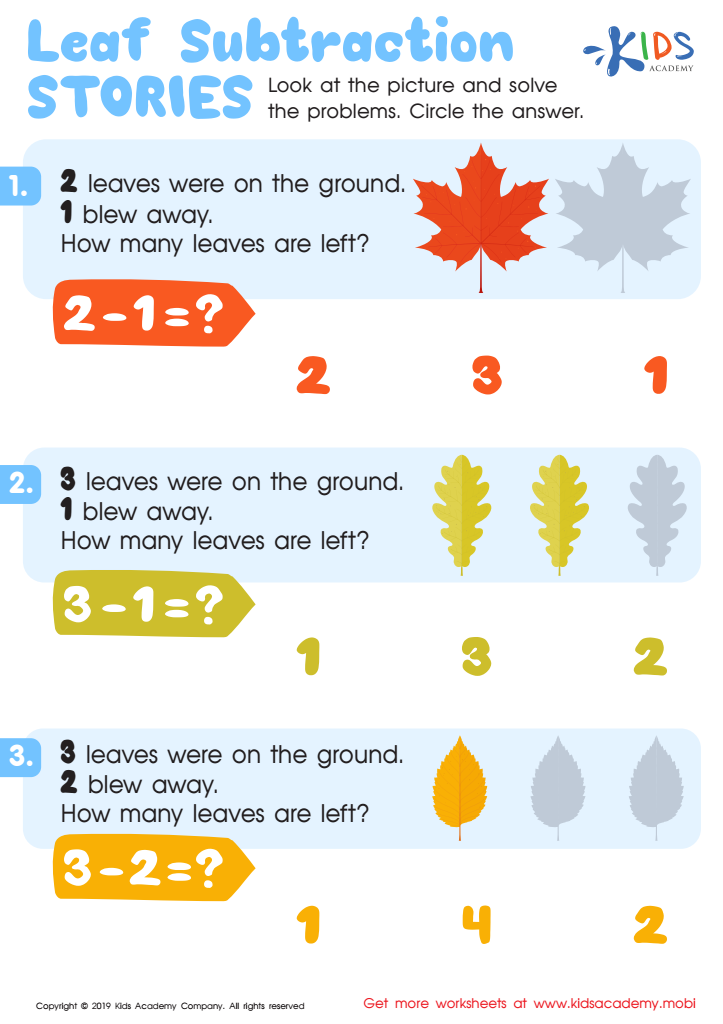
Leaf Subtraction Stories Worksheet
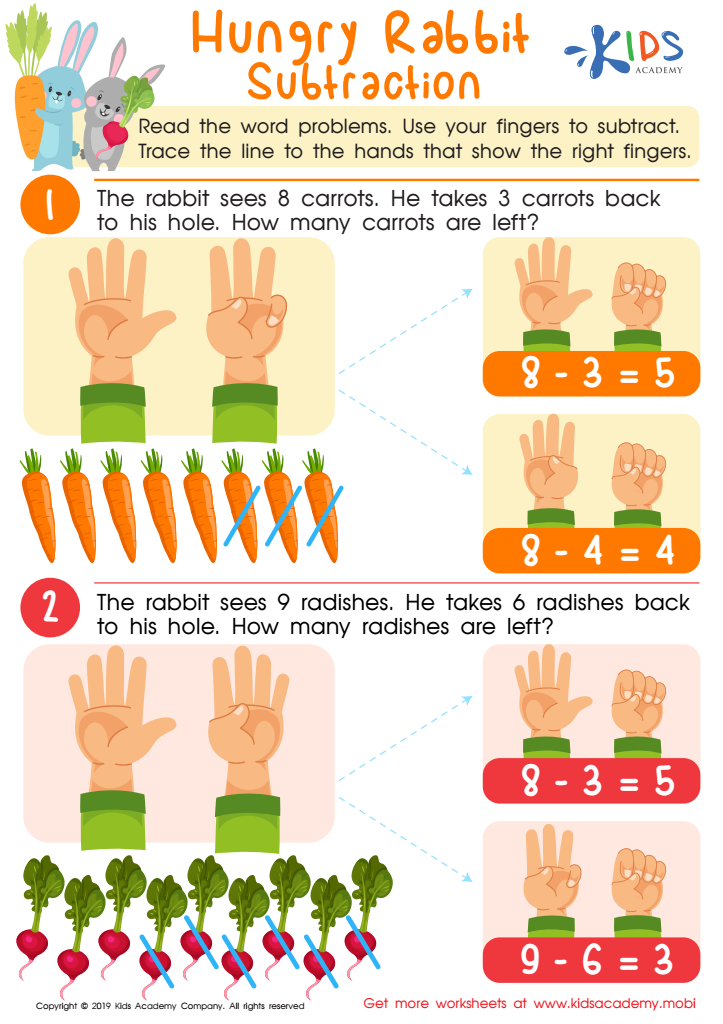
Hungry Rabbit Subtraction Worksheet
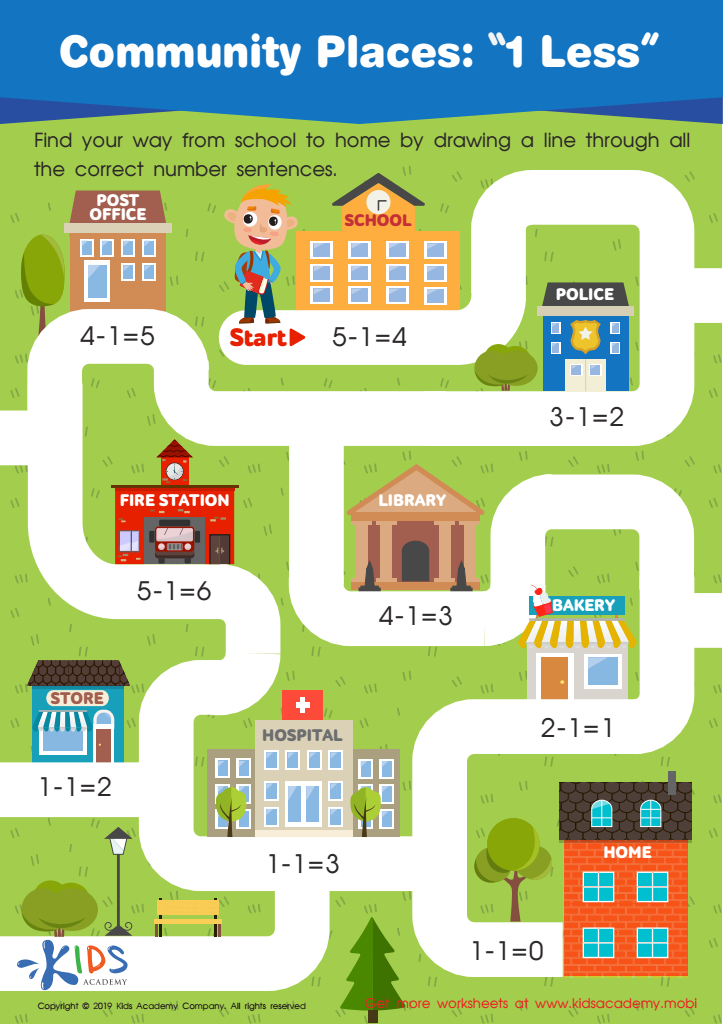
Community Places: 1 Less Worksheet
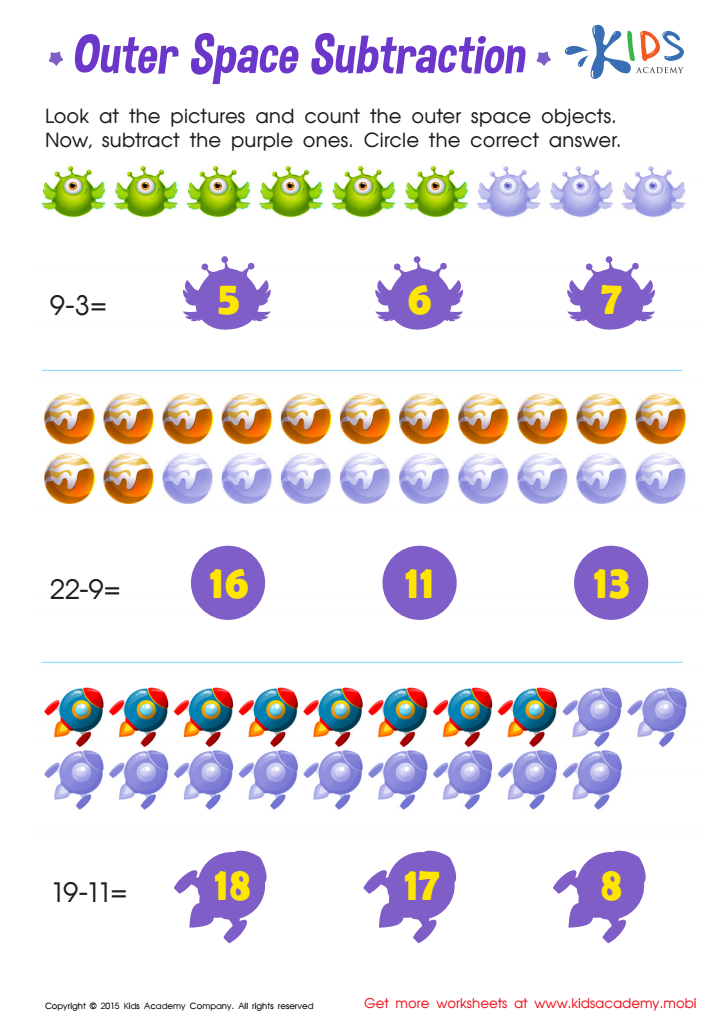
Outer Space Substraction Worksheet
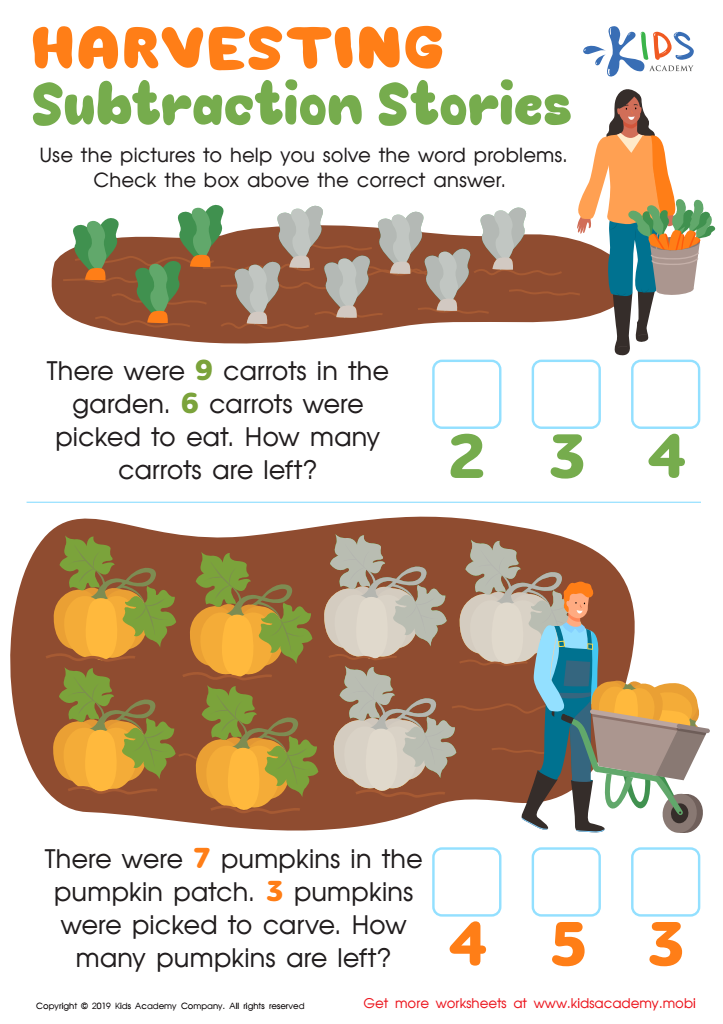
Harvesting Subtraction Stories Worksheet
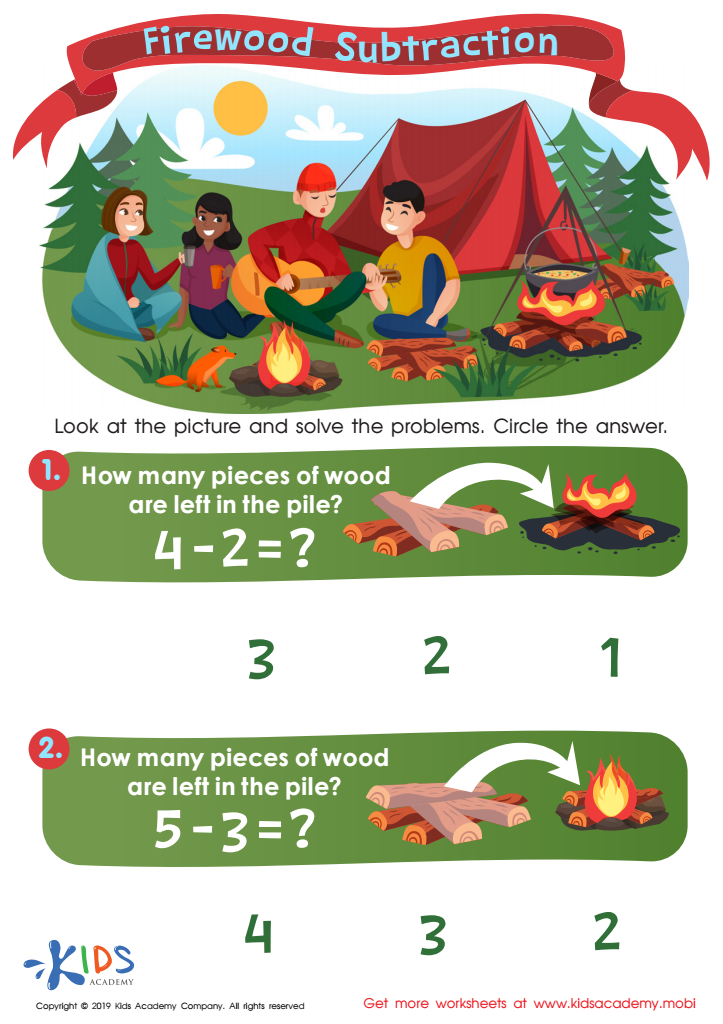
Firewood Subtraction Worksheet
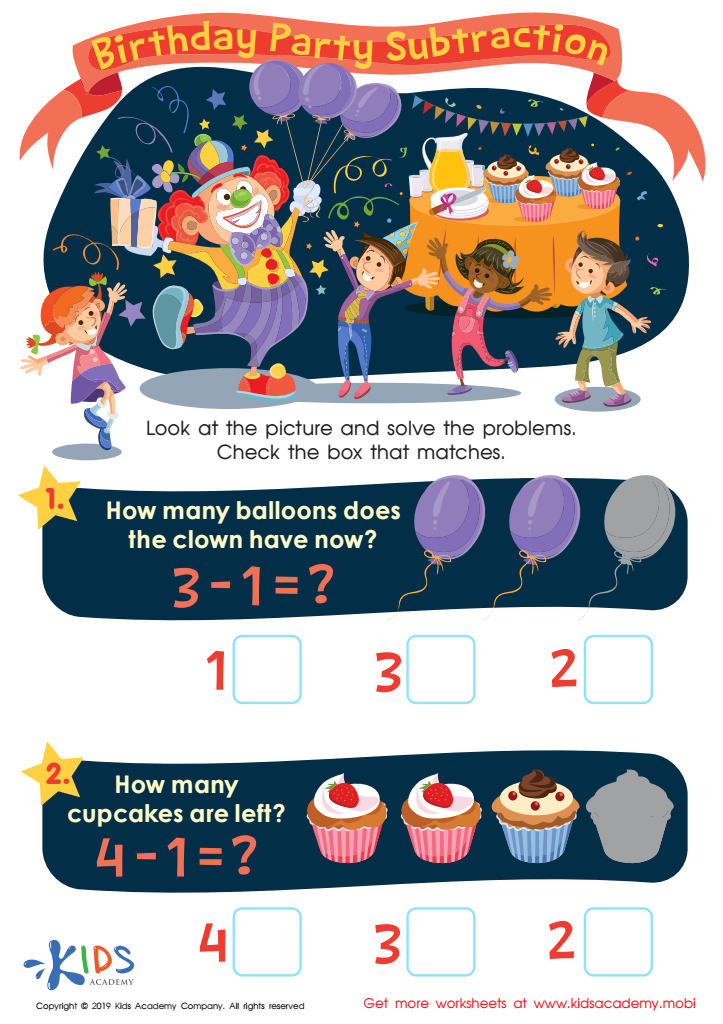
Birthday Party Subtraction Worksheet
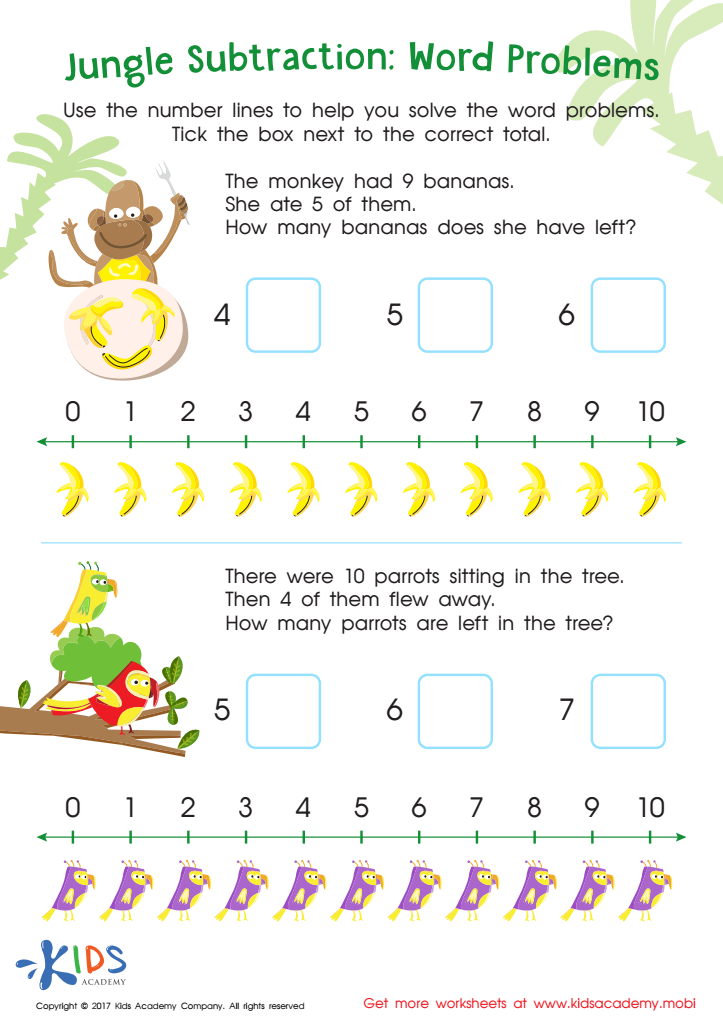
Jungle Subtraction Word Problems Substraction Worksheet








Subtraction practice for 4-year-olds is essential for their overall cognitive development and early mathematical understanding. At this age, children are naturally curious and eager to learn, making it a prime time to introduce basic math concepts. Engaging in subtraction activities helps develop critical thinking skills, spatial awareness, and the ability to solve problems.
When parents or teachers prioritize subtraction practice, it fosters a strong foundation for future learning. Mastery of basic subtraction can enhance a child's confidence in math, reducing the likelihood of math anxiety later on. Additionally, subtraction is not just about numbers; it encourages children to think abstractly, recognize patterns, and understand the relationship between different quantities.
Moreover, subtraction activities are often playful and interactive, allowing children to learn through engaging methods such as counting objects or playing games. This makes learning fun and encourages a lifelong love for math. Furthermore, regular practice strengthens fine motor skills and reinforces language development as children describe their thought processes.
In summary, emphasizing subtraction practice for 4-year-olds is crucial as it nurtures cognitive growth, builds confidence, enhances problem-solving abilities, and lays the groundwork for future academic success in mathematics.








