
Critical thinking skills Science Worksheets for 4-Year-Olds
5 filtered results
Difficulty Level
Grade
Age
-
From - To
Subject
Activity
Standards
Enhance your 4-year-old’s critical thinking abilities with our engaging science worksheets! Designed specifically for young minds, these printable resources encourage exploration, observation, and inquiry. Our carefully crafted activities promote curiosity and help children develop essential skills as they investigate the world around them. From simple puzzles to creative scenarios, each worksheet challenges kids to think independently and solve problems. Perfect for at-home learning or classroom use, our critical thinking science worksheets foster a love for science while ensuring that learning remains fun and interactive. Visit us to download your worksheets today and ignite your child's scientific imagination!
Favorites
With answer key
Interactive
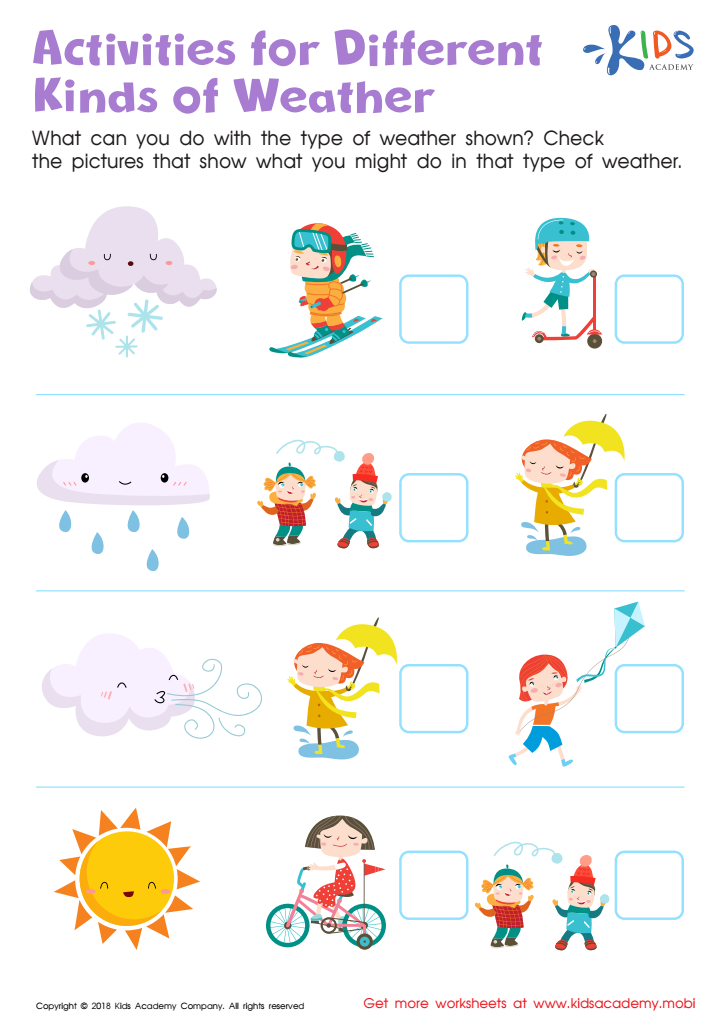
Activities for Different Kinds of Weather Worksheet
Help your child explore the changing seasons with this interactive worksheet. Ask them to name the different seasons and activities associated with each type of weather. Show the pictures and explain what they can do in that kind of weather. Have them check off the activities to help them learn and enjoy the changing seasons.
 Assign to My Students
Activities for Different Kinds of Weather Worksheet
Worksheet
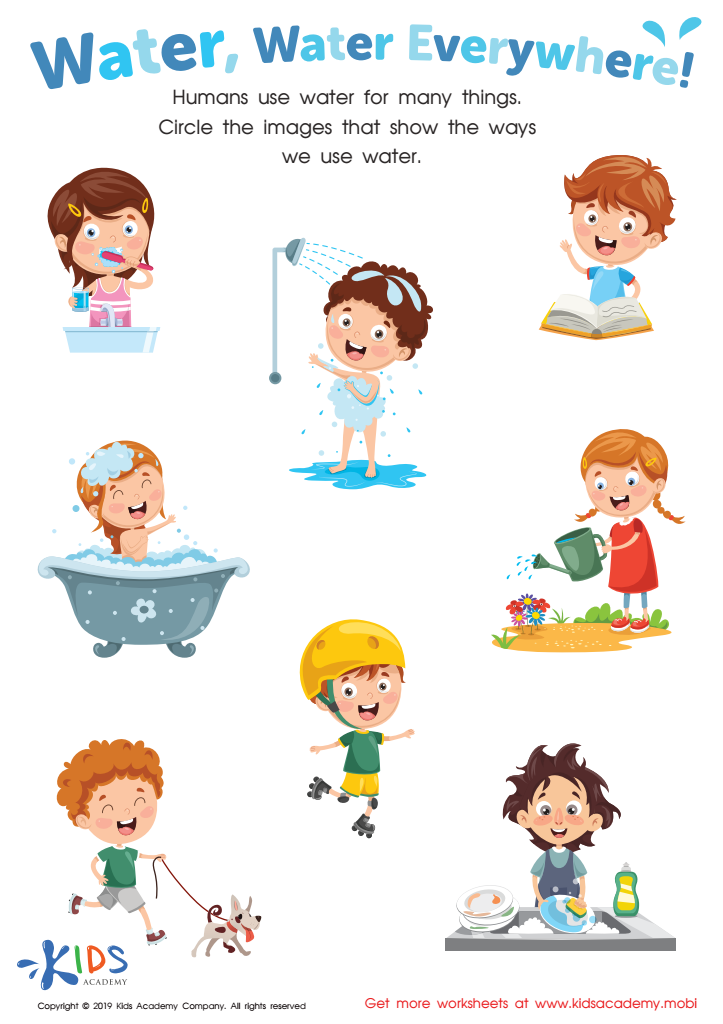
Water, Water Everywhere! Worksheet
Ask your kids how we use water daily. Point out how vital it is to the environment, as many living things couldn't exist without it. Show them this worksheet with kids doing different things that involve water. Ask them to identify what each one is doing, then help them circle the images which show the ways we use the water.
Water, Water Everywhere! Worksheet
Worksheet
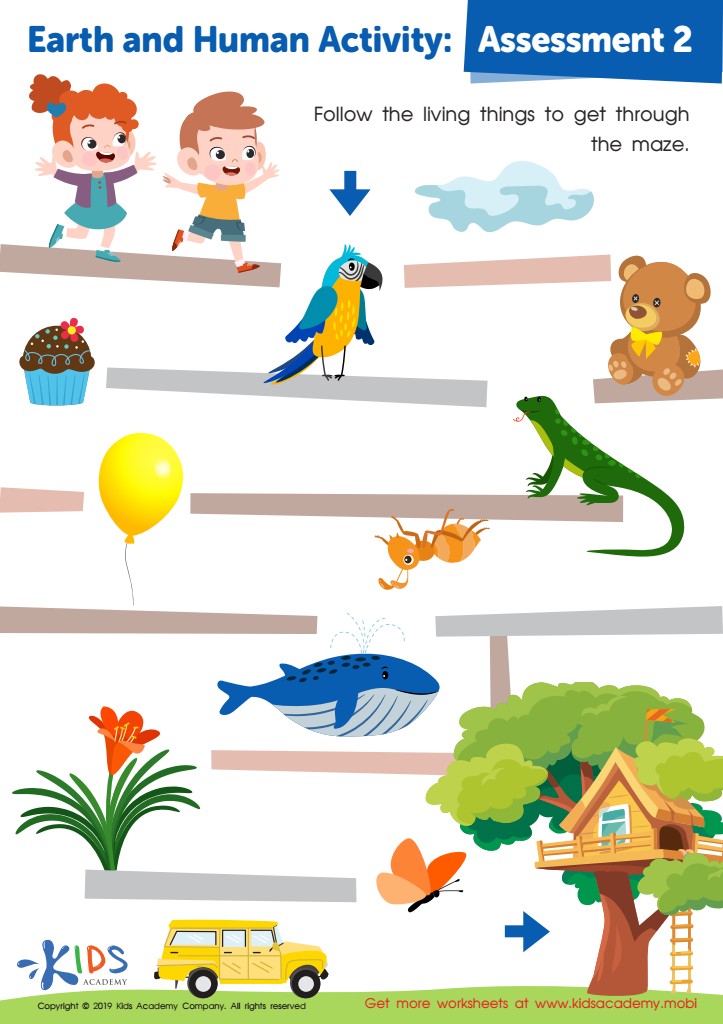
Earth and Human Activity: Assessment 2 Worksheet
Earth is alive with birds, trees, insects, and animals. Explain to your kids that the environment on Earth supports life. Ask for examples, then use the worksheet pictures to help them identify living things and complete the maze.
Earth and Human Activity: Assessment 2 Worksheet
Worksheet
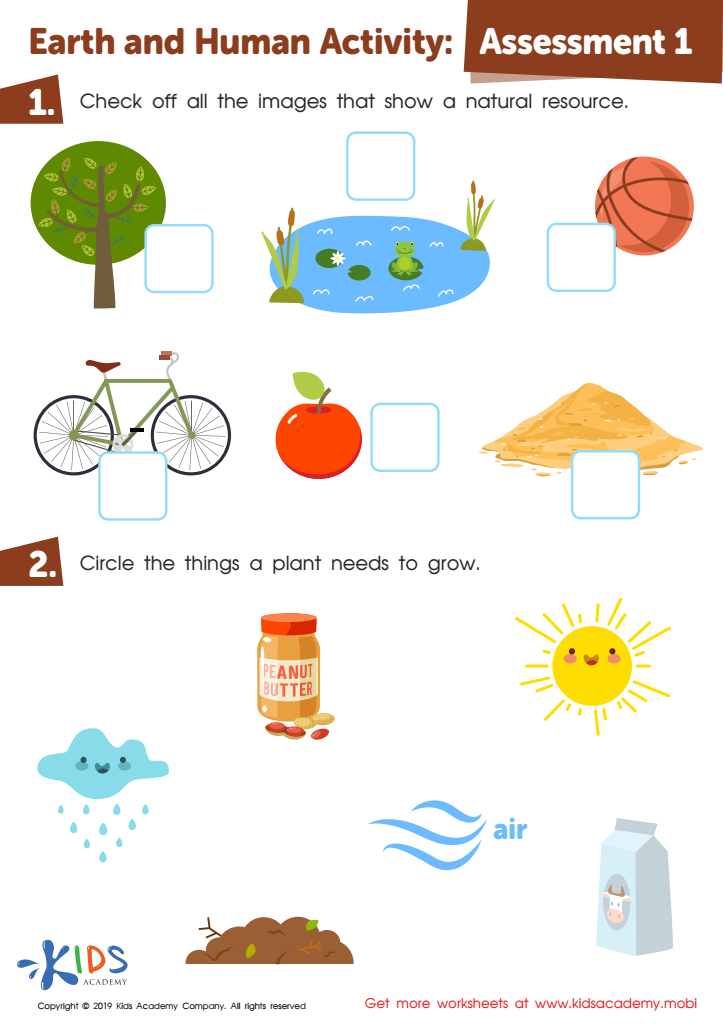
Earth and Human Activity: Assessment 1 Worksheet
Natural resources are gifts from Mother Nature that exist without man-made intervention. We use them to make essential items we use daily. Ask your kids for examples and have them check off images of natural resources on this worksheet.
Earth and Human Activity: Assessment 1 Worksheet
Worksheet
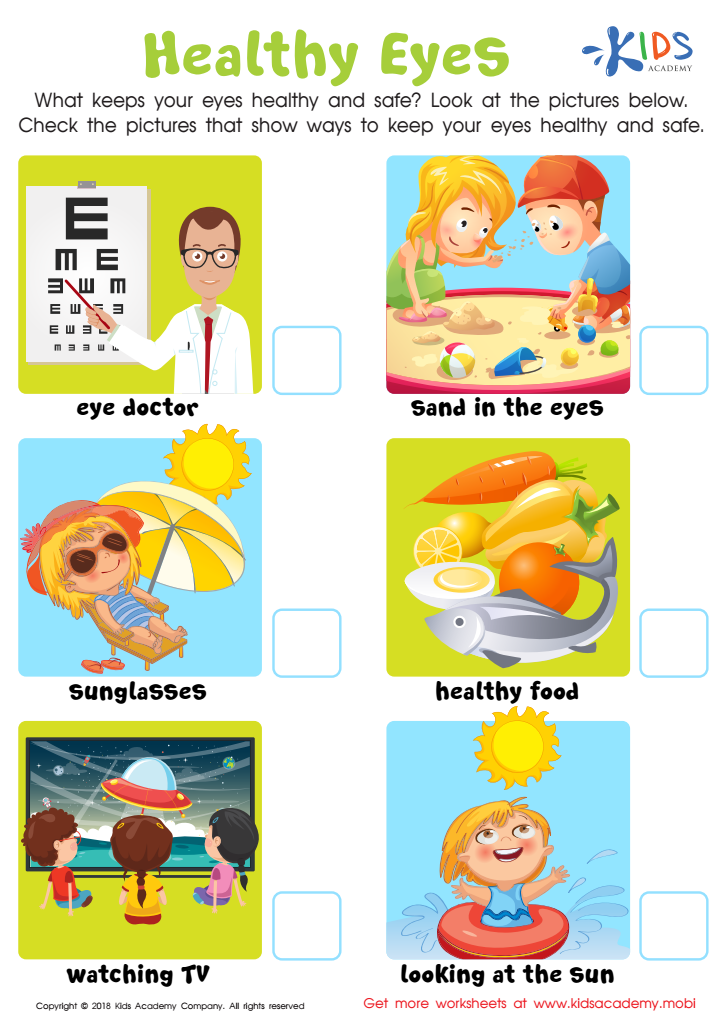
Healthy Eyes Worksheet
Does your child know how to care for their eyes? Help them understand with this worksheet. Look through the pictures together and discuss the different ways to keep the eyes healthy and safe. These include visits to the doctor, wearing sunglasses, and eating healthy food.
Healthy Eyes Worksheet
Worksheet
Join Kids Academy for Free
Who is primarily going to use this learning content?








Critical thinking skills are essential for young learners, and fostering these in 4-year-olds during science activities is vital for their overall development. At this stage, children are naturally curious and eager to explore their environment. When parents and teachers actively engage them in critical thinking about science, it enhances their observation and problem-solving abilities.
Encouraging critical thinking equips children with skills to ask questions, make predictions, analyze information, and draw conclusions, laying a strong foundation for future learning. As they explore scientific concepts — be it through simple experiments, nature walks, or discussions — they learn to think logically and make informed choices. These fundamental skills not only contribute to their academic growth but also foster resilience and adaptability in everyday situations.
Moreover, critical thinking in science promotes creativity as children learn to think outside the box and consider multiple perspectives. For parents and teachers, prioritizing this area of development means nurturing independent, inquisitive thinkers who are well-prepared to tackle increasingly complex concepts as they grow. Recognizing the early importance of critical thinking skills in science ensures that children develop a lifelong love for learning and inquiry, which is essential in our rapidly evolving world.







