Shape Recognition Science Worksheets for 4-Year-Olds
3 filtered results
-
From - To
Enhance your child's learning with our engaging Shape Recognition Science Worksheets designed specifically for 4-year-olds. These fun and interactive worksheets promote essential early STEM skills while helping children identify and understand various shapes in their environment. Through captivating activities, games, and colorful illustrations, young learners will develop critical thinking and fine motor skills. Perfect for both classroom settings and at-home learning, our worksheets provide a great way to introduce foundational scientific concepts while making learning enjoyable. Watch your child's confidence grow as they explore the fascinating world of shapes with our carefully crafted resources! Start their learning journey today!
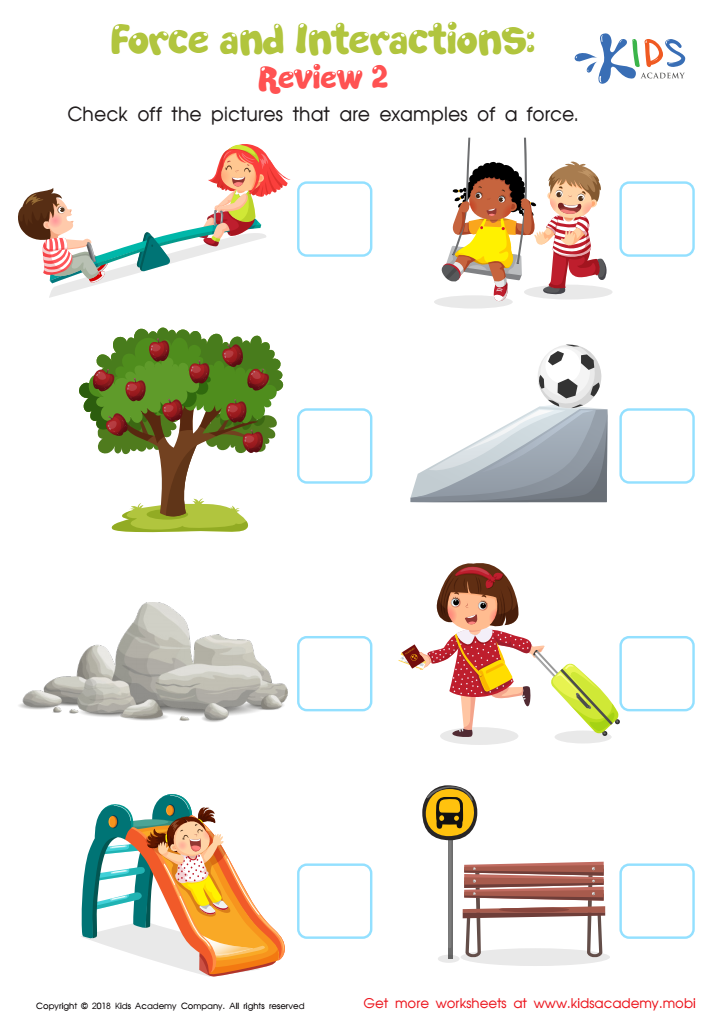
Force and Interactions: Review 2 Worksheet
 Assign to My Students
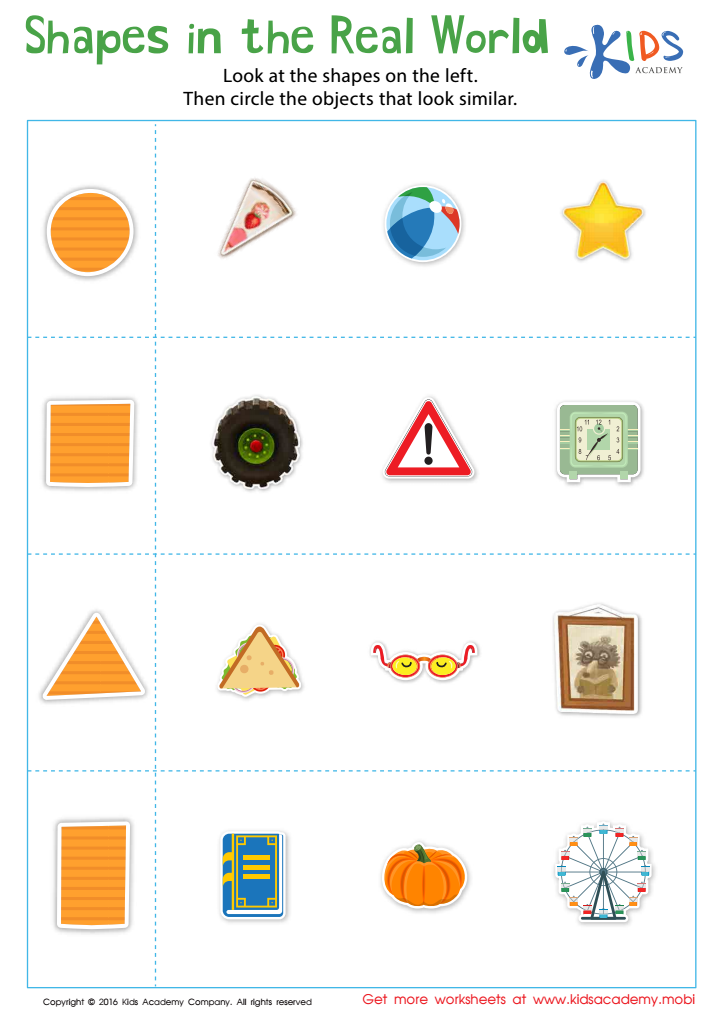
Shapes in the Real World Worksheet
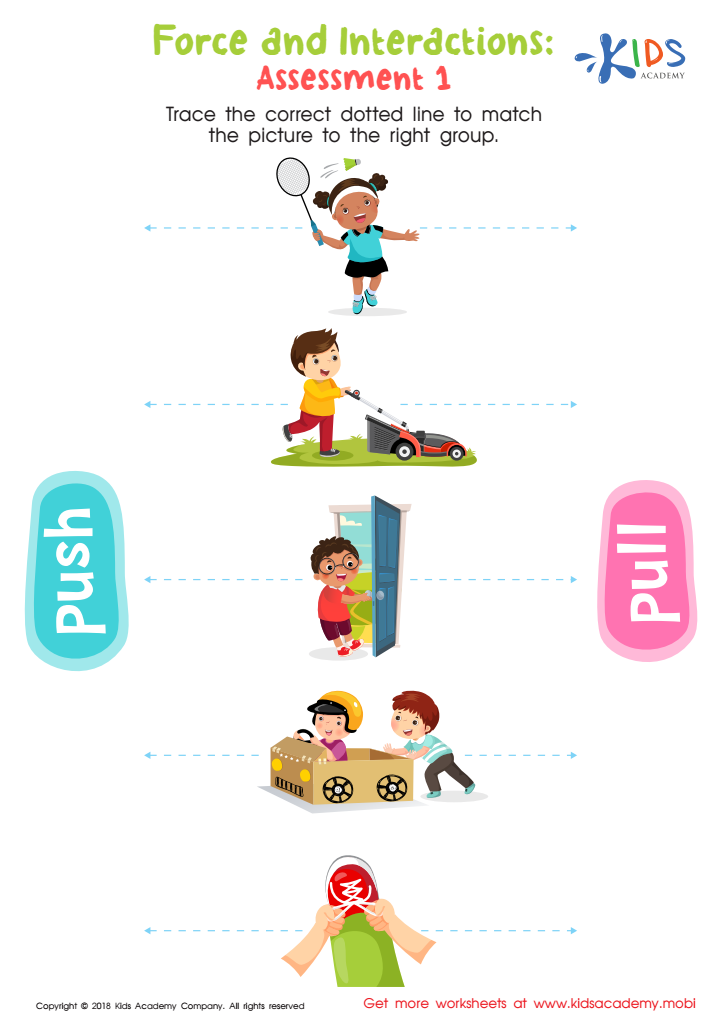
Force and Interactions: Assessment 2 Worksheet








Shape recognition is a fundamental aspect of early childhood education that has significant implications for a child's overall development. For 4-year-olds, understanding shapes goes beyond merely identifying circles, squares, and triangles; it lays the groundwork for critical cognitive skills such as spatial awareness, problem-solving, and logical thinking.
Parents and teachers should prioritize shape recognition because it enhances children's abilities to categorize and interpret the world around them. As children learn to distinguish shapes, they also develop better visual discrimination skills, facilitating reading readiness and mathematical understanding later on. Recognizing shapes can promote rich conversations, encourage creativity through art and design, and support constructive play, which contributes to fine motor skill development.
Moreover, shape recognition fosters visual-spatial reasoning, essential for everyday activities and tasks, from puzzles to navigating environments. Active engagement with shapes helps cultivate curiosity and an enthusiasm for learning, setting positive attitudes toward education.
In a broader context, equipping children with these foundational skills aids in their transition to more complex concepts in math and science, contributing to lifelong learning. Therefore, teachers and parents should incorporate shape recognition activities into daily routines to nurture a solid base for future academic success.







