Filters

224 filtered results

Clear all filters
Favorites
With answer key
Interactive

224 filtered results

Difficulty Level

Grade


Check out this FREE "Cognitive Development" Trial Lesson for age 5-6!

Review

Favorites
With answer key
Interactive
  • 5-6
  • Cognitive Development
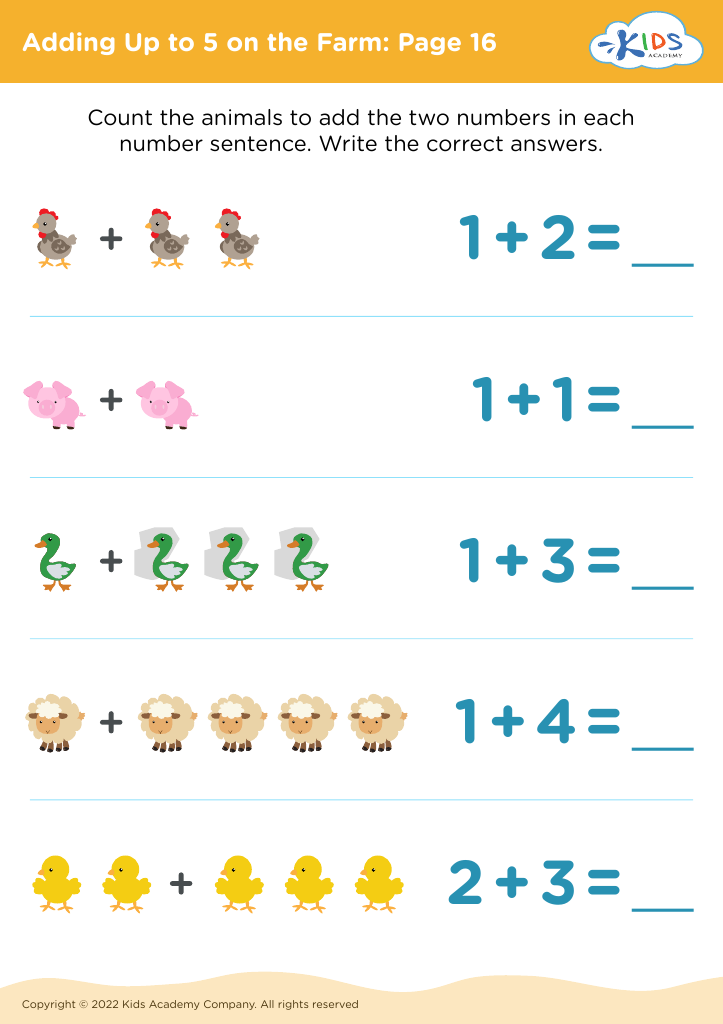
Adding Up to 5 on the Farm: Page 16
Worksheet
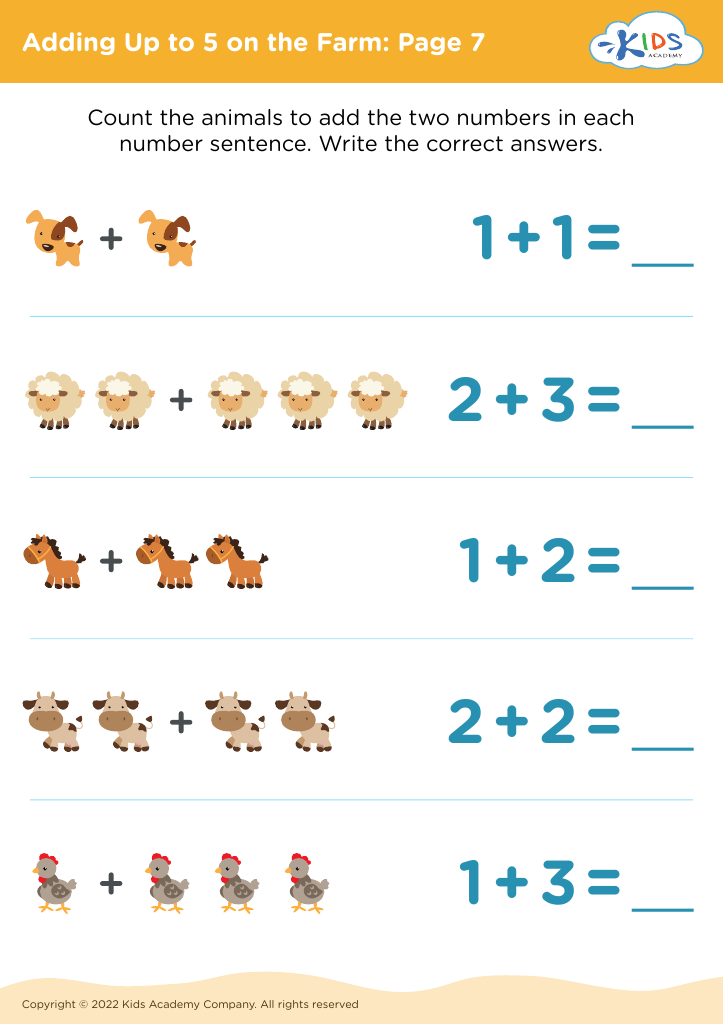
Adding Up to 5 on the Farm: Page 7
Worksheet
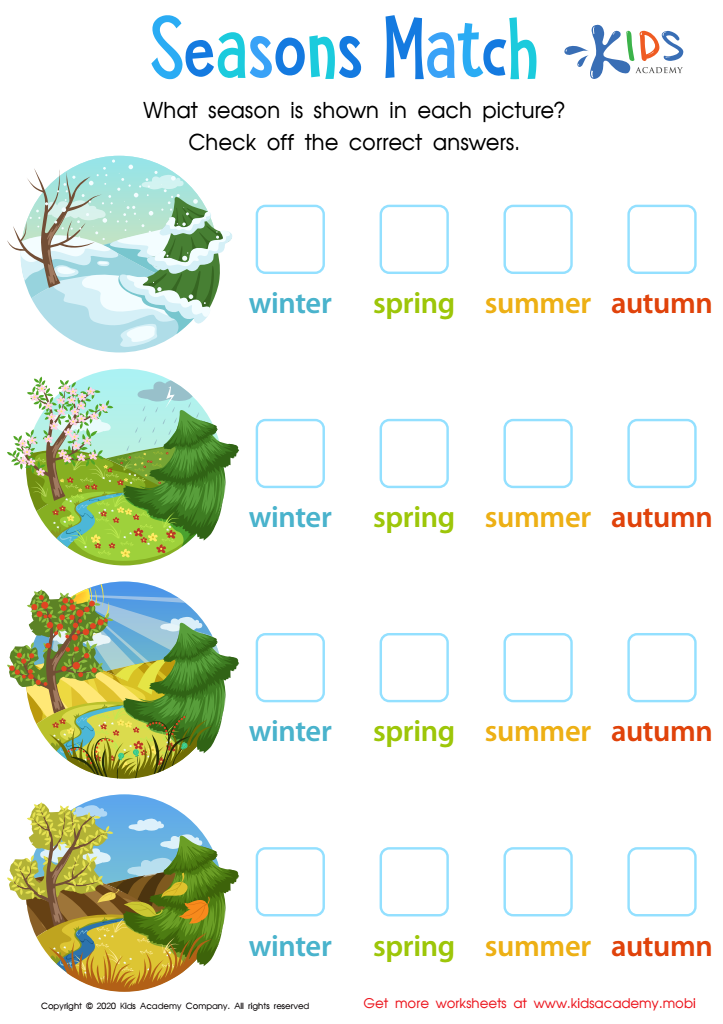
Seasons Match Worksheet

Seasons Match Worksheet

Preschoolers should begin learning about seasons and weather early. Most can tell what season it is by upcoming holidays or school activities. Test their knowledge with a printable PDF worksheet. It asks them to match each image with its corresponding season!
Seasons Match Worksheet
Worksheet
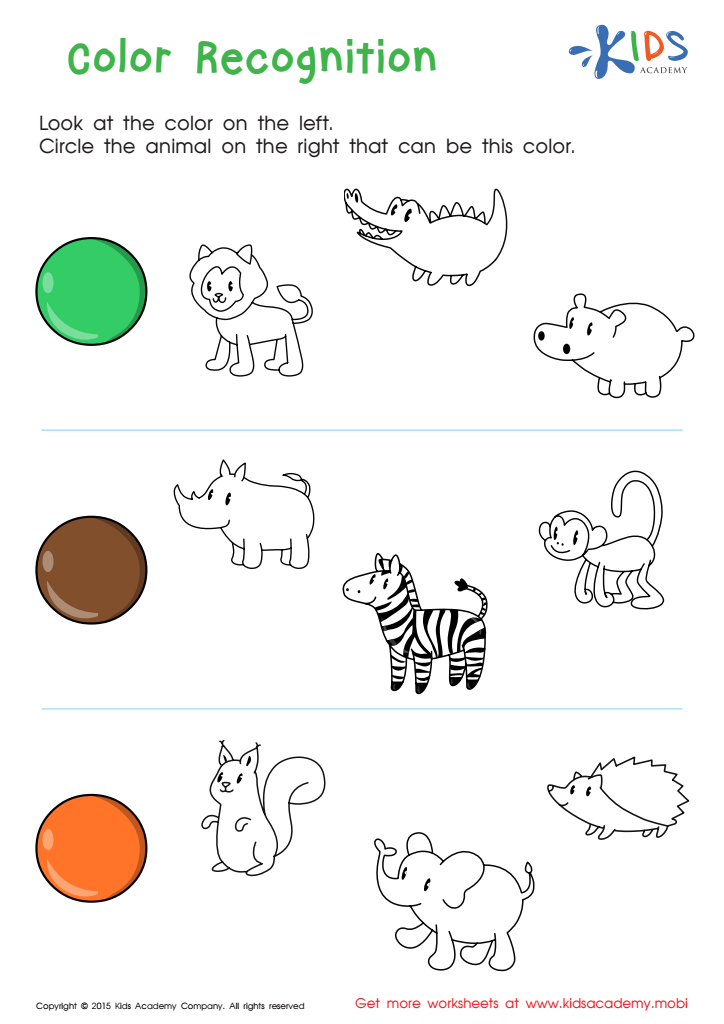
Free Printable Color Recognition Worksheet for Preschoolers

First Words: Color Recognition Worksheet
Kids learn colors early. This free printable color recognition worksheet for preschoolers helps them practice important cognitive skills. It encourages your child to match colors to animals, plus use artistic skills to color their answers. After solving each section, encourage them to color the picture with the indicated color! Fun and learning go hand in hand!
First Words: Color Recognition Worksheet
Worksheet
Spanish Word Search Worksheet
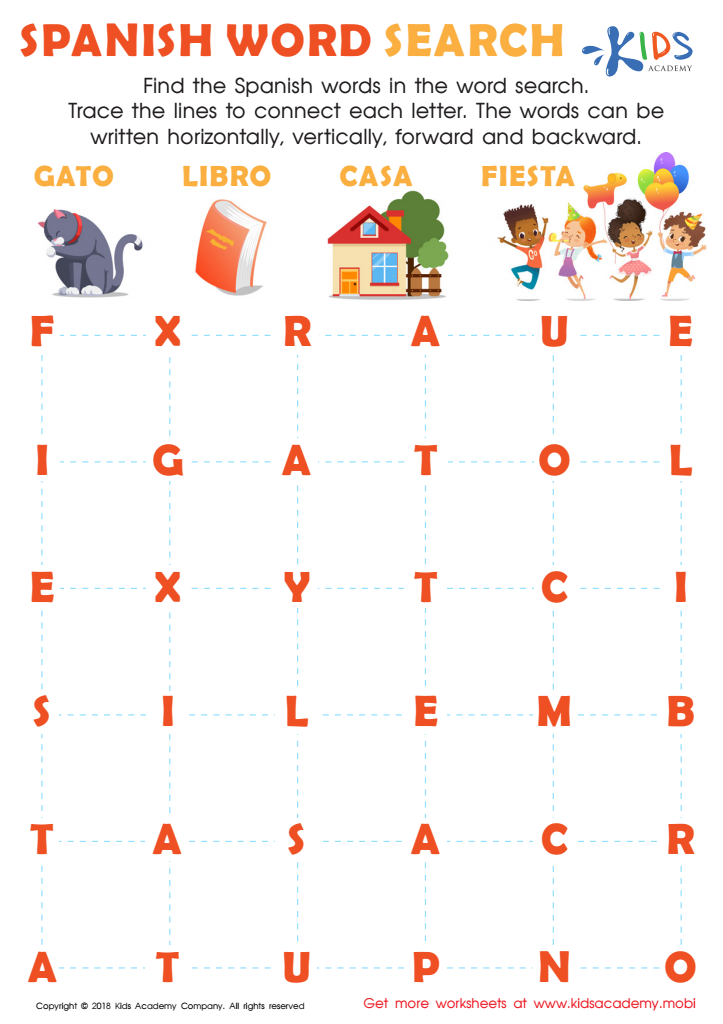
Spanish Word Search Worksheet
This free worksheet encourages students to learn Spanish words while developing visual, fine motor, and hand-eye coordination skills. Through colorful pictures and traceable lines, the task of finding words such as gato, libro, casa, and fiesta is disguised as a fun and engaging way to explore new cultures.
Spanish Word Search Worksheet
Worksheet
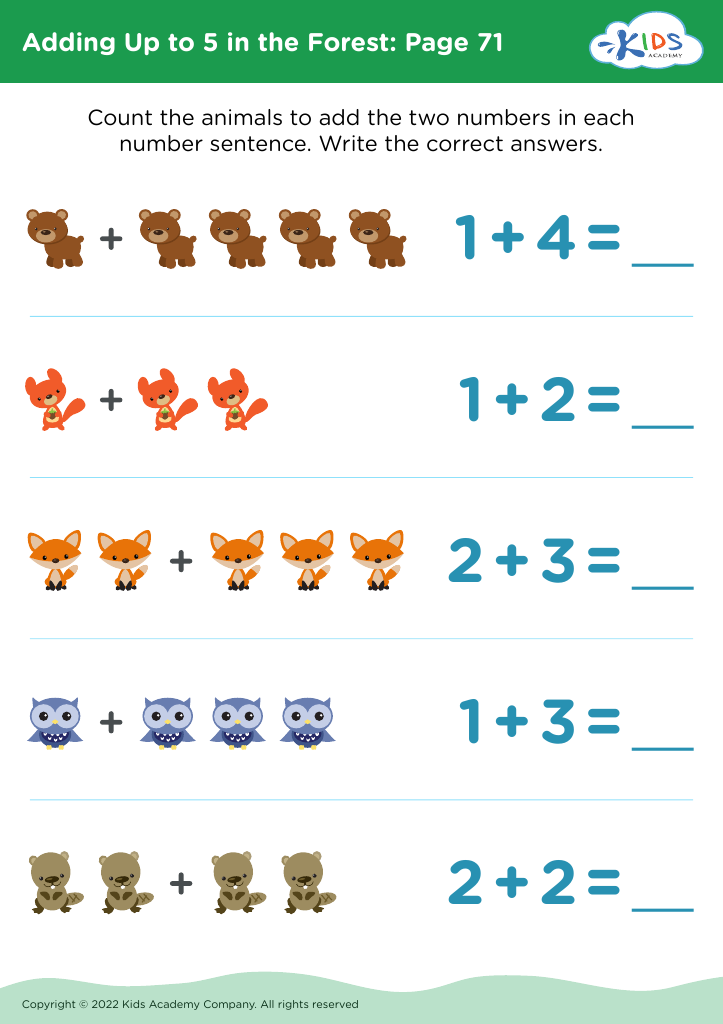
Adding Up to 5 in the Forest: Page 71
Worksheet
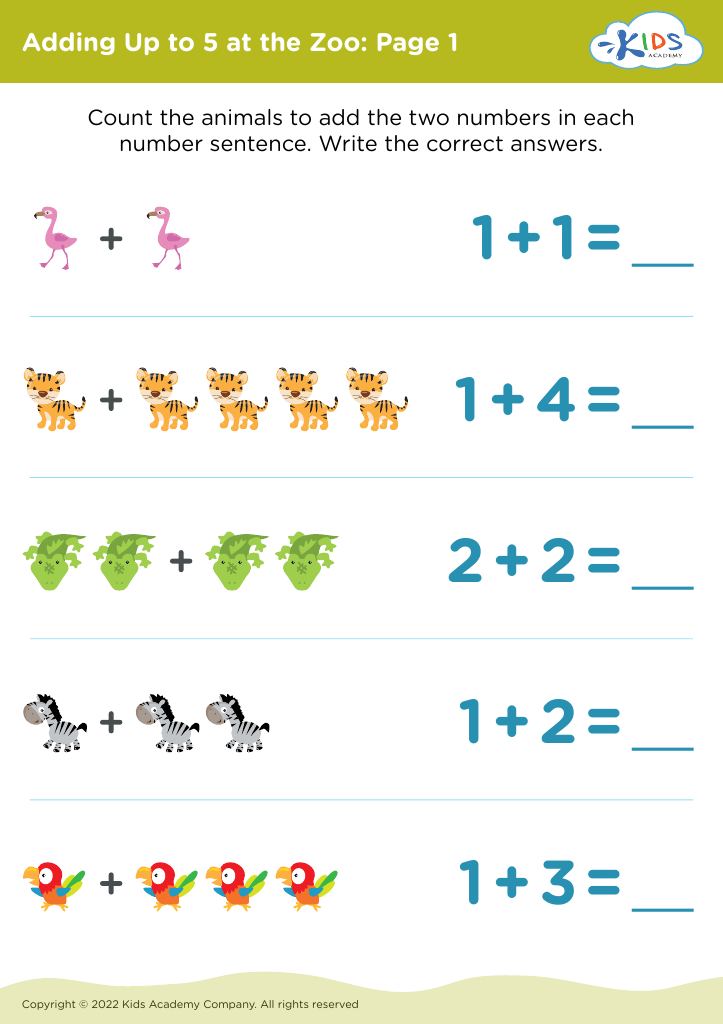
Adding Up to 5 at the Zoo: Page 1

Adding Up to 5 at the Zoo: Page 1

Adding Up to 5 at the Zoo: Page 1
Worksheet
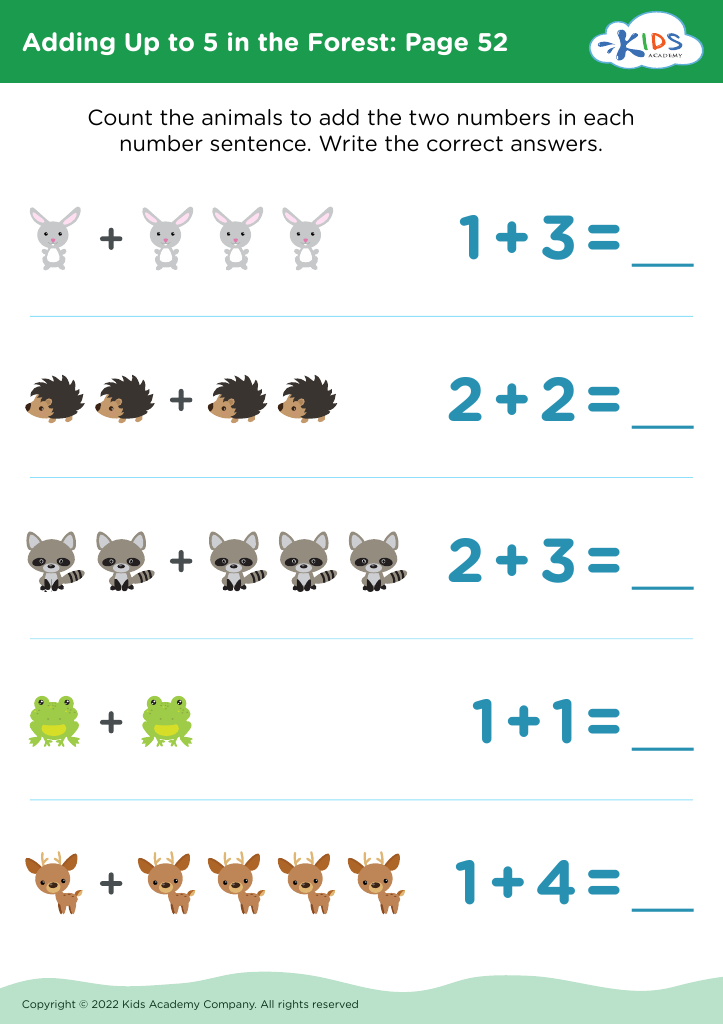
Adding Up to 5 in the Forest: Page 52
Worksheet
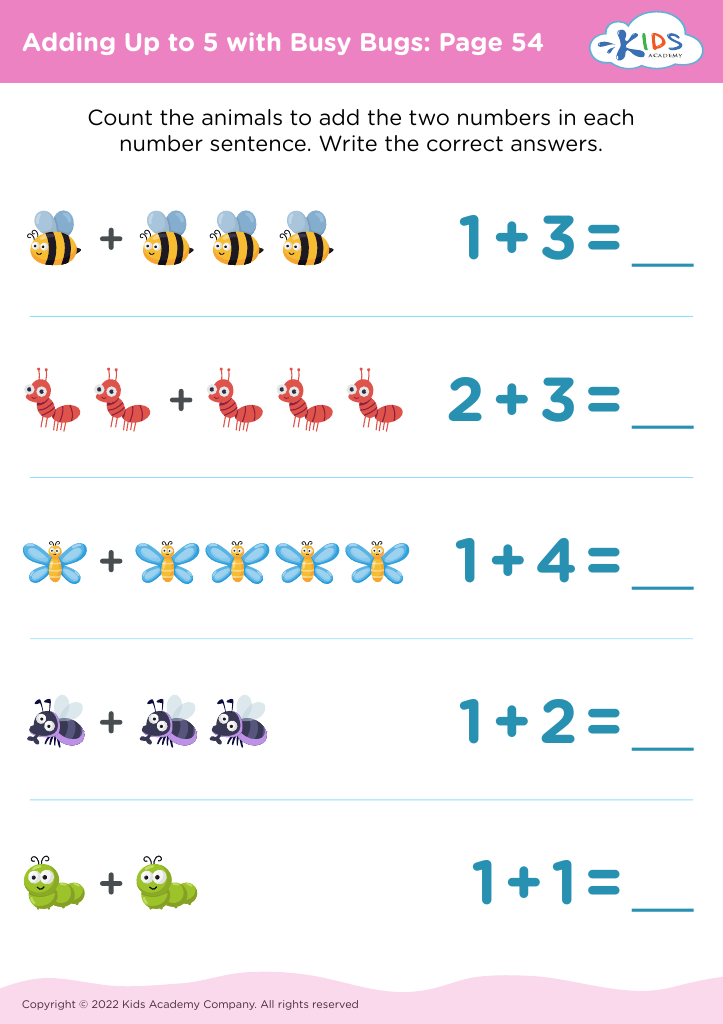
Adding Up to 5 with Busy Bugs: Page 54
Worksheet
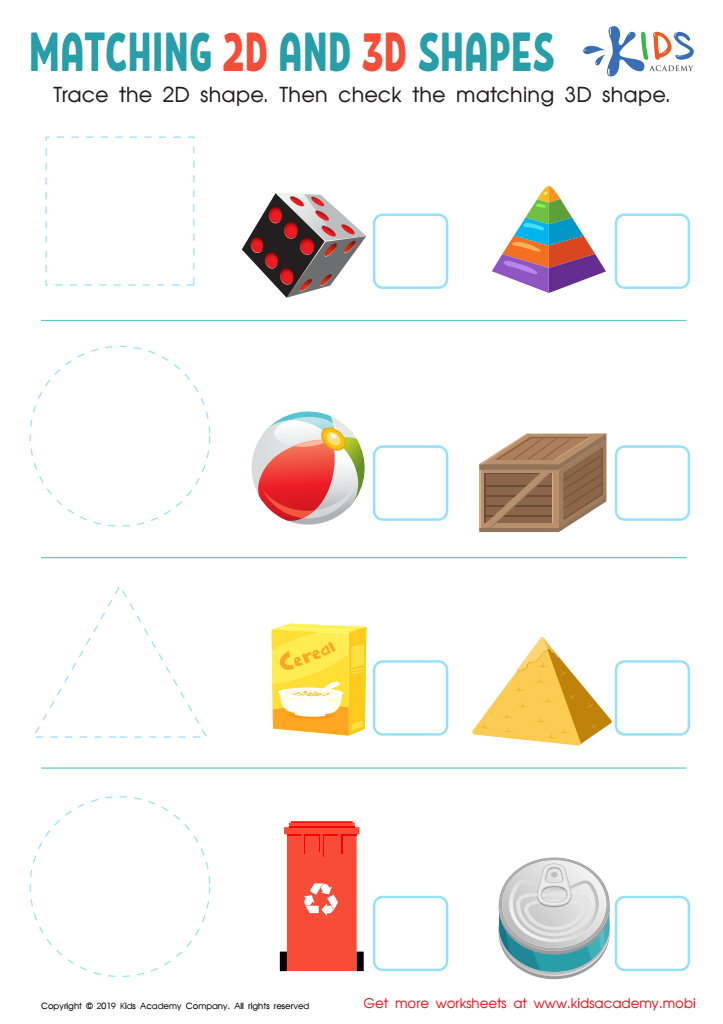
Matching 2D and 3D Shapes Worksheet

Matching 2D and 3D Shapes Worksheet

Before starting this worksheet, ask your kids what shapes they know and point out the 2D and 3D shapes on it. Help your kids trace the 2D shapes and then match them to the 3D versions. It'll be a fun new world for your kids to explore!
Matching 2D and 3D Shapes Worksheet
Worksheet
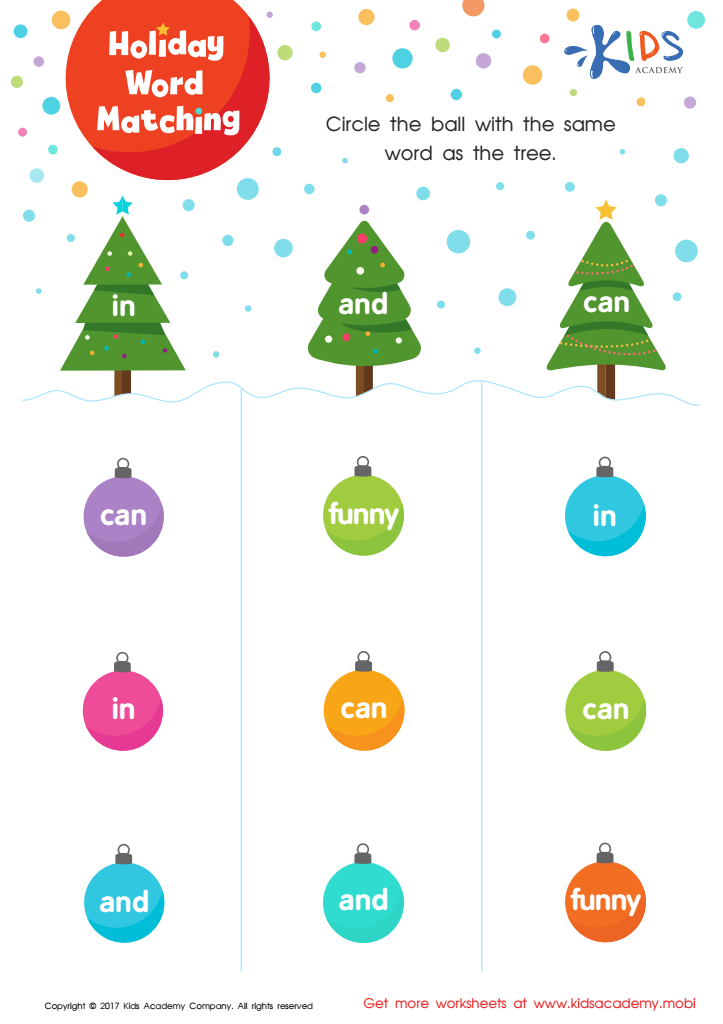
Holiday Word Matching Worksheet
Holiday Word Matching Worksheet

Decorate with Kids Academy this year! Keep kids learning this holiday season with this festive worksheet. Let them look for sight words on Christmas trees then circle the matching ornament to decorate. It's a fun and educational way to enjoy the holidays!
Holiday Word Matching Worksheet
Worksheet
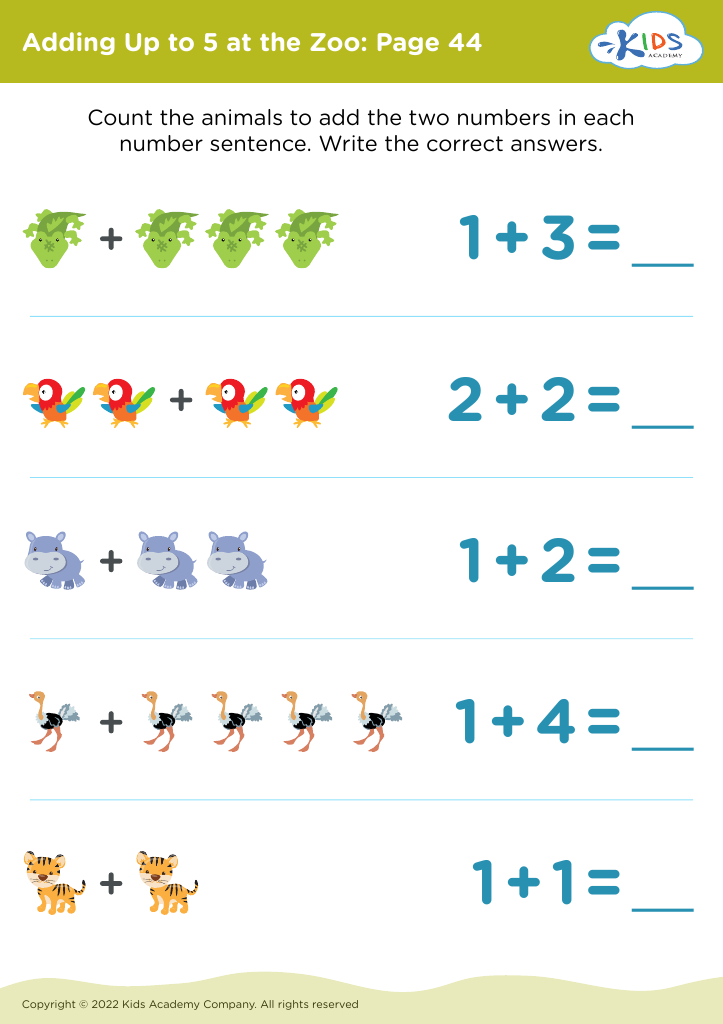
Adding Up to 5 at the Zoo: Page 44
Worksheet
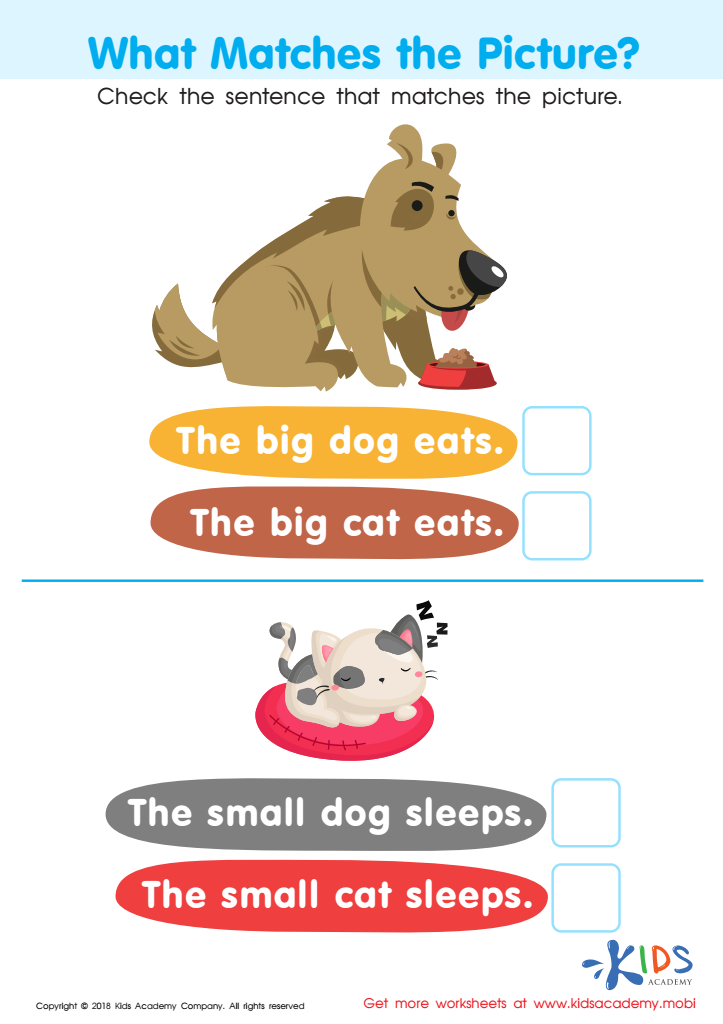
What Matches the Picture? Worksheet
What Matches the Picture? Worksheet

Emerging readers can use pictures of cute pets and phrase repetition to match sentences to pics, building skills while having fun! It's a great way to bolster vocab and confidence, motivating them to keep reading.
What Matches the Picture? Worksheet
Worksheet
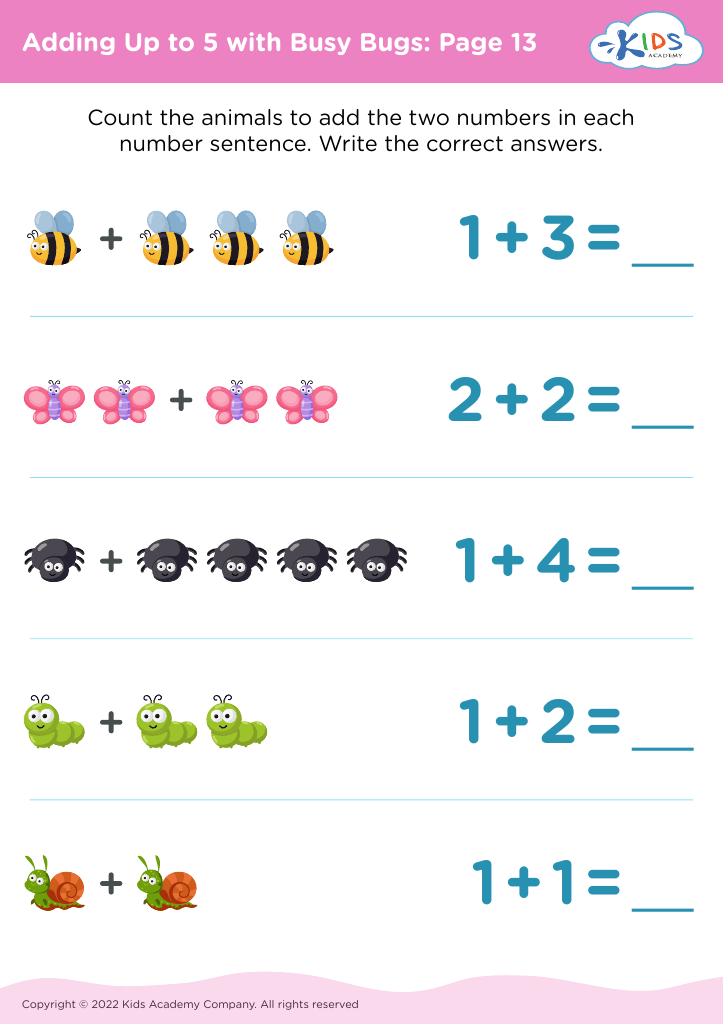
Adding Up to 5 with Busy Bugs: Page 13
Worksheet
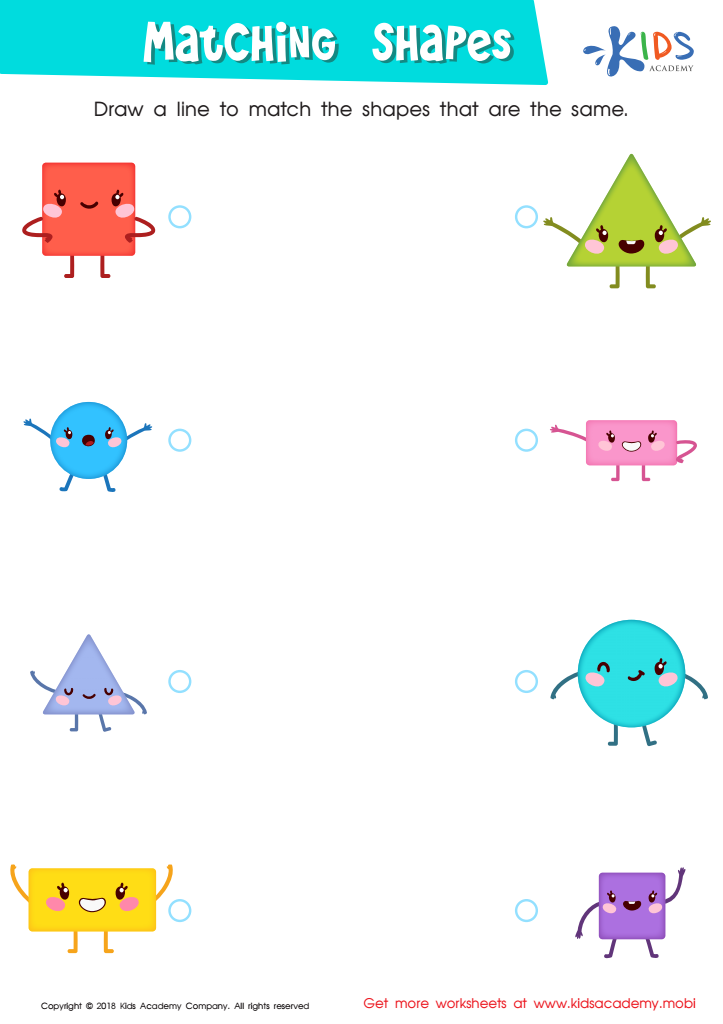
Matching Shapes Worksheet
Matching Shapes Worksheet
Introduce your students to the 4 most common shapes: squares, triangles, rectangles and circles. When they progress, show them other shapes like rhombuses and parallelograms. Use this matching shapes worksheet to help them match two identical shapes. Print out the worksheet and instruct them to draw lines connecting them.
Matching Shapes Worksheet
Worksheet
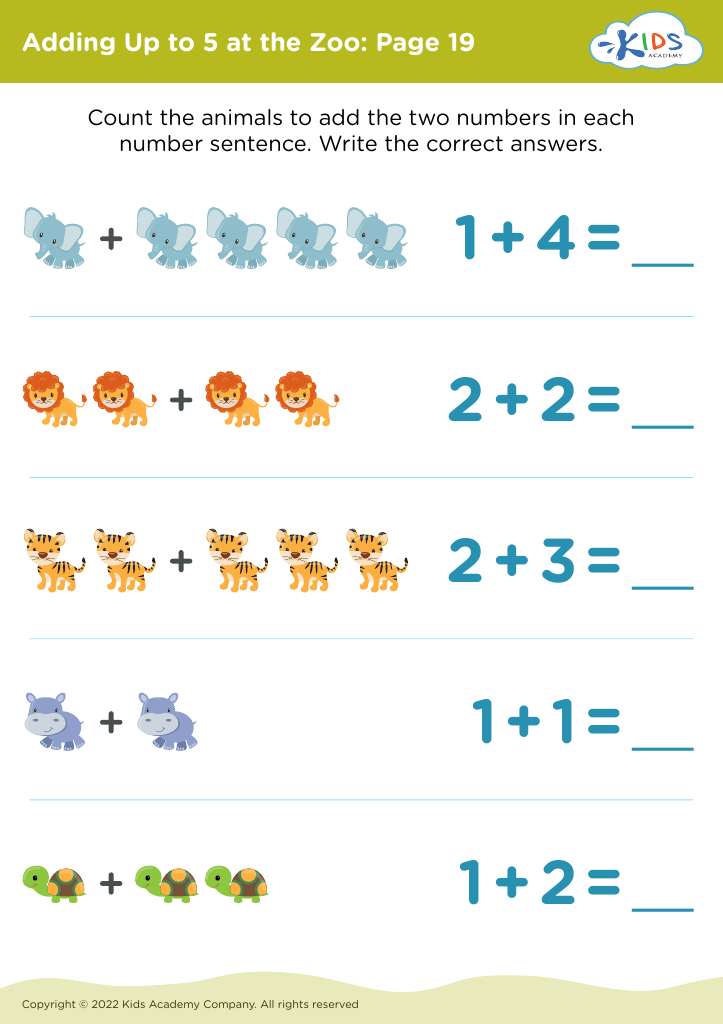
Adding Up to 5 at the Zoo: Page 19
Worksheet
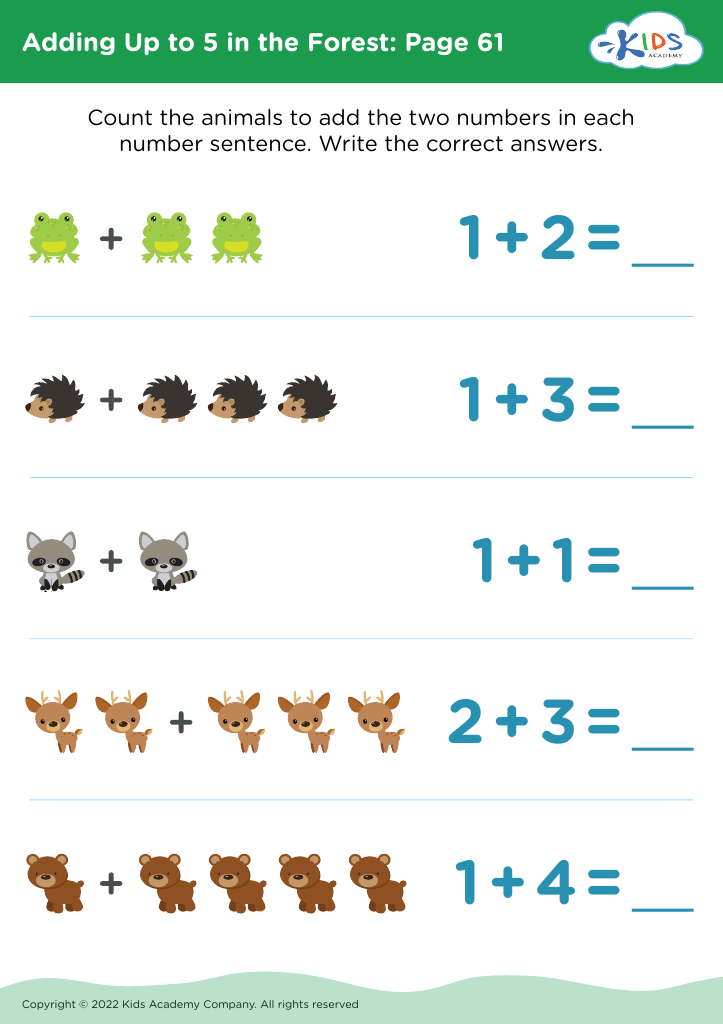
Adding Up to 5 in the Forest: Page 61
Worksheet
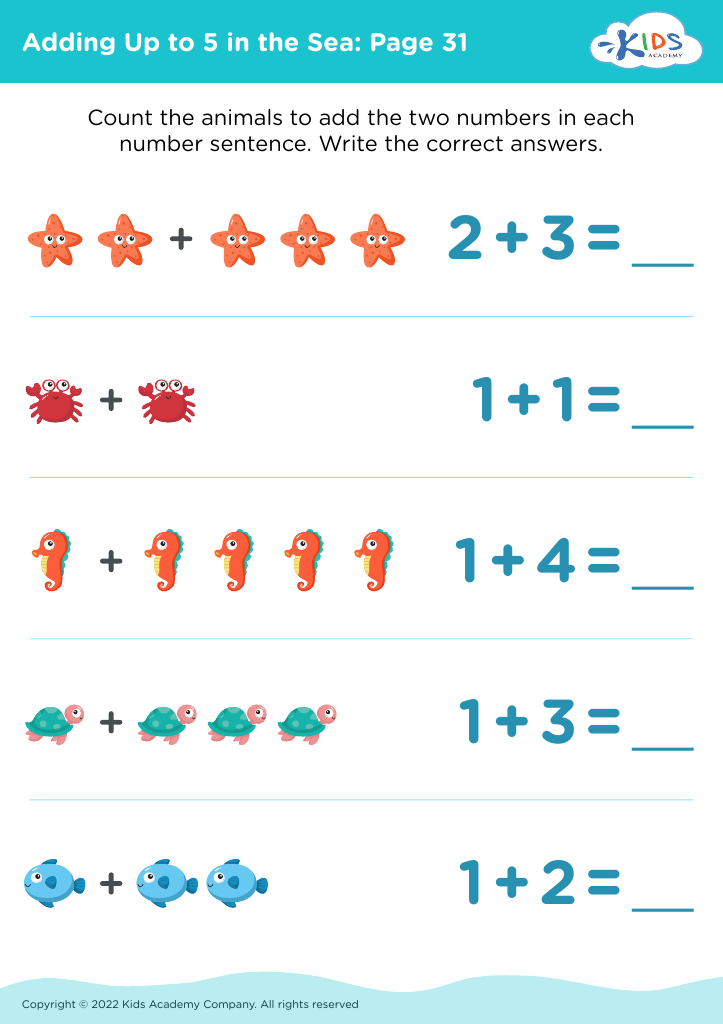
Adding Up to 5 in the Sea: Page 31
Worksheet
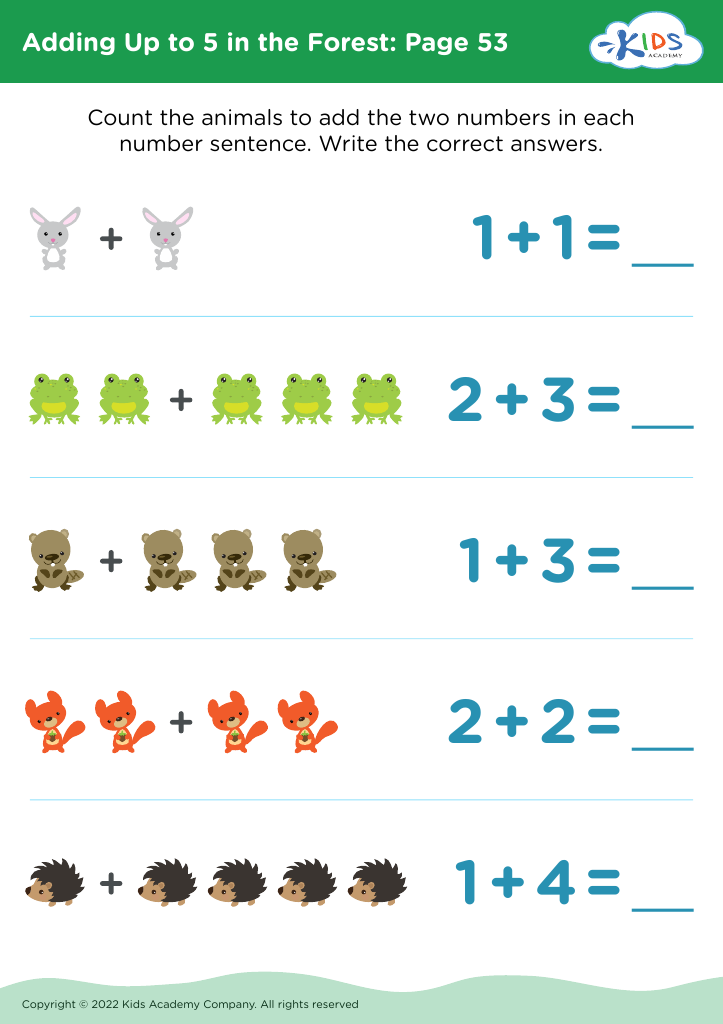
Adding Up to 5 in the Forest: Page 53
Worksheet
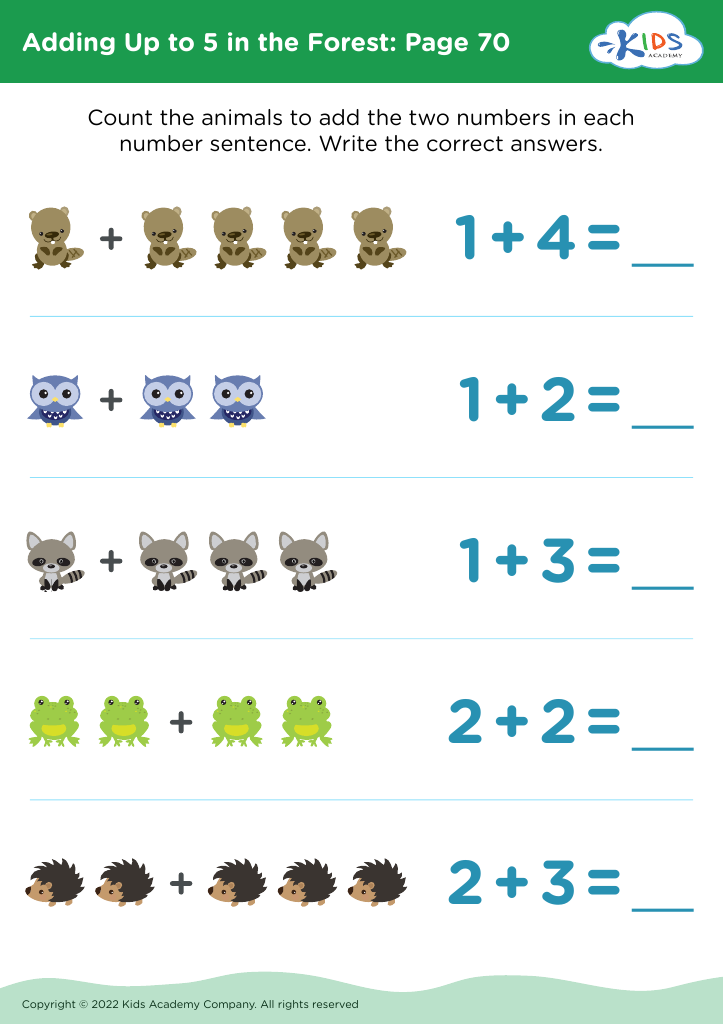
Adding Up to 5 in the Forest: Page 70
Worksheet
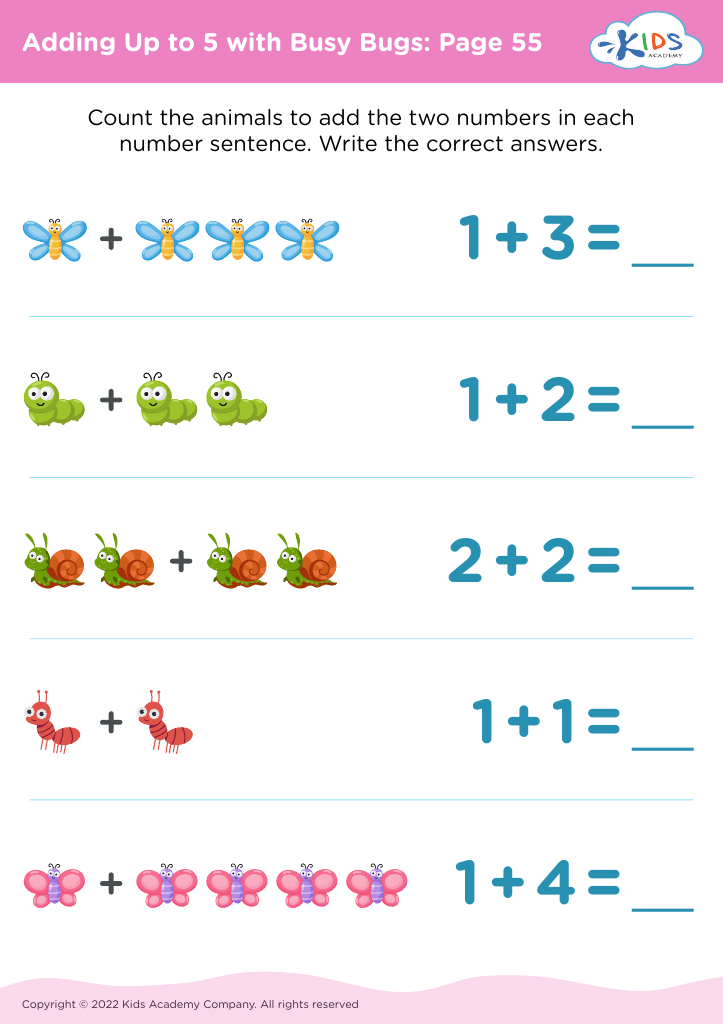
Adding Up to 5 with Busy Bugs: Page 55
Worksheet
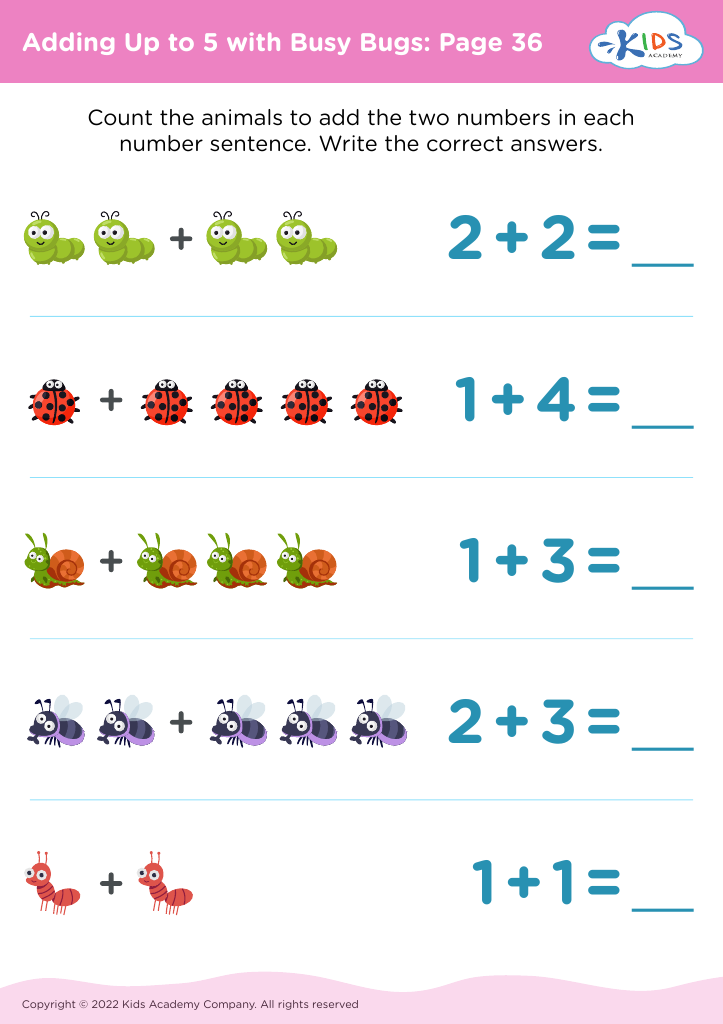
Adding Up to 5 with Busy Bugs: Page 36
Worksheet
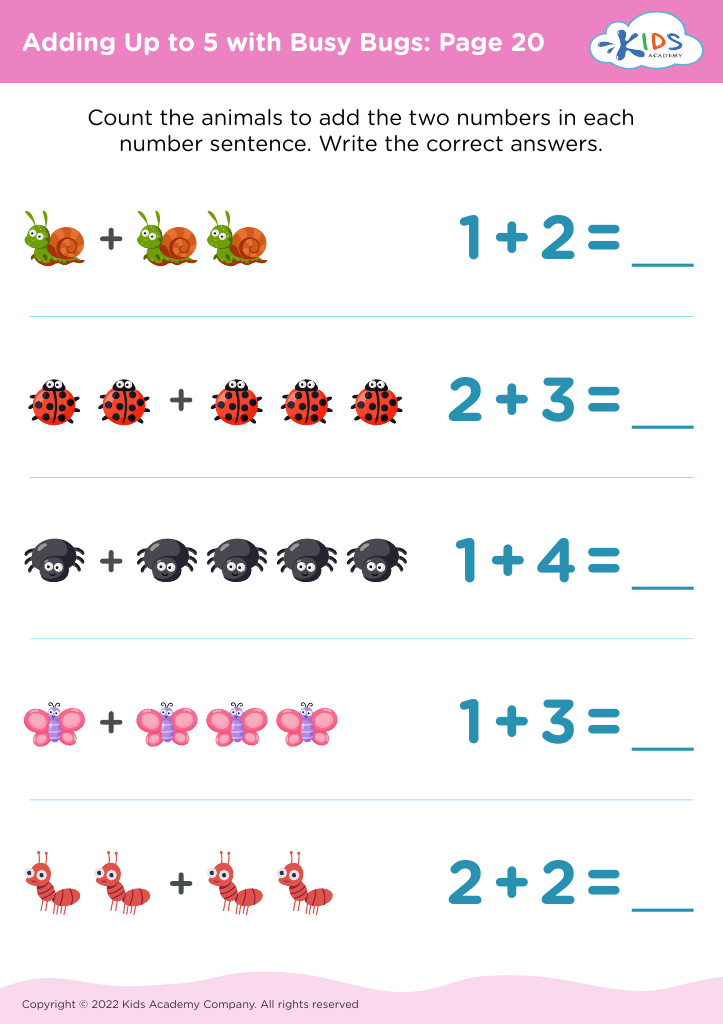
Adding Up to 5 with Busy Bugs: Page 20
Worksheet
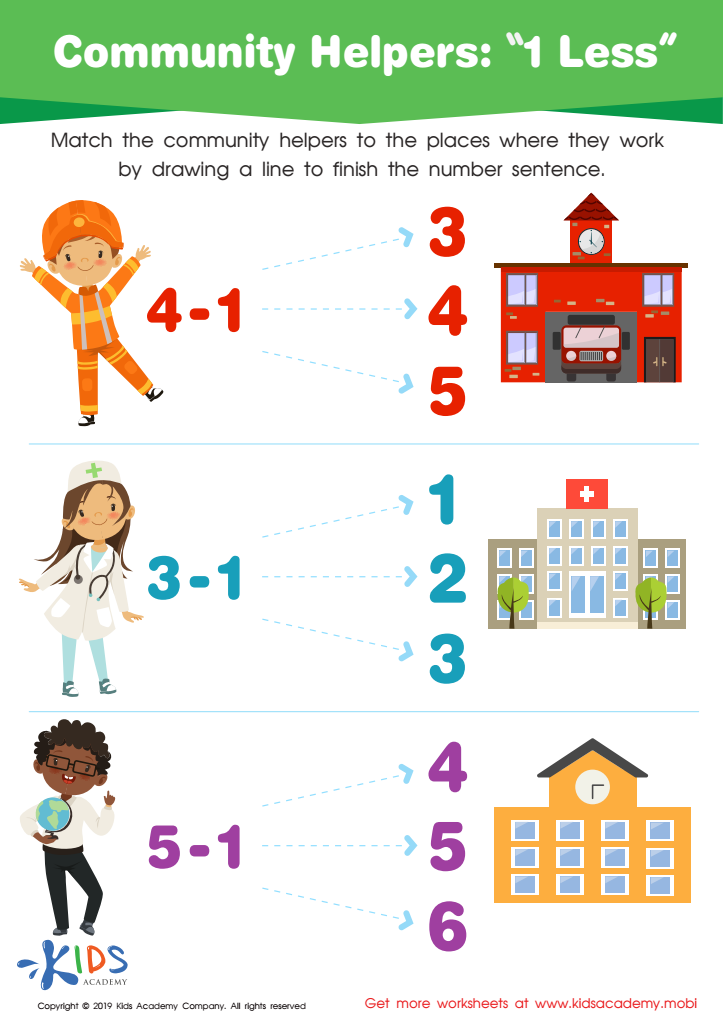
Community Helpers: 1 less Worksheet


Community Helpers: 1 less Worksheet

Look at this worksheet with your child and ask them to identify the different community helpers. Match them to the places where they work by drawing a line to finish the number sentence. This helps them identify the people that help keep the community organized and running smoothly. Examples of community helpers include doctors, police officers, firefighters, teachers, etc.
Community Helpers: 1 less Worksheet

Worksheet


Cognitive development in children aged 5-6 is crucial as it lays the foundation for future learning, problem-solving, and social interactions. At this age, children's brains are rapidly growing and forming new neural connections, making it an optimal period for acquiring essential skills. By nurturing cognitive development, parents and teachers can enhance children's abilities to think, understand, and remember.

During this stage, kids begin to develop important cognitive abilities such as memory, attention, and the capacity to understand complex concepts. For example, they start learning how to count, recognize letters, and understand the consequences of their actions. These skills are fundamental for their success in school and everyday life.

In addition, cognitive development is closely tied to emotional and social growth. Children with strong cognitive skills are better able to regulate their emotions, engage in meaningful social interactions, and cope with challenges. They become more resilient and adaptable, which are important traits for overall well-being.

Moreover, early cognitive development sets the stage for lifelong learning. Children who receive rich cognitive stimulation early on are more likely to develop a love for learning, perform well academically, and have better educational and professional outcomes in the long run. Therefore, parents and teachers should actively engage children in activities that stimulate their brains and provide supportive, enriching environments to foster robust cognitive development.