Filters

224 filtered results

Clear all filters
Favorites
With answer key
Interactive

224 filtered results

Difficulty Level

Grade


Check out this FREE "Cognitive Development" Trial Lesson for age 5-6!

Inherited Traits

Favorites
With answer key
Interactive
  • 5-6
  • Cognitive Development
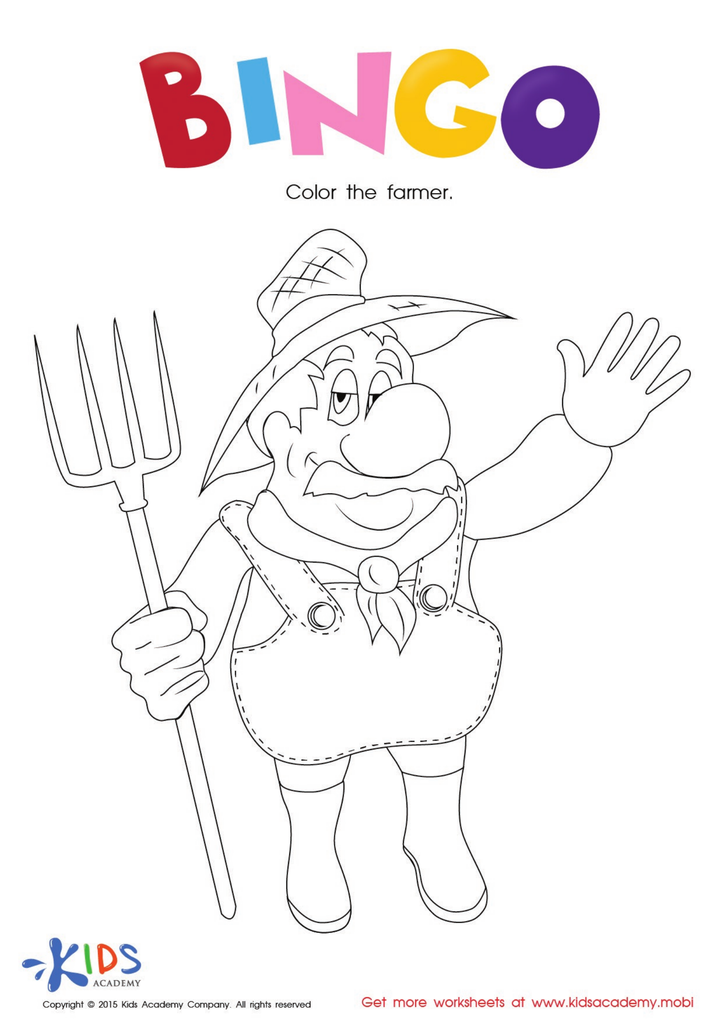
The Bingo Song: Coloring The Farmer PDF Worksheet

The Bingo Song: Coloring The Farmer Worksheet
Introduce The Bingo Song with concept questions then get your kids to color the free PDF coloring page. Visualize the characters while they sing and make the activity more fun with free nursery rhymes worksheets from our website. Clap along to The Bingo Song and enjoy!
The Bingo Song: Coloring The Farmer Worksheet
Worksheet
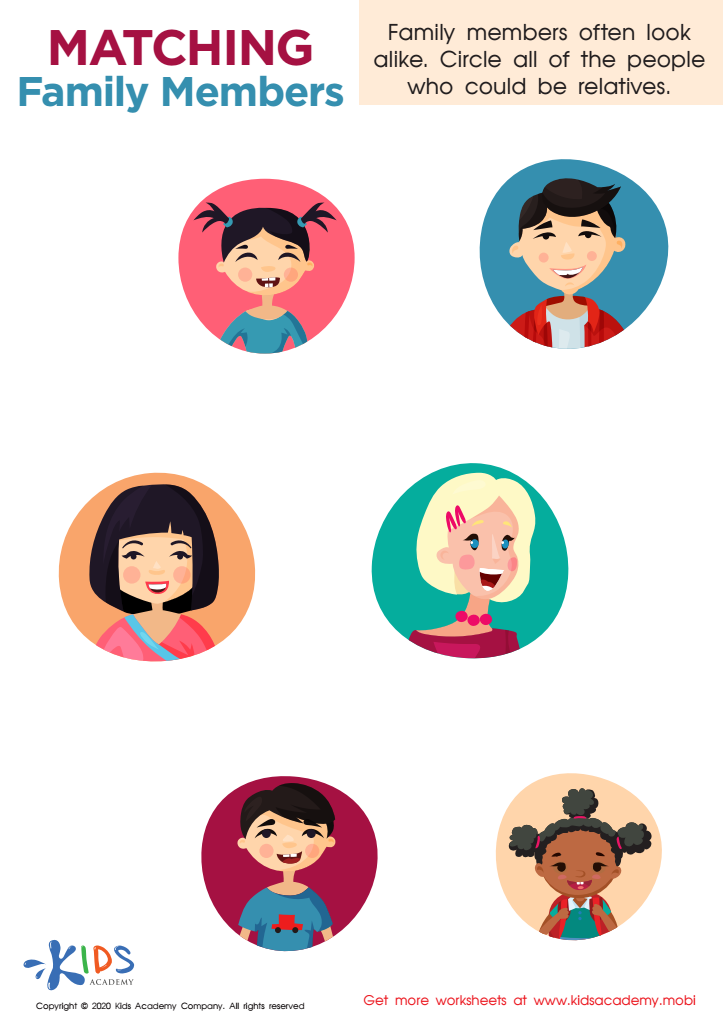
Matching Family Members Worksheet

Matching Family Members Worksheet

Most family members look similar due to genetics. Teach this concept to your child using this worksheet - look for similar facial and bodily features, then circle those from the same family. Help them learn how to recognise family resemblance.
Matching Family Members Worksheet
Worksheet
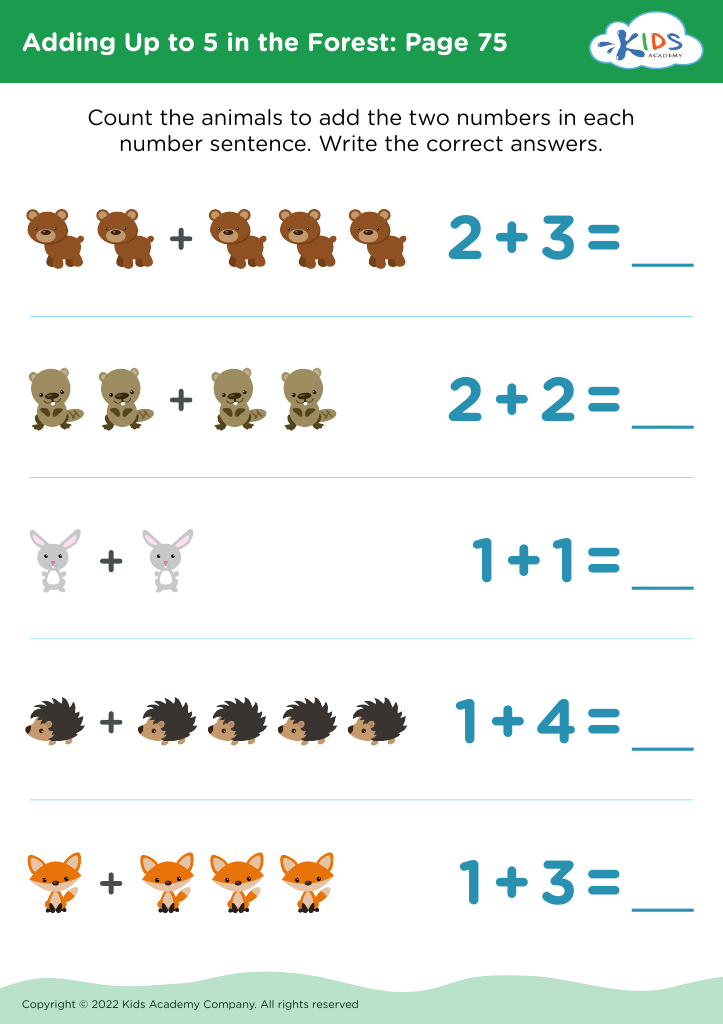
Adding Up to 5 in the Forest: Page 75
Worksheet
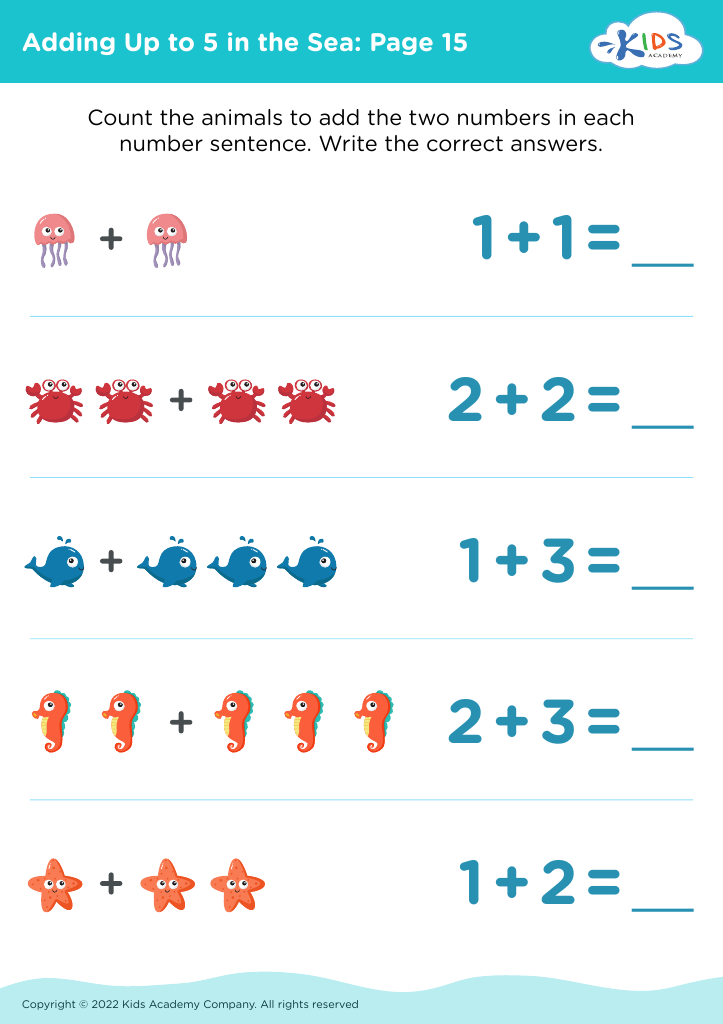
Adding Up to 5 in the Sea: Page 15
Worksheet
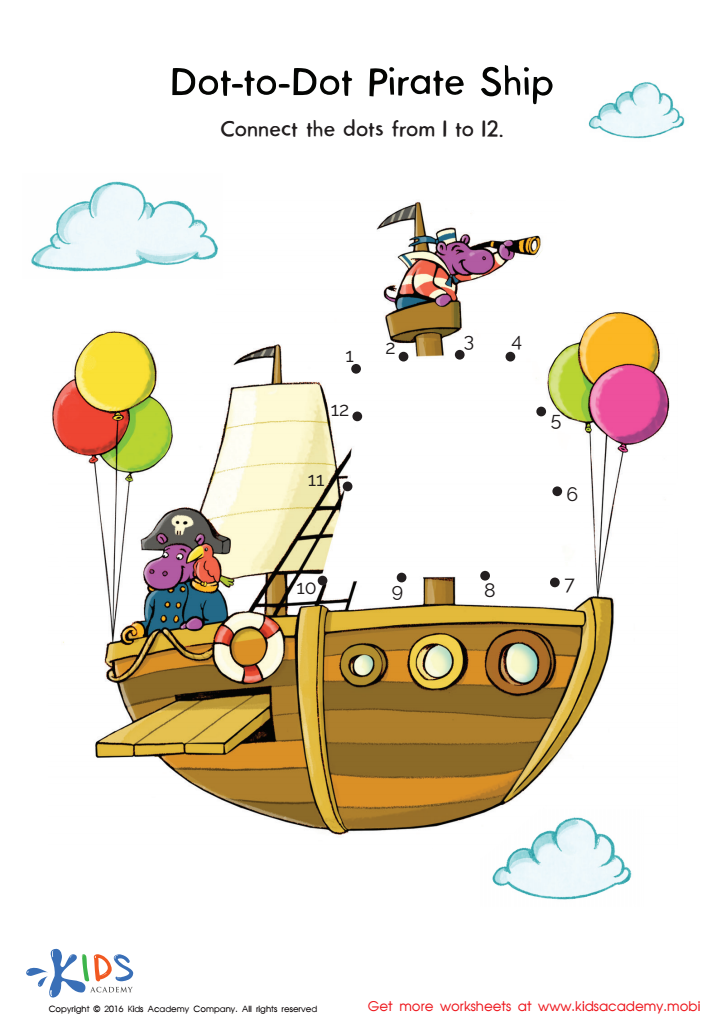
Dot to Dot: Ship
Dot to Dot: Ship

Pirate Ship Connect Dots Worksheet
Encourage your child's creativity with this pirate dot to dot! They'll connect the dots to craft a ship and then decorate the sail. This worksheet will help them practice numeracy, counting, and other reasoning skills. Once they understand how the dots come together to make a picture, they'll be motivated to move on to tougher challenges.
Pirate Ship Connect Dots Worksheet
Worksheet
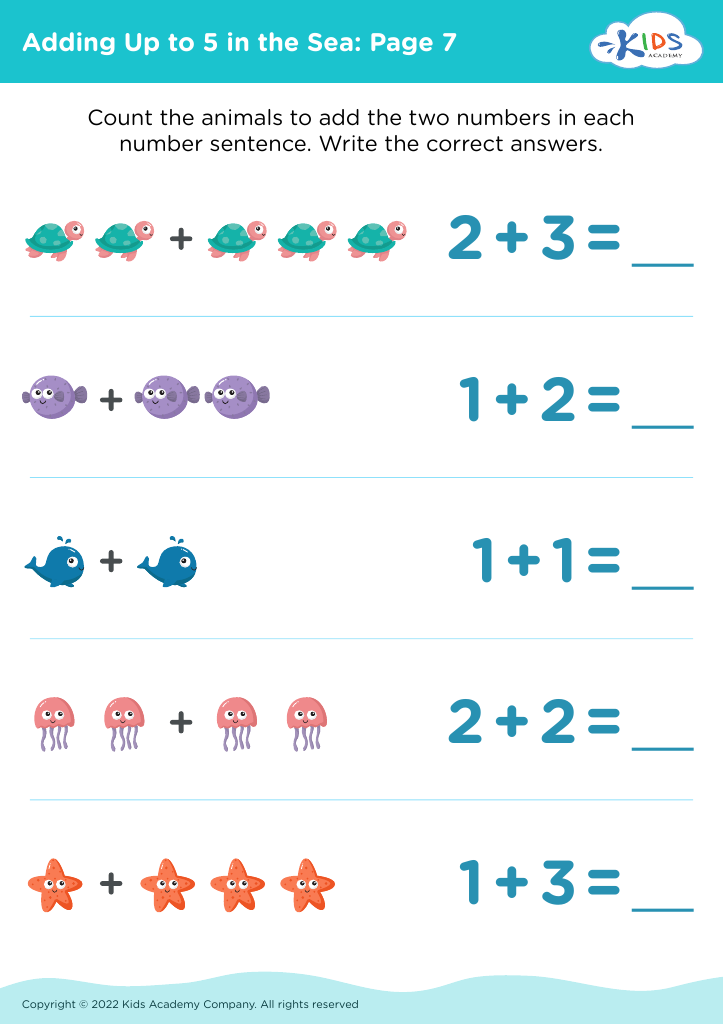
Adding Up to 5 in the Sea: Page 7

Adding Up to 5 in the Sea: Page 7

Adding Up to 5 in the Sea: Page 7
Worksheet
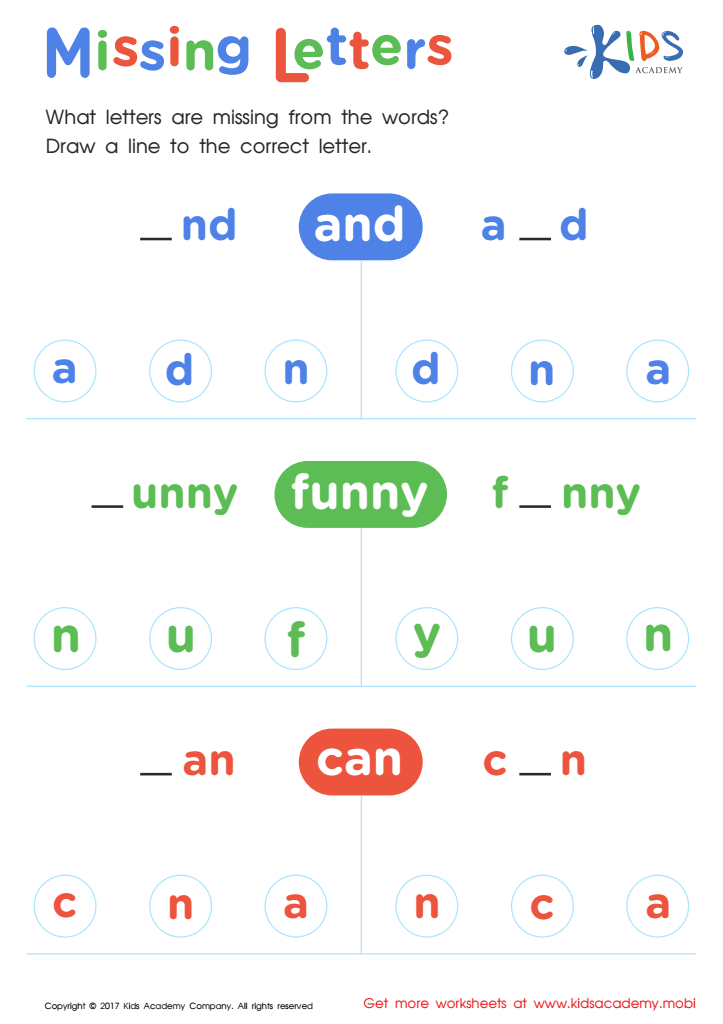
Missing Letters Worksheet
Missing Letters Worksheet
Review sight words with this fun matching worksheet from Kids Academy! Look at the sight words in the middle, read them aloud and find the missing letter on each side for each word. Draw a line to the correct letter to complete the sheet!
Missing Letters Worksheet
Worksheet
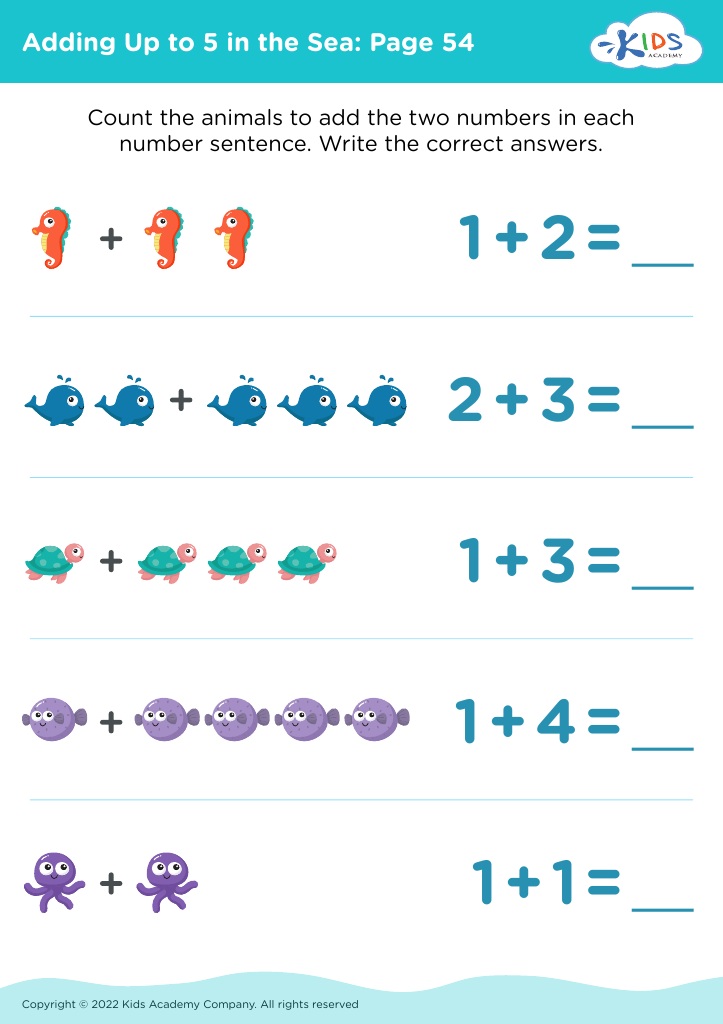
Adding Up to 5 in the Sea: Page 54
Worksheet
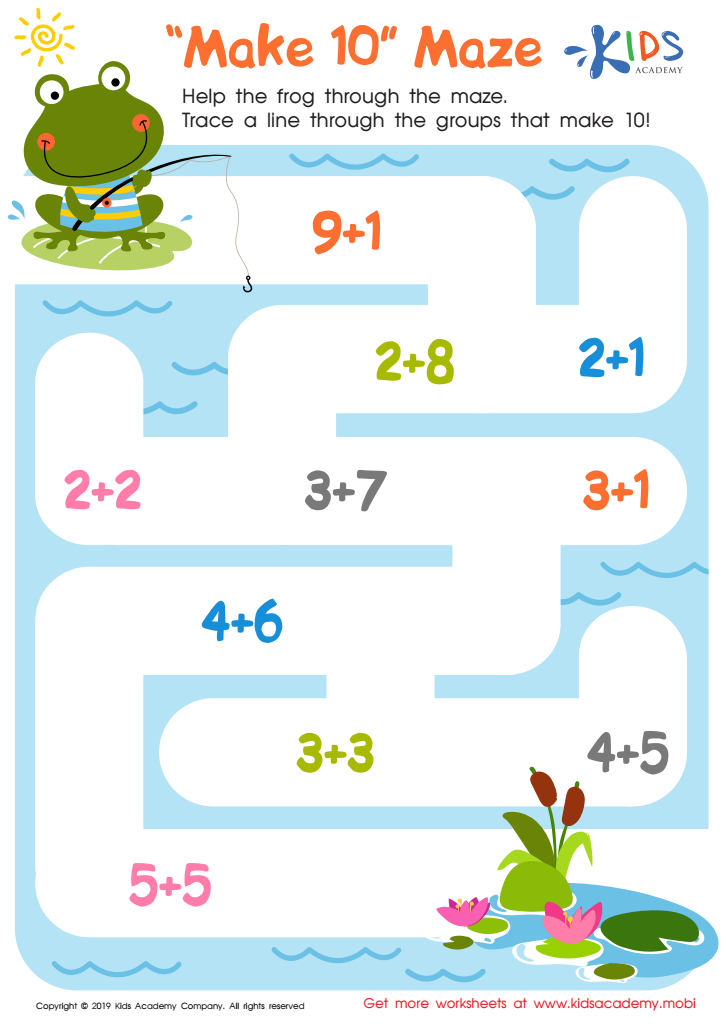
Make 10 Maze Worksheet

Make 10 Maze Worksheet

Help your child's frog friend make its way out of the maze! Mazes are an enjoyable way to get your kids to learn and can be a challenge. Have your kids take a look at this tracing sheet and help the frog make its way through the maze by tracing a line through the groups of equations that make 10. It’ll be a fun time for everyone!
Make 10 Maze Worksheet
Worksheet
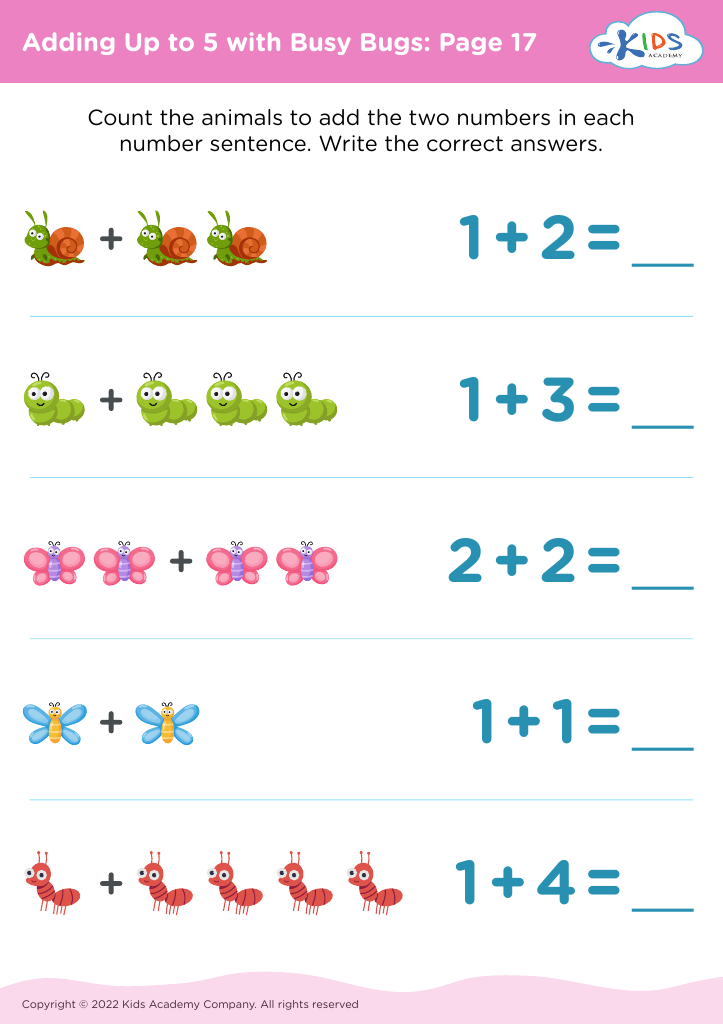
Adding Up to 5 with Busy Bugs: Page 17
Worksheet
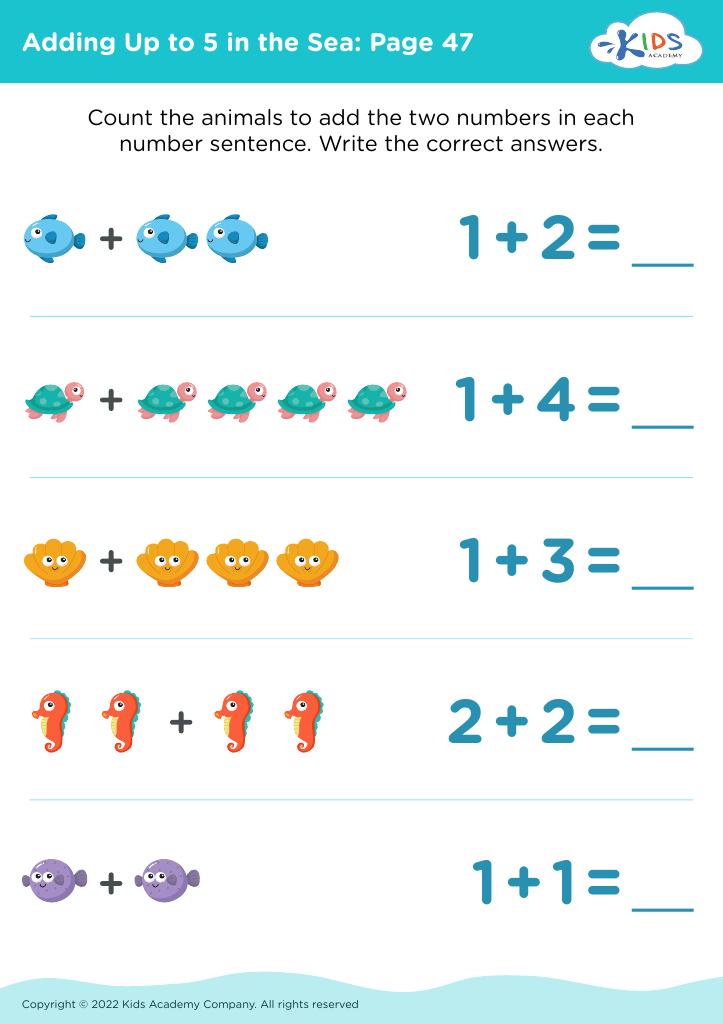
Adding Up to 5 in the Sea: Page 47
Worksheet
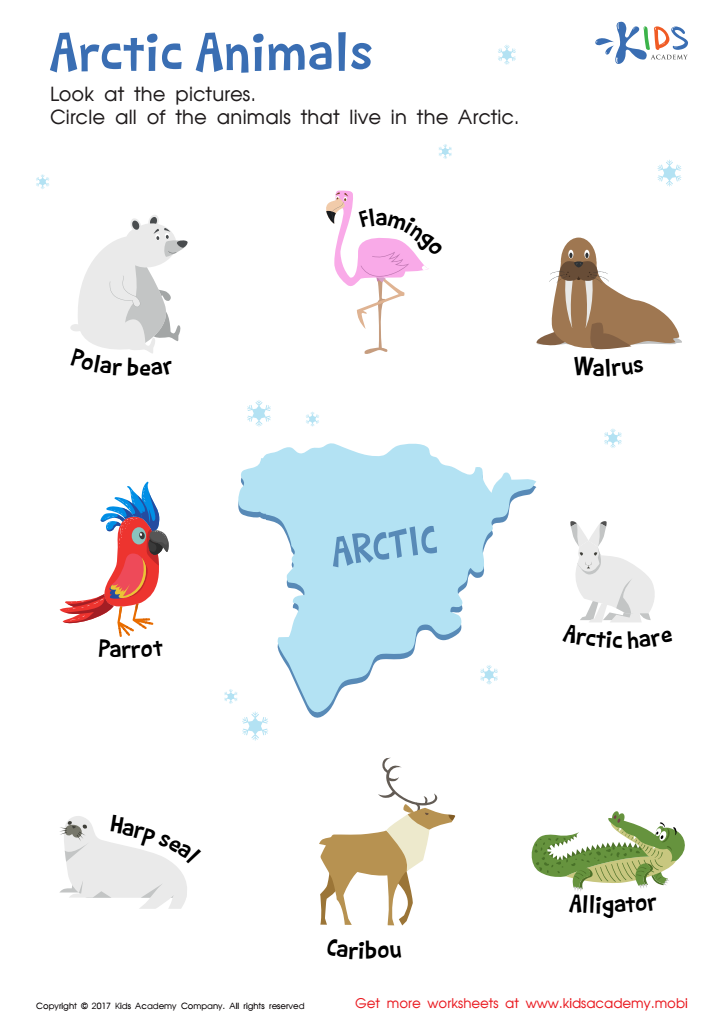
Arctic Animals Worksheet

Arctic Animals Worksheet

Kids love animals and this worksheet is a great way to teach them where they live. It reinforces classification skills and introduces new animals, like the Arctic hare. Use it to discuss the Arctic climate and how these animals live, then ask your child where other animals live to keep the conversation going.
Arctic Animals Worksheet
Worksheet
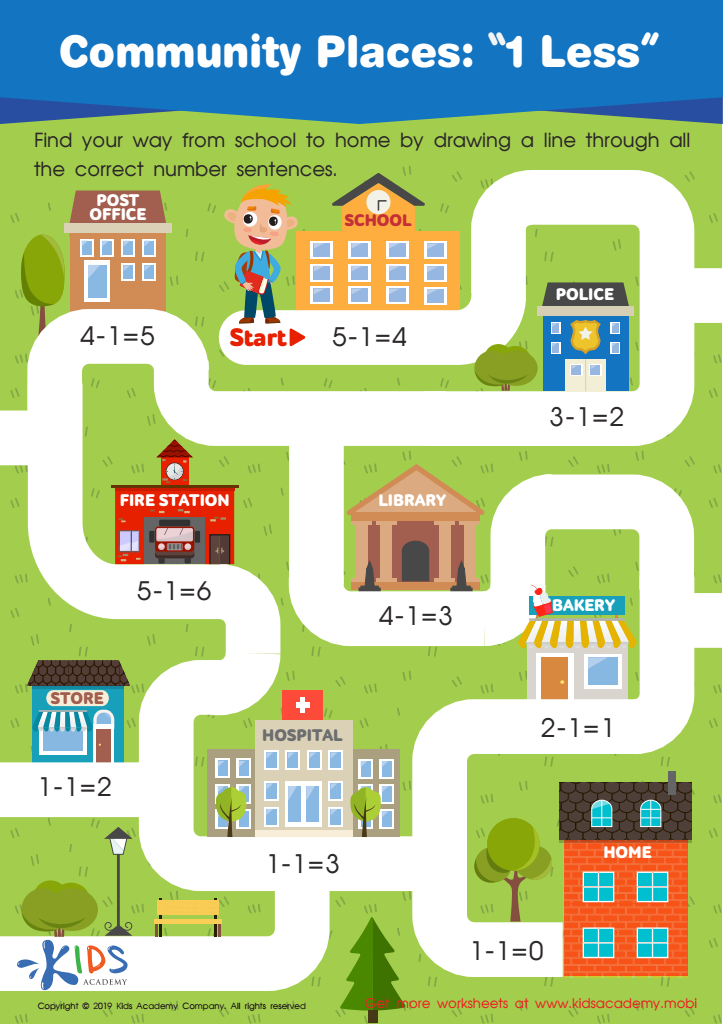
Community Places: 1 Less Worksheet
Community Places: 1 Less Worksheet

Have your kindergarteners draw a line through the correct number sentences as they find their way home from school. Ask them to identify the people, places, and buildings in their community and the jobs they do.
Community Places: 1 Less Worksheet
Worksheet
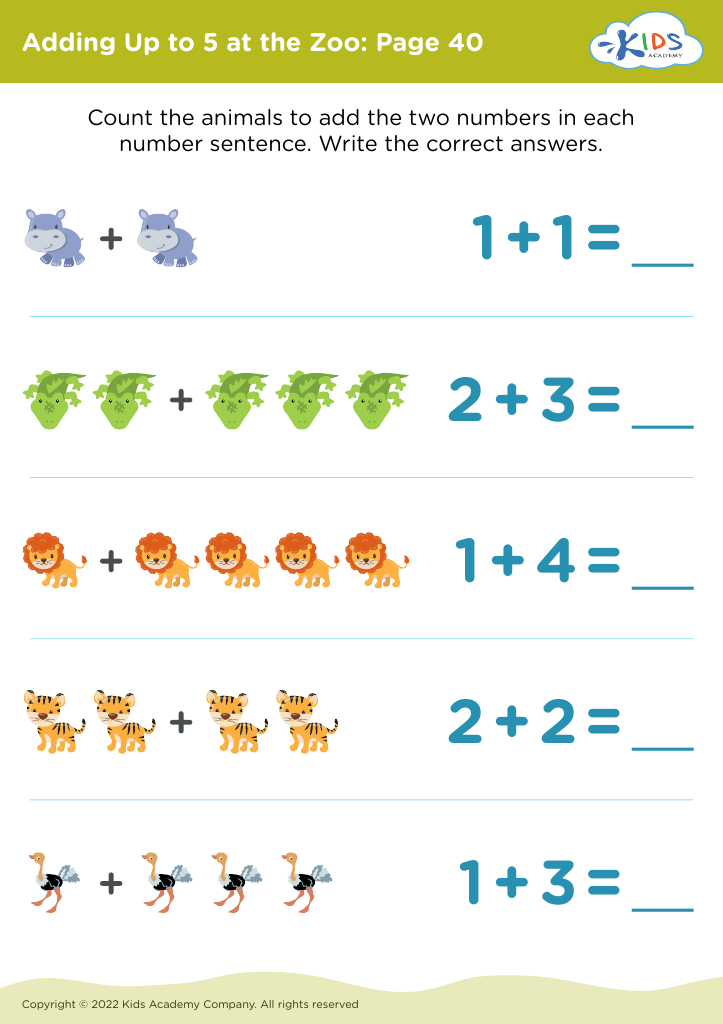
Adding Up to 5 at the Zoo: Page 40
Worksheet
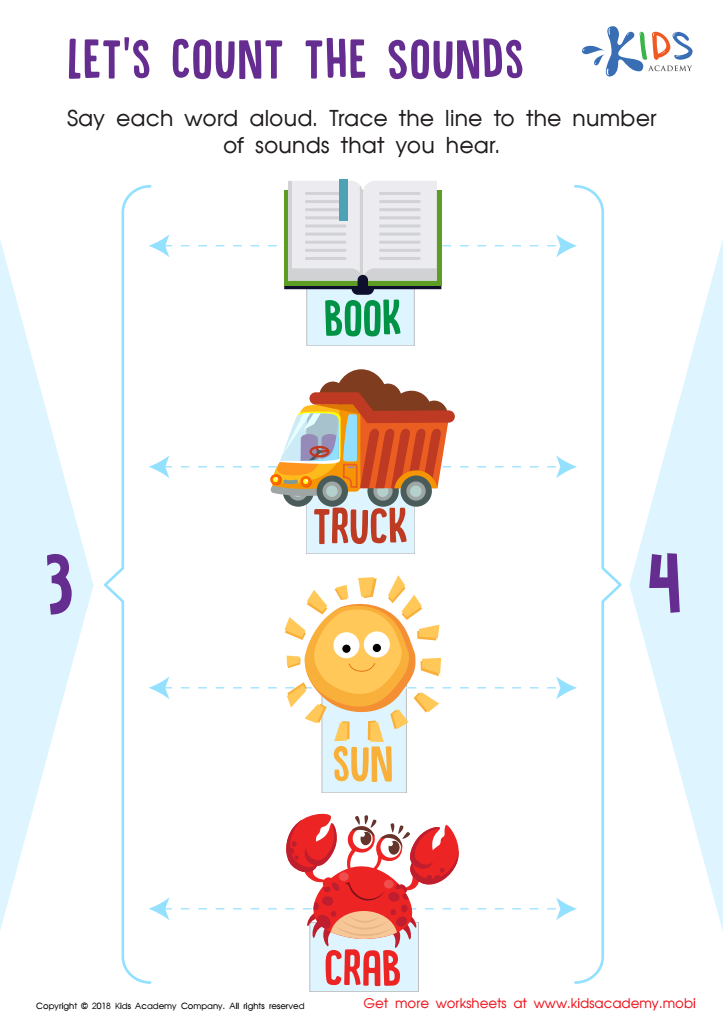
Let's Count the Sounds Worksheet

Let's Count the Sounds Worksheet

This bright and cheery traceable worksheet encourages children to practice auditory discrimination and phonological awareness. Using picture clues, they read each word and trace the line that represents the number of sounds heard. This builds decoding skills and helps them become successful readers.
Let's Count the Sounds Worksheet
Worksheet
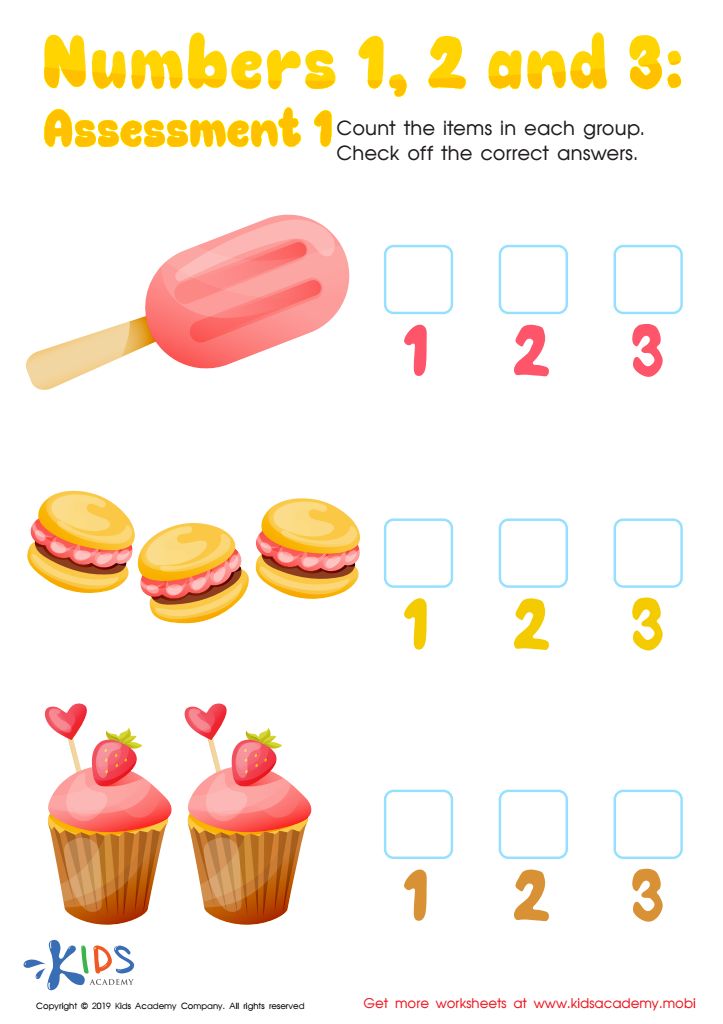
Numbers 1, 2 and 3: Assessment 1 Worksheet
Numbers 1, 2 and 3: Assessment 1 Worksheet

This bright and colorful numbers assessment worksheet is a great way to assess your child's numeracy skills. It provides a sweet treat for them, and helps them recognise 1, 2 or 3 objects. One-to-one representation is key for foundational math skills, and this PDF helps your child build these essential skills.
Numbers 1, 2 and 3: Assessment 1 Worksheet
Worksheet
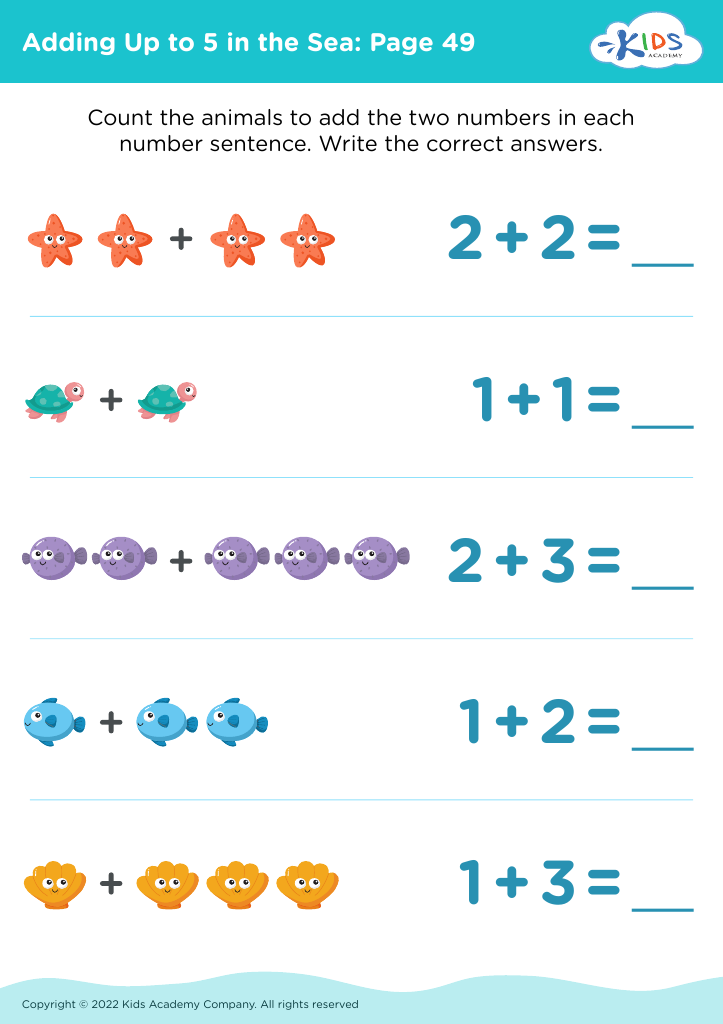
Adding Up to 5 in the Sea: Page 49
Worksheet
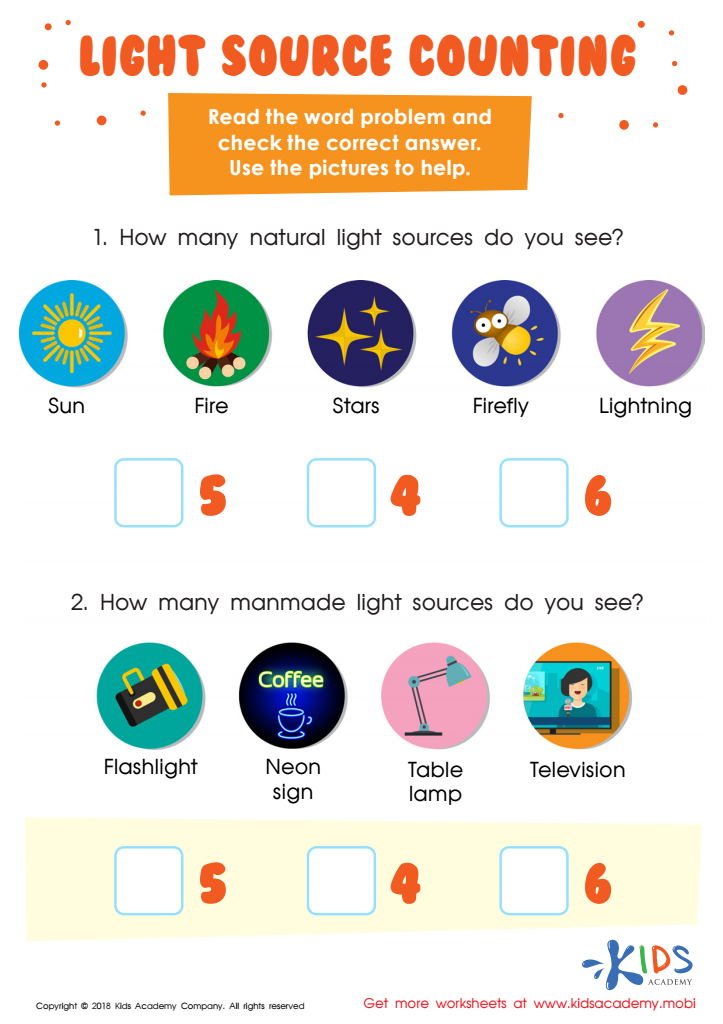
Light Source Counting Worksheet

Light Source Counting Worksheet

Help your students properly understand and interpret word problems with this worksheet. Read each problem aloud and have them check the correct answers. Pictures are included to aid in problem-solving. If they're still struggling, be sure to provide guidance and support.
Light Source Counting Worksheet
Worksheet
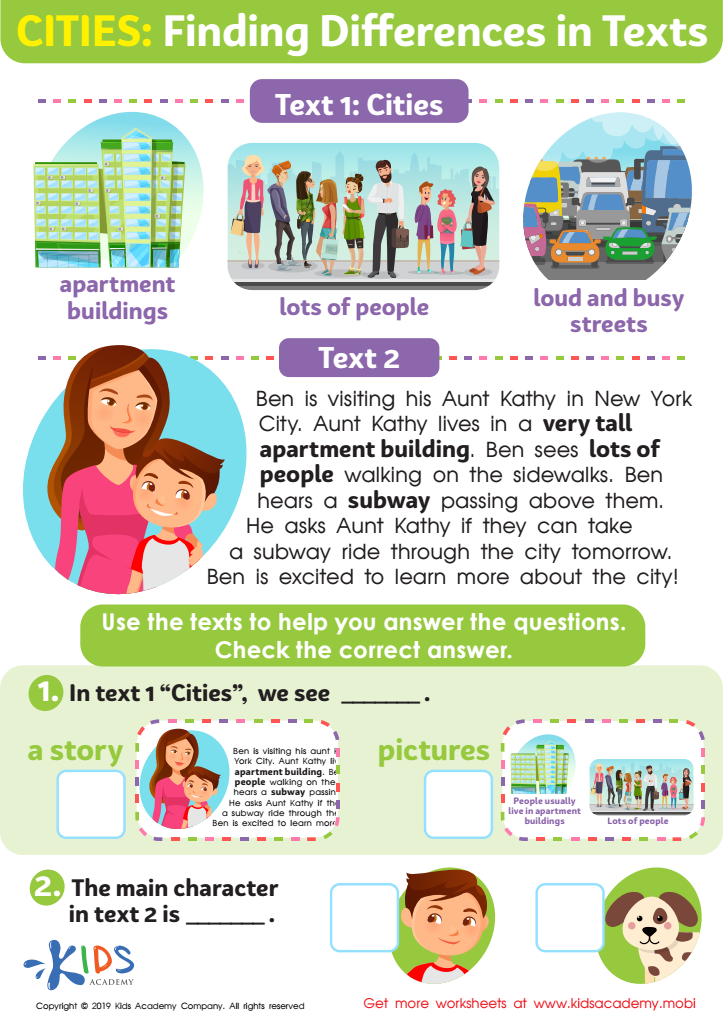
Cities: Finding Differences Worksheet
Cities: Finding Differences Worksheet
Critical thinking is essential for reading comprehension. New readers must be able to identify the key information in different text formats. This worksheet helps children learn what they might find in cities and how to differentiate between stories and pictures.
Cities: Finding Differences Worksheet
Worksheet
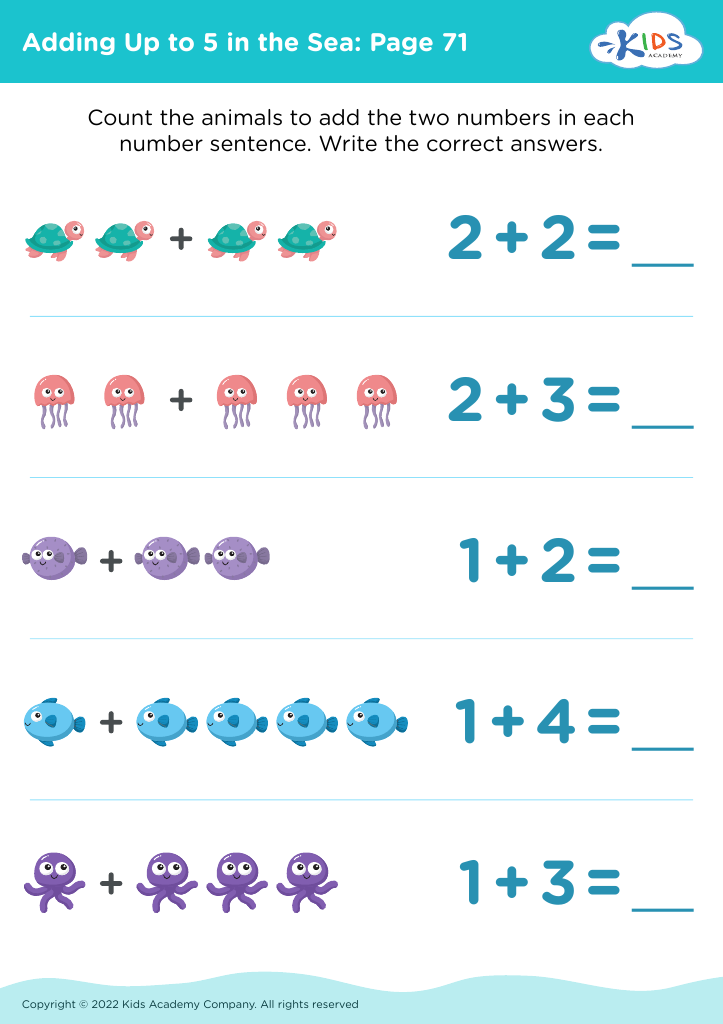
Adding Up to 5 in the Sea: Page 71
Worksheet
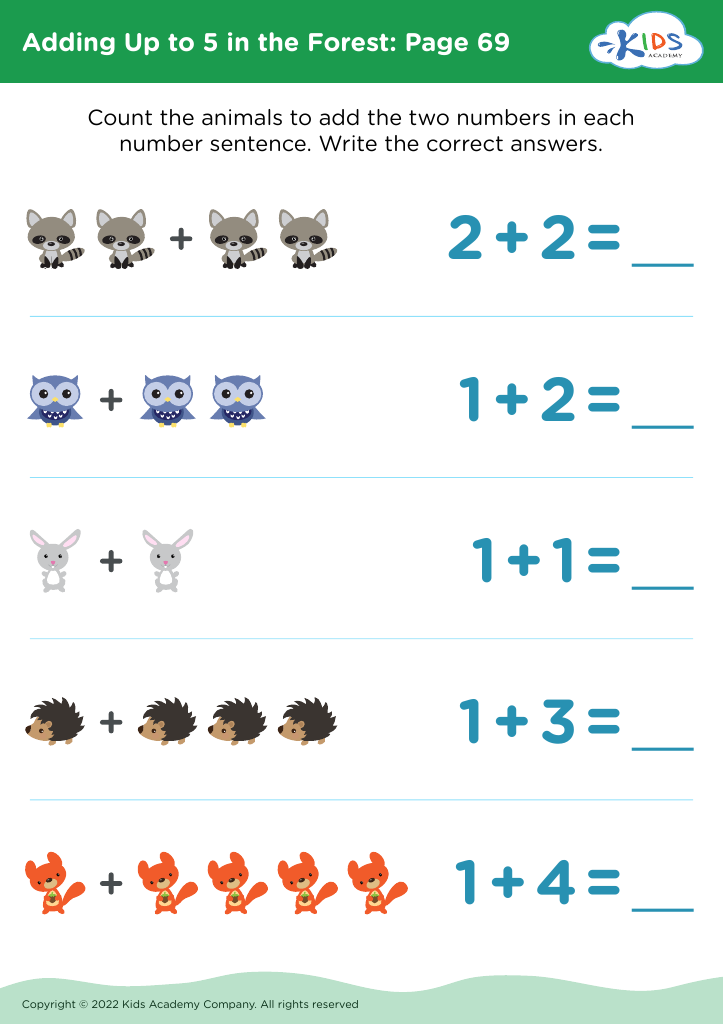
Adding Up to 5 in the Forest: Page 69
Worksheet
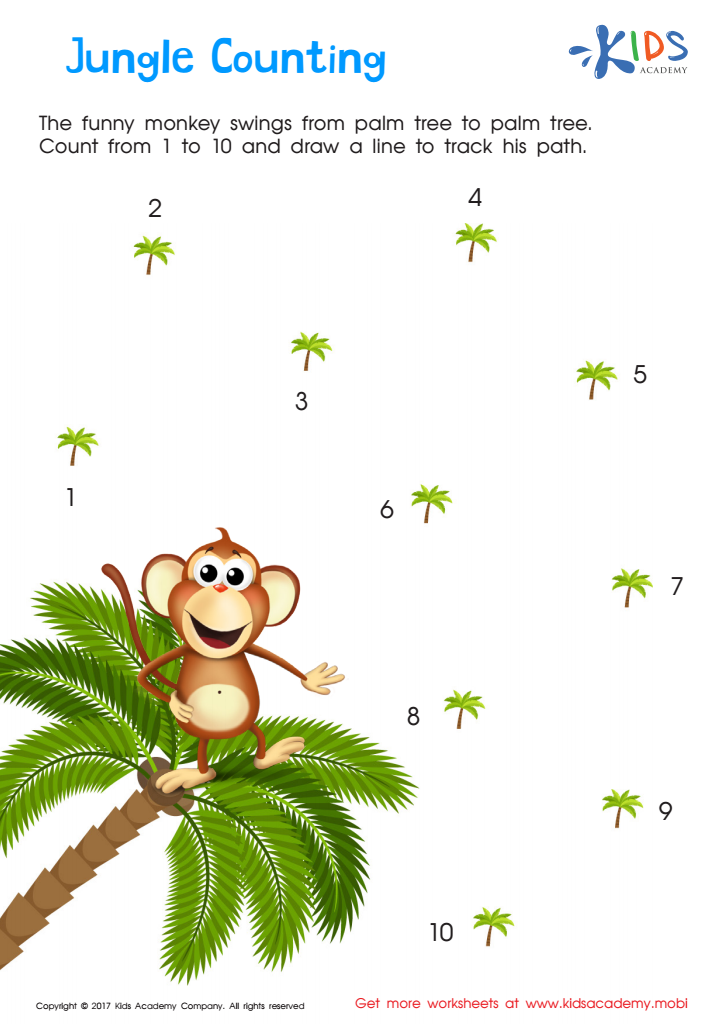
Dot to Dot Numbers 1-10

Jungle Counting Connect Dots Worksheet
Help your child count from 1-10 and practice problem solving skills with this dot to dot worksheet. Your child will enjoy helping the cute monkey swing from tree to tree while honing their math skills. Let them have a jungle-themed counting adventure!
Jungle Counting Connect Dots Worksheet
Worksheet
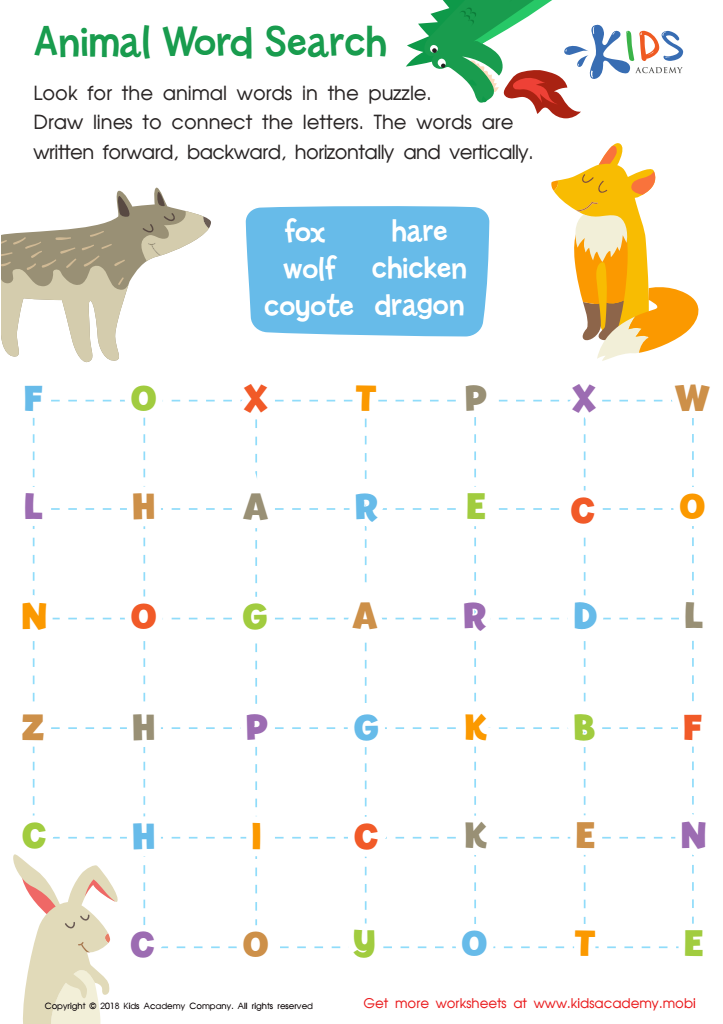
Animal Word Search Worksheet

Animal Word Search Worksheet

Students can have fun and strengthen spelling and vocabulary skills with this word search worksheet. Search for animal words and circle the letters in the puzzle. Words can be found forwards, backwards, horizontally or vertically, providing a great challenge to foster critical thinking skills. An enriching activity for all ages!
Animal Word Search Worksheet
Worksheet
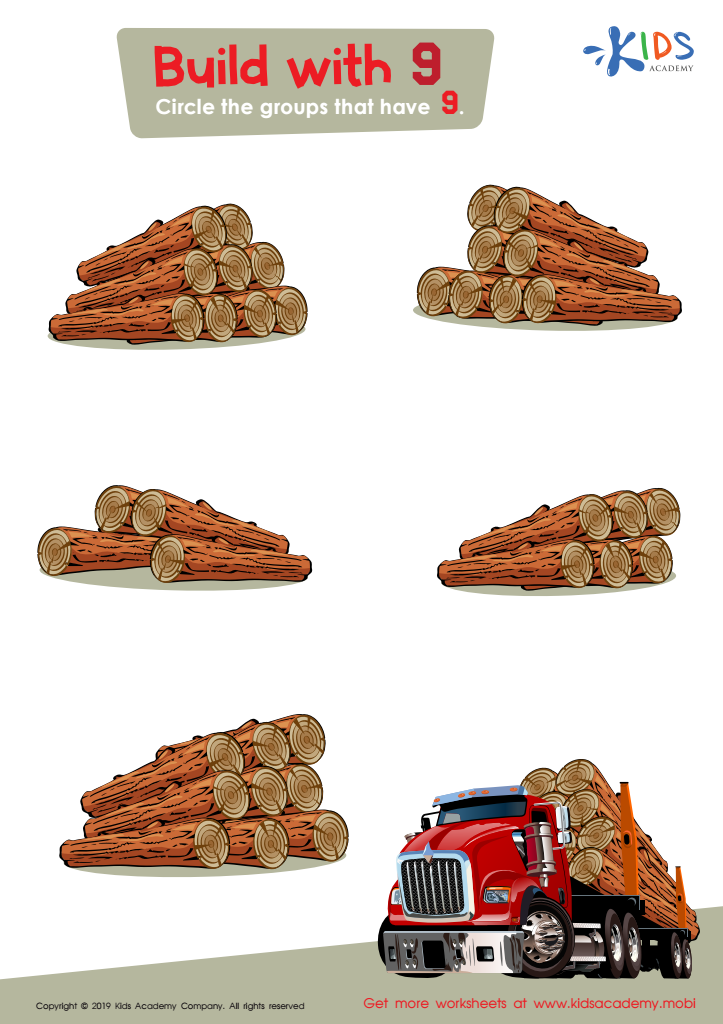
Build with 9 Worksheet

Build with 9 Worksheet

Your students' learning journey can be challenging, but ultimately rewarding. This worksheet helps them practice counting: count the logs in all the groups and circle those with 9 logs.
Build with 9 Worksheet
Worksheet


Cognitive development in children aged 5-6 is crucial as it lays the foundation for future learning, problem-solving, and social interactions. At this age, children's brains are rapidly growing and forming new neural connections, making it an optimal period for acquiring essential skills. By nurturing cognitive development, parents and teachers can enhance children's abilities to think, understand, and remember.

During this stage, kids begin to develop important cognitive abilities such as memory, attention, and the capacity to understand complex concepts. For example, they start learning how to count, recognize letters, and understand the consequences of their actions. These skills are fundamental for their success in school and everyday life.

In addition, cognitive development is closely tied to emotional and social growth. Children with strong cognitive skills are better able to regulate their emotions, engage in meaningful social interactions, and cope with challenges. They become more resilient and adaptable, which are important traits for overall well-being.

Moreover, early cognitive development sets the stage for lifelong learning. Children who receive rich cognitive stimulation early on are more likely to develop a love for learning, perform well academically, and have better educational and professional outcomes in the long run. Therefore, parents and teachers should actively engage children in activities that stimulate their brains and provide supportive, enriching environments to foster robust cognitive development.