Filters

224 filtered results

Clear all filters
Favorites
With answer key
Interactive

224 filtered results

Difficulty Level

Grade


Check out this FREE "Cognitive Development" Trial Lesson for age 5-6!

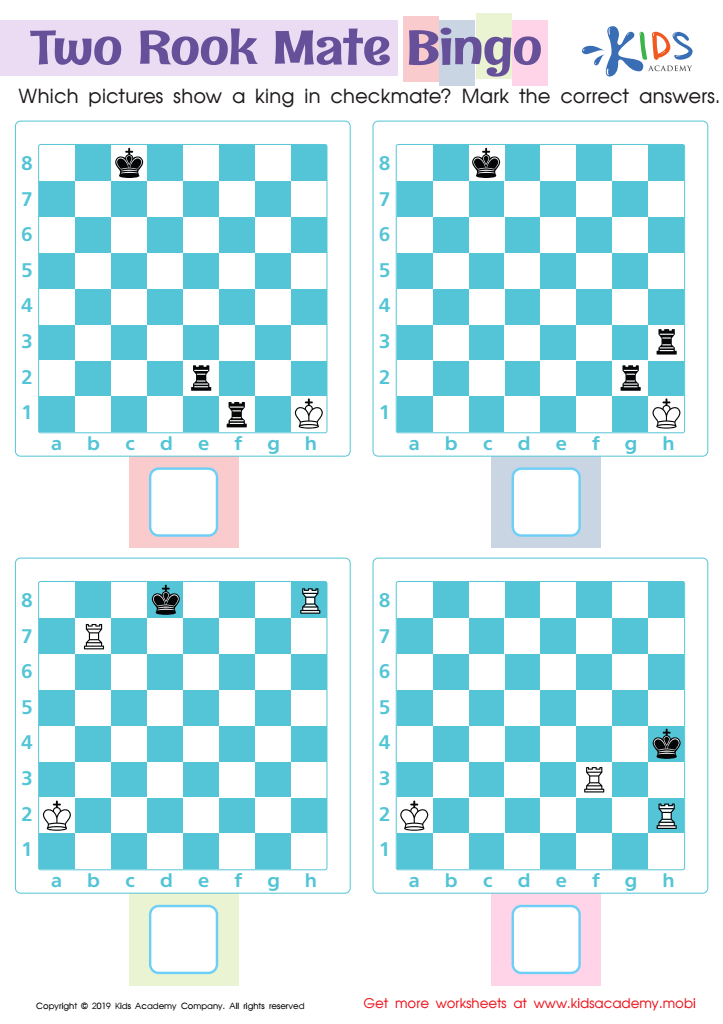
Checkmating Patterns: Two Rook Mate

Favorites
With answer key
Interactive
  • 5-6
  • Cognitive Development
Two Rook Bingo Worksheet

Two Rook Bingo Worksheet

Kids can have fun and strengthen their visual perception skills with Two Rook Mate Bingo. This worksheet challenges them to identify which chess boards show a king in checkmate using the Two Rook Mate strategy. Once they choose the correct one, they get the prize for checkmate! Playing chess helps kids with strategy, logic, and critical thinking.
Two Rook Bingo Worksheet
Worksheet
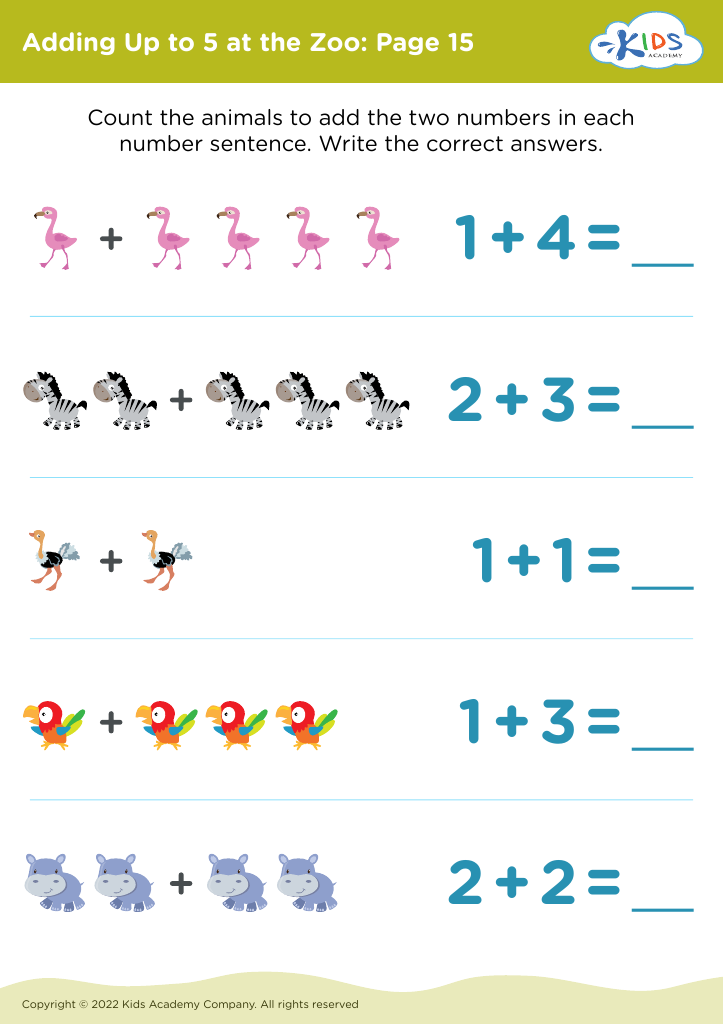
Adding Up to 5 at the Zoo: Page 15
Worksheet
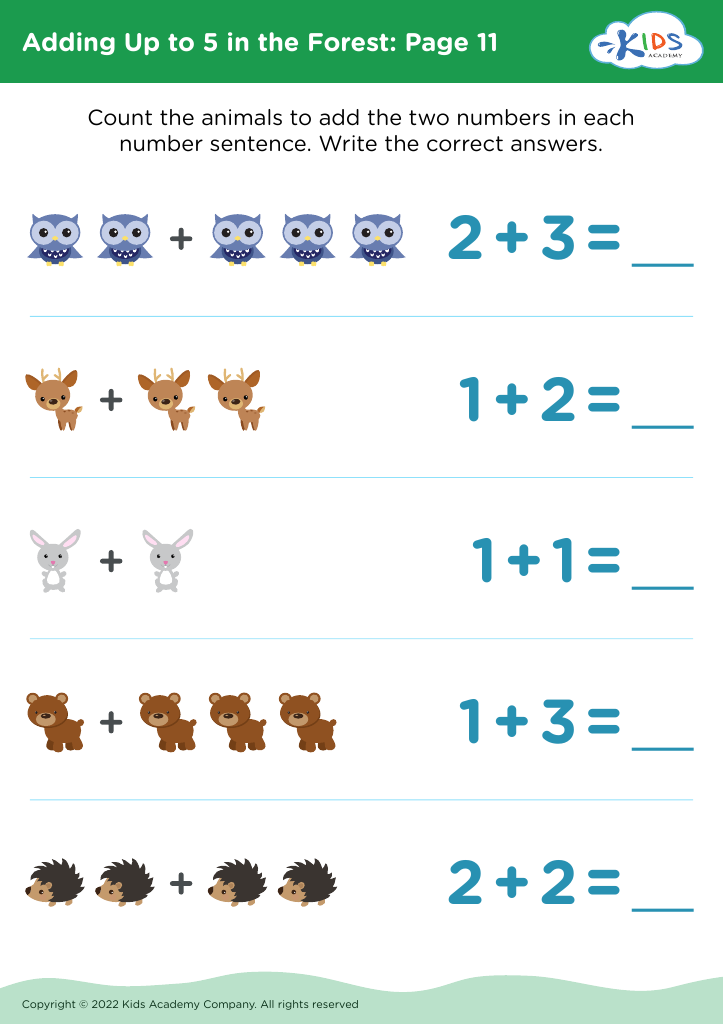
Adding Up to 5 in the Forest: Page 11
Worksheet
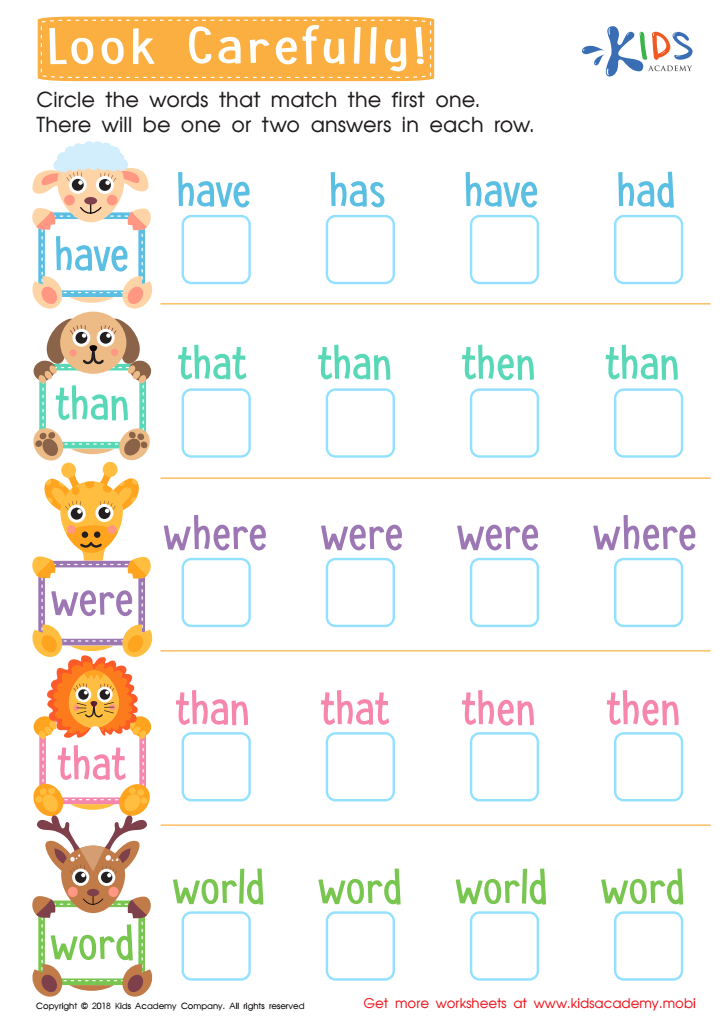
Look Carefully Worksheet

Look Carefully Worksheet

It's crucial to teach kids to identify sight words and become fluent readers. This free worksheet helps make it simpler for kids to learn the similarities and differences between similar words. They'll get practice by looking at the box word and selecting the one that matches from the row.
Look Carefully Worksheet
Worksheet
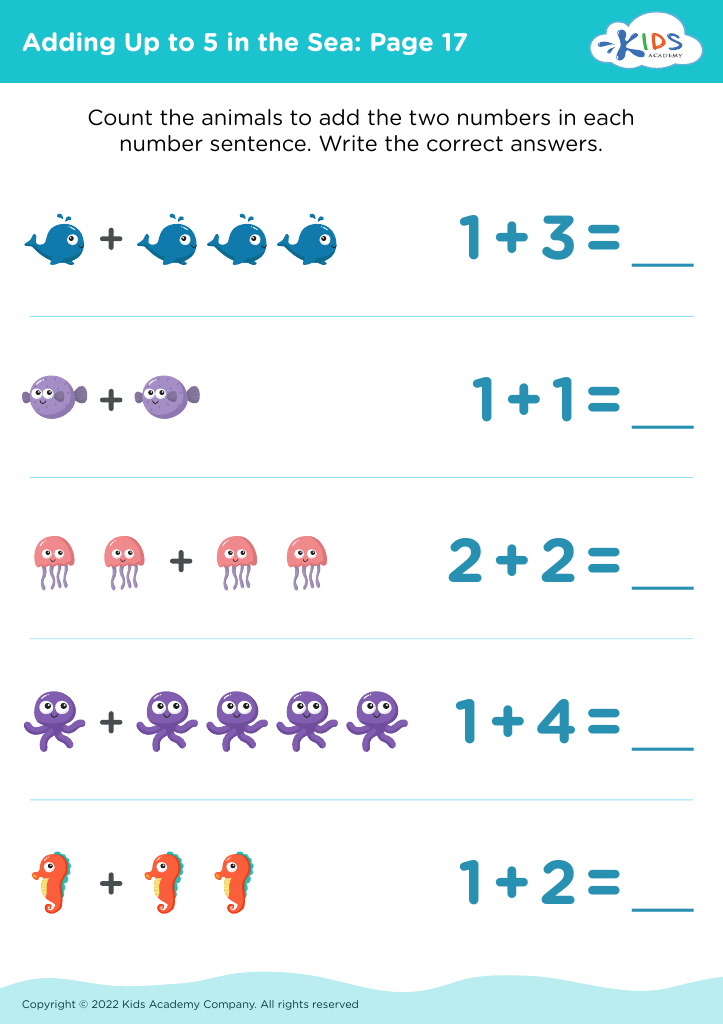
Adding Up to 5 in the Sea: Page 17
Worksheet
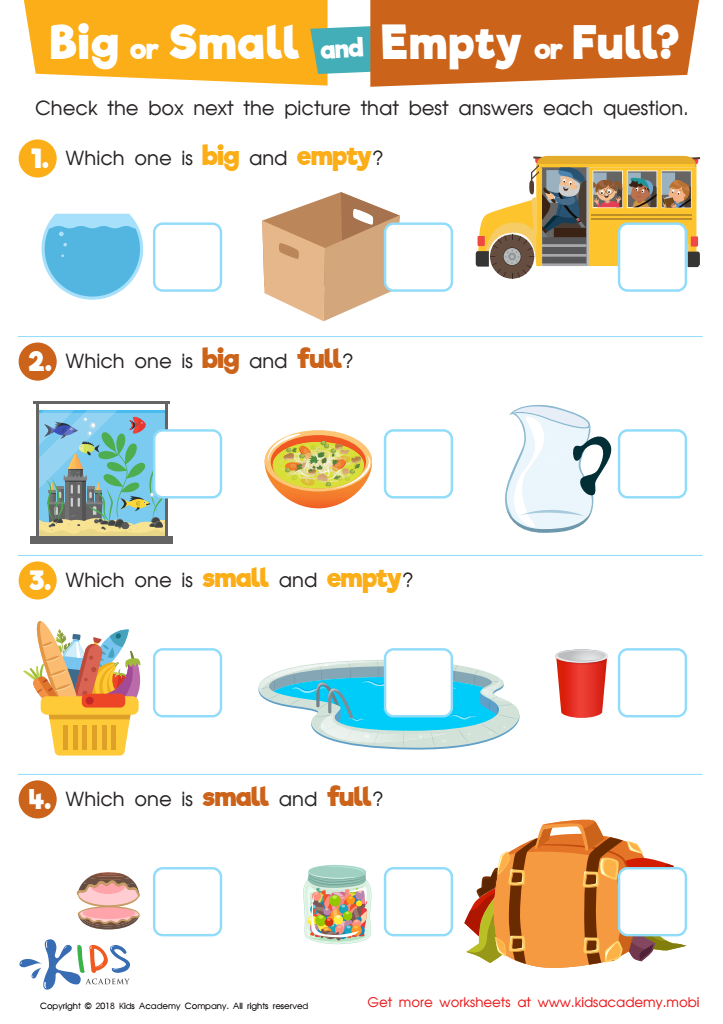
Big or Small and Empty or Full? Worksheet
Big or Small and Empty or Full? Worksheet
Early learners can develop their math skills by using this Worksheet with fun, familiar pictures. It reinforces concepts like big/small and empty/full, helping them to differentiate and identify objects that meet those definitions.
Big or Small and Empty or Full? Worksheet
Worksheet
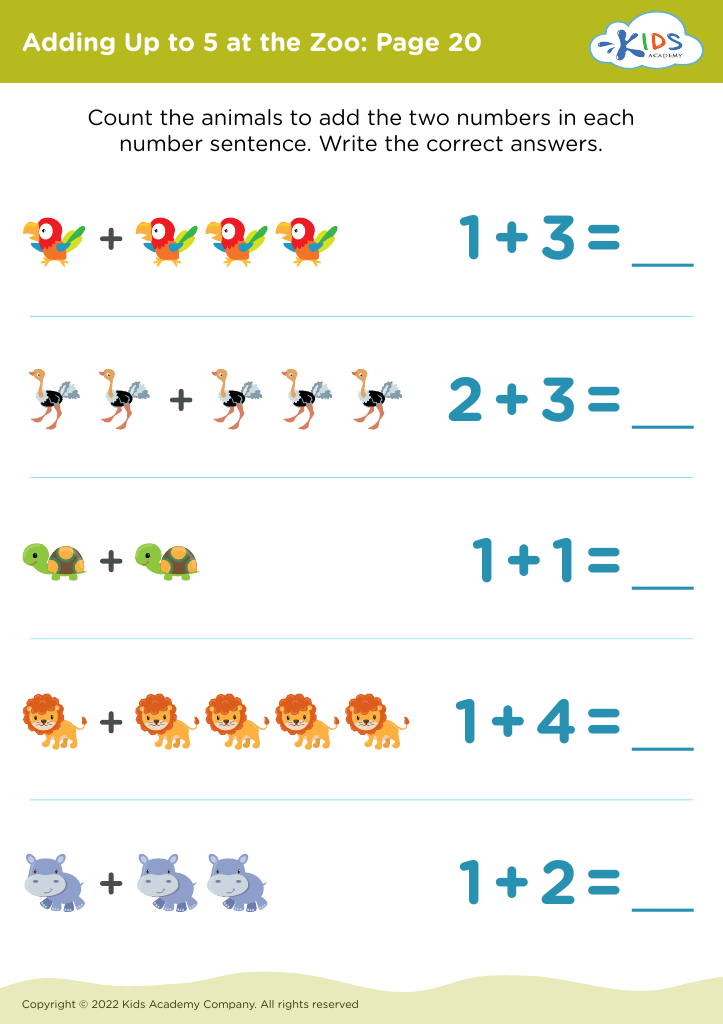
Adding Up to 5 at the Zoo: Page 20
Worksheet
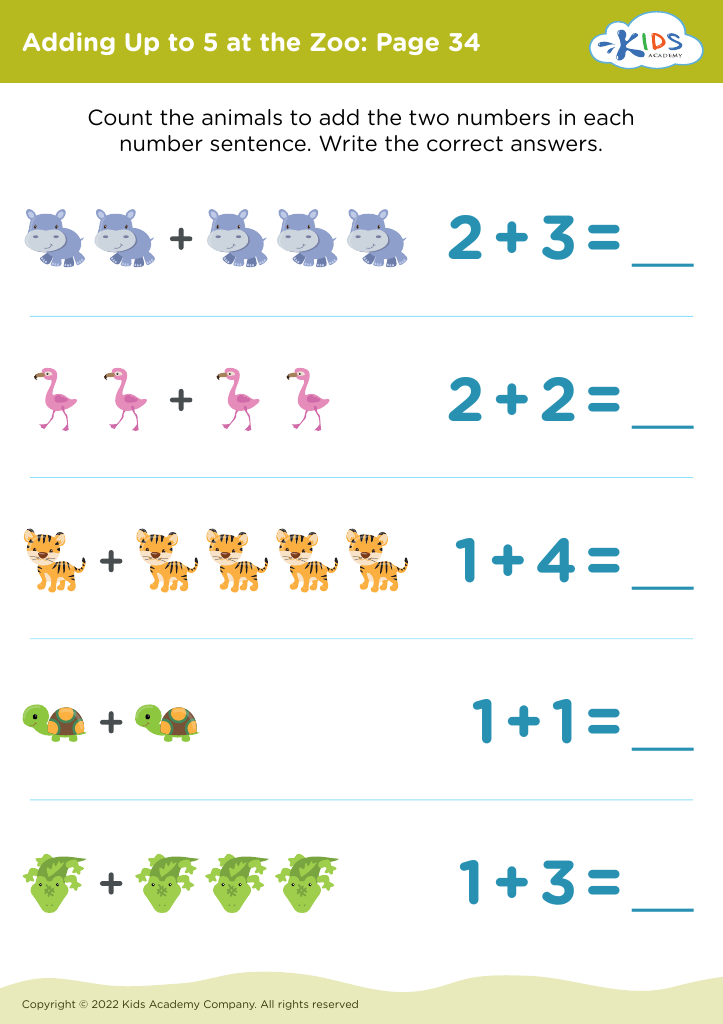
Adding Up to 5 at the Zoo: Page 34
Worksheet
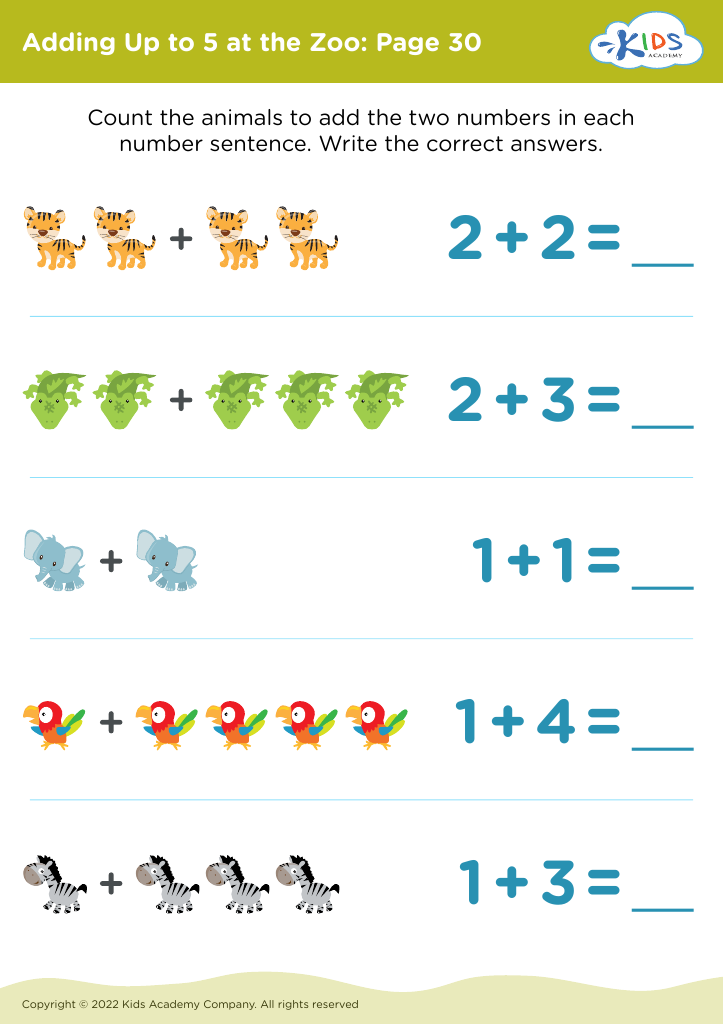
Adding Up to 5 at the Zoo: Page 30
Worksheet
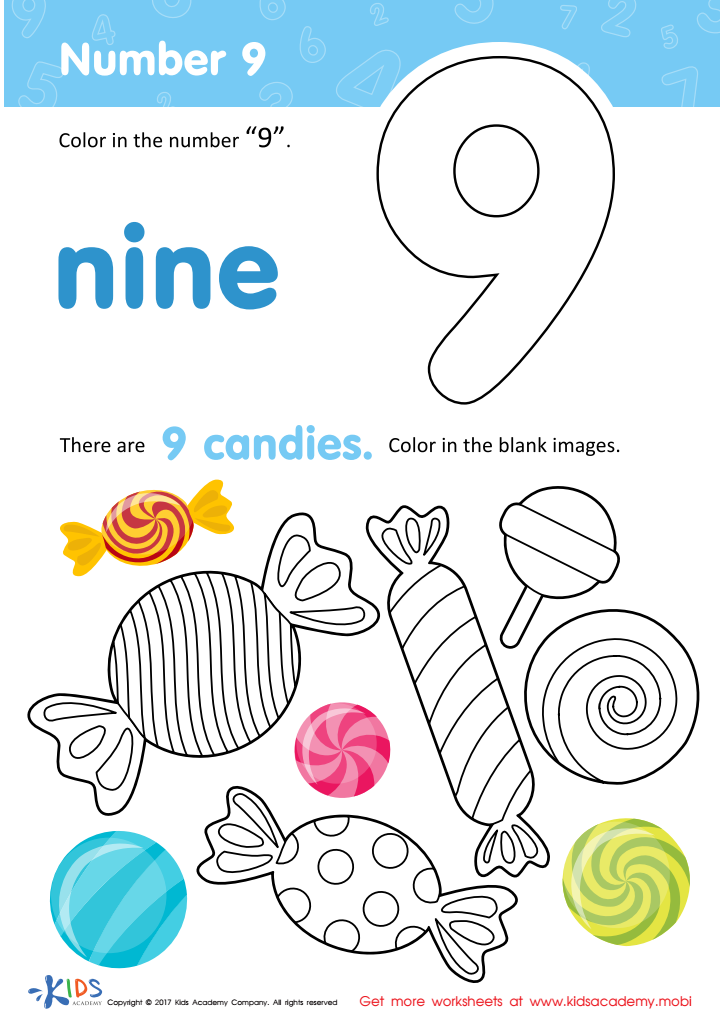
Coloring Page: Number 9

Number 9 Printable

Let your child hone their reading and counting skills with this fun coloring page! With the number 9 candies, your child can decorate their own favorite treats. Make learning a sweet experience and let their mouth water! Help them count and recognize the numbers while having fun.
Download (PDF)
Assign to My Students
Number 9 Printable
Worksheet
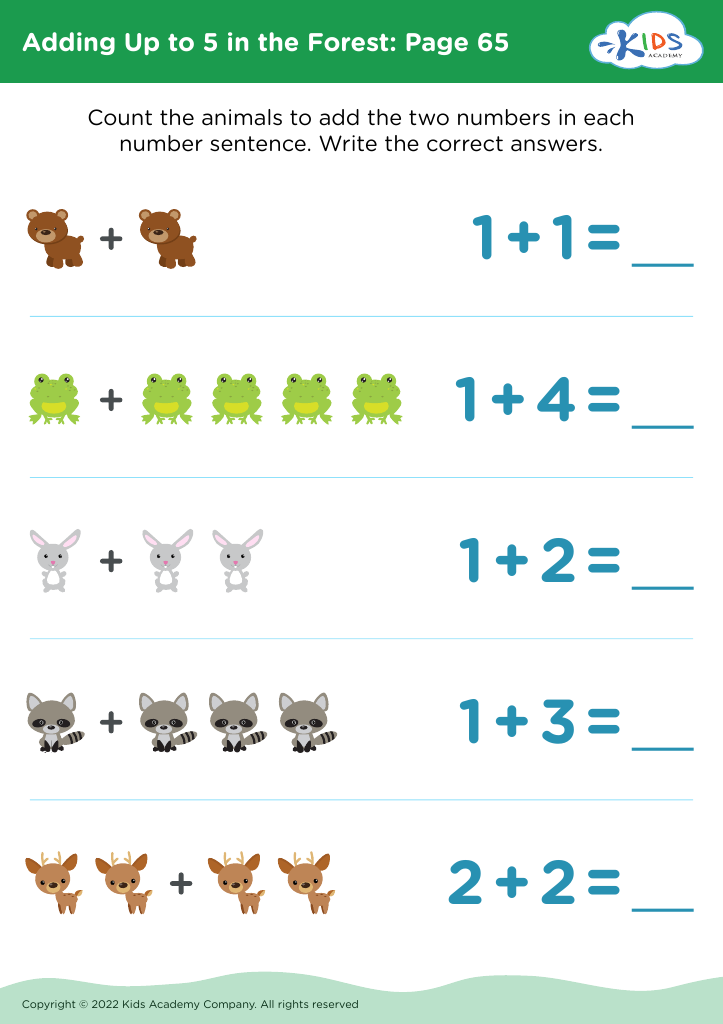
Adding Up to 5 in the Forest: Page 65
Worksheet
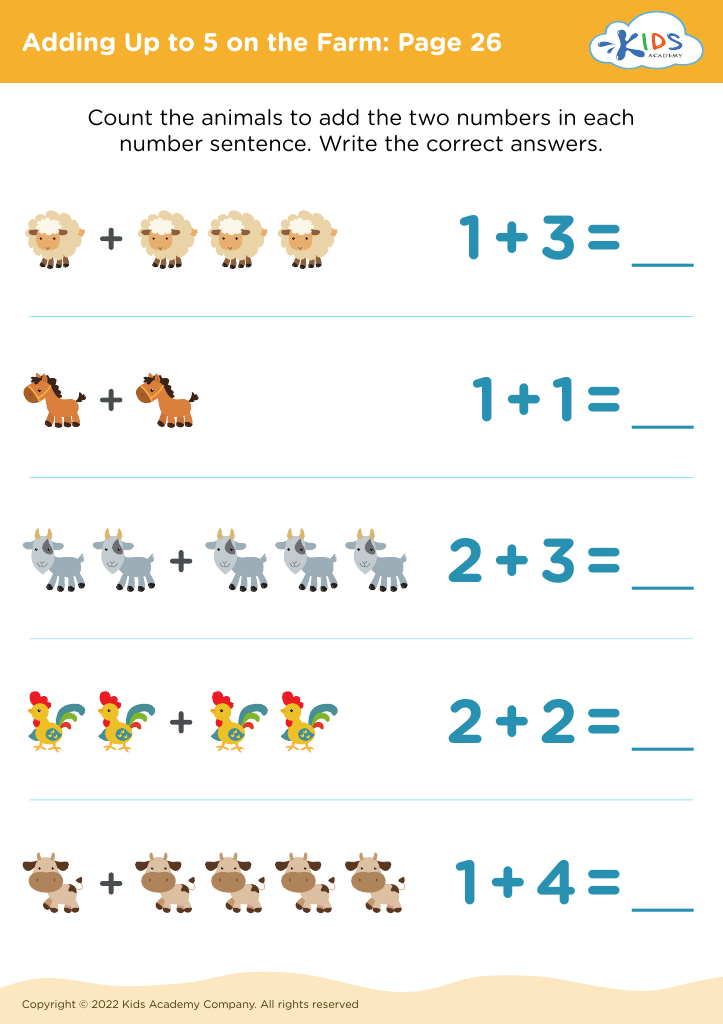
Adding Up to 5 on the Farm: Page 26
Worksheet
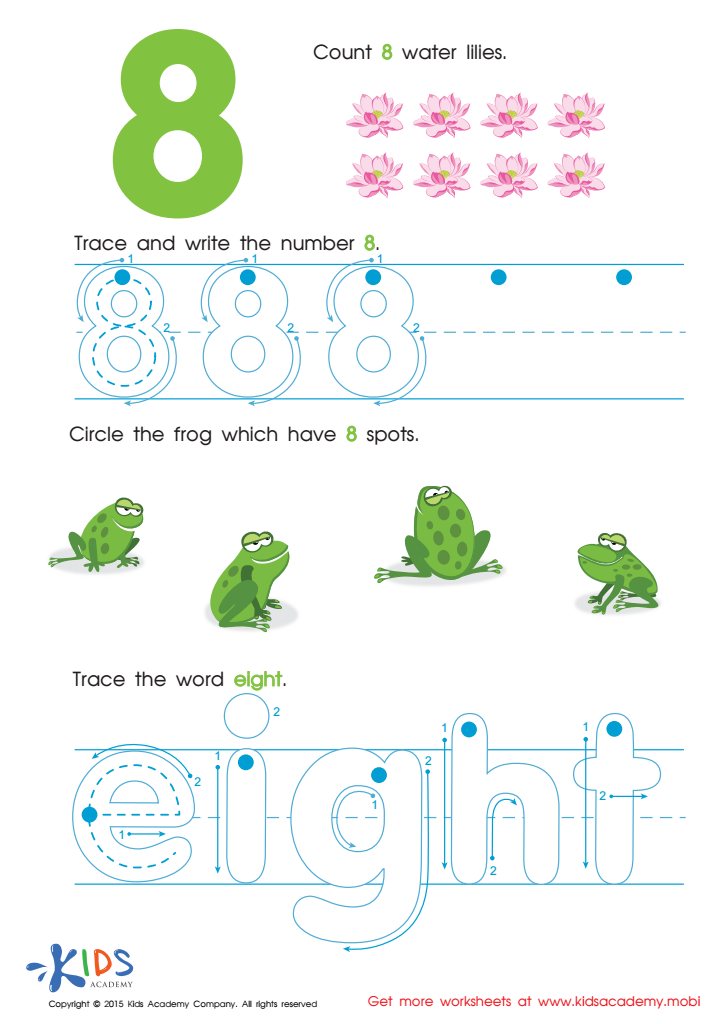
Learning Numbers Worksheets: Learn Number 8 Easily

Learn Number 8 Easily Worksheet

Kids can trace, write numbers and learn to pronounce them through exciting activities and games. Try our number worksheets for preschoolers to make learning fun!
Learn Number 8 Easily Worksheet
Worksheet
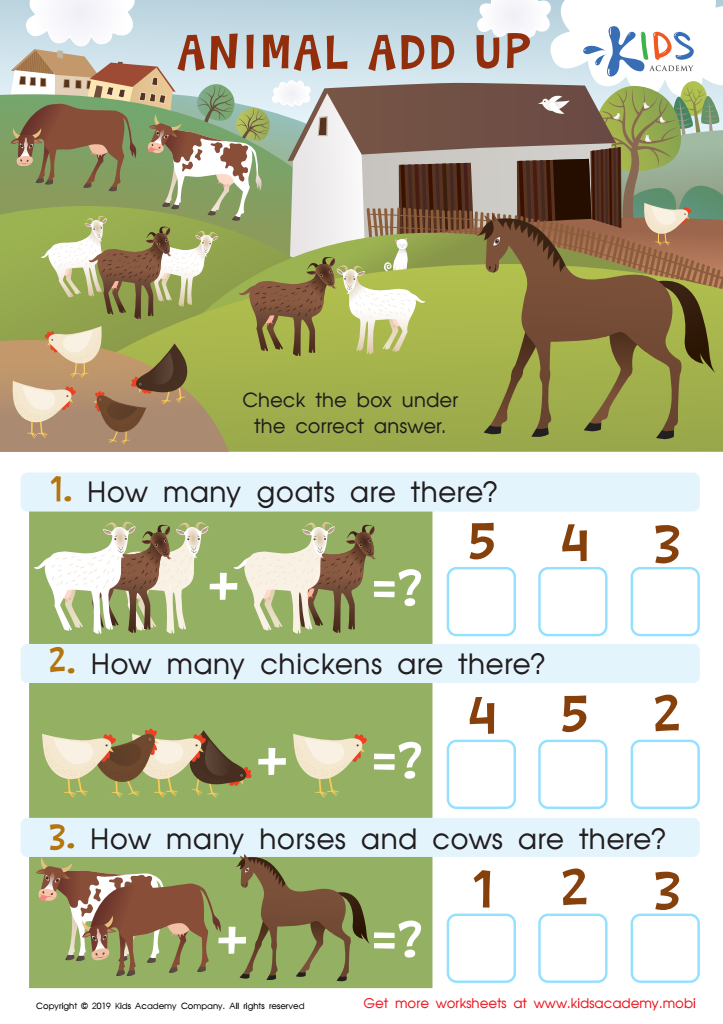
Animal Add Up Worksheet

Animal Add Up Worksheet

Animals are fun to observe and interact with. They can be seen at the zoo, parks, farms and in homes with pets. This worksheet helps kids identify animals, and build addition skills. Look at the picture with them and help name each animal. After that, add the animals up and check the box for the correct answer. 80 words.
Animal Add Up Worksheet
Worksheet
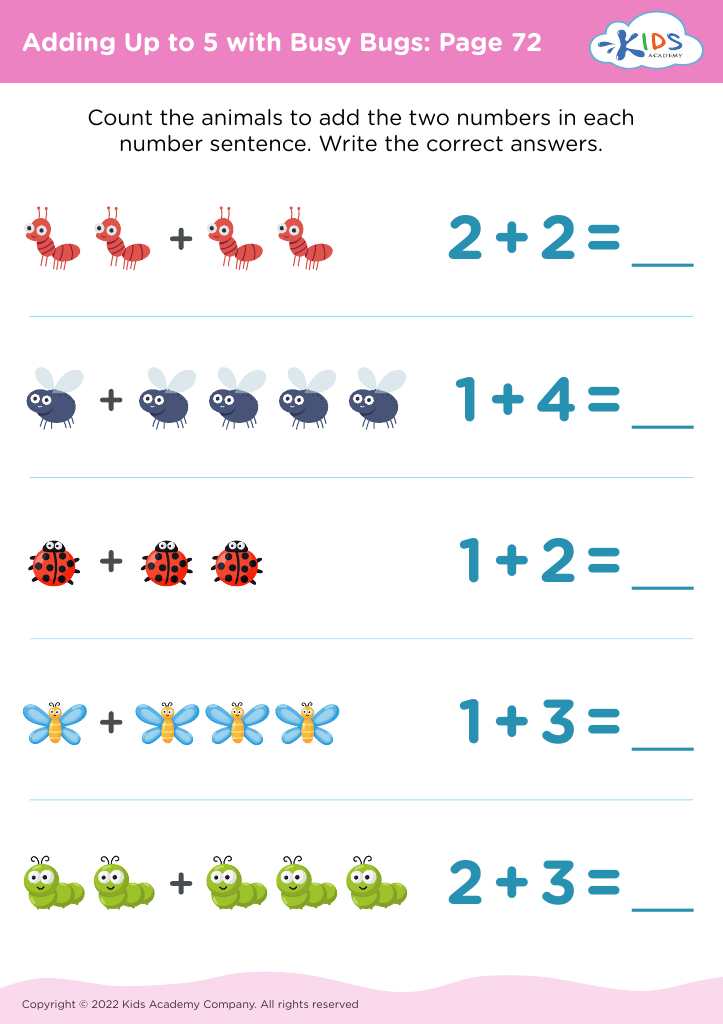
Adding Up to 5 with Busy Bugs: Page 72
Worksheet
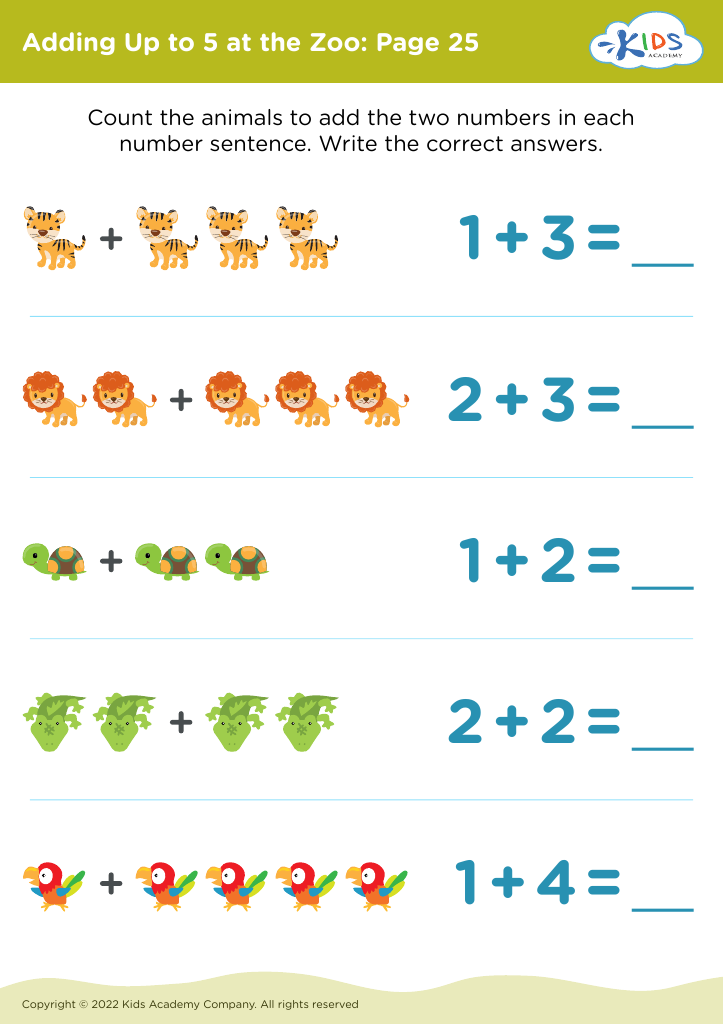
Adding Up to 5 at the Zoo: Page 25
Worksheet
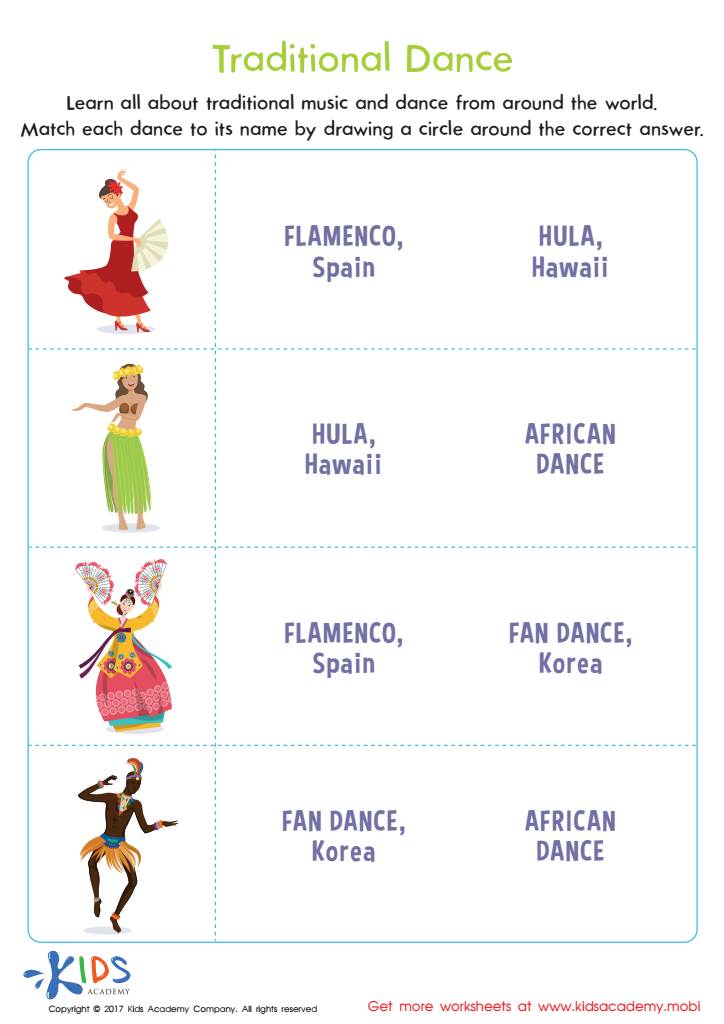
Traditional Dance Worksheet

Traditional Dance Printable
Introduce your child to traditional dances from across the globe with this worksheet. They'll learn to identify dances from different cultures, use their critical thinking skills and build an appreciation for different cultures. Let’s help kids to appreciate people’s differences and explore the world with this fun, colorful worksheet.
Traditional Dance Printable
Worksheet
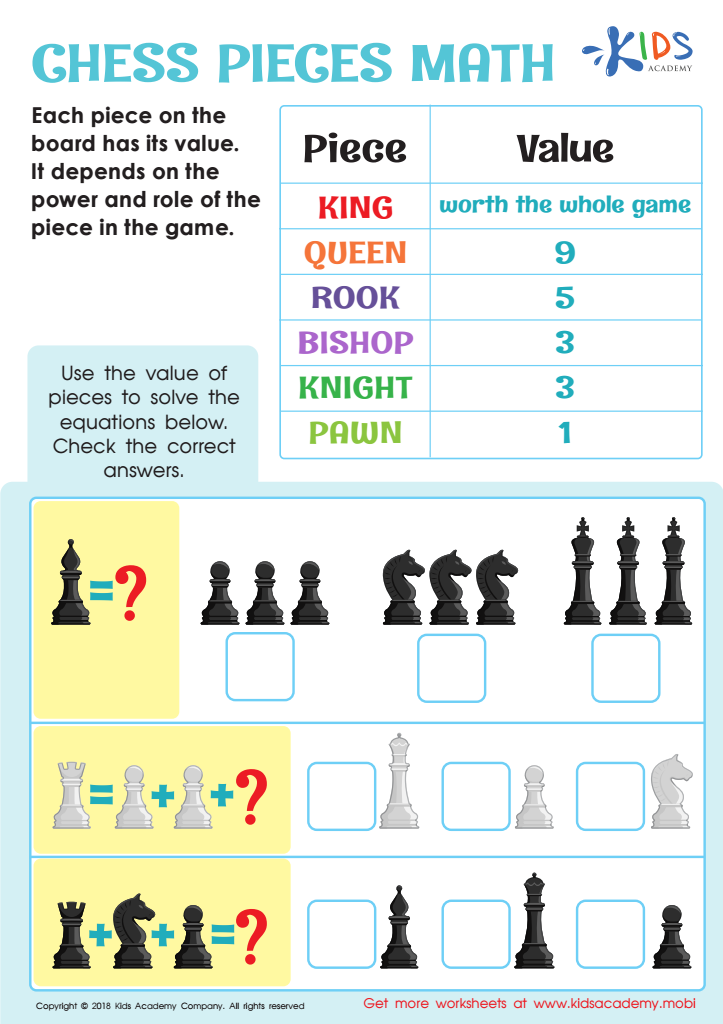
Chess Pieces Math Worksheet

Chess Pieces Math Worksheet

Chess involves math! Each piece has its own value, from the king (worth the entire game) to the queen (9 points), varying according to their power and role. In the worksheet, your child must use these values to solve the equations at the bottom.
Chess Pieces Math Worksheet
Worksheet
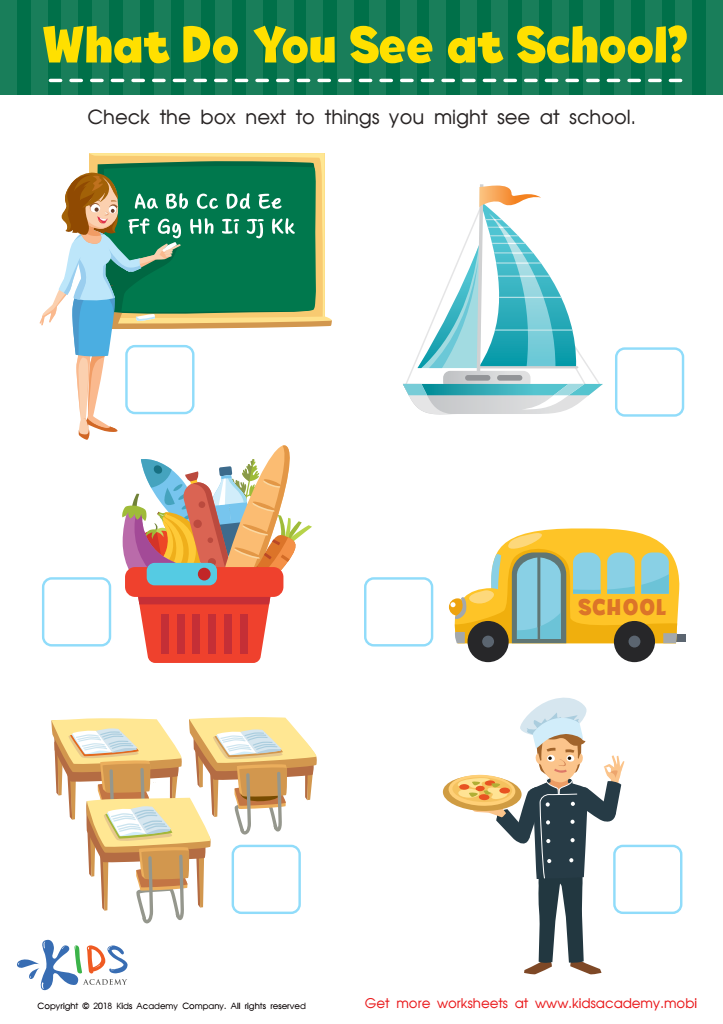
What Do you See at School? Worksheet

What Do you See at School? Worksheet

Have your kids give you a list of things they see at school. Then, view the worksheet together. Ask them to check the boxes next to the school items. Look for objects that can be found at school and those that don't belong. This is a great way to check their knowledge of what they see at school daily, except on weekends and holidays.
What Do you See at School? Worksheet
Worksheet
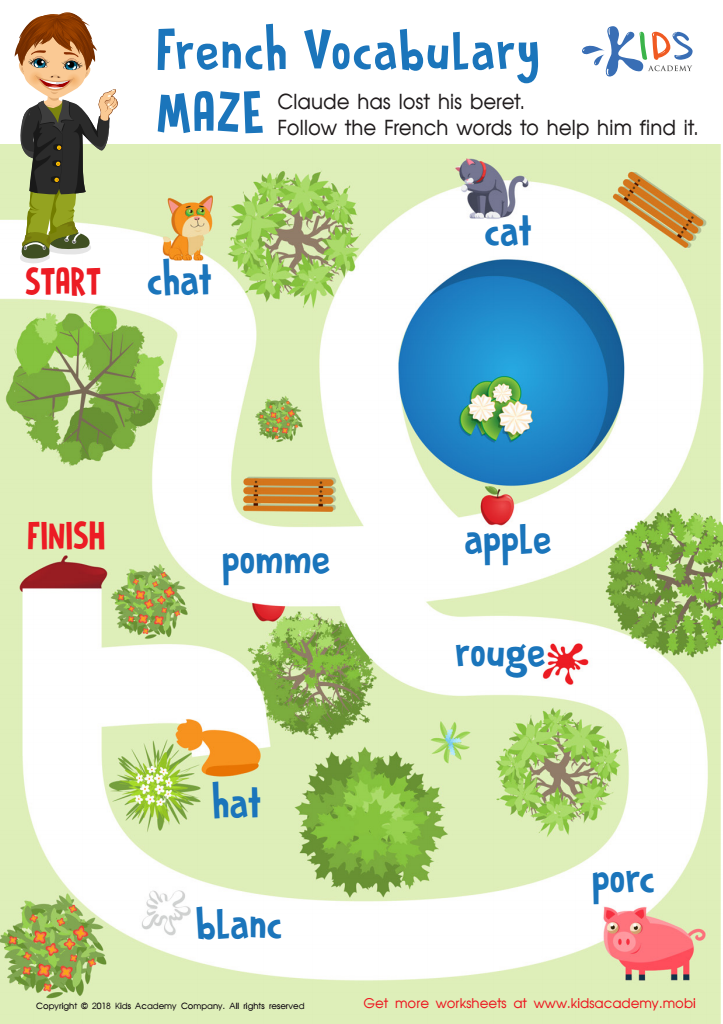
French Vocabulary Maze Worksheet

French Vocabulary Maze Worksheet

Kids can learn they're part of a global community with this fun maze worksheet. Claude needs help finding his beret, and by using the pictures children will develop their fine-motor skills. They don't even know they're learning new language words, they're just helping a friend!
French Vocabulary Maze Worksheet
Worksheet
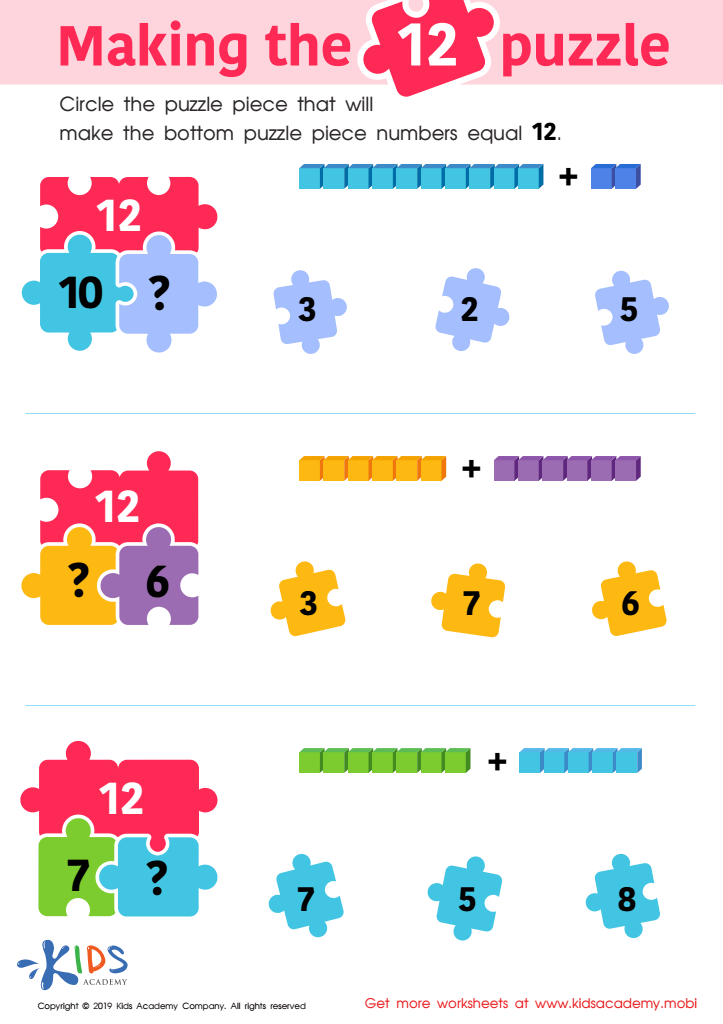
Making the 12 Puzzle Worksheet

Making the 12 Puzzle Worksheet

Engage preschoolers in learning with this fun and colorful worksheet. Ask them to look at the picture and identify the missing equation on each puzzle piece; then help them solve the problems. When all the puzzle pieces make the bottom numbers equal 12, have them circle it. This is a great way to combine learning and fun!
Making the 12 Puzzle Worksheet
Worksheet
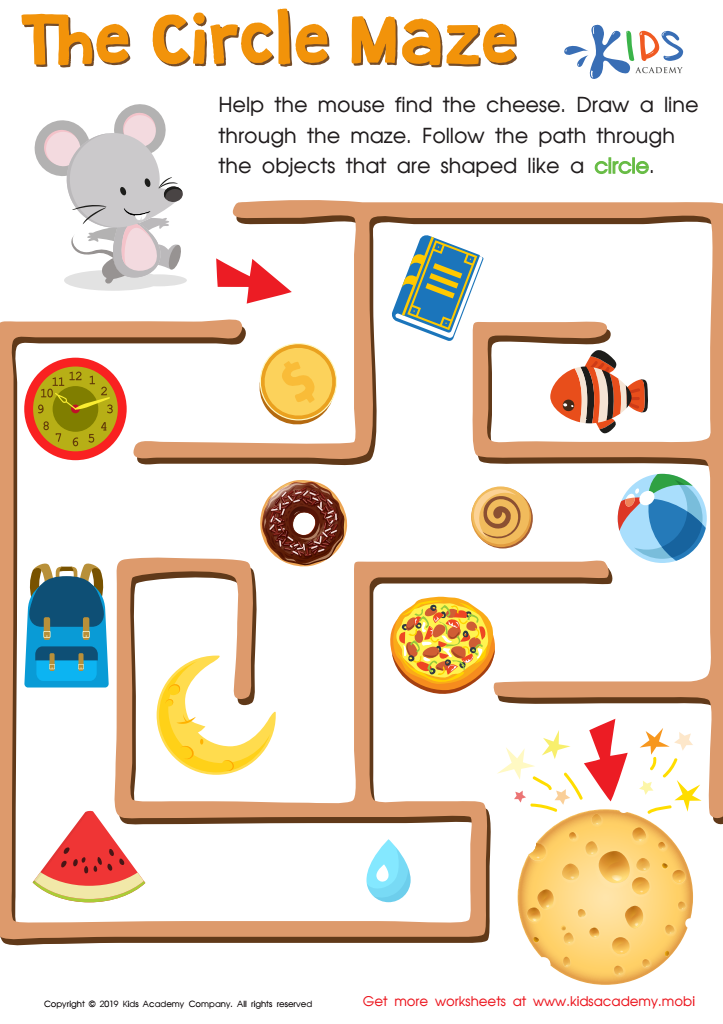
The Circle Maze Worksheet
The Circle Maze Worksheet

Kids can have fun learning shapes with this maze worksheet. They can help the mouse find its cheese by tracing the path of a circle through the maze. This printable is great for classroom learning or as an activity at home.
The Circle Maze Worksheet
Worksheet
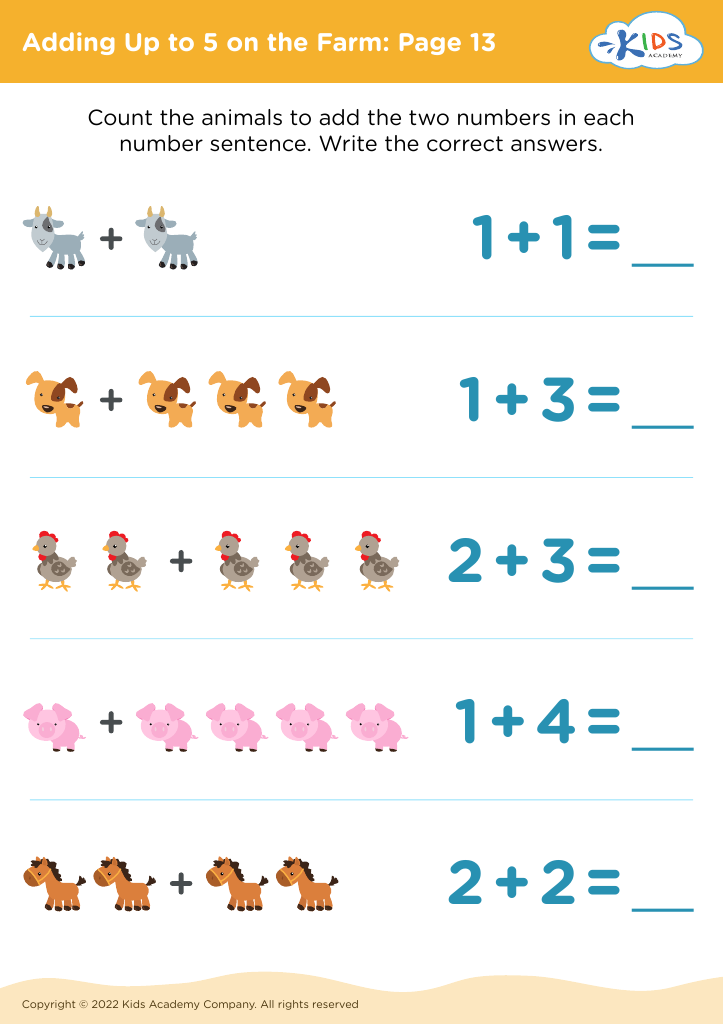
Adding Up to 5 on the Farm: Page 13
Worksheet
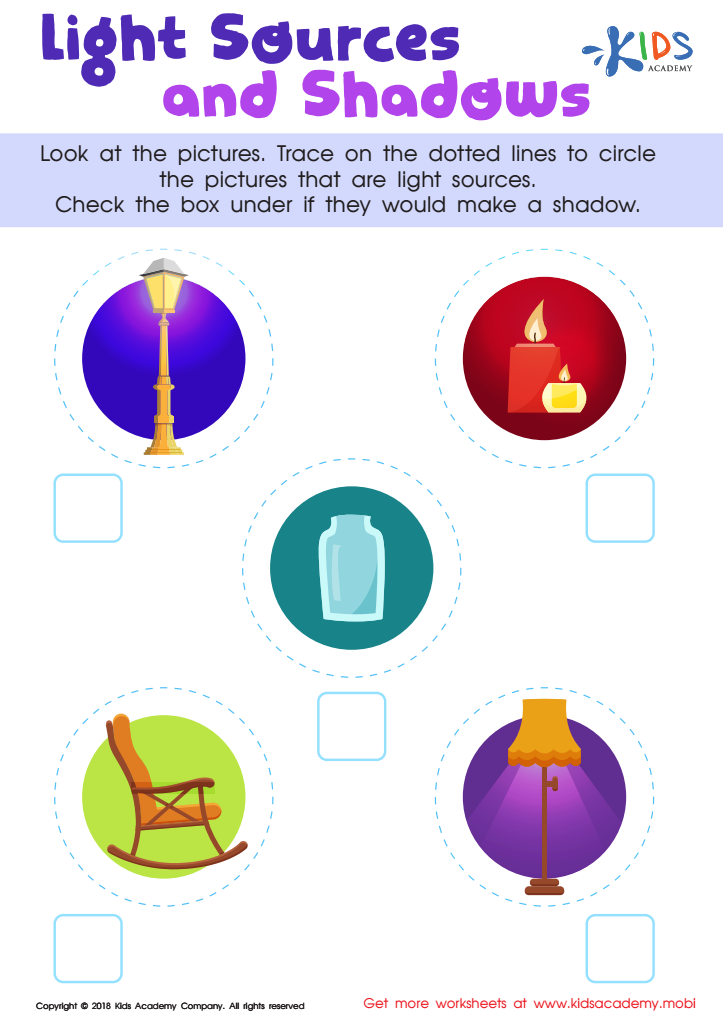
Light Sources and Shadows Worksheet


Light Sources and Shadows Worksheet
During the day, the sun radiates bright light. At night, when it's time for bed, the sun sets and darkness takes over. To light our way, we use other sources of light. With your students, trace the dotted lines around the pictures of light sources and check the boxes under the objects that will cast shadows.
Light Sources and Shadows Worksheet

Worksheet


Cognitive development in children aged 5-6 is crucial as it lays the foundation for future learning, problem-solving, and social interactions. At this age, children's brains are rapidly growing and forming new neural connections, making it an optimal period for acquiring essential skills. By nurturing cognitive development, parents and teachers can enhance children's abilities to think, understand, and remember.

During this stage, kids begin to develop important cognitive abilities such as memory, attention, and the capacity to understand complex concepts. For example, they start learning how to count, recognize letters, and understand the consequences of their actions. These skills are fundamental for their success in school and everyday life.

In addition, cognitive development is closely tied to emotional and social growth. Children with strong cognitive skills are better able to regulate their emotions, engage in meaningful social interactions, and cope with challenges. They become more resilient and adaptable, which are important traits for overall well-being.

Moreover, early cognitive development sets the stage for lifelong learning. Children who receive rich cognitive stimulation early on are more likely to develop a love for learning, perform well academically, and have better educational and professional outcomes in the long run. Therefore, parents and teachers should actively engage children in activities that stimulate their brains and provide supportive, enriching environments to foster robust cognitive development.