Understanding subtraction Worksheets for Ages 5-6
12 filtered results
-
From - To
Welcome to our "Understanding Subtraction Worksheets" designed specifically for ages 5-6! These engaging worksheets help young learners grasp the concept of subtraction through fun and interactive activities. Children will explore basic subtraction through various exercises, including visual aids and real-life scenarios, enhancing their comprehension of this essential math skill. Our worksheets are crafted to foster critical thinking, improve problem-solving abilities, and build a strong mathematical foundation. With colorful visuals and clear instructions, these resources make learning subtraction enjoyable and effective. Perfect for parents and teachers alike, these worksheets can be used at home or in the classroom for meaningful practice.
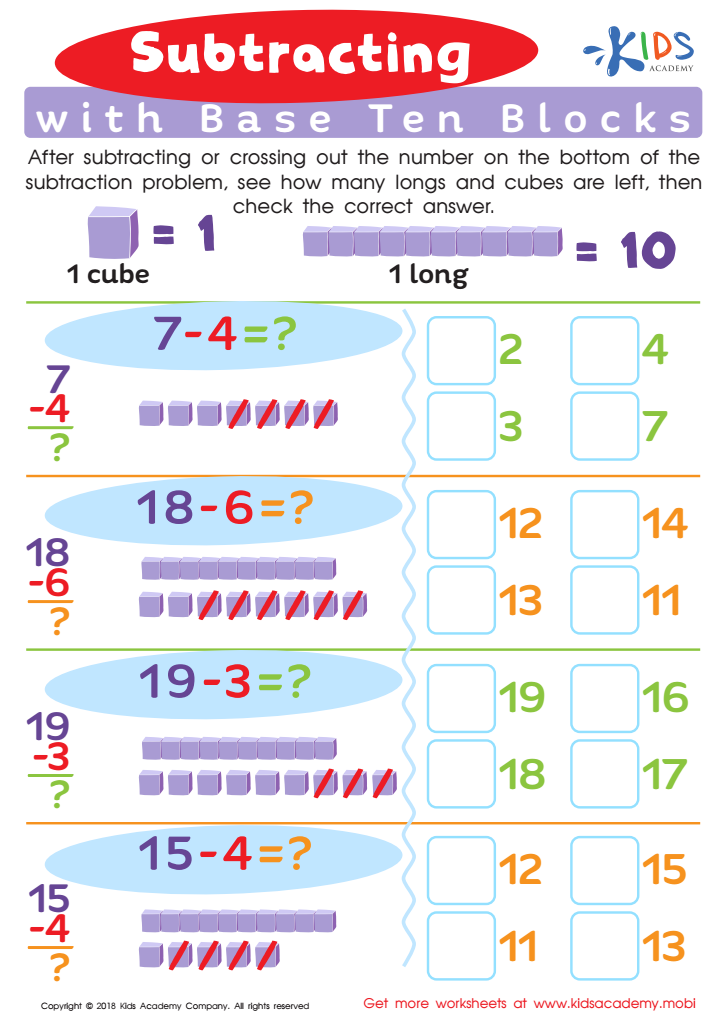
Subtracting With Base 10 Blocks Worksheet
 Assign to My Students
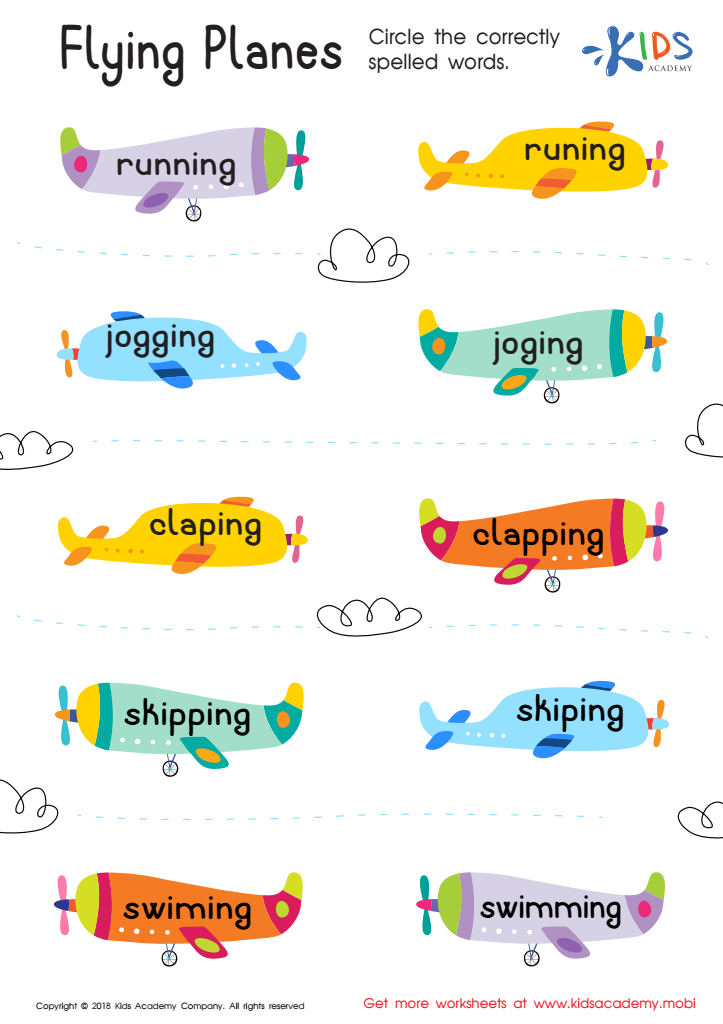
Flying Planes Worksheet
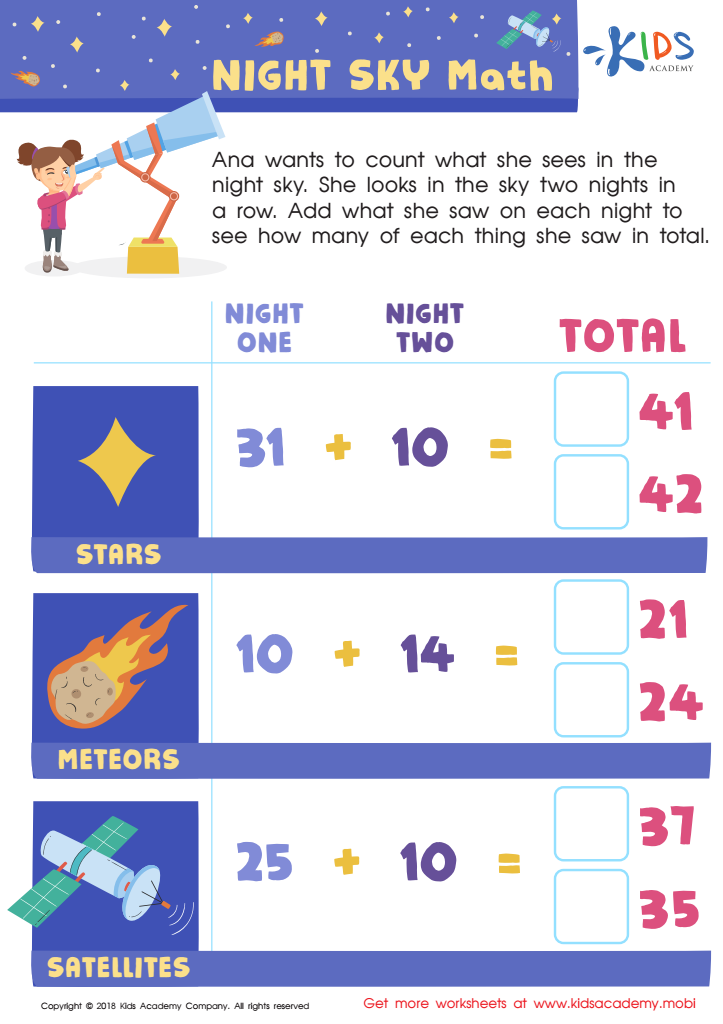
Night Sky Math Worksheet
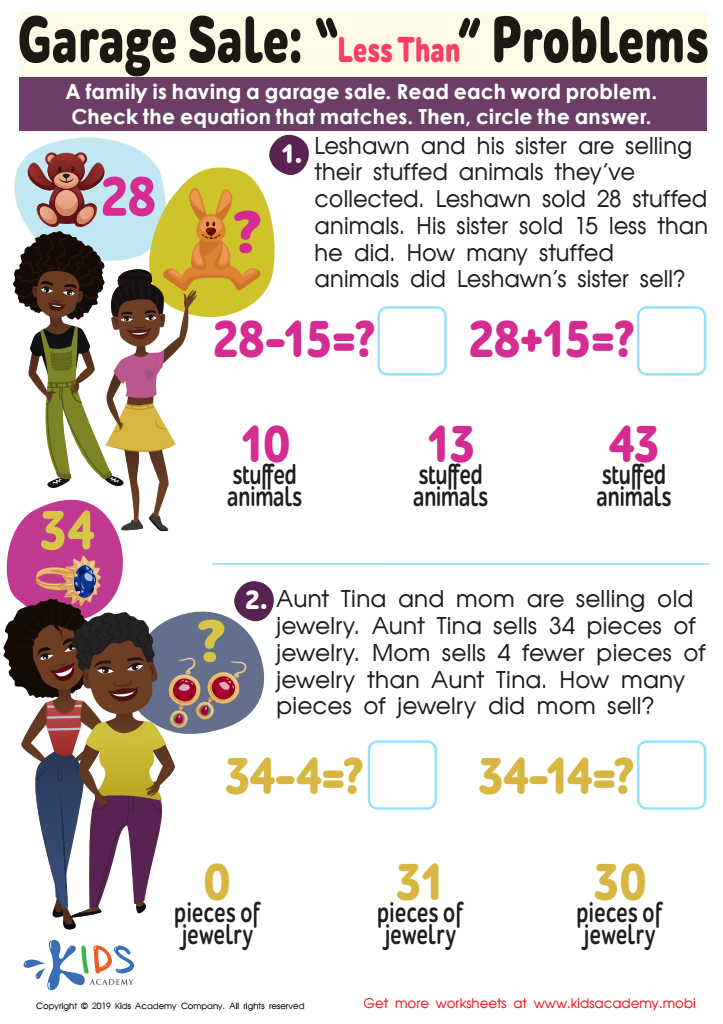
Garage Sale Less Than Worksheet
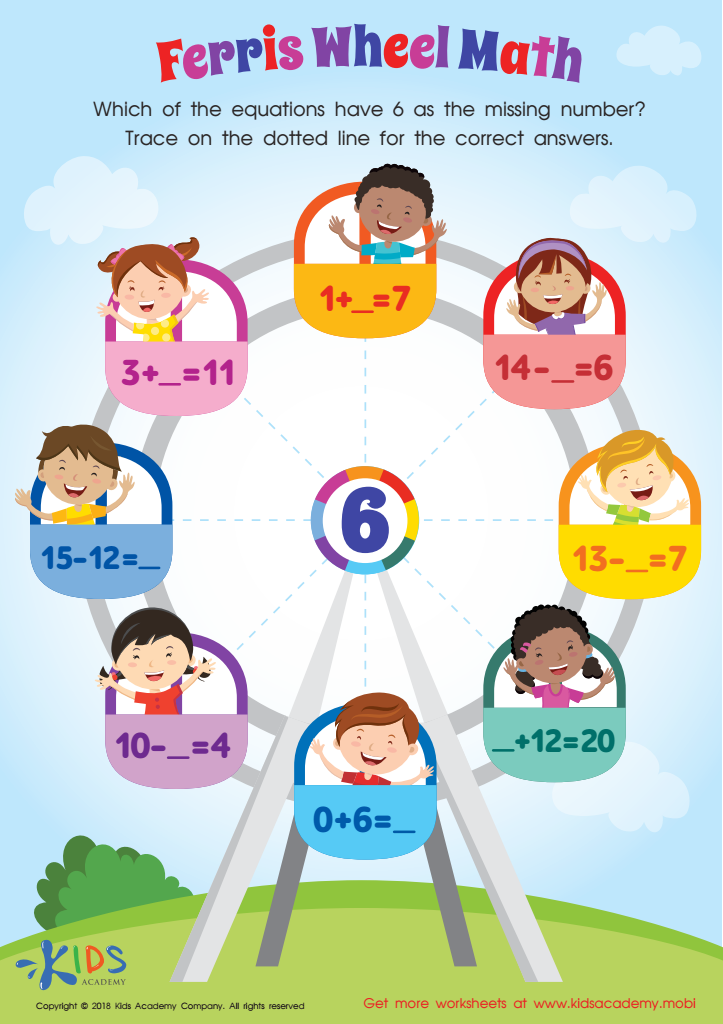
Missing Number: Ferris Wheel Math Worksheet
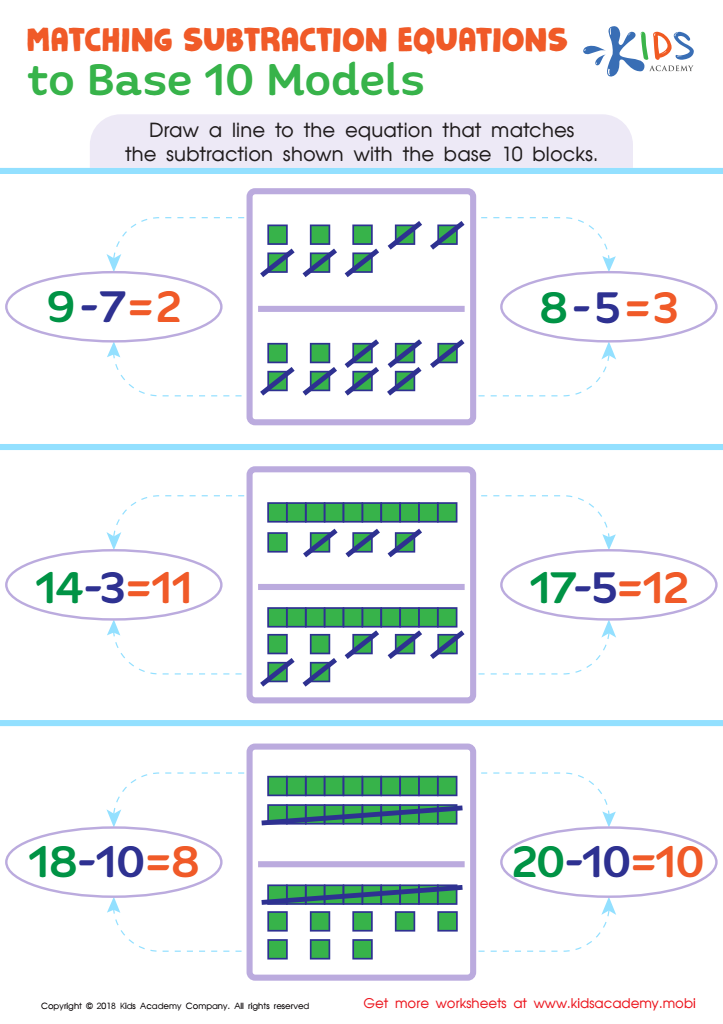
Matching Subtraction Equations To Base 10 Models Worksheet
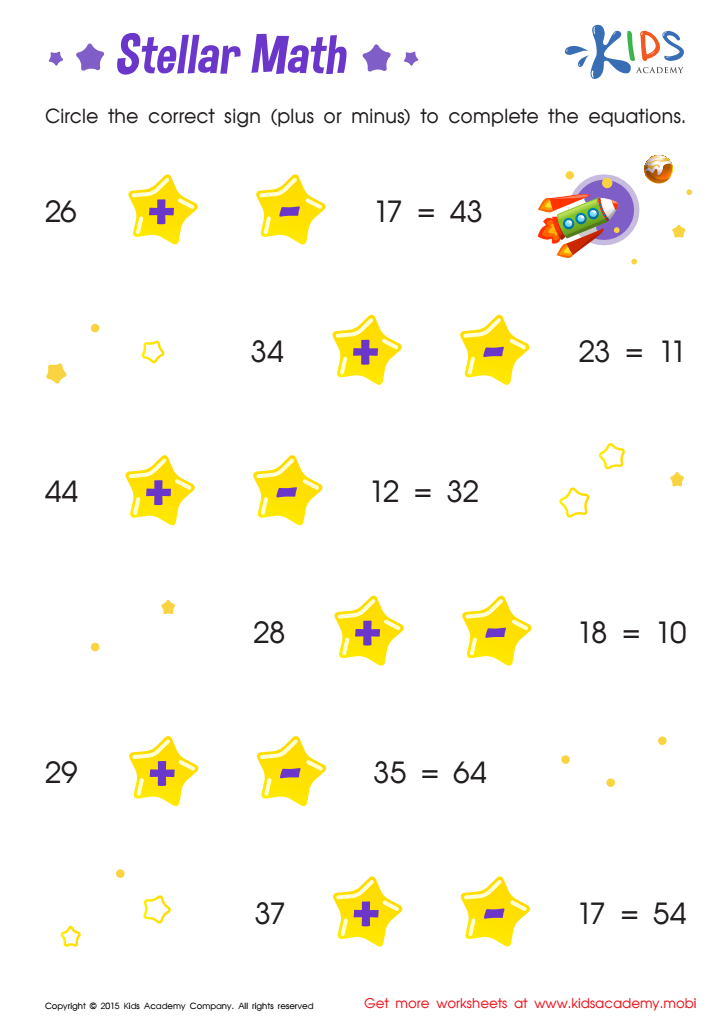
Stellar Math Substraction Worksheet
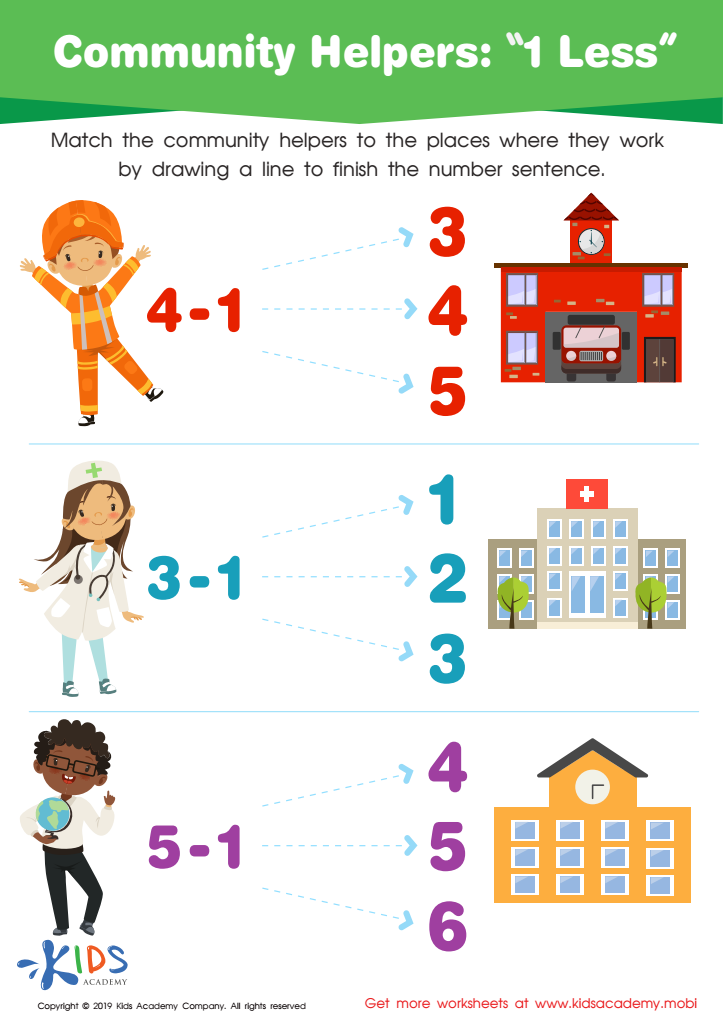
Community Helpers: 1 less Worksheet
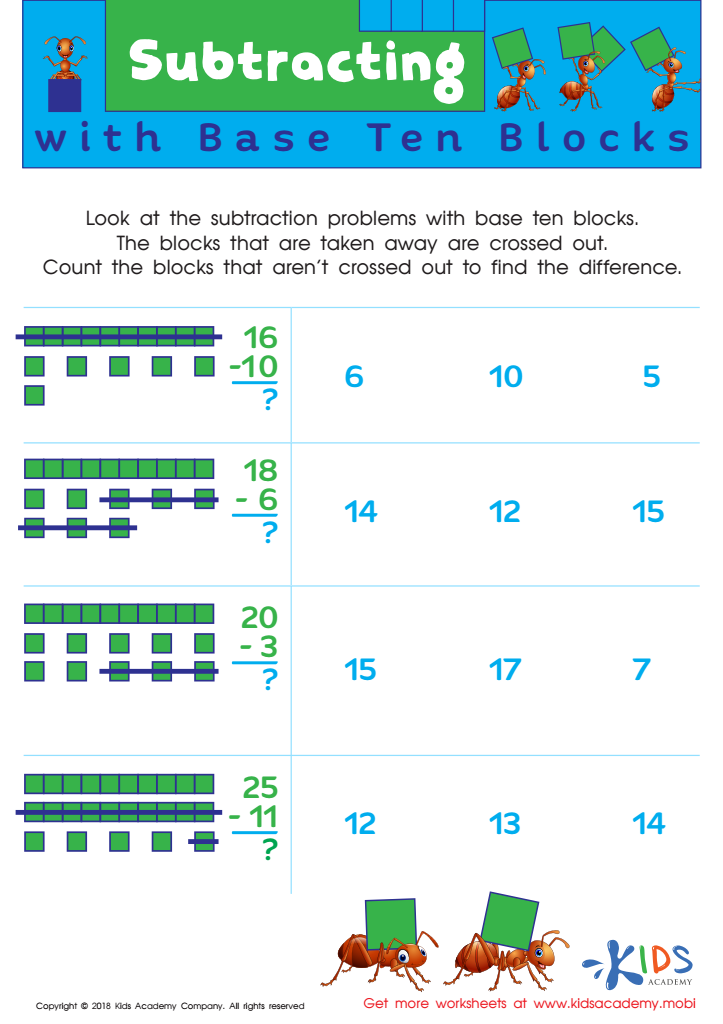
Subtracting with Base Blocks Worksheet
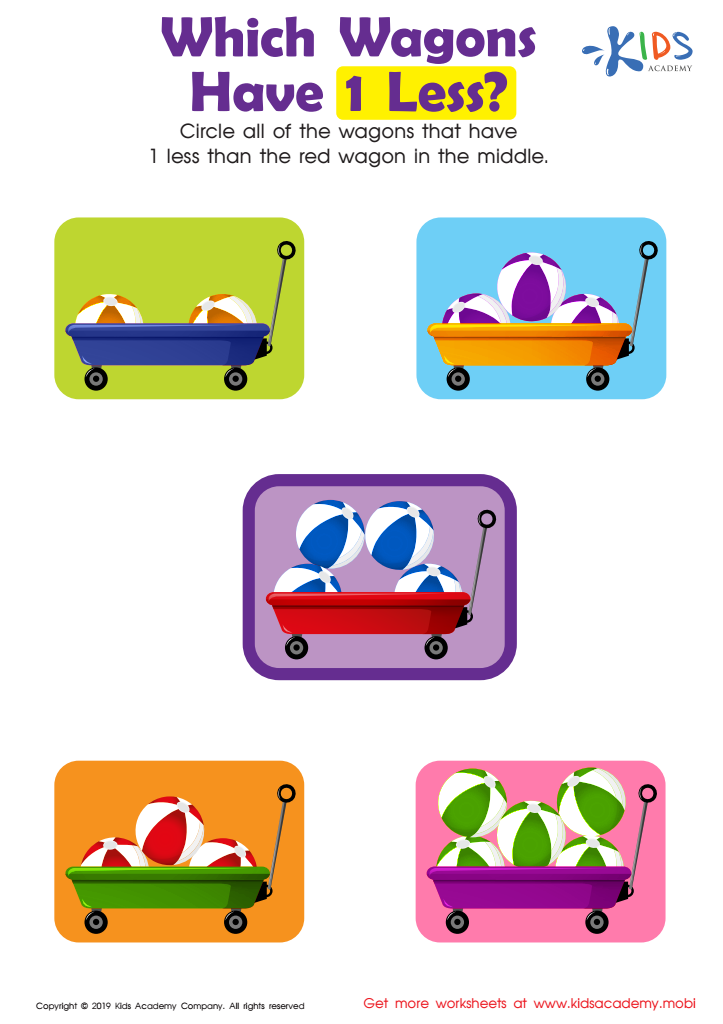
Which Wagons Have 1 Less? Worksheet
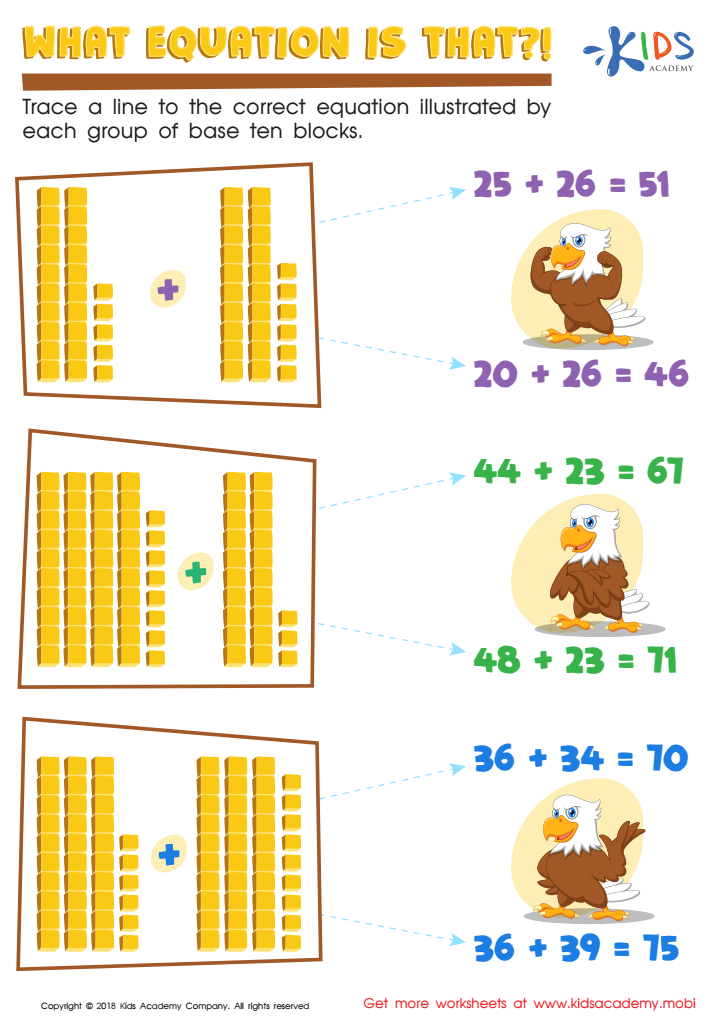
What Equation Is That? Worksheet
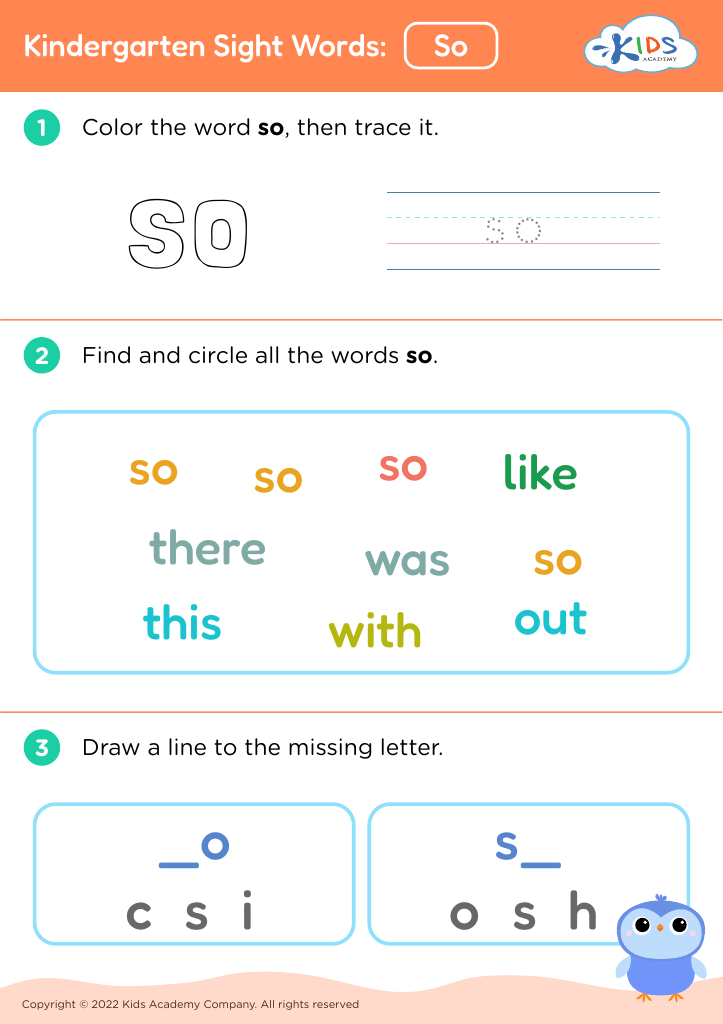






Understanding subtraction is crucial for children aged 5-6 as it lays the foundation for their future mathematical skills. At this developmental stage, children are naturally curious and eager to grasp new concepts. Learning subtraction is not just about memorizing facts; it enhances critical thinking and problem-solving abilities. When children understand subtraction, they learn to grasp the idea of taking away, which has practical applications in their everyday lives.
Moreover, mastering subtraction aids in their overall confidence in math. A strong foundation in early mathematics can inspire a positive attitude towards the subject, fostering a lifelong love for learning. Parents and teachers play a vital role in this process by using engaging, hands-on methods, like counting objects or using visual aids, that make subtraction relatable and enjoyable. Additionally, understanding subtraction helps children connect their math skills to real-world situations, such as sharing snacks or counting toys, making the learning relevant.
Ultimately, a grasp of subtraction sets children up for success in more complex mathematical concepts in later grades, contributing to their academic achievement and cognitive development. Thus, prioritizing an understanding of subtraction is essential for building engaged, competent learners.








