Hand-eye Coordination Addition Worksheets for Ages 5-6
18 filtered results
-
From - To
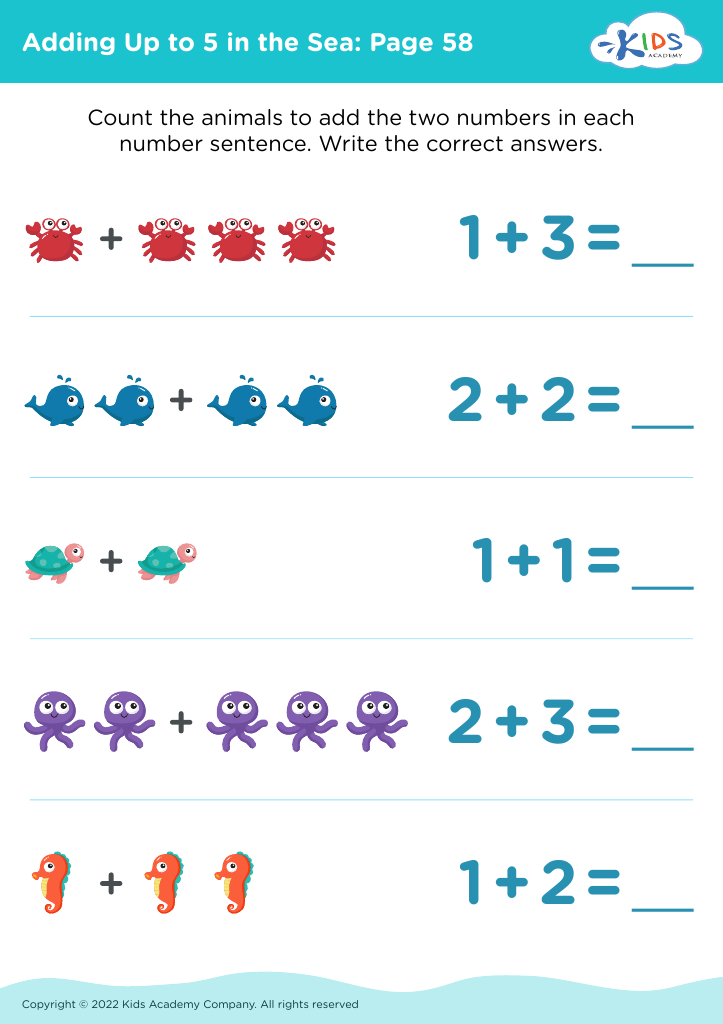
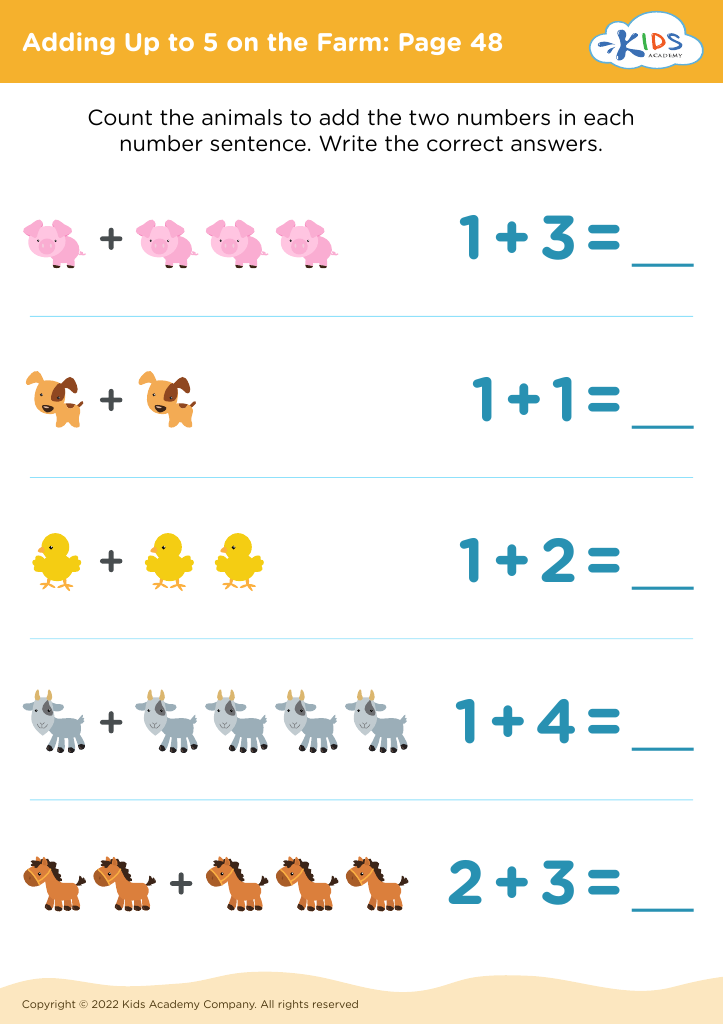
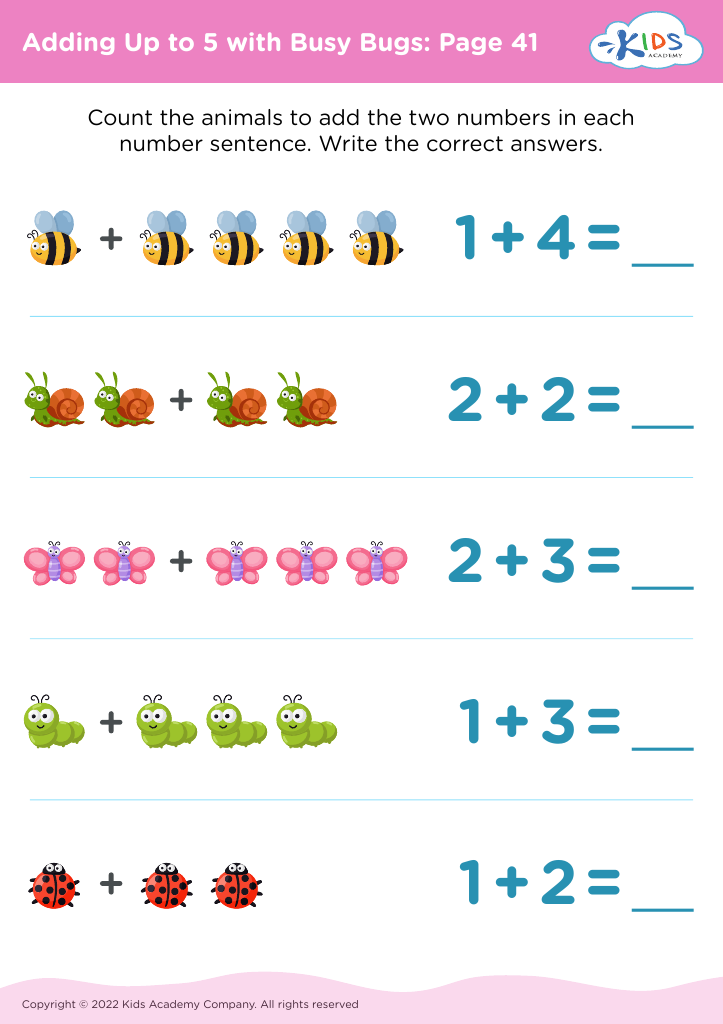
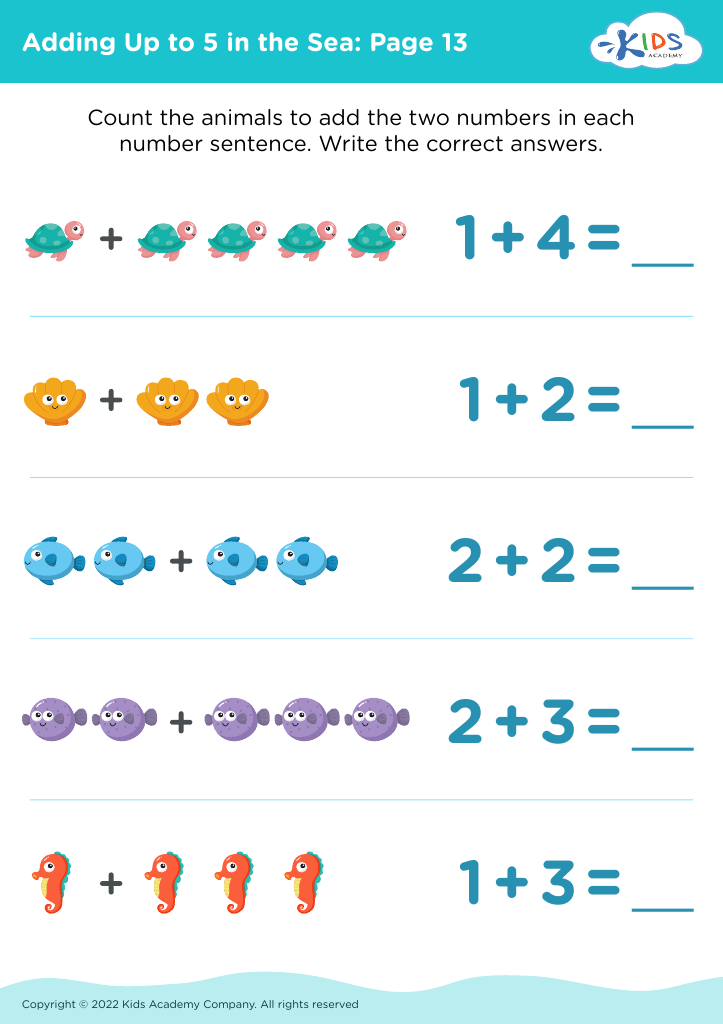
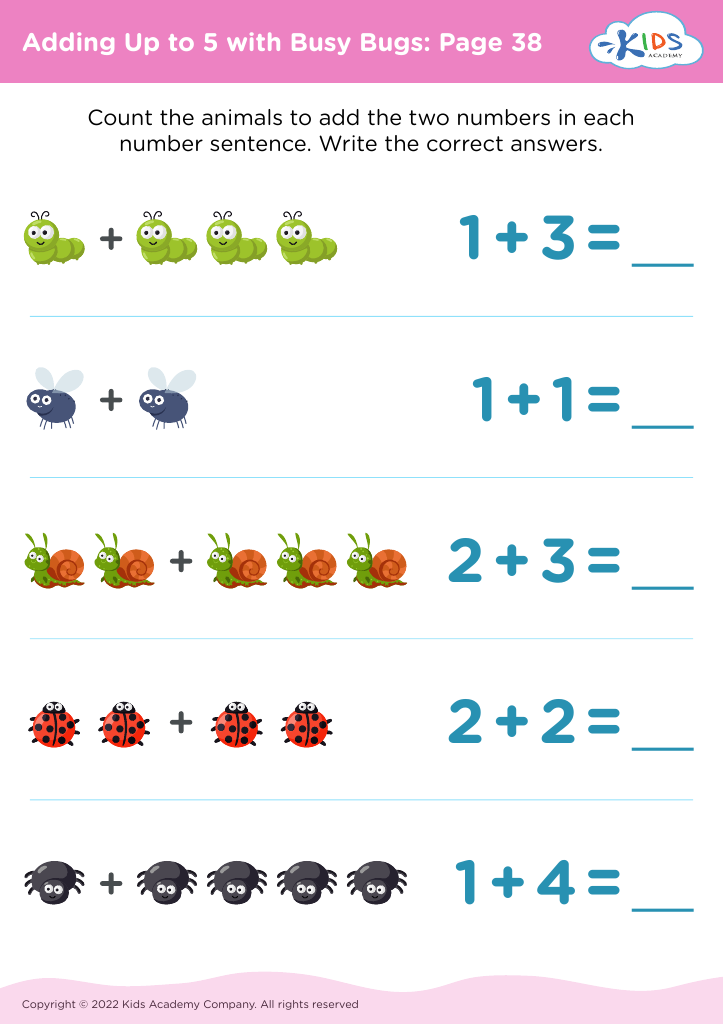
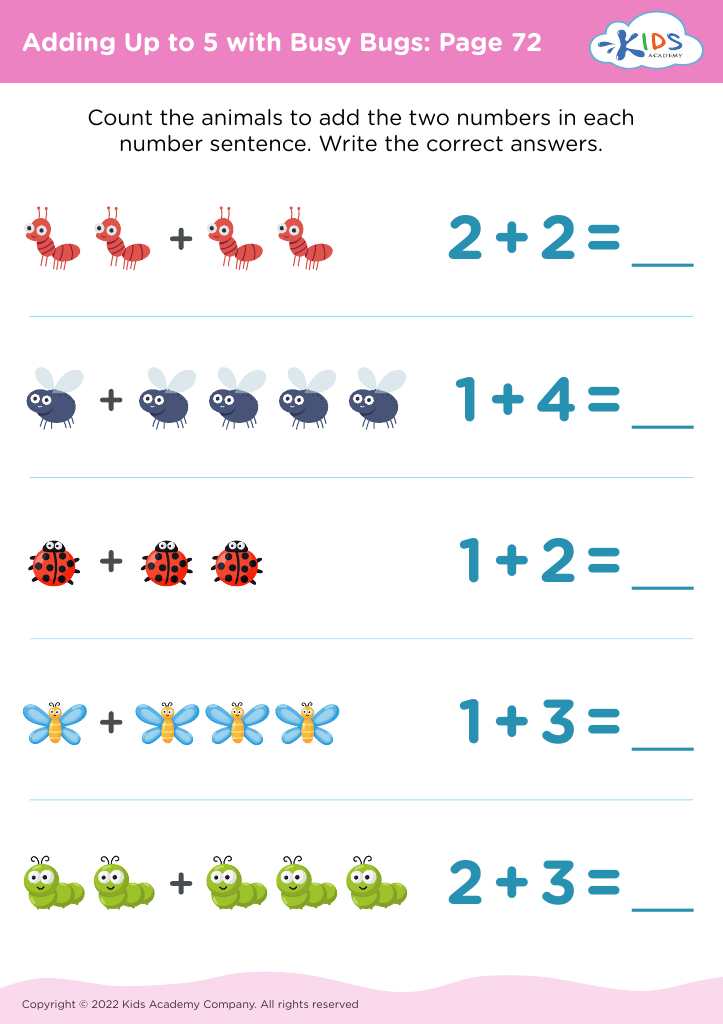
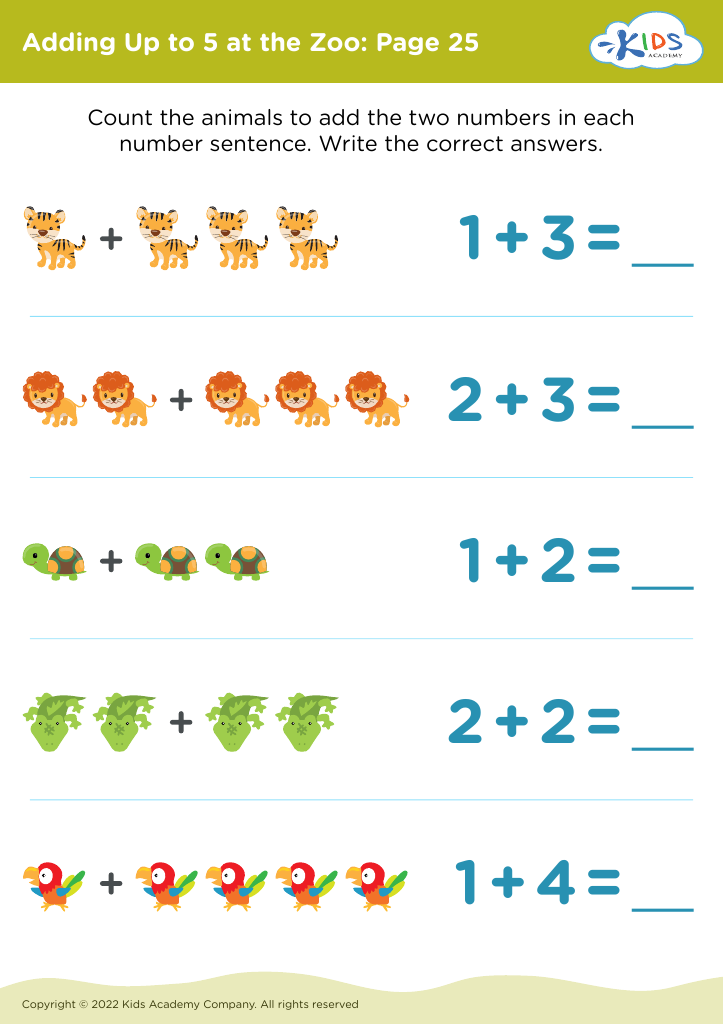
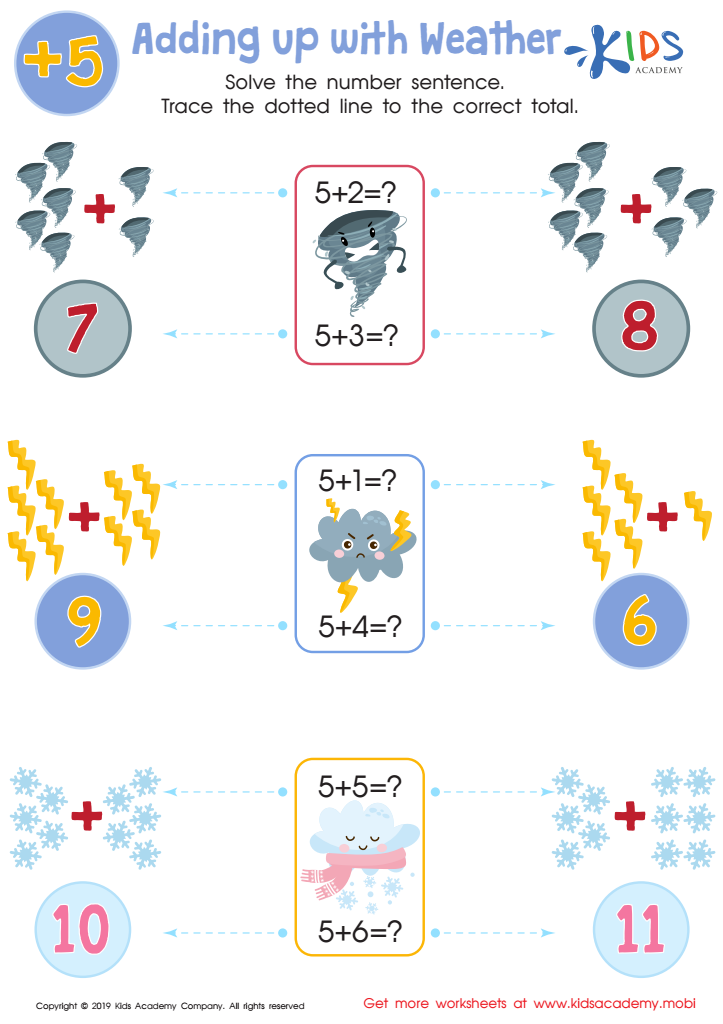
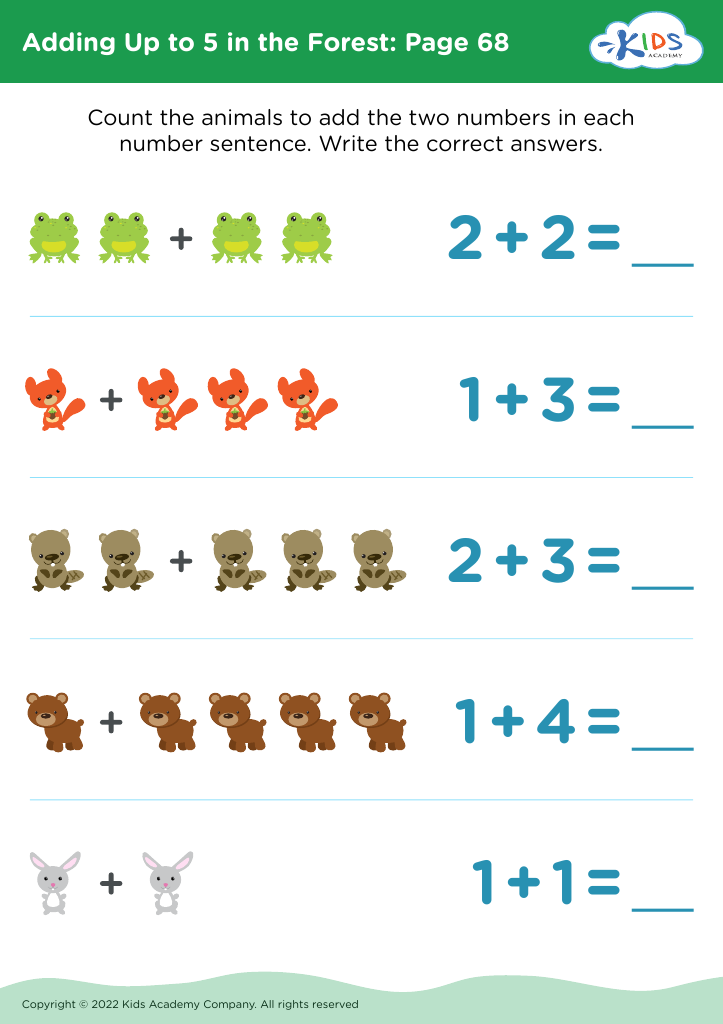
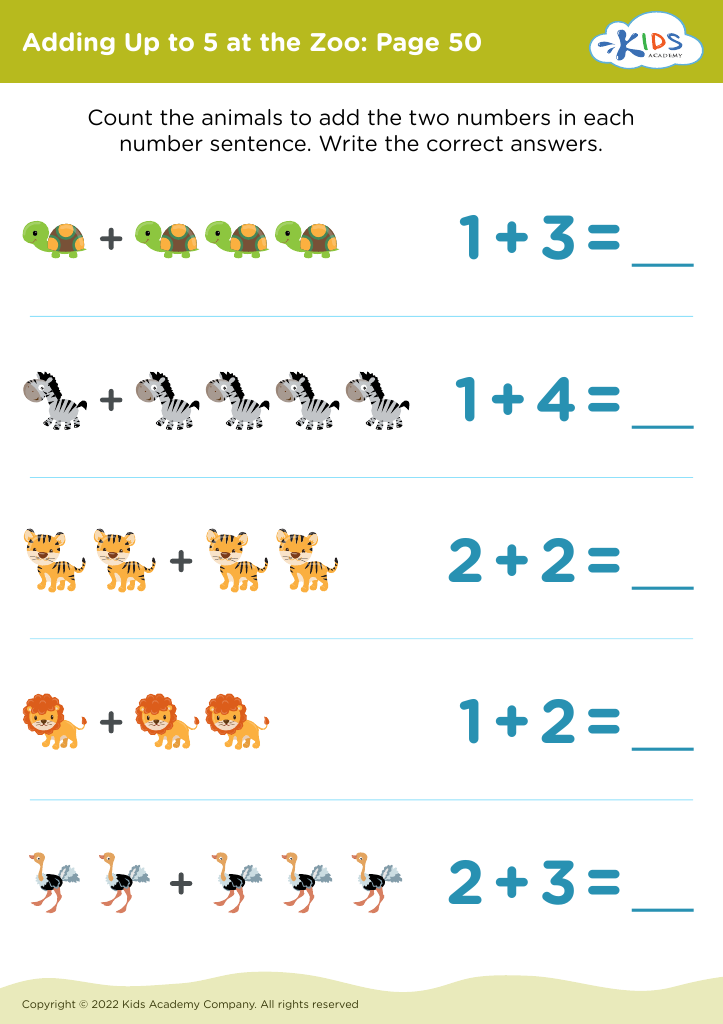
Unlock your child’s potential with our Hand-eye Coordination Addition Worksheets designed specifically for ages 5-6. These engaging activities help young learners seamlessly improve their addition skills while enhancing their fine motor abilities. Each worksheet combines colorful, interactive exercises that encourage kids to count, add, and solve problems, making learning fun and effective. Perfect for at-home practice or classroom reinforcement, our worksheets cater to your child's developmental needs, providing a strong foundation for future math success. Make math an enjoyable adventure with dynamic, expertly crafted worksheets that nurture both cognitive and motor skills.
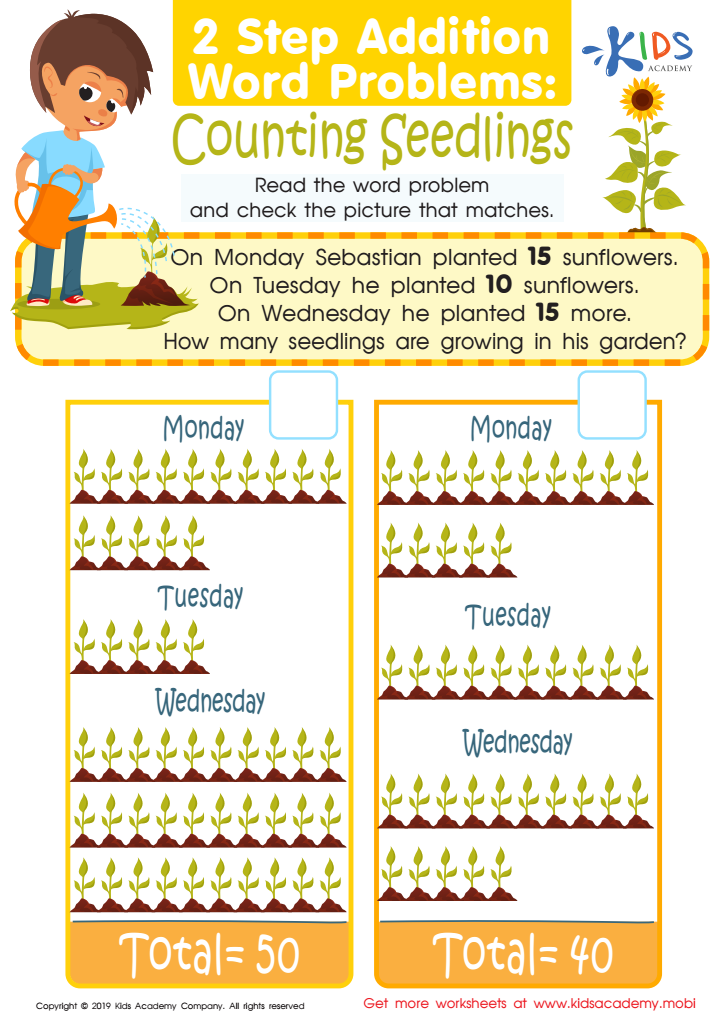
Counting Seedlings Worksheet
 Assign to My Students
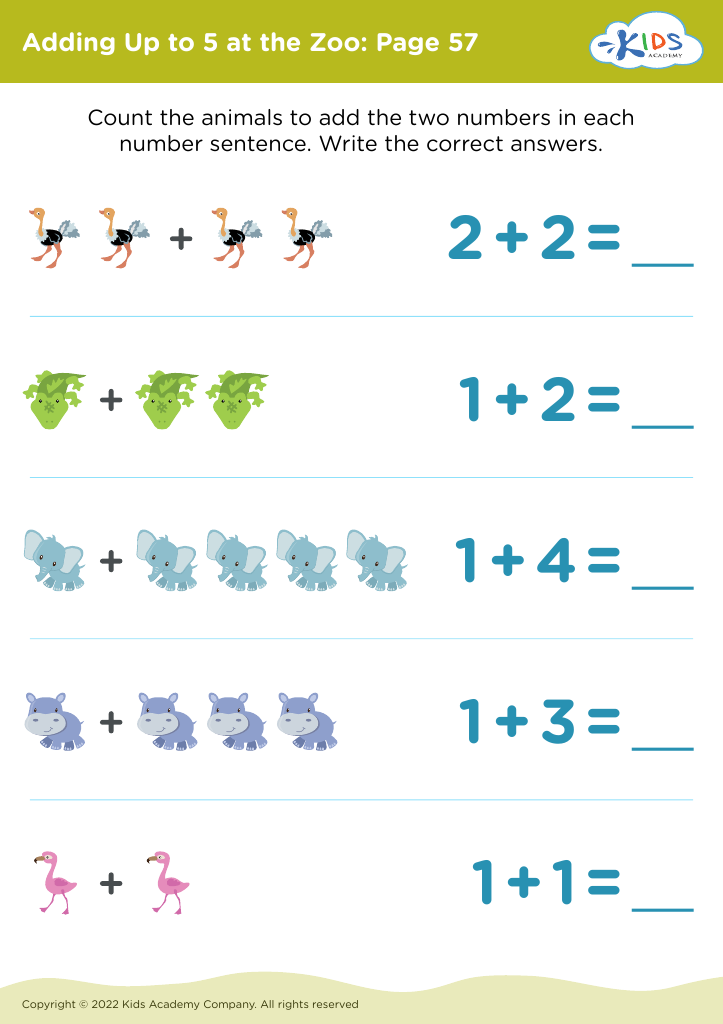
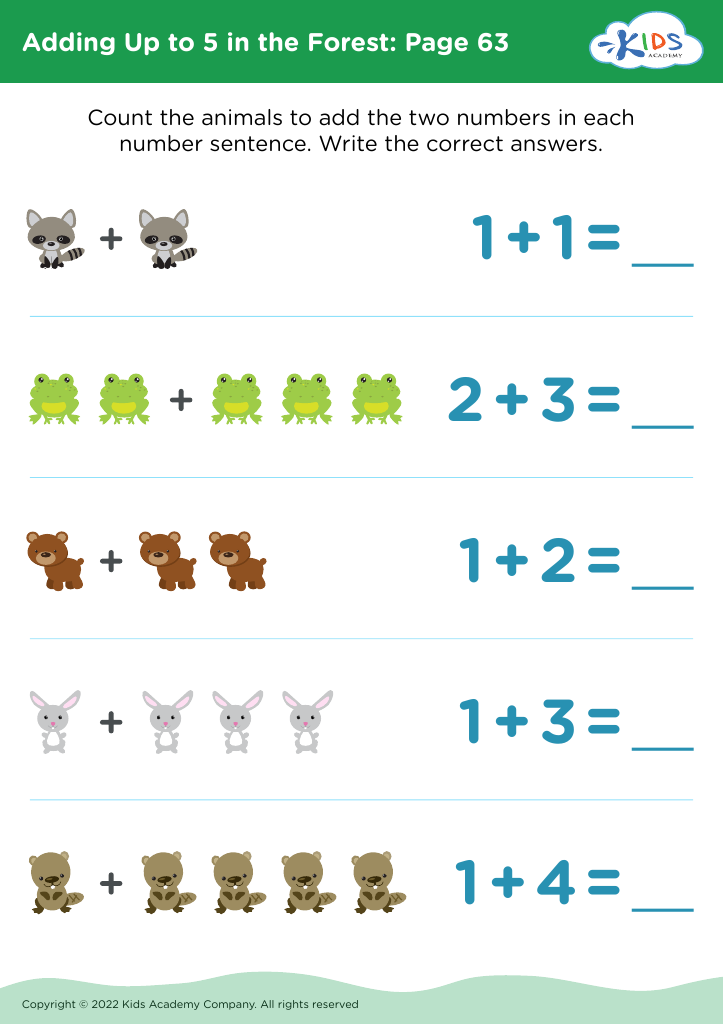
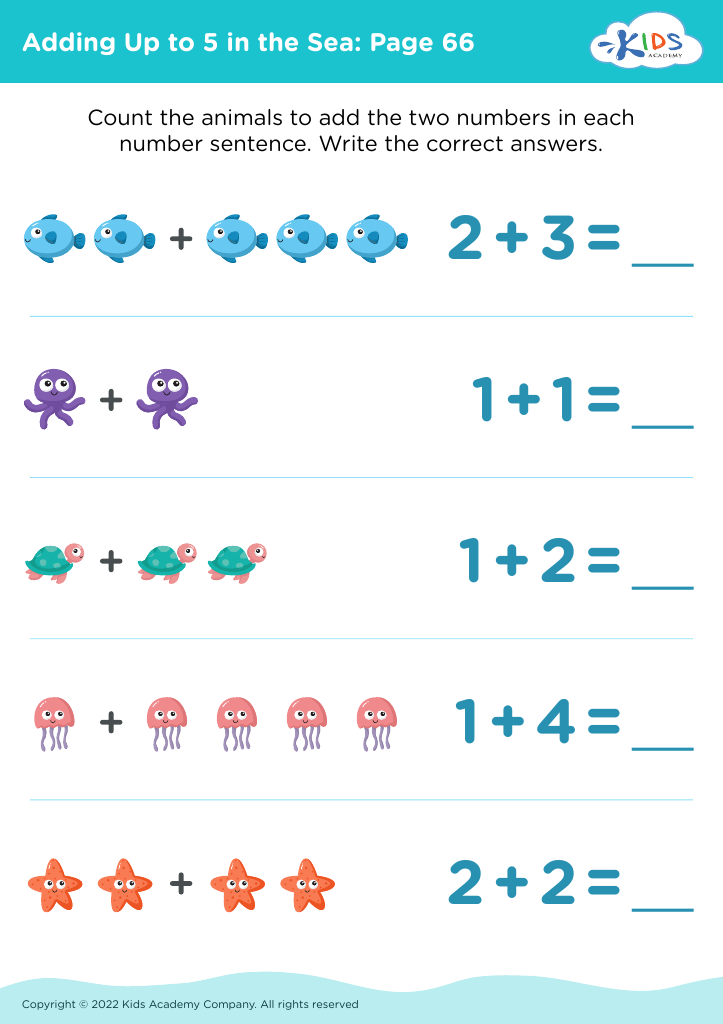
Adding up With Water Worksheet
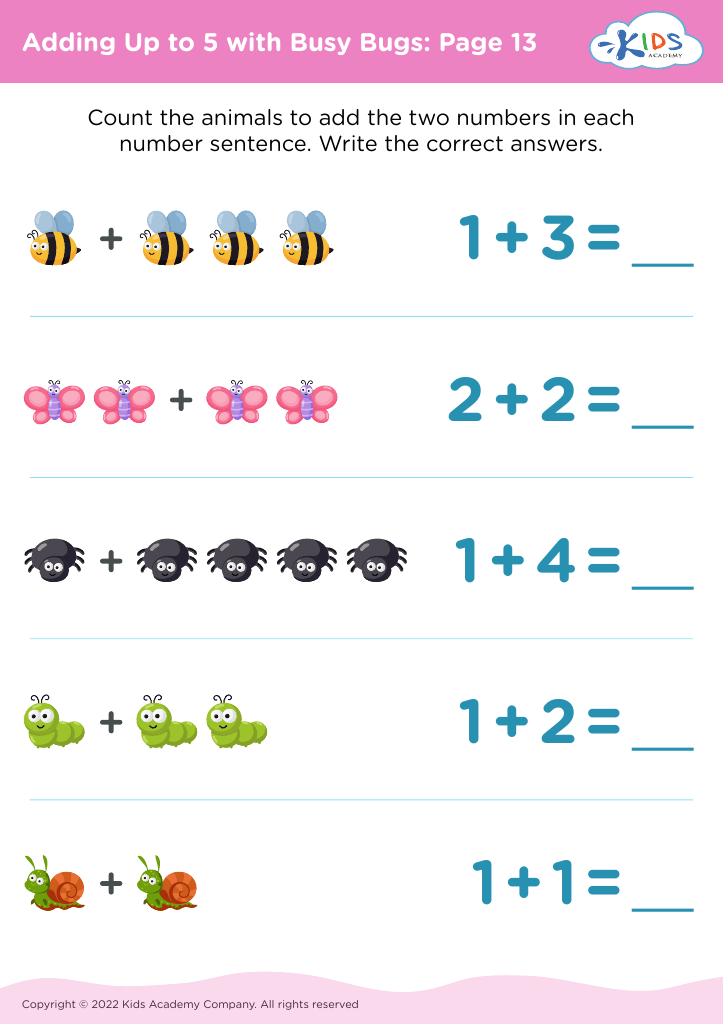
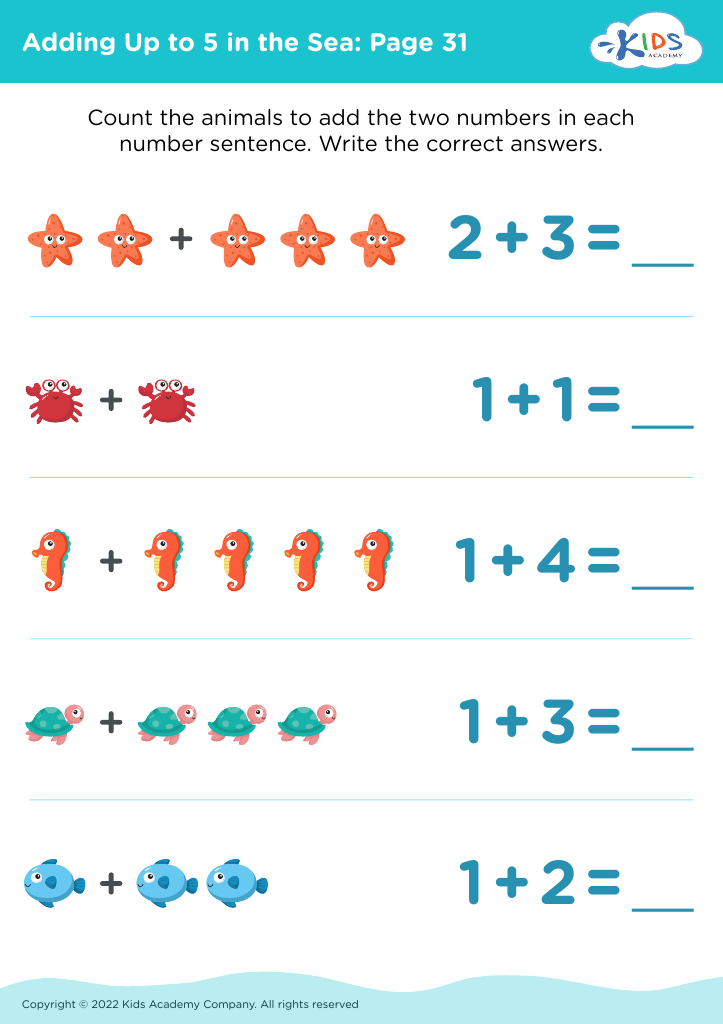
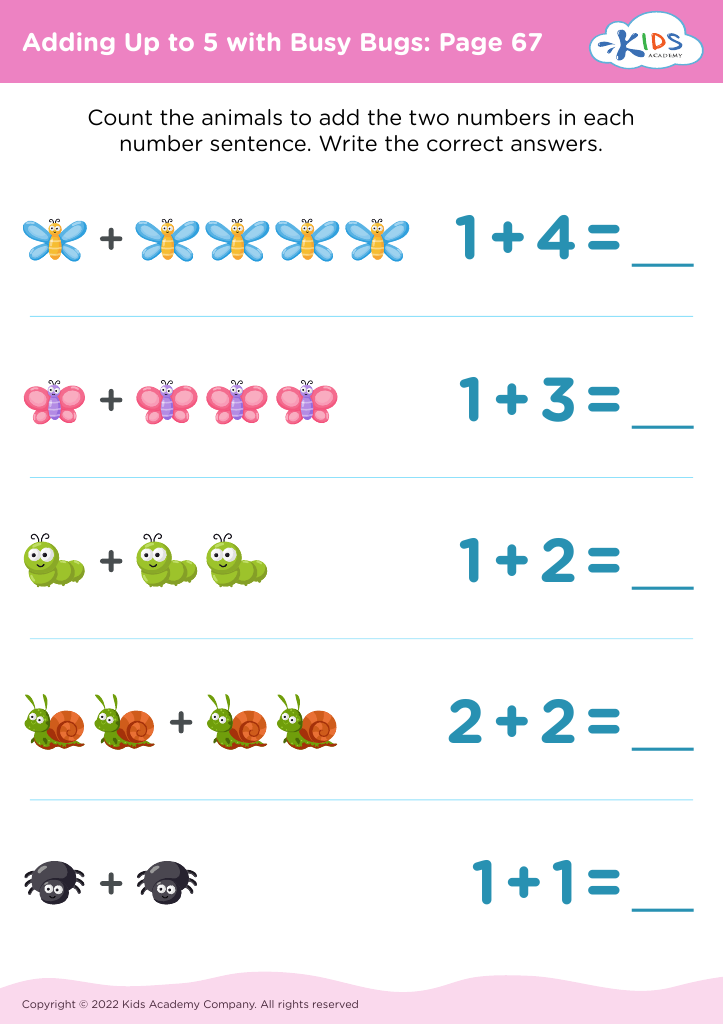
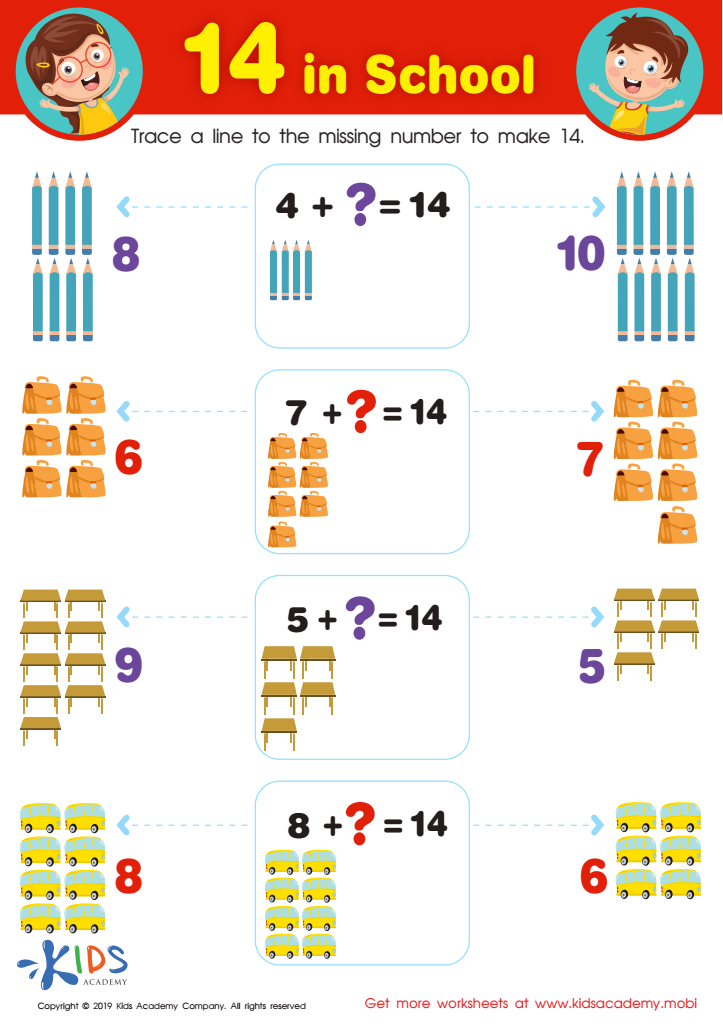
14 in School Worksheet








Hand-eye coordination is the synchronized control of eye movement with hand movement and the processing of visual input to guide reaching and grasping. For ages 5-6, this skill is particularly crucial as it directly influences a child's ability to perform fundamental tasks essential for both academic and personal development.
First, improving hand-eye coordination helps children with basic classroom activities such as writing, drawing, and using scissors. These activities require fine motor skills, which are developed through repeated hand-eye interactions. As a child’s handwriting and drawing improve, they gain confidence in their abilities, fostering a positive attitude towards learning and creativity.
Moreover, hand-eye coordination is pivotal in physical activities like catching a ball or playing on the playground. These activities not only keep the child physically active but also help with social skills, as play often involves interaction with peers. Good hand-eye coordination ensures that children are better equipped to join in these activities without feeling frustrated or left out.
Finally, early development of hand-eye coordination lays the foundation for more complex skills later in life, including sports, musical instruments, and even using technology. Parents and teachers who emphasize and support the enhancement of this skill contribute significantly to their child's holistic development, equipping them with essential tools for lifelong success and well-being.








