Comparing shapes Geometry Worksheets for Ages 5-6
3 filtered results
-
From - To
Explore our exciting "Comparing Shapes Geometry Worksheets" specifically designed for ages 5-6! These engaging worksheets help young learners identify, compare, and contrast different shapes. Packed with fun activities and colorful illustrations, these resources make geometry accessible and enjoyable. Children will develop critical thinking and observation skills as they compare attributes like size, sides, and angles. Perfect for both classroom use and at-home practice, these worksheets ensure a strong foundation in geometry. Visit our page to spark your child's love for learning and watch their confidence in math grow!
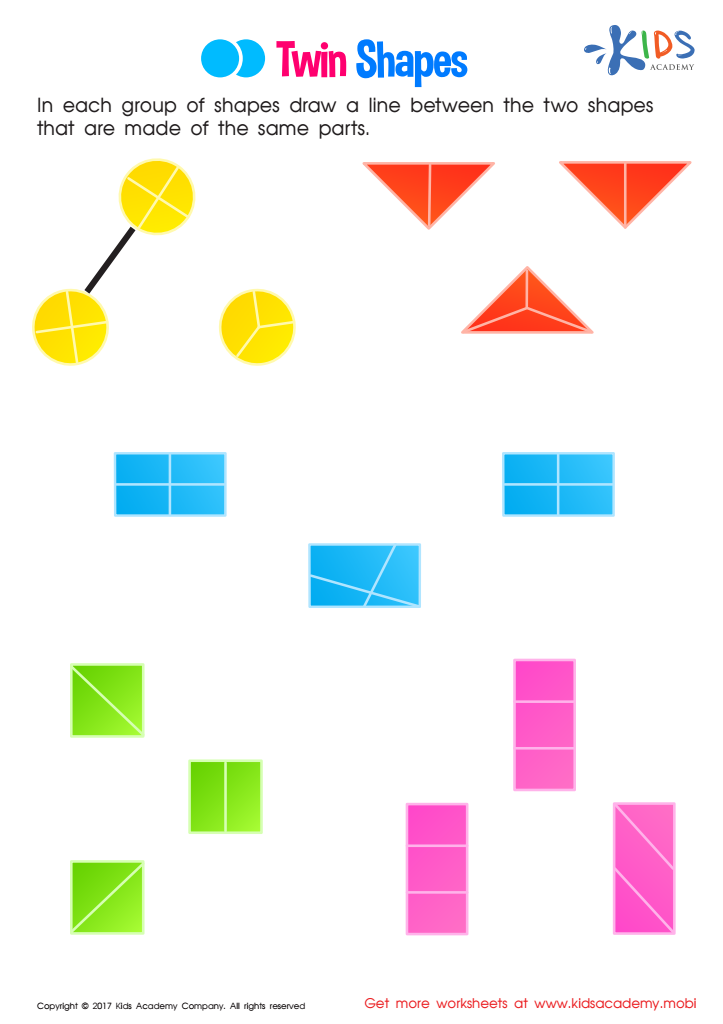
Twin Shapes Worksheet
 Assign to My Students











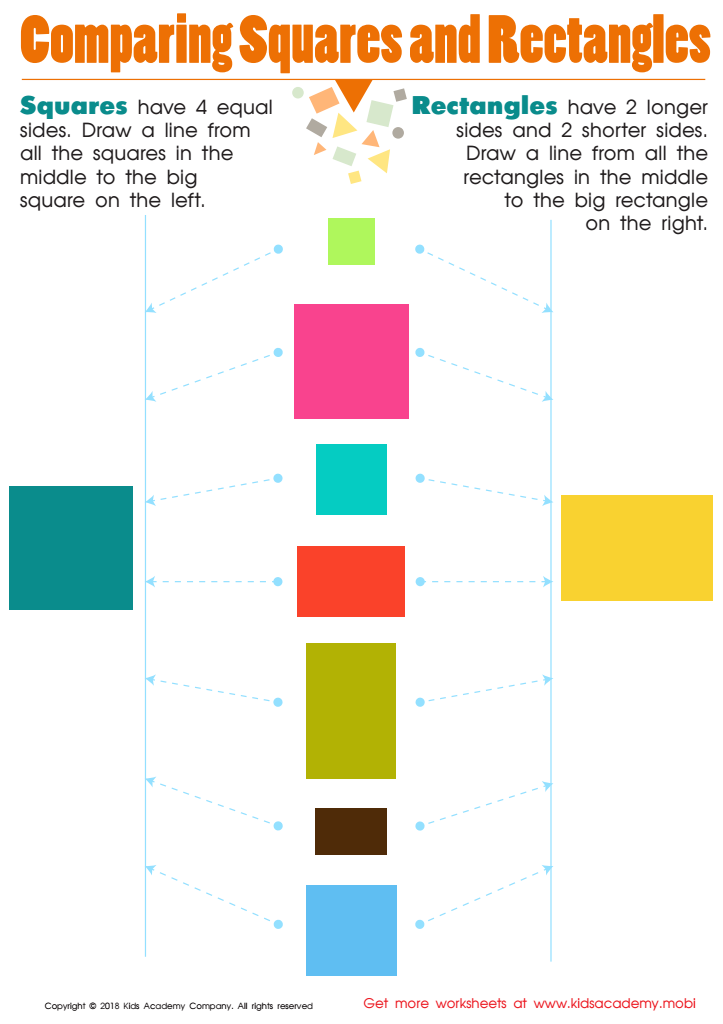
Comparing Squares Rectangles Worksheet
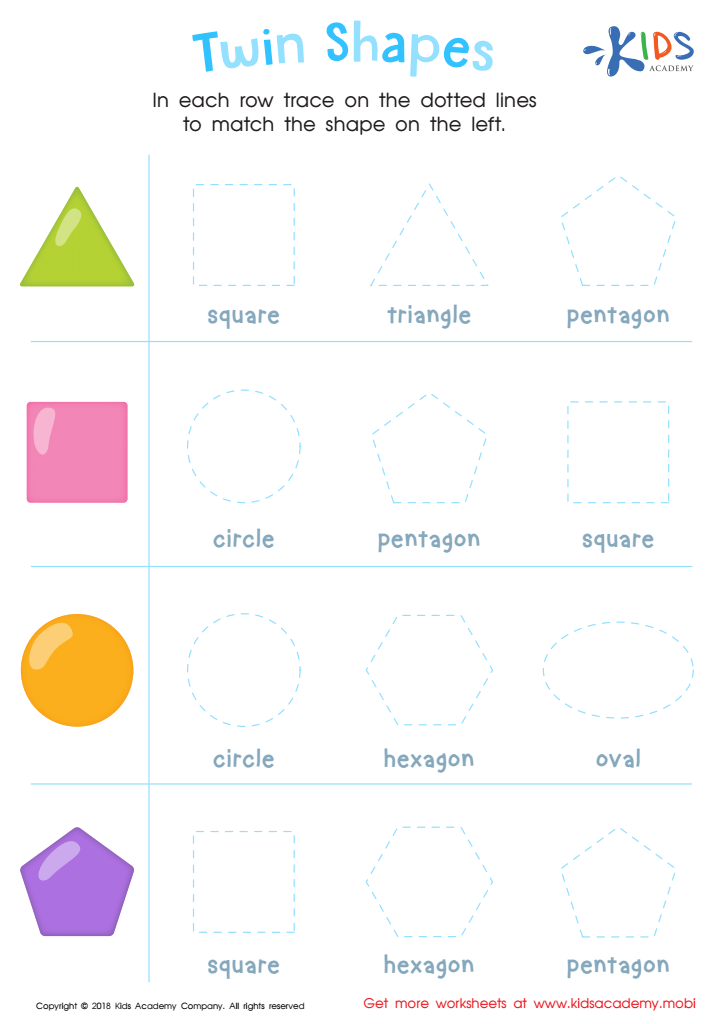
Twin Shapes Dot-to-Dot Worksheet








Understanding and comparing shapes is a foundational skill in geometry that plays a crucial role in early childhood development, and parents or teachers should prioritize it for children ages 5-6. This early exposure enhances critical thinking and problem-solving abilities, which are essential in all areas of learning. Recognizing and comparing shapes helps children develop spatial awareness, which is vital for skills like reading, writing, and understanding mathematical concepts.
When children compare shapes, they learn to observe and recognize differences and similarities, fostering attention to detail. This practice supports the cognitive development necessary for understanding more complex mathematical ideas later on, such as fractions, symmetry, and area. Additionally, discussing shapes builds vocabulary and language skills while promoting clear communication and reasoning.
Engaging with shapes in playful and practical activities also ignites curiosity and a love for learning. Creative tasks, like building with blocks or drawing, enhance fine motor skills and hand-eye coordination. These activities help children follow instructions and develop perseverance, both of which are critical for academic success.
In summary, by comparing shapes, children gain essential mathematical skills and cognitive abilities that pave the way for future academic achievements while nurturing their overall intellectual growth and creativity.








