Critical Thinking Geometry Worksheets for Ages 5-6
5 filtered results
-
From - To
Discover our engaging "Critical Thinking Geometry Worksheets for Ages 5-6," designed to spark curiosity and enhance analytical skills in young learners. These worksheets feature vibrant illustrations and fun activities that introduce basic geometric concepts, such as shapes, spatial awareness, and problem-solving strategies. Ideal for at-home learning or classroom use, each worksheet encourages children to think critically as they explore geometry through interactive exercises. Support your child's cognitive development and make learning enjoyable with our thoughtfully crafted materials. Empower them to recognize patterns, make connections, and develop a strong foundation in geometry that will benefit their future studies. Perfect for early education!
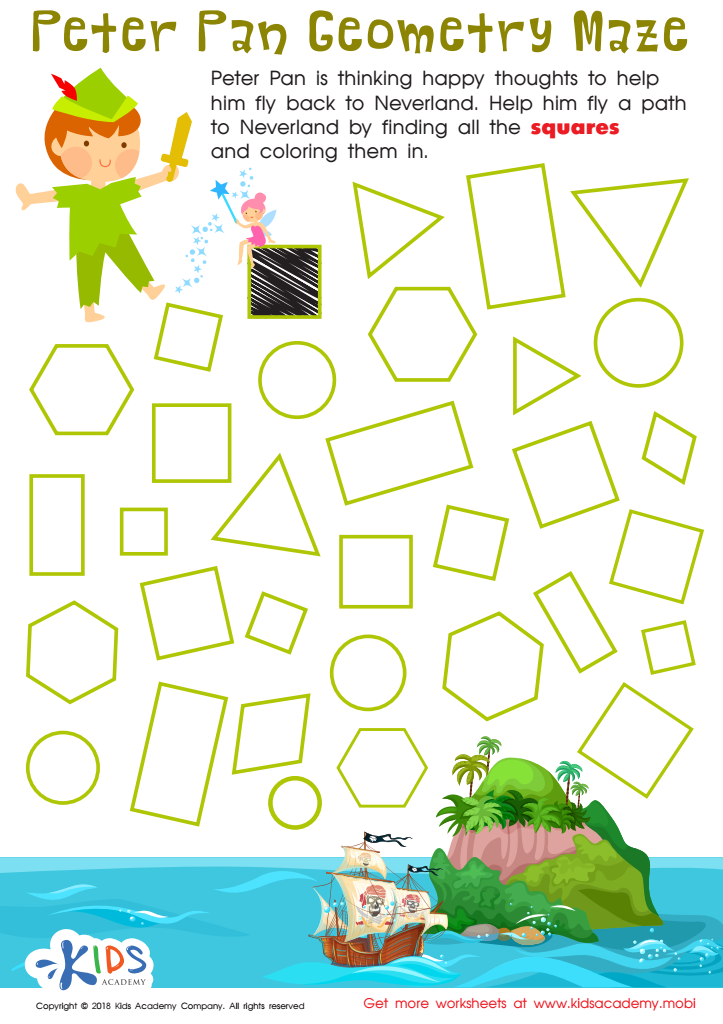
Peter Pan Worksheet
 Assign to My Students











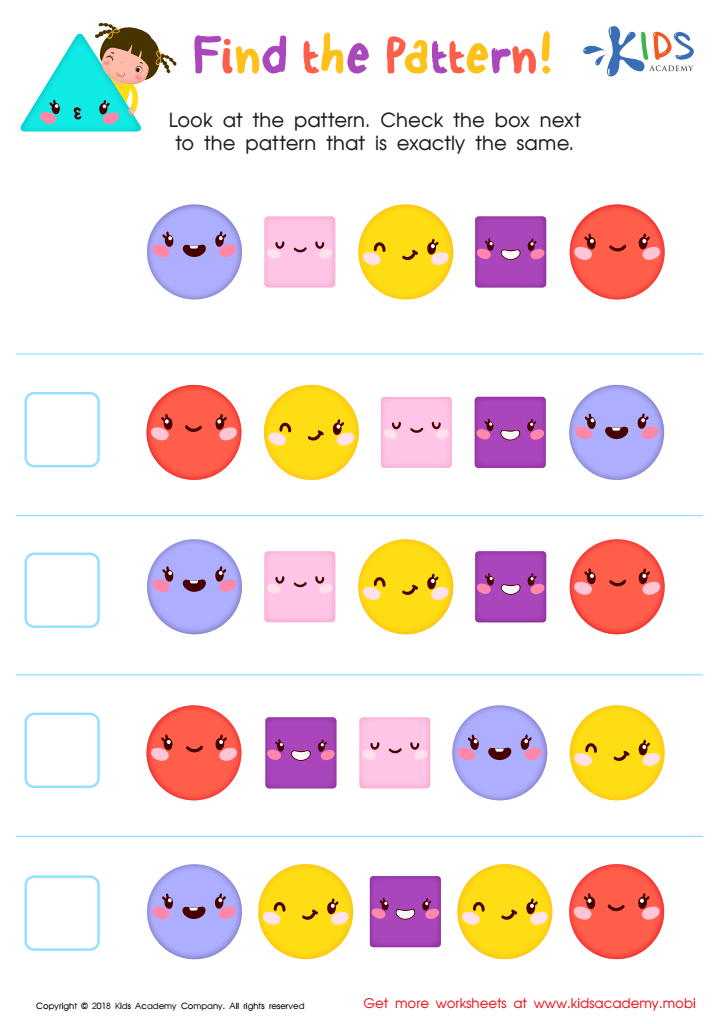
Find the Pattern Worksheet
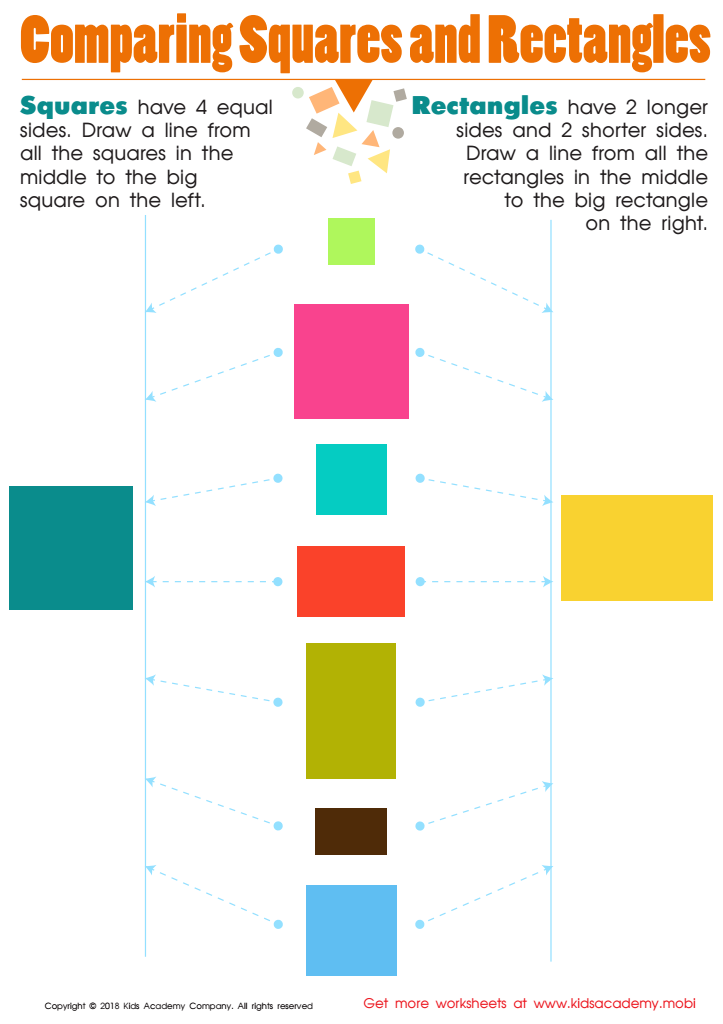
Comparing Squares Rectangles Worksheet
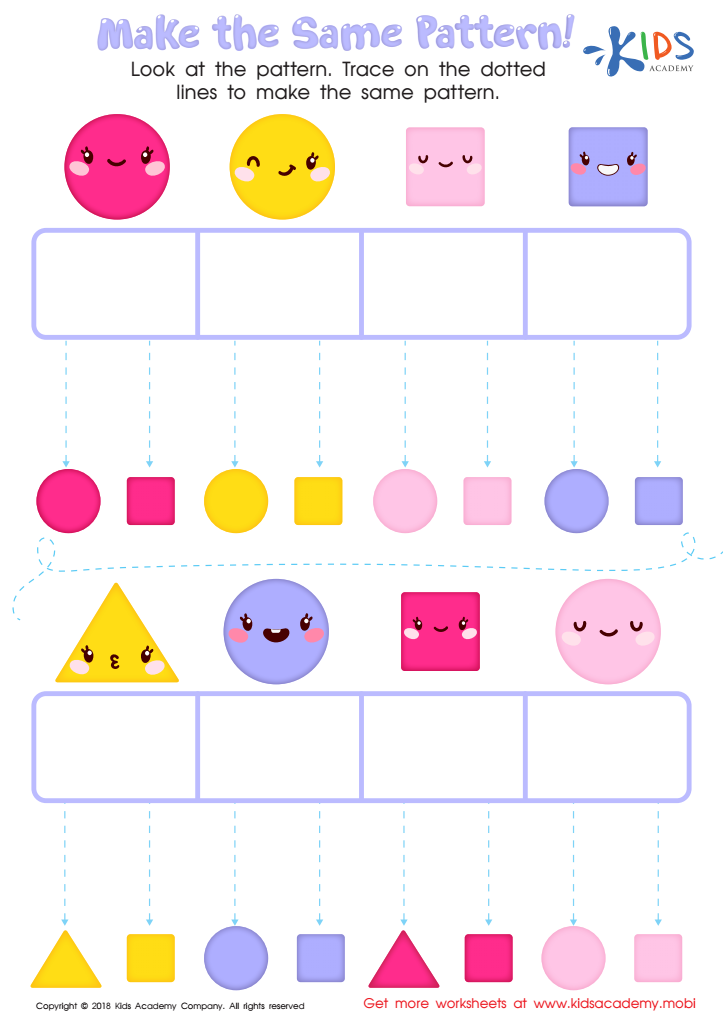
Make the Same Pattern Worksheet
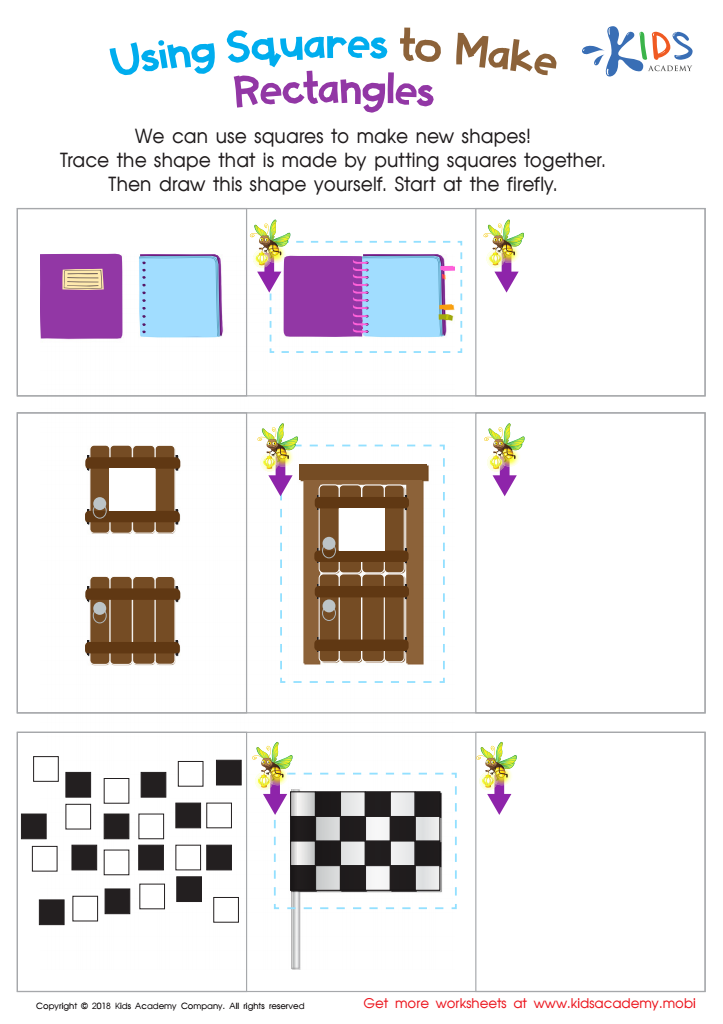
Using Squares to Make Rectangles Worksheet








Critical Thinking Geometry for ages 5-6 plays a vital role in nurturing a child's overall cognitive development. At this foundational stage, children engage with geometric concepts through hands-on activities and real-world applications, fostering not only an understanding of shapes and spatial awareness but also essential critical thinking skills. Learning geometry encourages young learners to explore, experiment, and solve problems, effectively preparing them for more complex mathematical concepts later on.
Parents and teachers should care about this area of learning as it promotes logical reasoning—children learn to recognize patterns, make connections, and utilize deductive thinking. Encouraging exploration of geometric shapes helps develop their ability to visualize and manipulate objects mentally, which is crucial in fields ranging from math and science to art and architecture.
Moreover, integrating critical thinking into geometry lays the groundwork for collaborative skills, as children work together to solve puzzles or build structures. This teamwork not only enhances their social skills but also instills a sense of responsibility in their learning. Ultimately, nurturing critical thinking through geometry fosters a curious mindset, encouraging children to ask questions, seek answers, and approach challenges with confidence—a key basis for lifelong learning and problem-solving.








