Identifying story elements Reading Worksheets for Ages 5-6
3 filtered results
-
From - To
Discover our engaging "Identifying Story Elements Reading Worksheets" designed specifically for children ages 5-6. These interactive worksheets focus on key story components such as characters, settings, and plots, helping young learners enhance their reading comprehension skills. With fun illustrations and captivating narratives, your child will enjoy identifying and analyzing these essential elements in stories. Perfect for educators and parents alike, our resources provide a solid foundation for understanding literature and foster a lifelong love for reading. Start your child's literary journey today and unlock their imagination with our thoughtfully crafted worksheets! Ideal for classroom use or at-home practice.
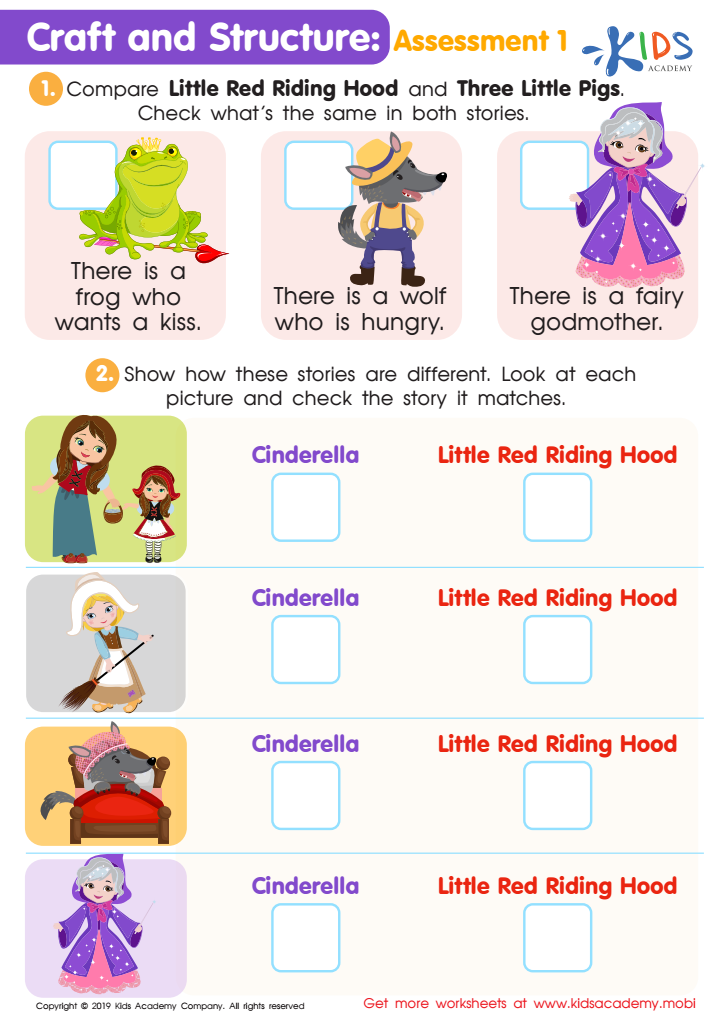
Craft and Structure: Assessment 1 Worksheet
 Assign to My Students
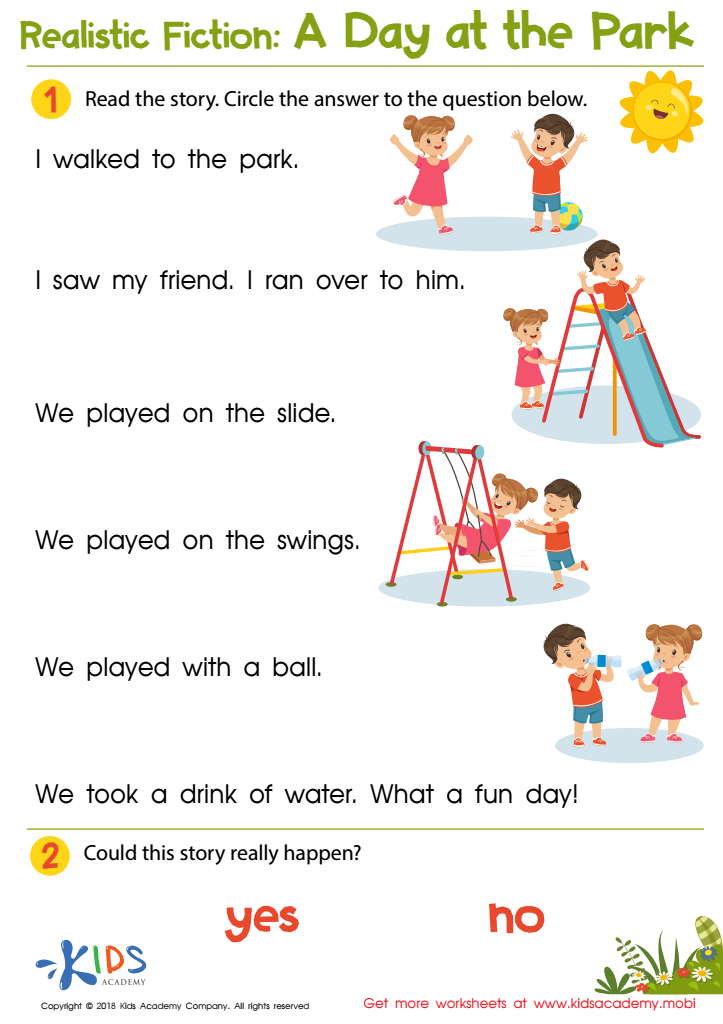
A Day at the Park Worksheet
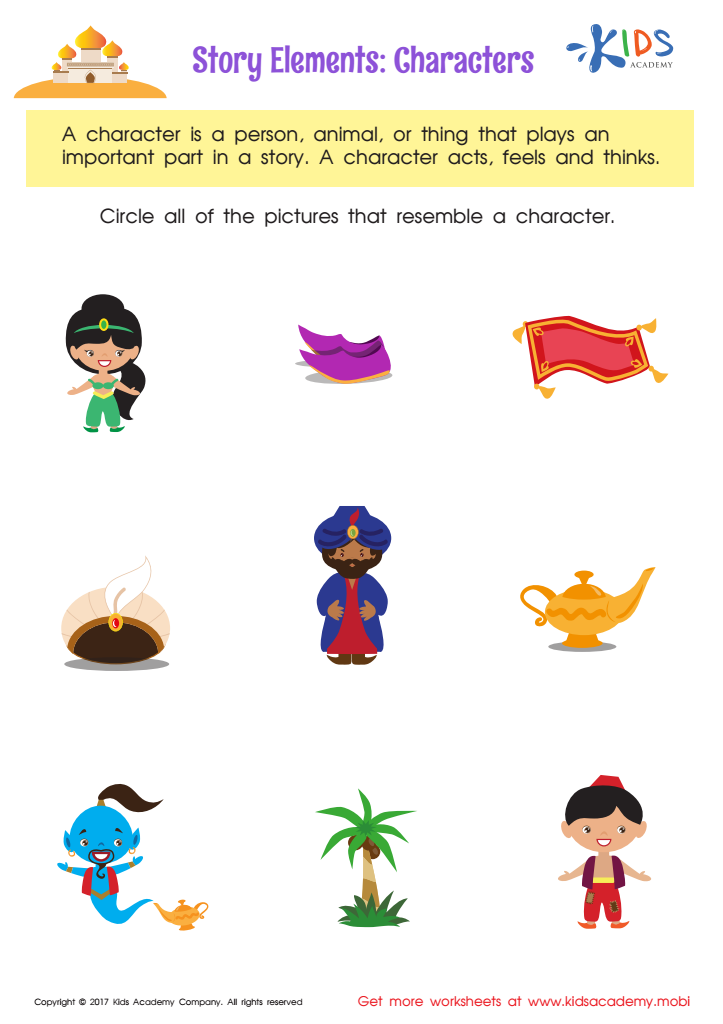
Story Elements Printable








Identifying story elements is crucial for young readers, as it lays the foundation for comprehensive literacy skills. For children aged 5-6, understanding story elements—such as character, setting, plot, conflict, and resolution—enhances their ability to comprehend narratives. By recognizing these components, children improve their critical thinking and analytical skills, enabling them to make connections between different texts and their own experiences.
Parents and teachers play a vital role in guiding children through this learning process. When story elements are highlighted during reading sessions, it encourages curiosity and deeper engagement with the text. This practice fosters a love for reading, as children become more invested in the stories they encounter. Additionally, identifying story elements aids in language development, as children learn new vocabulary and sentence structures while discussing characters' actions or settings.
Moreover, early identification of story elements prepares children for more advanced literacy tasks in the future, such as summarizing or predicting outcomes, which are vital skills in academic success. Importantly, this practice also nurtures creativity and imagination, essential facets of a child’s development. In conclusion, prioritizing story elements in early reading helps cultivate confident, capable readers who are ready to explore the world of literature.








