Information retention Reading Comprehension Worksheets for Ages 5-6
3 filtered results
-
From - To
Discover our engaging Information Retention Reading Comprehension Worksheets designed for ages 5-6. These meticulously crafted worksheets from Kids Academy are designed to boost your child's reading understanding and memory. Each activity enhances the ability to retain key details, answer questions about the text, and improve critical thinking skills. Perfect for early learners, these worksheets combine fun and education, using captivating stories and colorful images to keep your child interested. Download today to support your child's reading journey and watch their confidence grow as they master essential skills for future academic success.
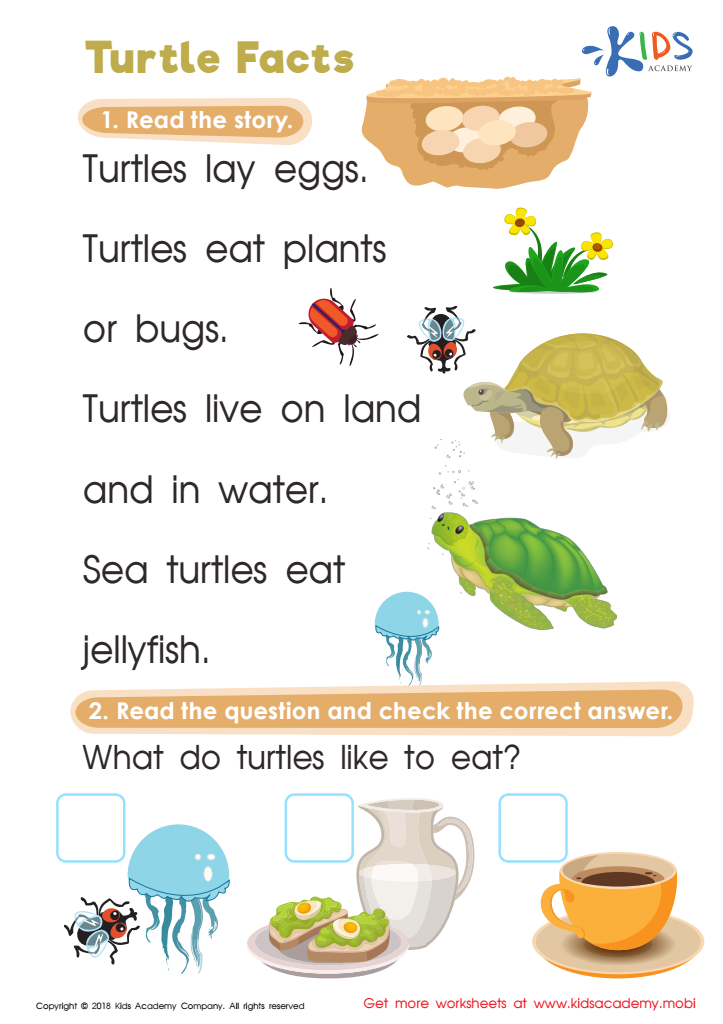
Turtle Facts Worksheet
 Assign to My Students
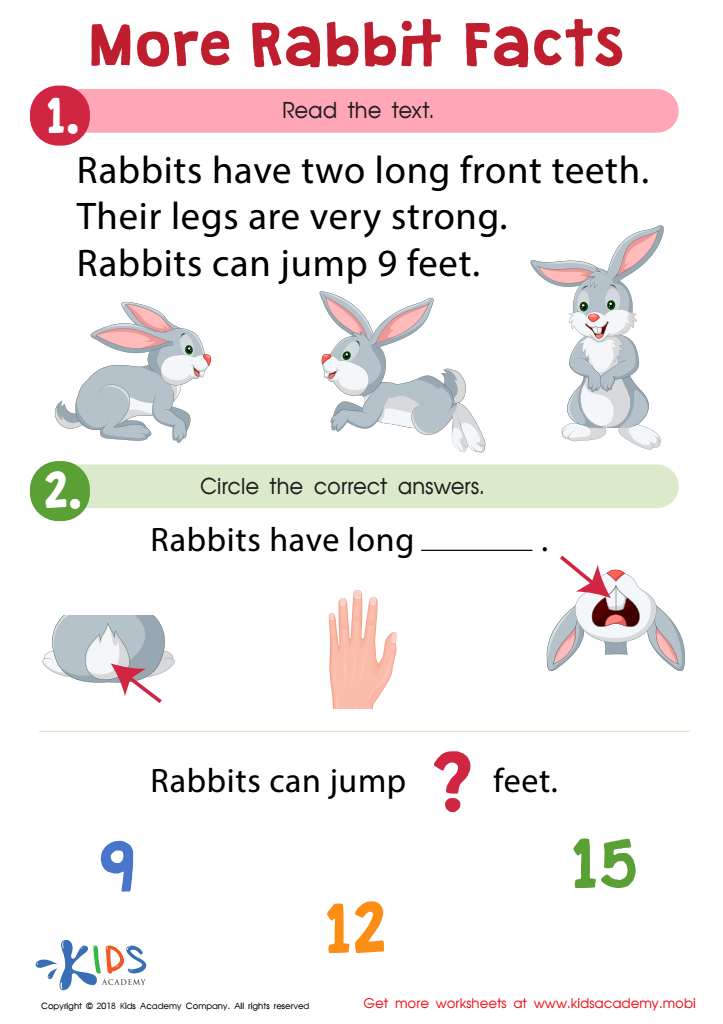
More Rabbit Facts Worksheet
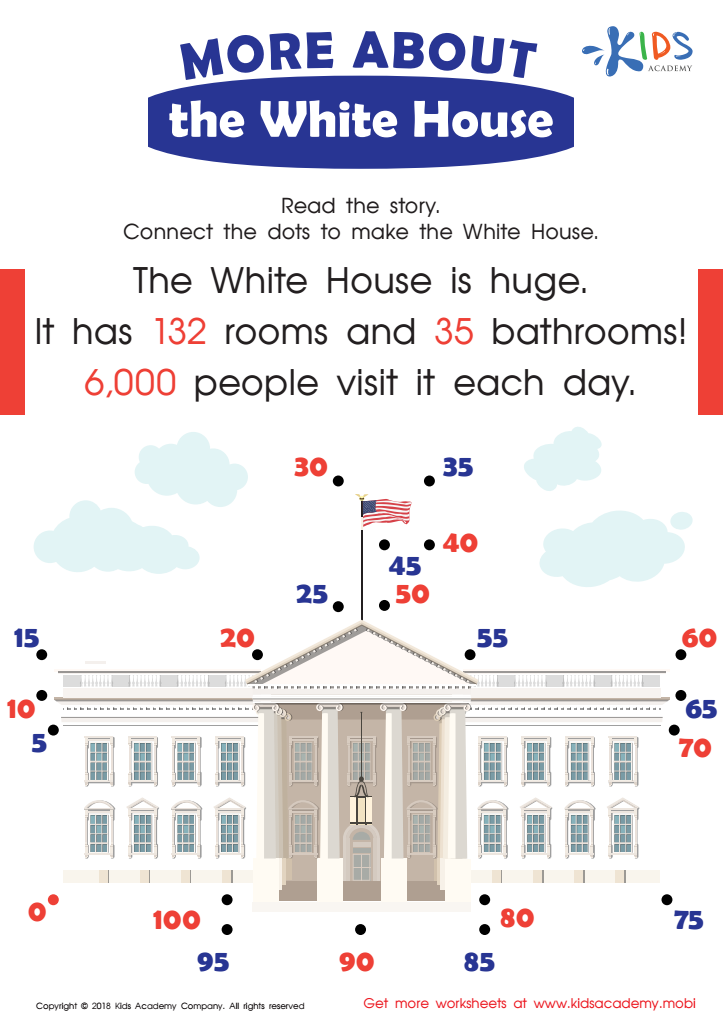
More About the White House Worksheet








Parents and teachers should prioritize information retention and reading comprehension for ages 5-6 because these formative years are crucial for cognitive development. During this period, children’s brains are exceptionally receptive to learning new information, forming the foundation for future academic success.
Good reading comprehension enables young learners to make sense of words, sentences, and texts, which is essential not only for literacy but for learning in all subjects. When children can retain what they read, they are better positioned to connect new ideas with prior knowledge, enhancing their overall understanding and ability to apply learned concepts in various situations.
Moreover, strong reading skills help boost confidence, laying a positive foundation for early school experiences. Children who struggle with comprehension may face academic difficulties and lower self-esteem, which can set off a negative cycle affecting their motivation to learn.
Reading comprehension also fosters critical thinking and problem-solving skills. As kids grasp more complex narratives and information, they develop the ability to think independently and critically, which are essential for daily decision-making and later educational endeavors.
In summary, by focusing on information retention and reading comprehension, parents and teachers help children develop the essential skills they need for long-term academic achievement and personal growth, setting them up for a future of lifelong learning.








