Categorizing objects Science Worksheets for Ages 5-6
4 filtered results
-
From - To
Explore our engaging "Categorizing Objects Science Worksheets" designed specifically for children aged 5-6. These worksheets help young learners develop essential skills in sorting and organizing items based on their attributes such as color, shape, and size. With vibrant illustrations and interactive activities, children will enjoy identifying similarities and differences while enhancing their critical thinking and observational skills. Ideal for home or classroom use, these worksheets foster a love for science and exploration. Download and start facilitating your child’s understanding of categorization today, paving the way for foundational knowledge that supports their educational journey!
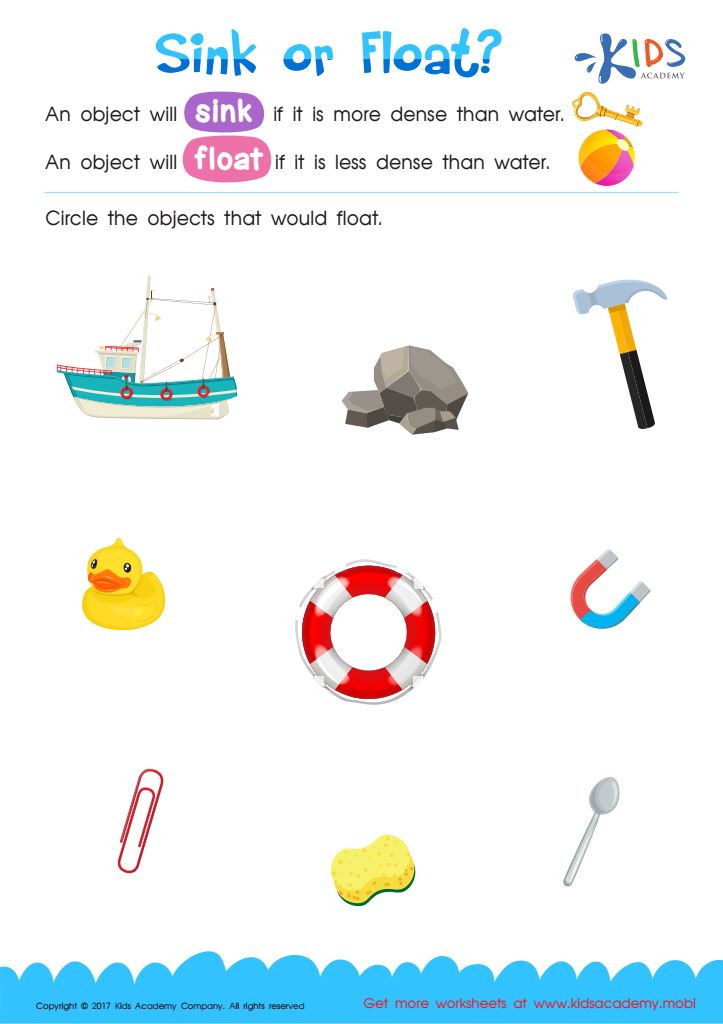
Sink or Float Printable
 Assign to My Students
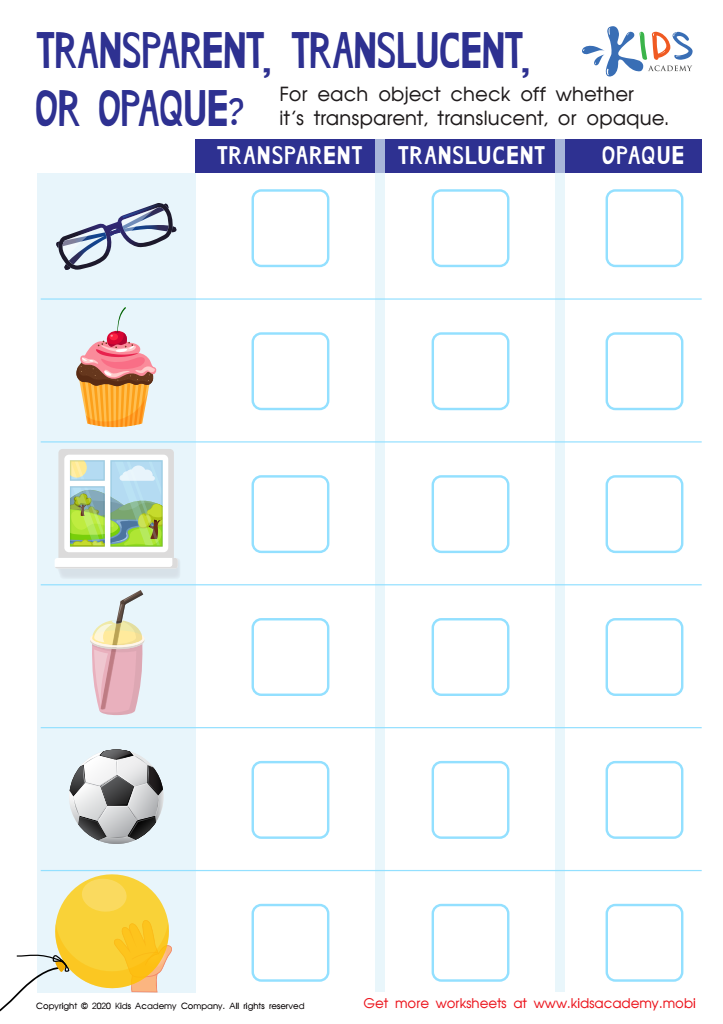
Transparent, Translucent, or Opaque Worksheet
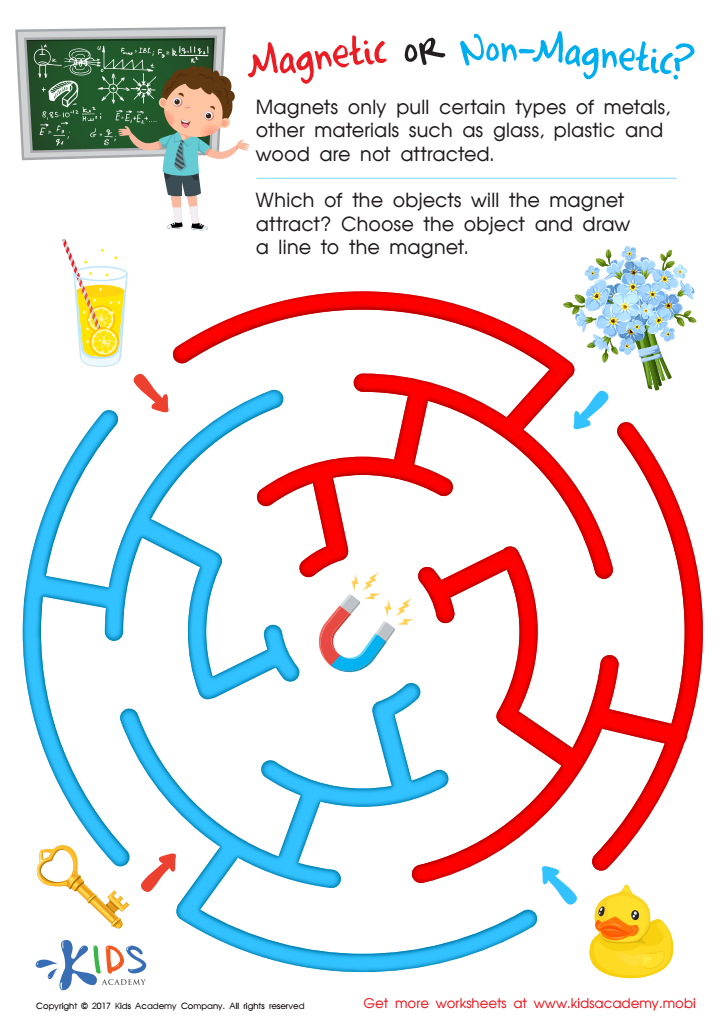
Magnetic or Non–Magnetic Worksheet
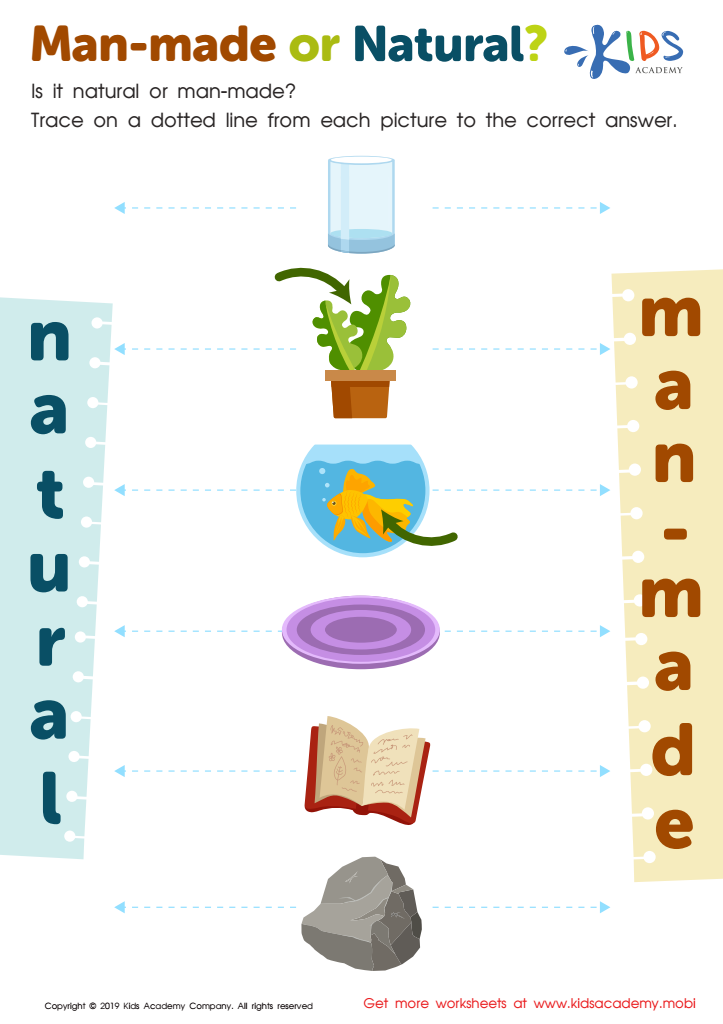
Man-Made or Natural? Worksheet







Categorizing objects is a fundamental skill that plays a critical role in the cognitive development of children aged 5-6. For parents and teachers, understanding its importance can significantly enhance a child's learning experience.
First, categorization helps children make sense of the world around them. By grouping objects based on characteristics such as size, shape, color, or function, children learn to identify similarities and differences. This skill lays the foundation for more advanced reasoning and problem-solving skills later in life.
Secondly, through categorizing activities, children develop language skills as they learn to describe, compare, and explain their reasoning. This fosters communication abilities and expands their vocabulary.
Moreover, categorization promotes critical thinking, as it encourages children to explore relationships among objects. This exploration inspires curiosity and engagement with scientific concepts, connecting their playtime to practical understanding.
Lastly, collaborative categorization activities can enhance social skills. When children work in groups, they learn to share perspectives, negotiate differences, and develop teamwork skills, which are vital for their social development.
In summary, emphasizing categorizing objects in early education nurtures essential cognitive, language, and social skills, making it a key component of a child's growth and learning trajectory.







