Understanding directions Science Worksheets for Ages 5-6
4 filtered results
-
From - To
Discover our "Understanding Directions Science Worksheets" designed specifically for children aged 5-6! These engaging and interactive worksheets help young learners develop essential direction-following skills through fun science-related activities. Students will practice interpreting instructions, enhancing comprehension, and boosting problem-solving abilities—all while exploring intriguing science concepts. Our carefully crafted resources are perfect for classroom use or at-home learning, ensuring your child builds a solid foundation in both science and critical thinking. With vibrant illustrations and intuitive layouts, these worksheets make learning directions exciting and enjoyable! Empower your child’s learning journey and spark their curiosity in science today!
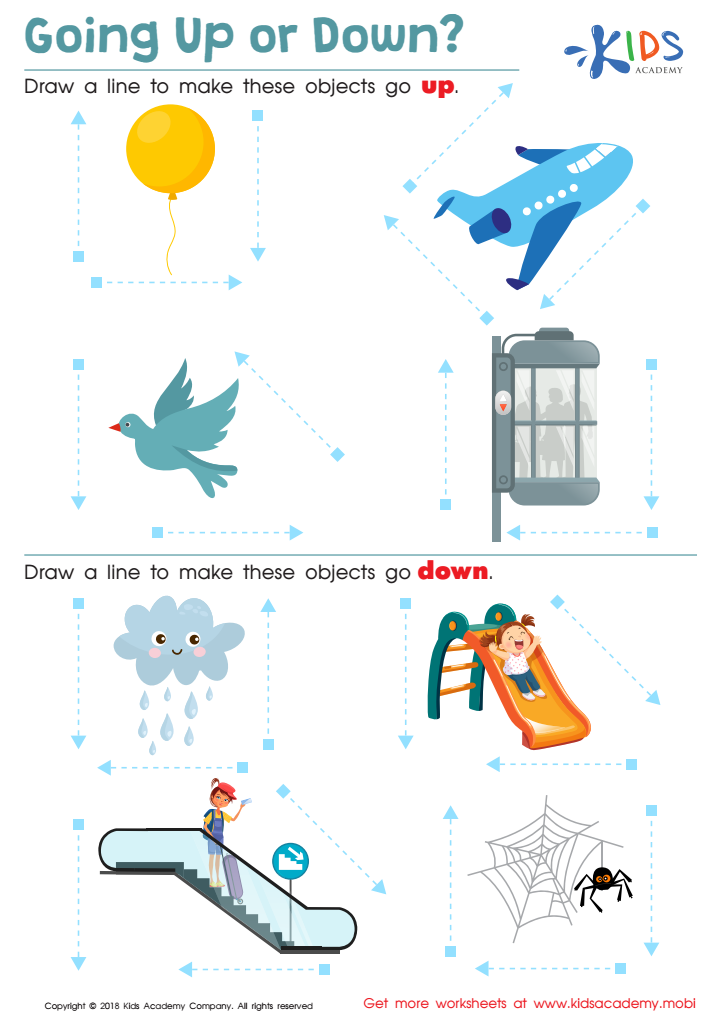
Going up or Down? Worksheet
 Assign to My Students
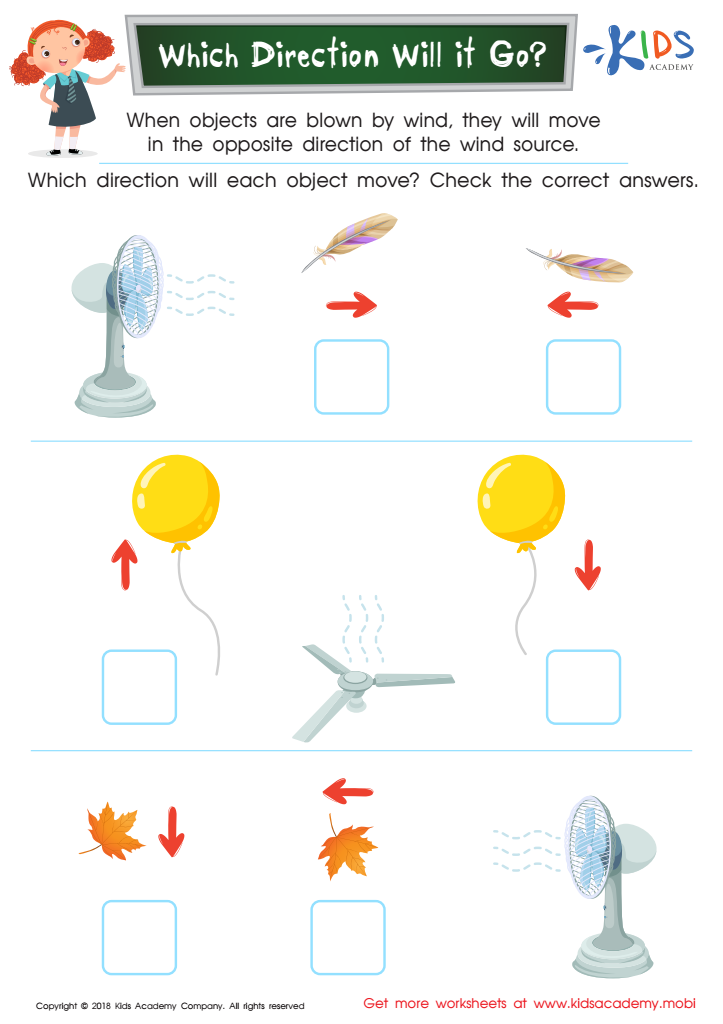
Which Direction Will it Go? Worksheet
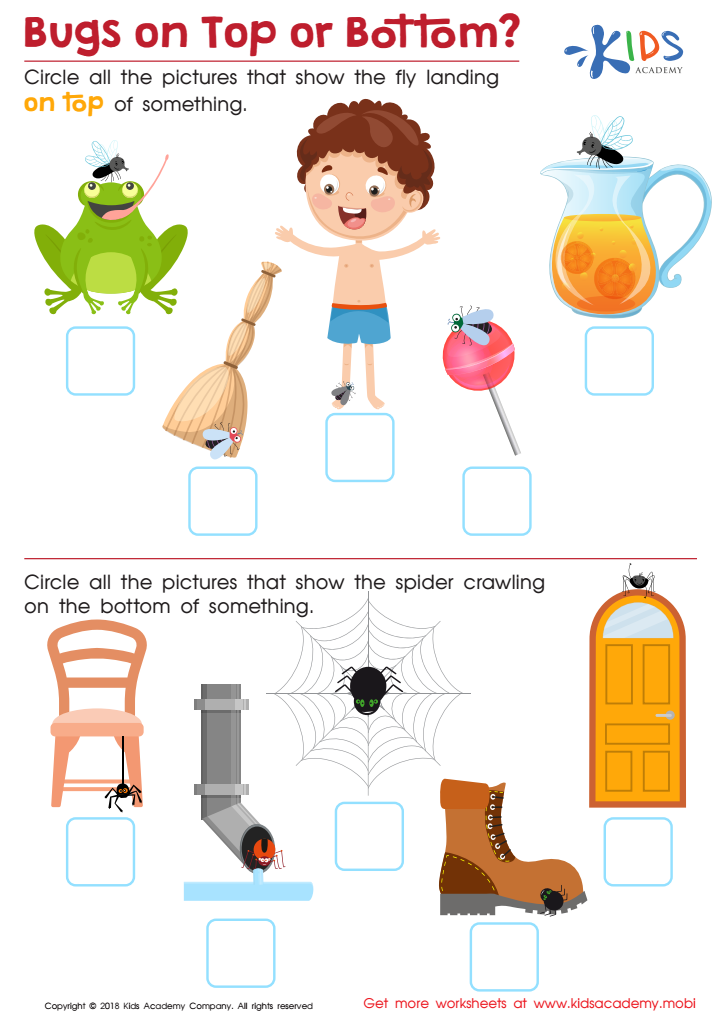
Bugs on Top or Bottom? Worksheet
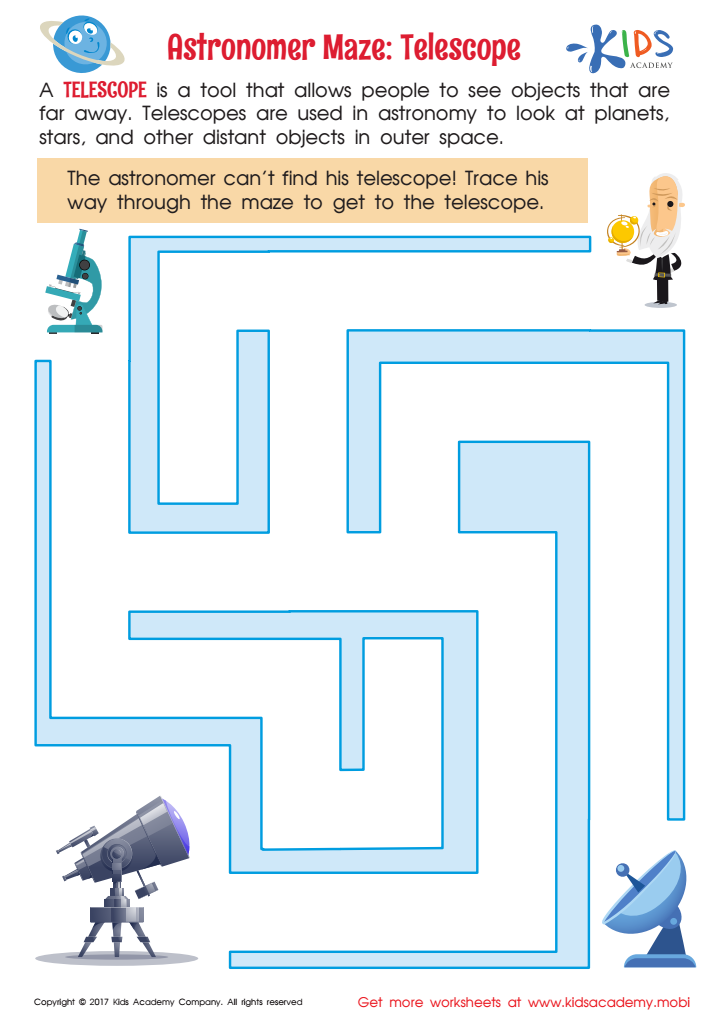
Astronomer Maze: Telescope Worksheet







Understanding directions in science for ages 5-6 is vital for both parents and teachers as it lays the foundational skills for critical thinking and problem-solving. At this age, children are naturally curious and eager to explore, making it an ideal time to introduce them to scientific concepts. Providing them with clear directions helps them engage effectively in experiments and observations, fostering a sense of accomplishment and boosting their confidence.
When children learn to follow directions in science, they also develop essential literacy skills, such as listening, comprehension, and vocabulary. This process enhances their ability to communicate findings and ask questions, promoting deeper inquiry. Moreover, effective direction-following encourages attention to detail and encourages them to be methodical, qualities that are valuable in all areas of learning.
Parents and teachers can model enthusiasm for science during these activities, showing children that exploring the world around them is not just educational, but also fun. By supporting children's understanding of directions in science, adults help cultivate a lifelong love for learning, encouraging future academic success and ability to navigate challenges. Ultimately, fostering a strong foundation in science nurtures curious, knowledgeable, and confident individuals who are excited about the world around them.







