Observational skills Space Worksheets for Ages 5-6
3 filtered results
-
From - To
Enhance your child's observational skills with our engaging Space Worksheets designed for ages 5-6! These printable activities encourage young learners to explore the wonders of the universe, from planets to stars. Our worksheets are specifically crafted to develop critical thinking and attention to detail while sparking curiosity about space. With fun illustrations and easy-to-follow instructions, children will enjoy identifying, comparing, and describing various celestial objects. Perfect for homeschooling or classroom use, these resources make learning about space interactive and exciting. Download our space worksheets today and watch your child’s confidence and observational skills soar!
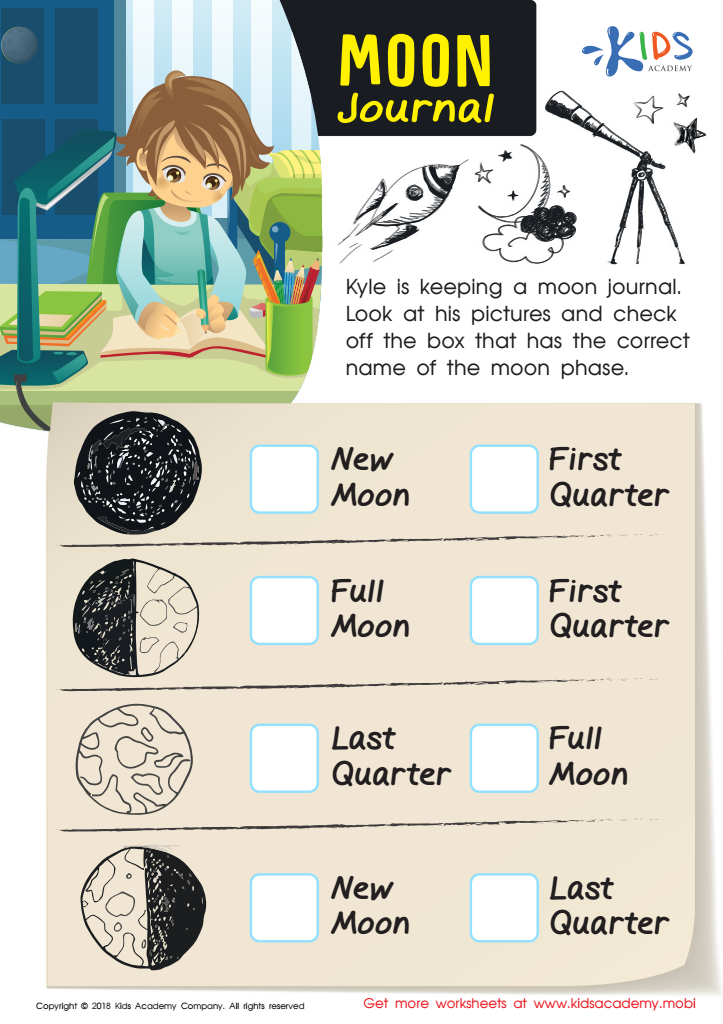
Moon Journal Worksheet
 Assign to My Students
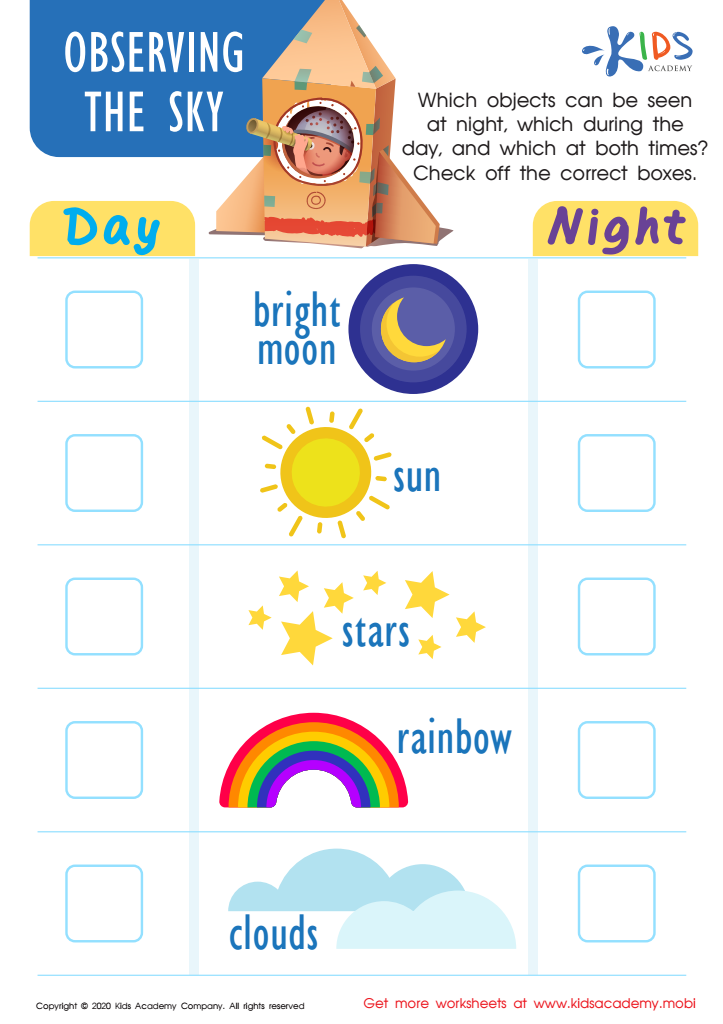
Observing the Sky Worksheet
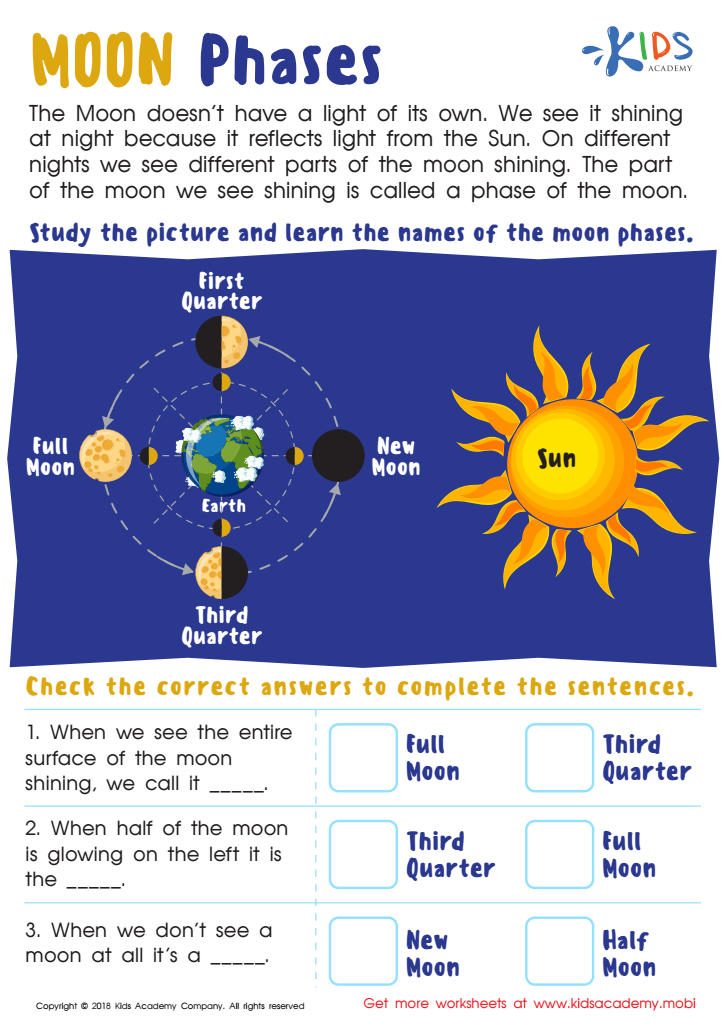
Moon Phases Worksheet




%20(1).jpg)

Observational skills are crucial for children aged 5-6 as they lay the foundation for critical thinking, creativity, and problem-solving abilities. At this age, children are naturally curious, and fostering their observational skills enhances their ability to analyze their surroundings, identify patterns, and make connections. Parents and teachers play a vital role in nurturing these skills, which contribute to overall cognitive development.
Enhancing observational skills helps children learn to focus, identify details, and articulate their thoughts, empowering them to express their ideas clearly. Engaging in observational activities—like nature walks, classroom science experiments, or even simple discussions about their surroundings—stimulates curiosity and boosts engagement.
Moreover, strong observational skills enable children to understand social cues and emotions in others, fostering empathy and communication skills. These abilities are essential for building relationships with peers and adults, which are critical aspects of their social development.
In the long run, good observational skills benefit a child’s academic performance as they become adept at listening, analyzing information, and drawing conclusions. By prioritizing these skills, parents and teachers set the stage for lifelong learning, ensuring children feel capable and confident as they navigate the world around them.







