
Identification skills Social Studies Worksheets for Ages 5-6
3 filtered results
Difficulty Level
Grade
Age
-
From - To
Subject
Activity
Standards
Unlock your child’s potential with our engaging Identification Skills Social Studies Worksheets designed specifically for ages 5-6. These interactive printable resources enhance early learning by helping young children recognize important social concepts, including community helpers, cultural symbols, and everyday scenes. Our worksheets encourage critical thinking and observation skills, making learning both fun and educational. Suitable for home or classroom use, these adaptable resources are perfect for introducing foundational social studies concepts. Equip your child with essential identification skills and watch them grow into confident learners. Discover the joy of learning with Kids Academy's well-crafted educational materials today!
Favorites
With answer key
Interactive
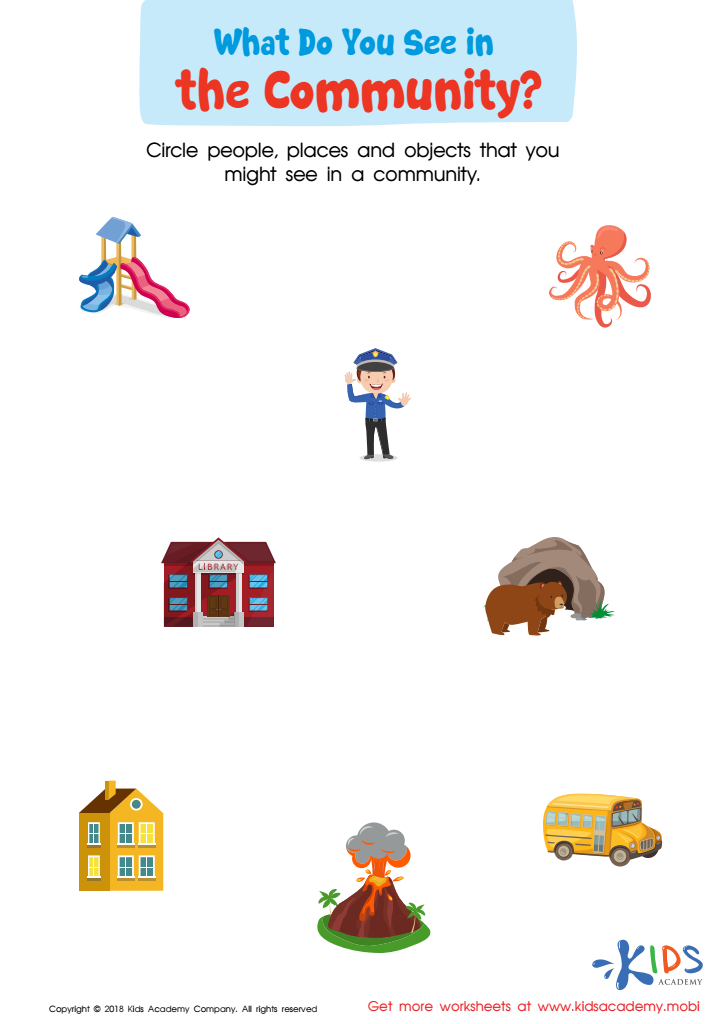
What Do You See in the Community Worksheet
This free social studies PDF can help your children learn about their local community. They'll identify its members, places and objects using engaging and recognizable pictures. As they trace circles around them, they'll also practice fine motor skills. It's a great way to introduce social science concepts and help them understand the importance of community.
 Assign to My Students
What Do You See in the Community Worksheet
Worksheet
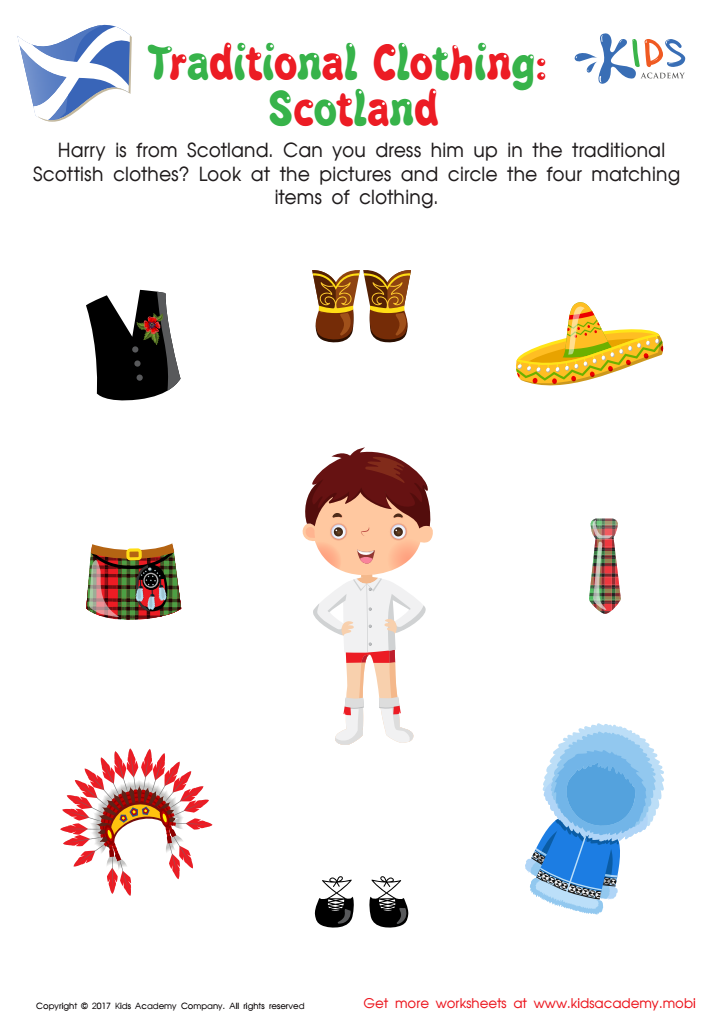
Traditional Clothing in Scotland Worksheet
Explore Scotland's traditional clothing without leaving home! This engaging worksheet will help your kid gain a new appreciation for different cultures. They'll have a blast learning about Scotland's clothing!
Traditional Clothing in Scotland Worksheet
Worksheet
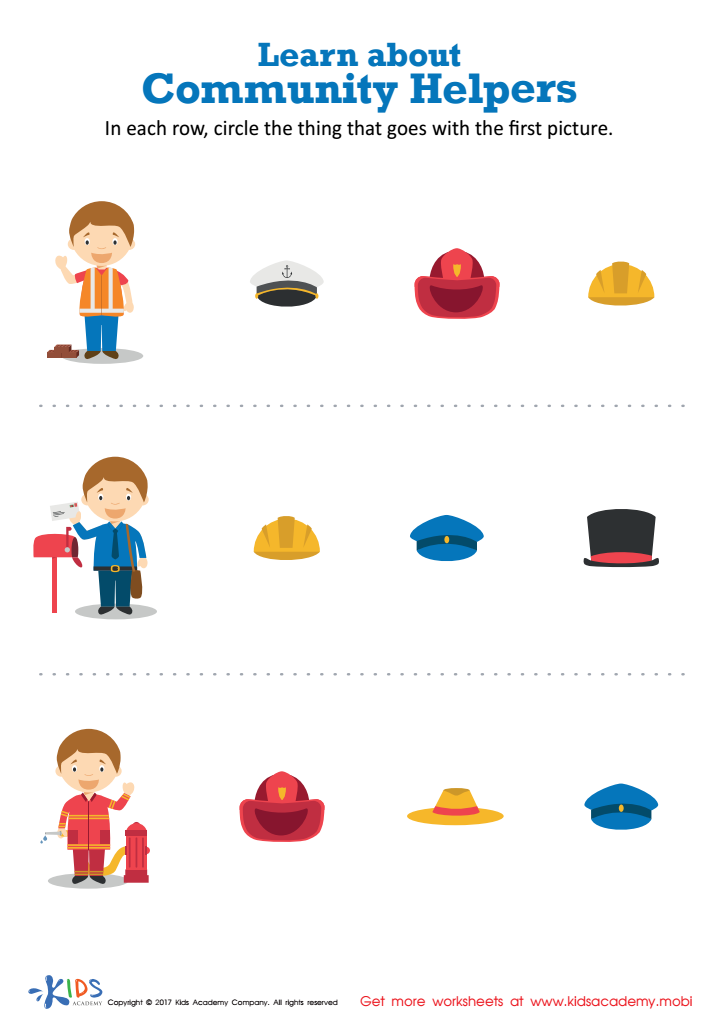
Learn about Community Helpers Printable
Introduce your little one to the amazing and hard-working people in the community with this free worksheet. It will help them use matching and observational skills to match the correct hat to its worker and recognize community helpers. Perfect for early learners, this worksheet uses familiar images to help them gain a deeper appreciation for their community helpers!
Learn about Community Helpers Printable
Worksheet
Join Kids Academy for Free
Who is primarily going to use this learning content?







Identification skills in Social Studies for children aged 5-6 are crucial for their cognitive and social development. Societal awareness begins at a young age, and fostering identification skills helps children understand their community, culture, and the world around them. These skills involve recognizing and categorizing different aspects of society, such as family roles, community helpers, symbols, and traditions, which lay the foundation for critical thinking.
By becoming adept at identifying elements of their environment, young learners develop a sense of belonging and empathy. They begin to appreciate diversity in their communities and understand different perspectives, strengthening their social interactions and promoting cooperation with peers.
Furthermore, engaging children in identification activities—like recognizing local landmarks or community roles—encourages curiosity and inquiry-based learning. Educators and parents can guide discussions around these identifications, fostering communication skills and cognitive growth.
Ultimately, prioritizing these skills in early education not only cultivates informed citizens but also equips children with the tools necessary for future academic success. Developing identification skills prepares young learners for more complex subjects in later schooling, ensuring a well-rounded educational experience that values social awareness and responsibility.








