Word Recognition Consonant Digraphs Worksheets for Ages 5-7
5 filtered results
Difficulty Level
Grade
Age
-
From - To
Subject
Activity
Standards
Introduce your child to the world of word recognition with our engaging Consonant Digraphs Worksheets designed for ages 5-7. These worksheets help young learners identify and understand consonant digraphs like "sh," "ch," and "th," boosting their phonics skills and reading fluency. Each activity is crafted to make learning fun and effective, featuring vivid illustrations and interactive exercises. By mastering consonant digraphs, your child will build a solid foundation for reading success. Ideal for both classroom and home use, these printable worksheets are perfect for children beginning their literacy journey. Download today and watch their reading skills soar!
Favorites
With answer key
Interactive
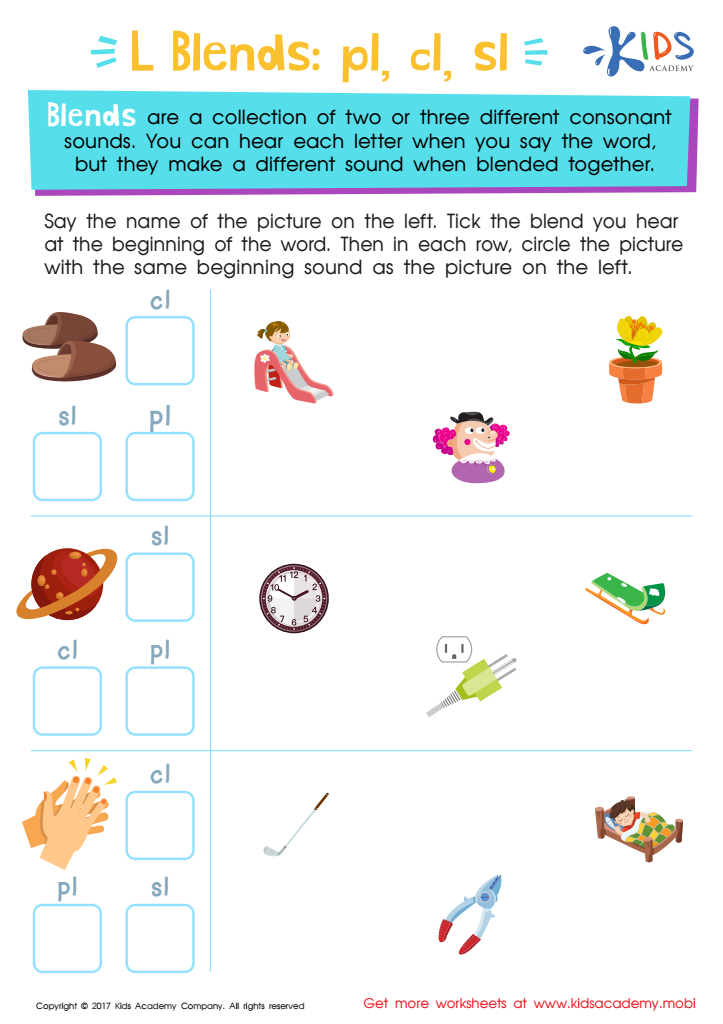
L Blends: "Pl", "Cl" and "Sl" Printable
This printable worksheet will help your child recognize and identify the Pl, Cl, and Sl consonant blends, sound them out, and identify them in print. Improve your child's reading and writing skills with fun and colorful phonics practice!
 Assign to My Students
L Blends: "Pl", "Cl" and "Sl" Printable
Worksheet
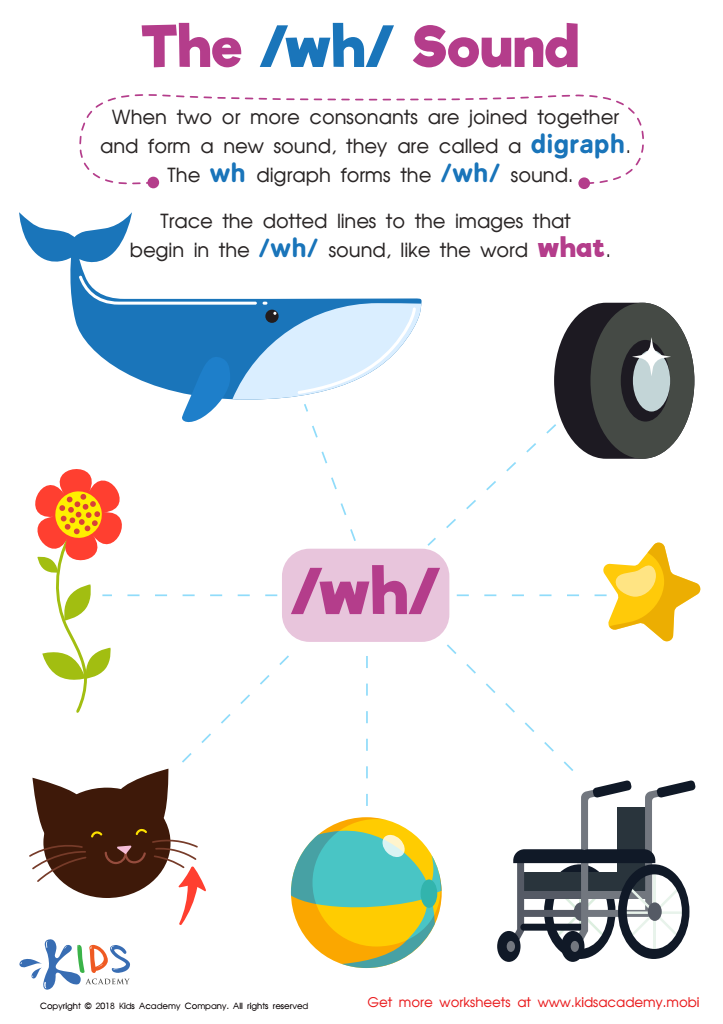
The /wh/ Sound Worksheet
Digraphs join two consonants to make a new sound, like /wh/. Give examples, like "whale", "when" and "why". Ask kids to name pictures in a worksheet and trace dotted lines to images beginning with the /wh/ sound; "what" is one example.
The /wh/ Sound Worksheet
Worksheet
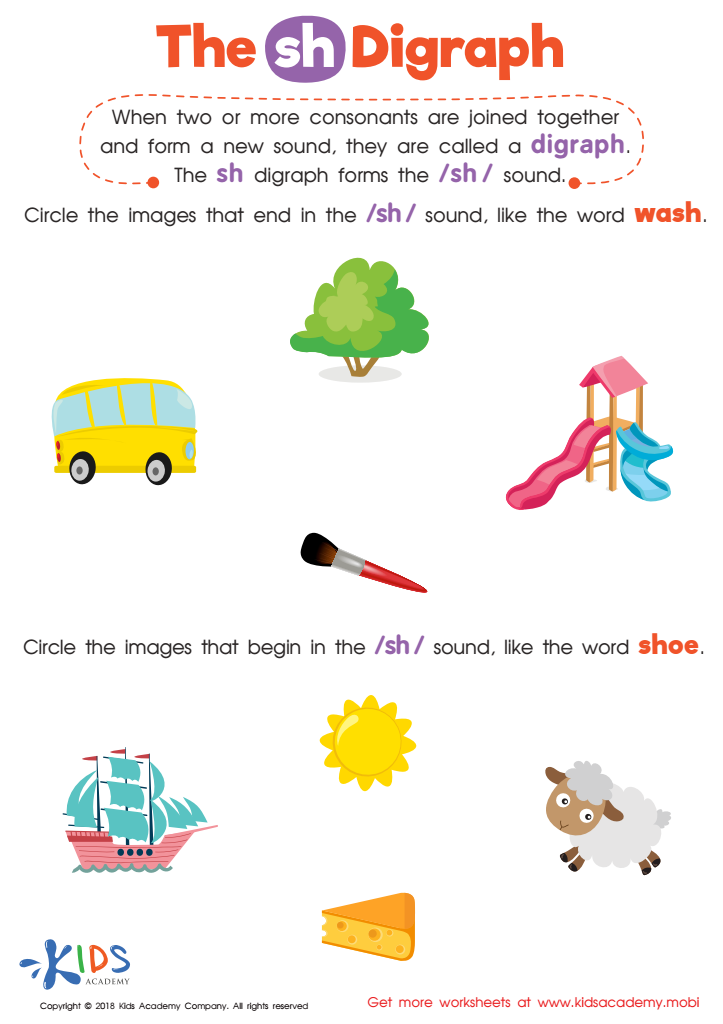
The SH Digraph Worksheet
There are many phonetic sounds, each with its own unique sound. When two or more consonants are combined to create a new sound, it's called a digraph. Example: the sh digraph creates the /sh/ sound. Have kids look at the pictures and say the words aloud. Help them circle the images ending with /sh/, like 'wash'.
The SH Digraph Worksheet
Worksheet
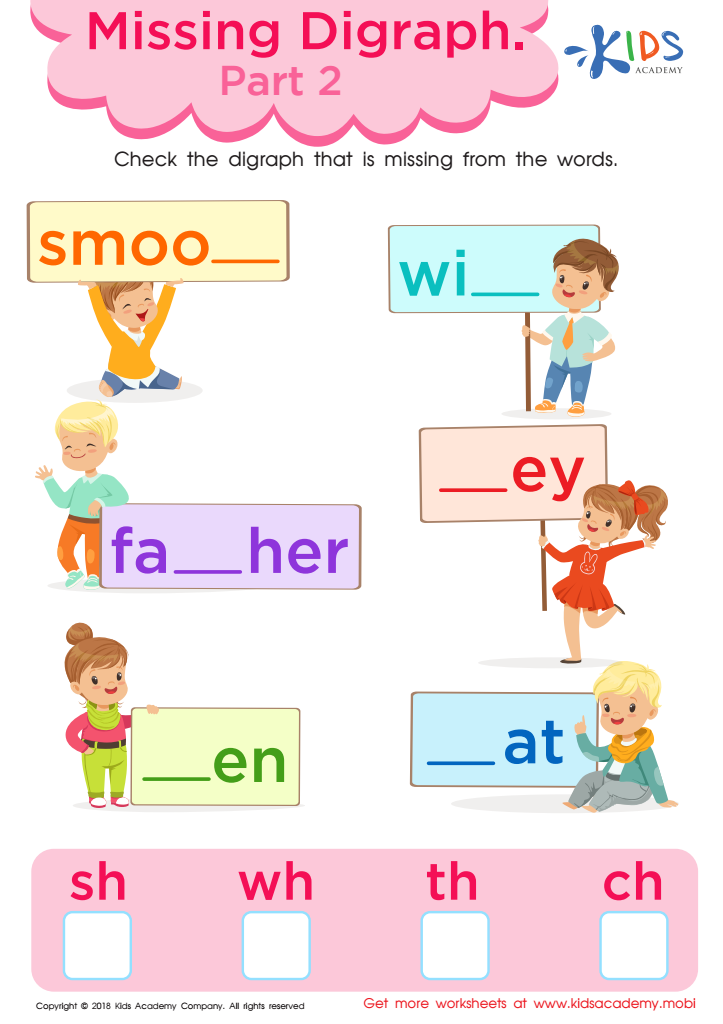
Missing Digraph: Part 2 Worksheet
Practice the "th" digraph with this fun worksheet from Kids Academy! See how it appears at the beginning, middle, or end of words and help learners fill in the blanks. Check if they got it right by finding the th digraph at the bottom!
Missing Digraph: Part 2 Worksheet
Worksheet
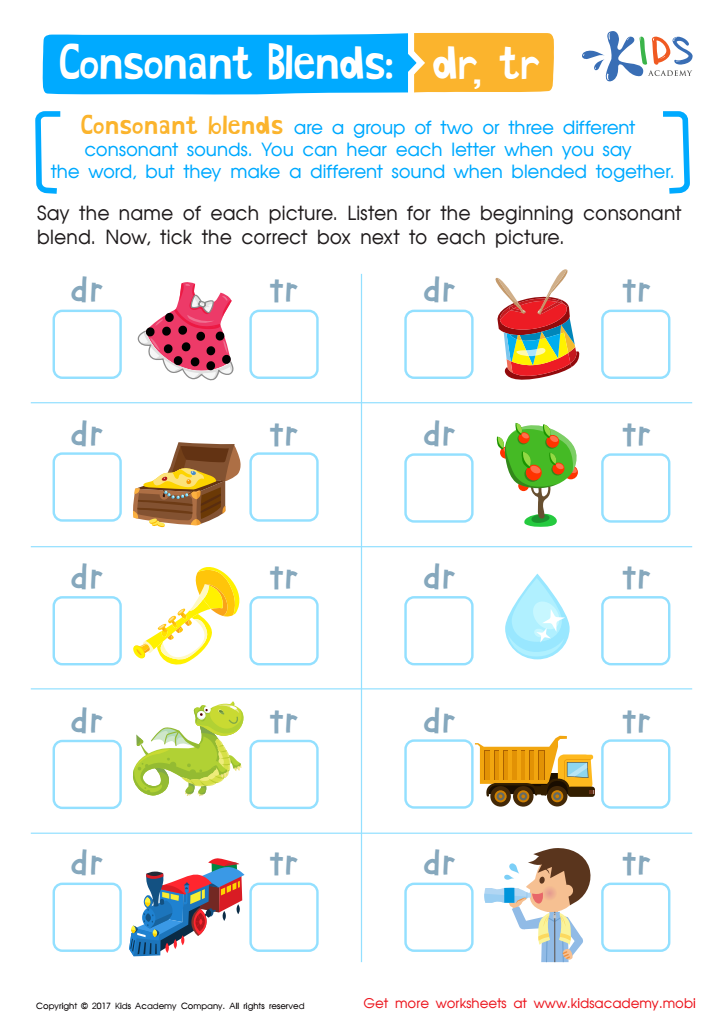
Consonant Blends: "Dr" and "Tr" Printable
Pictures of the words provide a visual cue, and sound-outs help with auditory cues.
Consonant Blends: "Dr" and "Tr" Printable
Worksheet
Join Kids Academy for Free
Who is primarily going to use this learning content?


Word recognition consonant digraphs are essential for young readers, typically ages 5-7, as these combinations form the basic building blocks of phonics that support fluent reading and comprehension. Consonant digraphs, such as "ch," "sh," "th," and "wh," are pairs of consonants that create a single sound. Recognizing these sounds is crucial for decoding words accurately and quickly.
When children develop the ability to recognize consonant digraphs, they can read more complex words, expanding their vocabulary and enhancing their comprehension skills. This foundation alleviates future reading struggles, making the process more enjoyable and less frustrating, thereby promoting a lifelong love of reading.
Parents and teachers caring about consonant digraph recognition support early literacy development. Providing practice opportunities helps solidify this knowledge, building confidence and fostering early academic success. When children feel confident in their reading abilities, they’re more eager to engage with text, leading to improved overall academic performance.
In an era where early literacy sets the stage for educational success, ensuring children grasp the significance of consonant digraphs at a young age is invaluable. This attention to early phonics skill development is a stepping stone toward more proficient reading and critical thinking capabilities.