Sound identification Alphabet Worksheets for Ages 5-7
5 filtered results
-
From - To
Unlock the amazing world of phonics with our Sound Identification Alphabet Worksheets designed for ages 5-7! These engaging and educational printables make learning fun and effective by helping young learners recognize and associate sounds with letters. Perfect for budding readers, these worksheets provide a solid foundation in early literacy skills through interactive and entertaining activities. Ideal for both classroom use and at-home practice, each worksheet is carefully crafted to nurture auditory discrimination and phonemic awareness. Equip your child with the tools they need to excel in reading, boosting their confidence and academic success. Download now and start your phonics journey today!
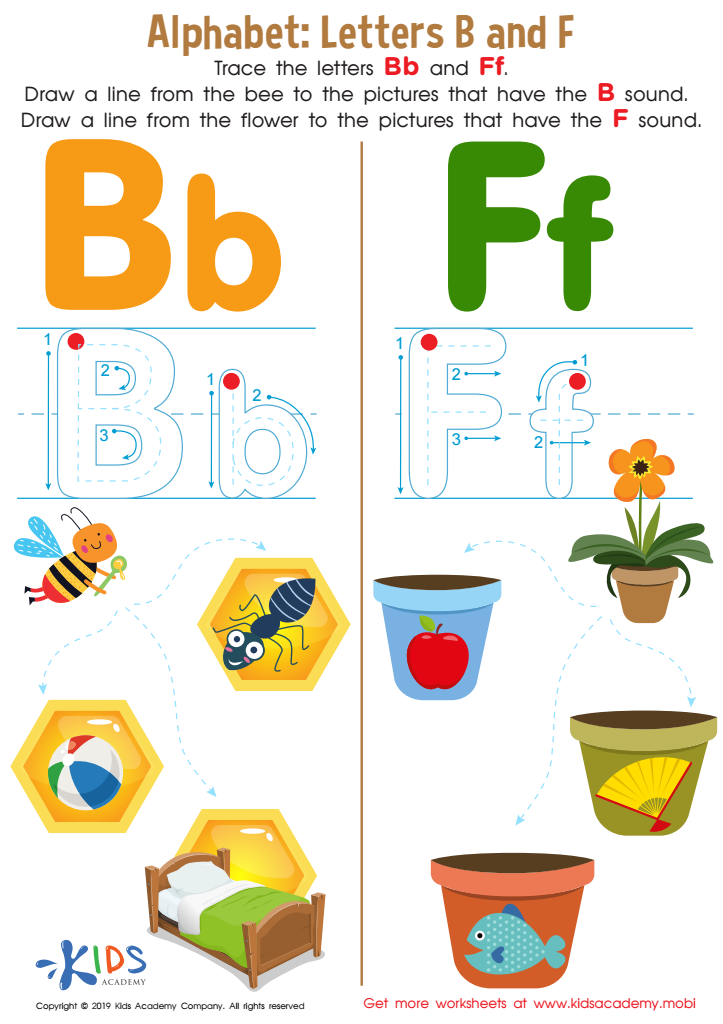
Letters B and F Tracing Worksheet
 Assign to My Students
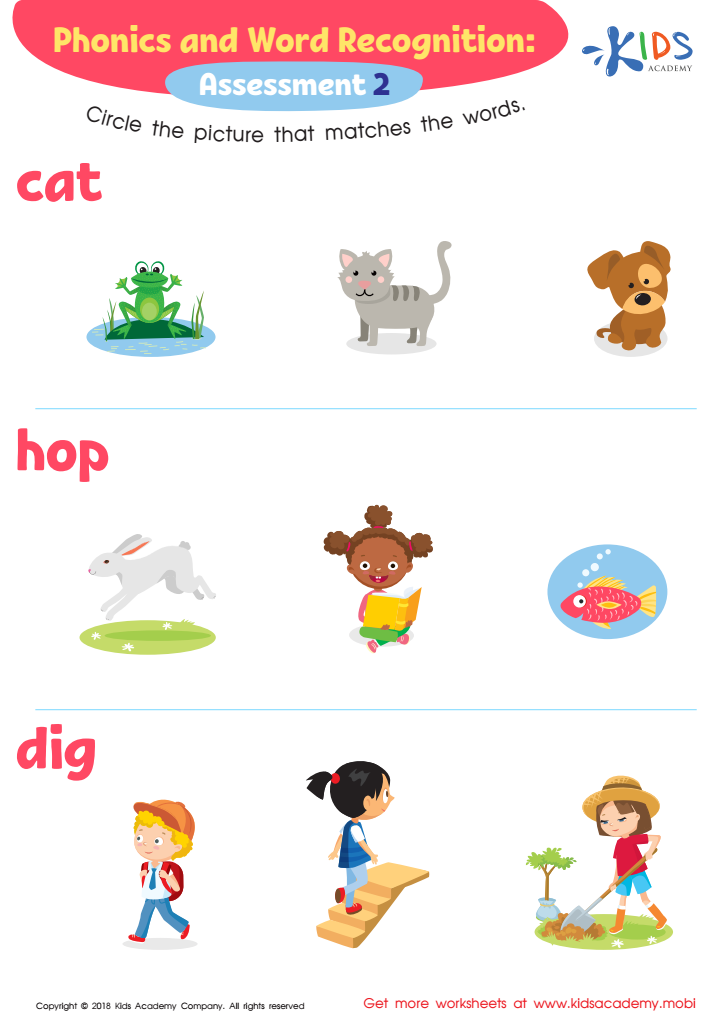
Phonological Awareness: Assessment 2 ELA Worksheet
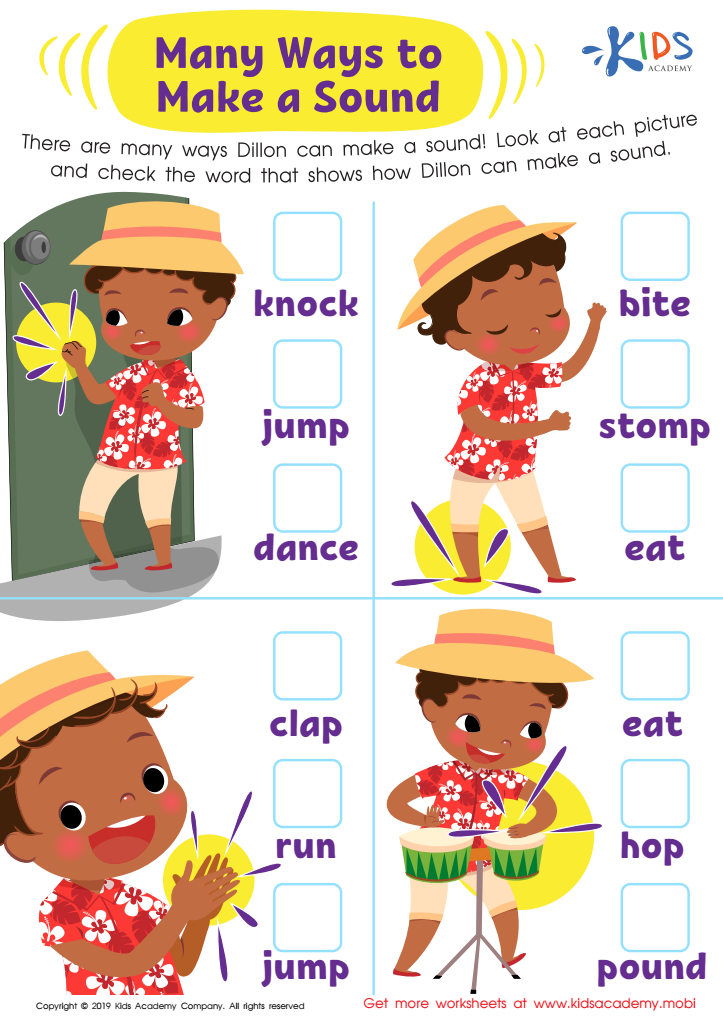
Many Ways to Make a Sound Worksheet
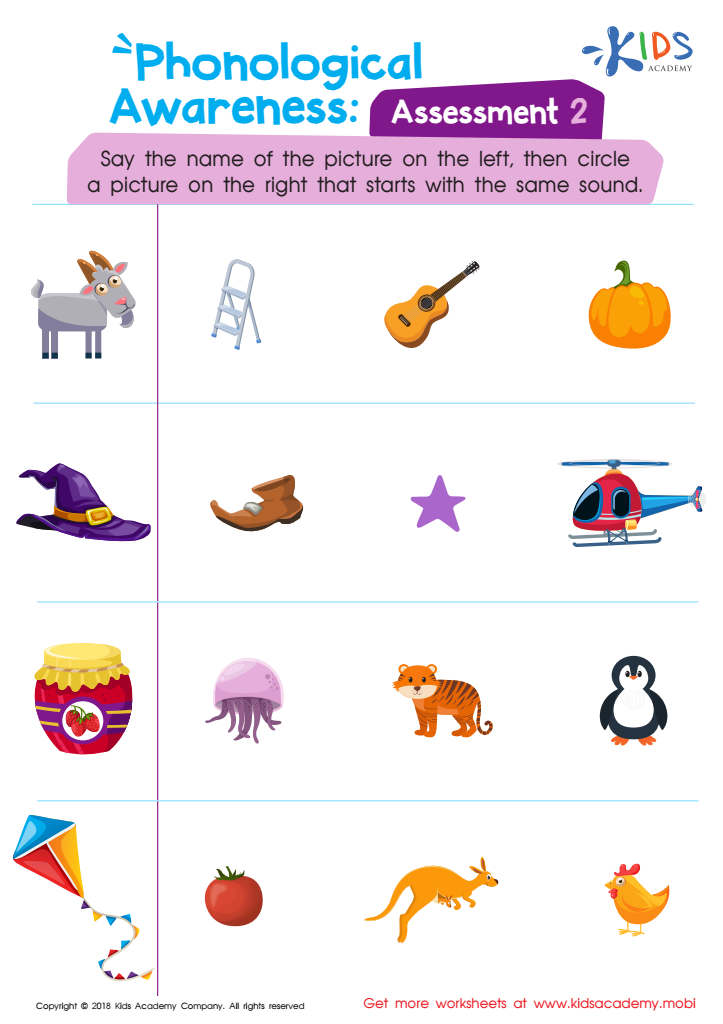
Phonological Awareness: Assessment 2 Worksheet
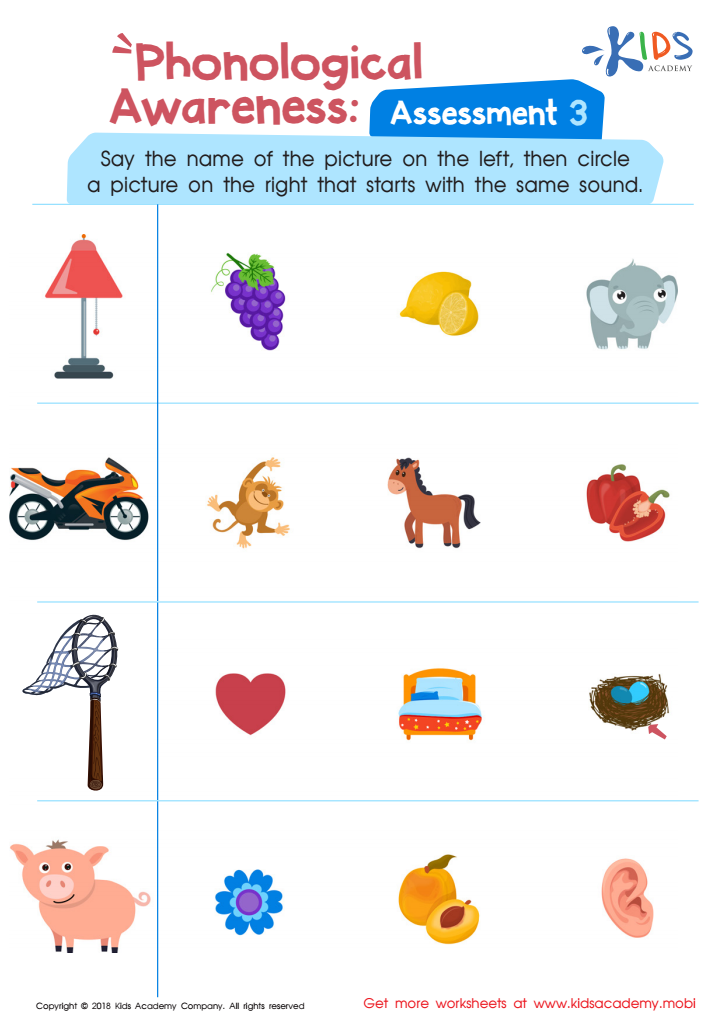
Phonological Awareness: Assessment 3 Worksheet








Sound identification with the alphabet is fundamental to early literacy development for children aged 5-7. Mastering sound identification helps children to decode words, an essential skill for reading. When children learn that each letter has a corresponding sound, they begin to recognize the structure of words. This phonemic awareness allows them to break down words into individual sounds (phonics), assisting them in spelling, reading, and writing.
For parents and teachers, focusing on sound identification can greatly improve a child’s literacy outcomes. Early exposure can prevent future reading difficulties and supports overall academic achievement. Sound identification activities can be fun and engaging, using songs, games, and visual aids that make learning natural and enjoyable.
Additionally, understanding sound-letter associations extends beyond literacy. It aids in the development of listening skills, enhances vocabulary, and fosters confident communication. A strong foundation in phonemic awareness promotes a lifelong love for reading and learning.
In summary, parents and teachers should care about sound identification because it facilitates early reading proficiency, enhances academic performance, and supports overall language development. Engaging and interactive methods can make this crucial skill accessible and enjoyable for young learners.







