Word identification Alphabet Worksheets for Ages 5-7
7 filtered results
-
From - To
Explore our engaging Word Identification Alphabet Worksheets designed specifically for children ages 5-7. These worksheets incorporate colorful visuals and interactive activities that help young learners recognize and understand words linked to the alphabet. Perfect for reinforcing literacy skills, our resources promote vocabulary development while making learning fun and enjoyable. Children will develop essential reading skills through easy-to-follow exercises, including matching letters to pictures, completing simple words, and practicing spelling. Designed to complement your teaching curriculum, these worksheets provide a solid foundation for early readers. Jumpstart your child’s reading journey today with our fun and educational materials!
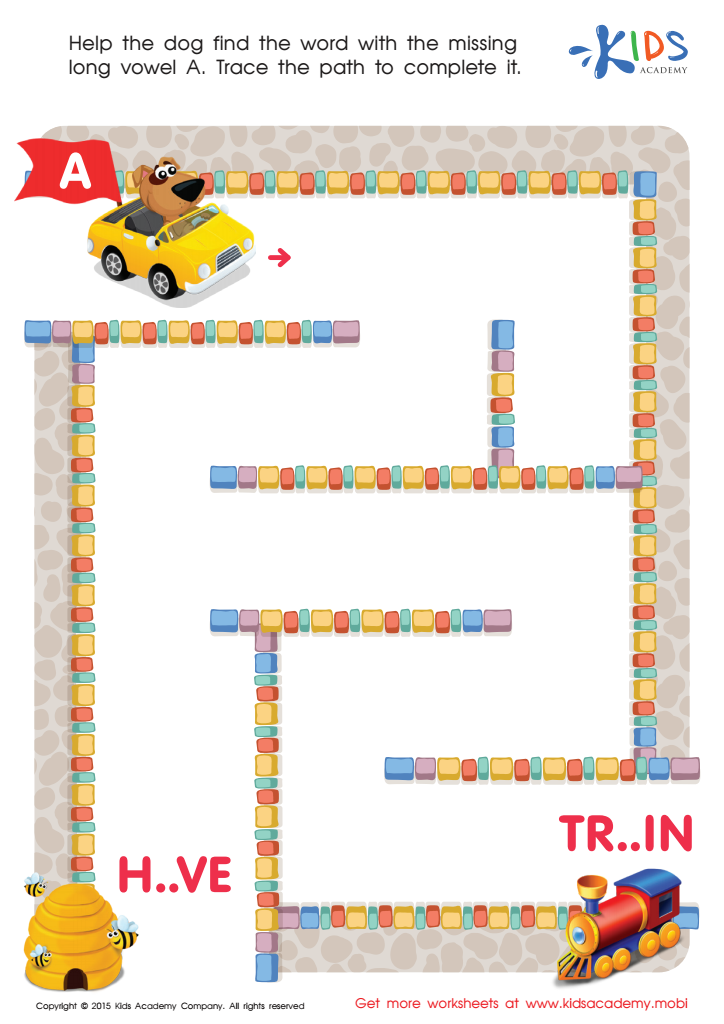
Long Vowel Sound A Worksheet
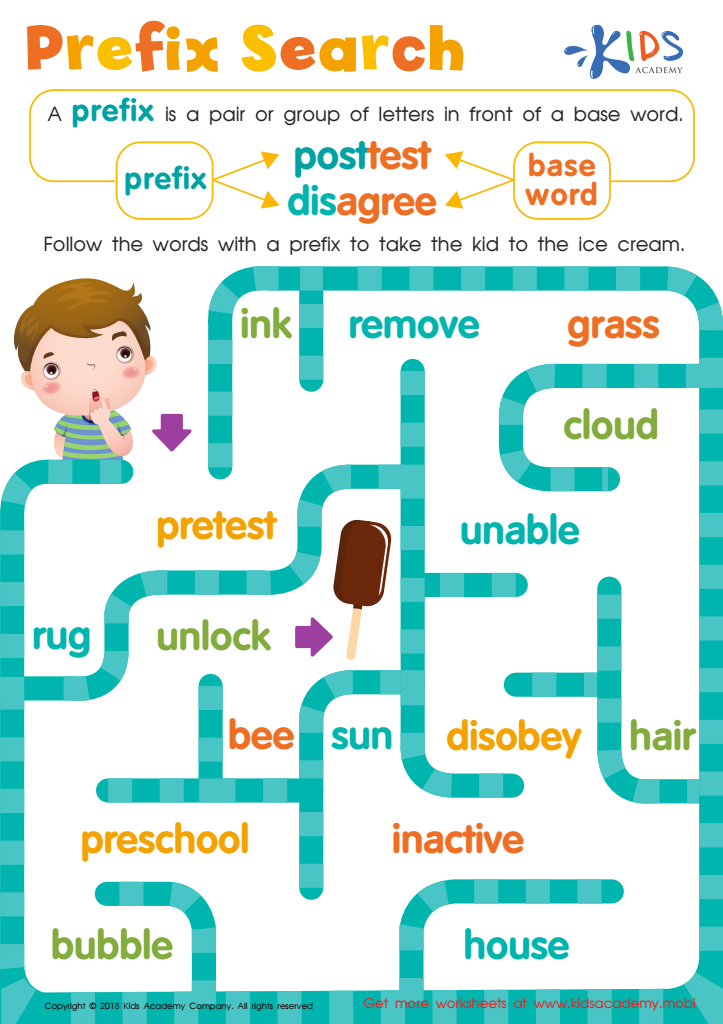
Reading: Prefix Search Worksheet
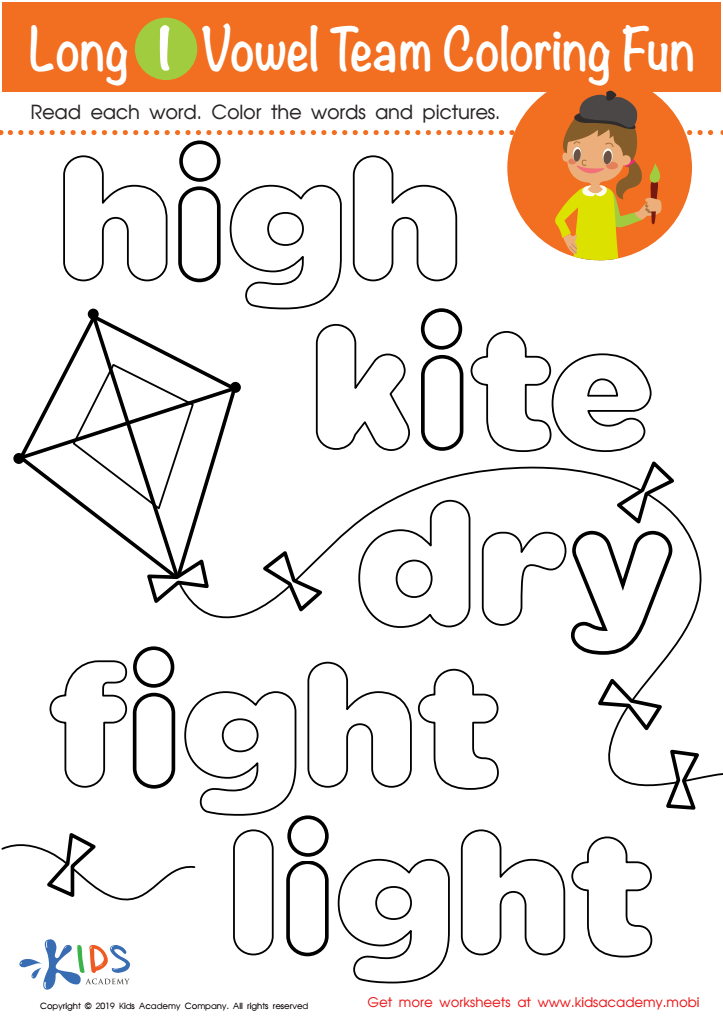
Long I Vowel Team Coloring Worksheet
 Assign to My Students
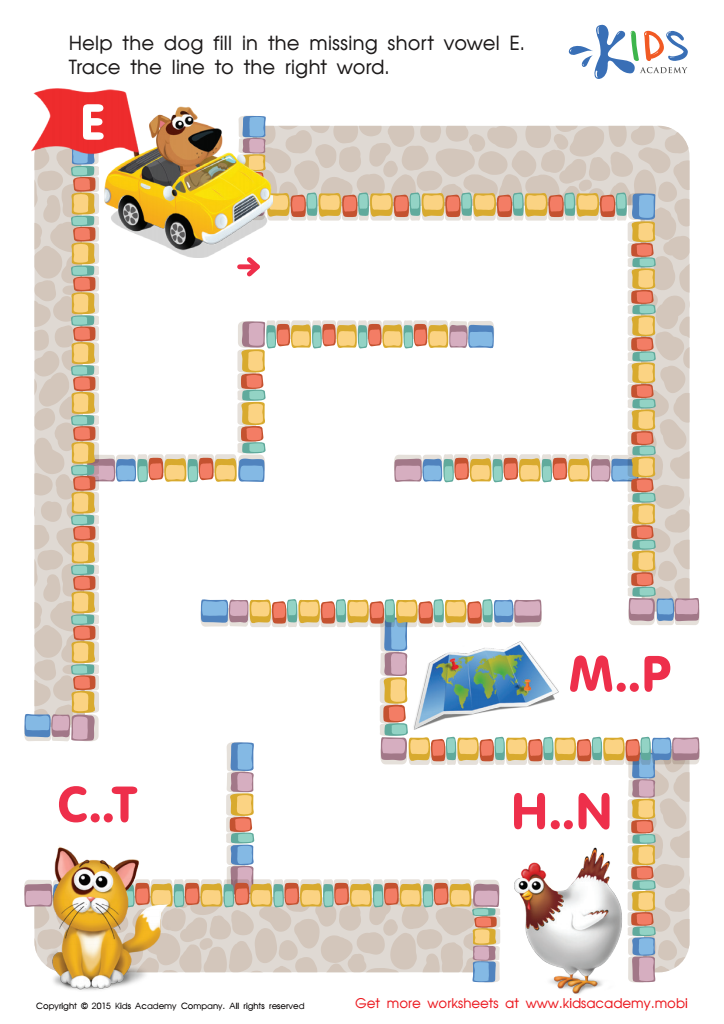
Short Vowel Sound E Worksheet
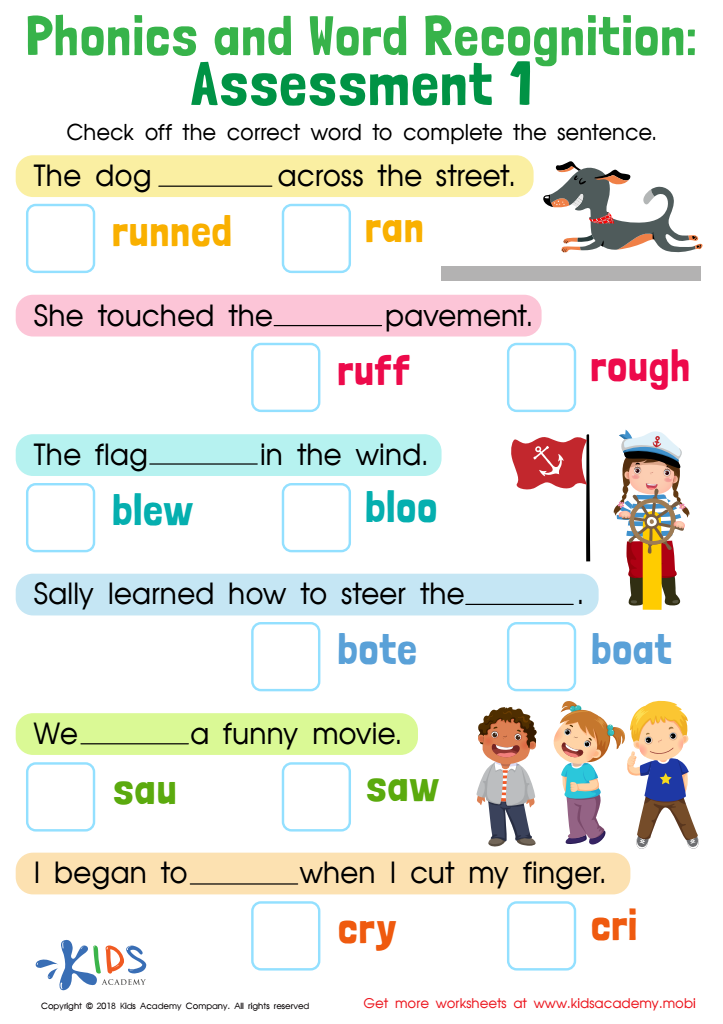
Phonics and Word Recognition: Assessment 1 Worksheet
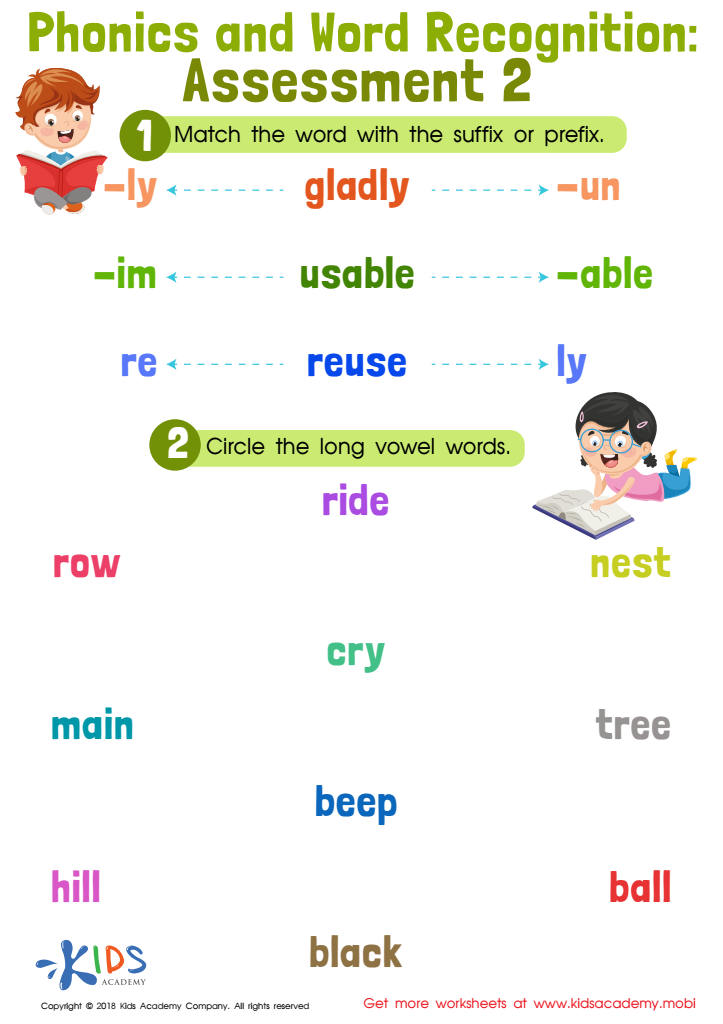
Phonics and Word Recognition: Assessment 2
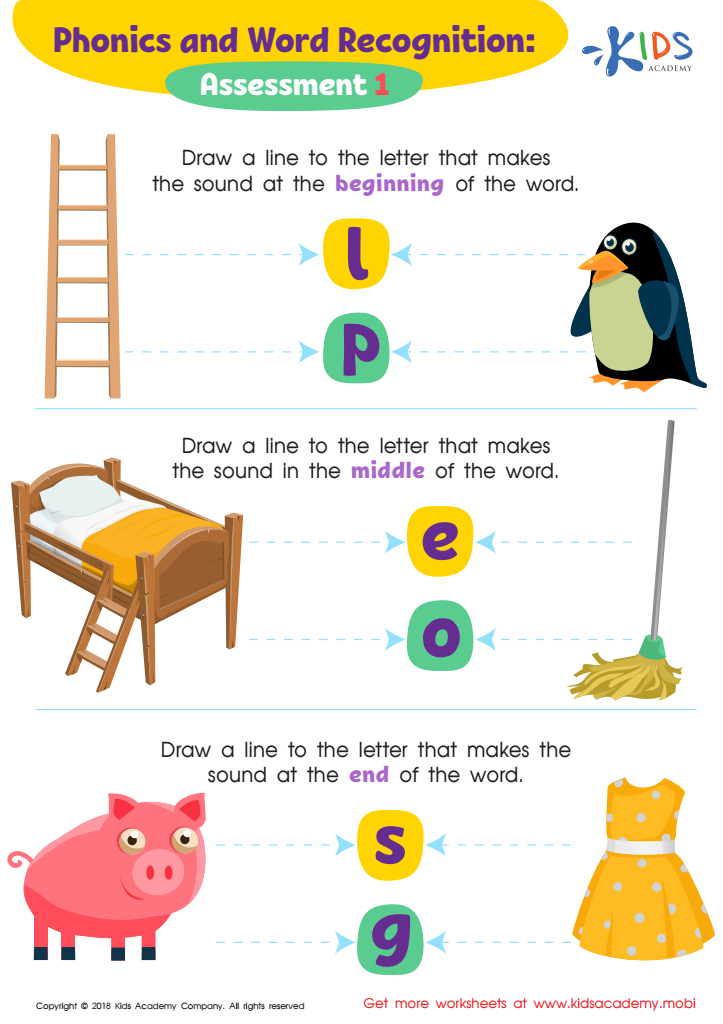
Phonics and Word Recognition: Assessment 1 ELA Worksheet






Word identification and the understanding of the alphabet are critical components of early literacy for children aged 5 to 7. At this stage, children are laying the foundation for their reading and writing skills, which are essential for their academic success and lifelong learning. Parents and teachers should care about these skills for several reasons.
First, word identification enables children to recognize and decode words, helping them develop fluency in reading. This competence fosters confidence and encourages a love for reading, as children begin to comprehend texts more easily.
Moreover, the alphabet serves as the building block of written language. Understanding the letters and their corresponding sounds is vital for phonetic awareness, spelling, and vocabulary development. When children grasp these concepts, they can interact with a variety of texts, expanding their knowledge and imagination.
Furthermore, engaging parents in their child’s literacy journey can strengthen the home-school connection. Activities such as reading together, playing word games, and practicing letter sounds can create a supportive learning environment.
Therefore, by prioritizing word identification and the alphabet, parents and teachers empower children to become competent readers and writers, setting them on a path toward academic achievement and lifelong literacy engagement.







