Lowercase identification Letter Recognition Worksheets for Ages 5-7
5 filtered results
-
From - To
Boost your child's literacy skills with our engaging Lowercase Identification Letter Recognition Worksheets designed for ages 5-7! These fun and interactive worksheets make learning the alphabet enjoyable as children practice recognizing and identifying lowercase letters through a variety of playful activities. Our resources promote fine motor skills, cognitive development, and reinforce letter recognition in a creative way. Perfect for at-home learning or classroom use, these worksheets offer a structured approach to help young learners gain confidence in their reading abilities. Equip your child with the foundational skills needed for success in literacy and watch them thrive! Explore our collection today!
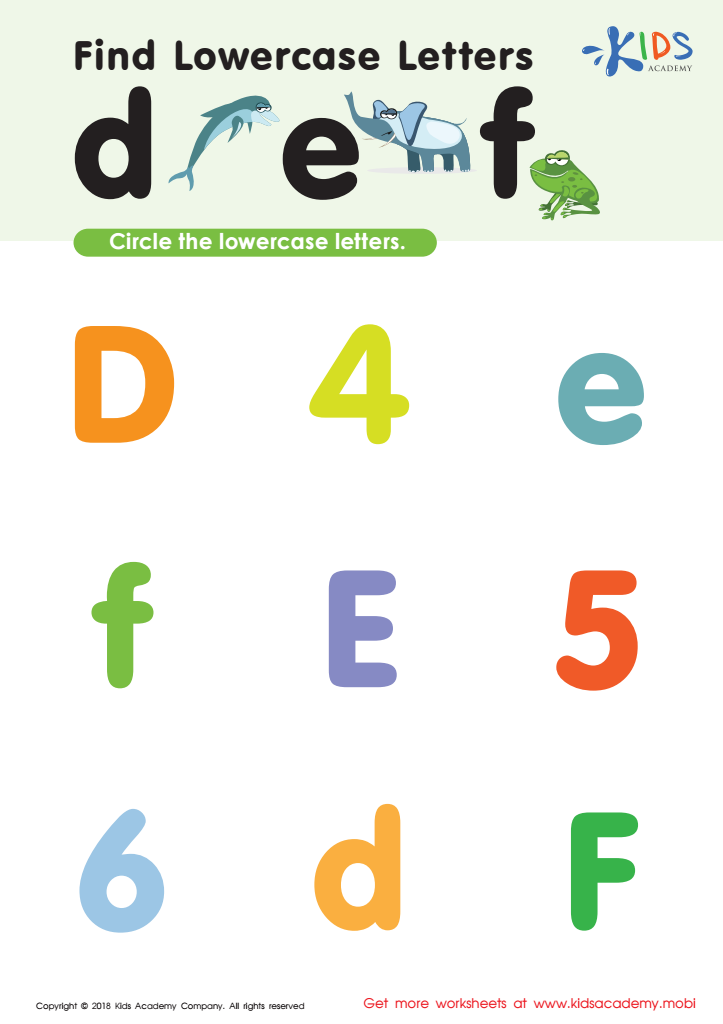
Find Lowercase Letters d e f Worksheet
 Assign to My Students
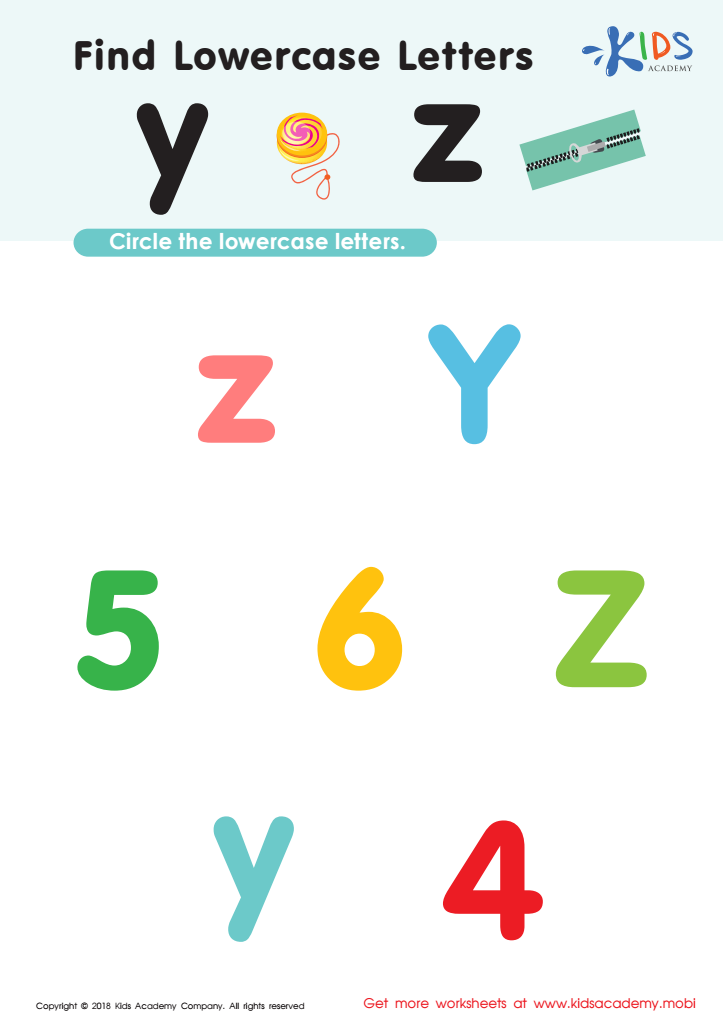
Find Lowercase Letters y z Worksheet

Find lowercase letters a b c Worksheet
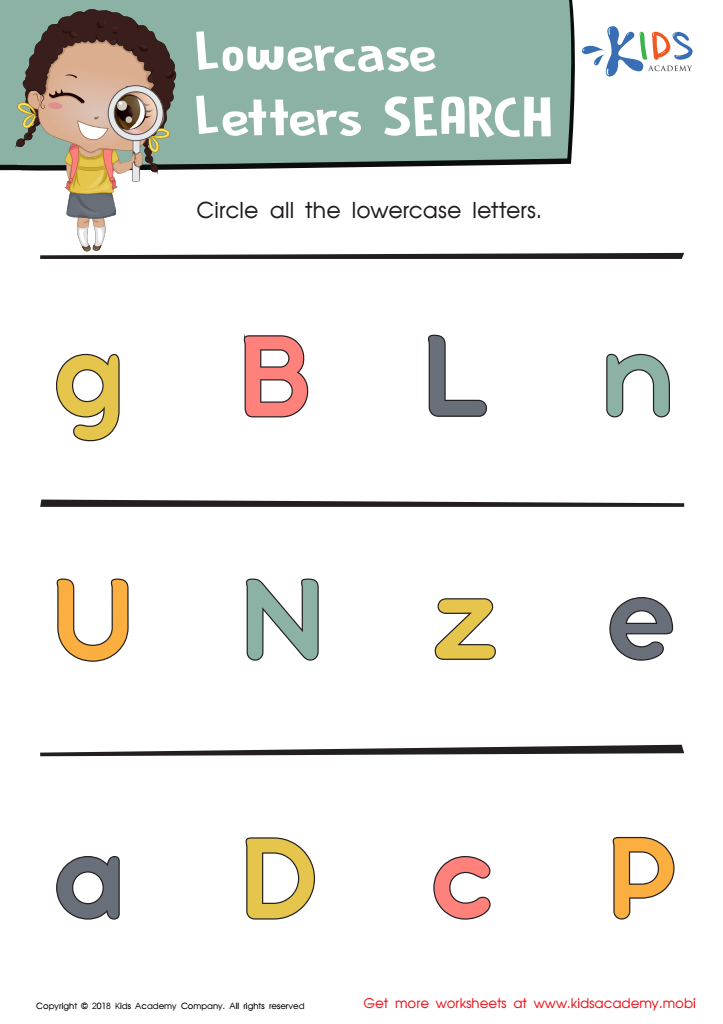
Lowercase Letters Search: Assessment Worksheet

Find Lowercase Letters v w x Worksheet








Lowercase letter identification and recognition is crucial for children aged 5-7 as it forms the foundation for reading and writing skills. Unlike uppercase letters, lowercase letters are far more prevalent in everyday texts, meaning children must learn to identify them to comprehend written material. Recognizing lowercase letters is vital for developing phonemic awareness, as each letter connects to specific sounds that children will later blend into words.
Additionally, lowercase letter recognition assists in word formation and spelling. It is essential for early writing experiences, enabling children to express themselves by communicating thoughts and ideas. Practicing lowercase letter identification can increase confidence in language skills, fostering a love for reading and writing.
Moreover, teachers and parents can create a supportive learning environment by using games, songs, and hands-on activities that engage young learners. This collaborative effort not only enhances letter recognition but cultivates a positive attitude toward literacy. By emphasizing the importance of lowercase letter recognition, adults can better prepare children for academic success, igniting their lifelong passion for learning. Understanding a child’s letter recognition abilities is integral in monitoring their progress and ensuring they have the necessary skills to thrive in future educational settings.







