Sound Association Letter Sounds Worksheets for Ages 5-7
19 filtered results
-
From - To
Introduce your child to the world of phonics with our Sound Association Letter Sounds Worksheets for ages 5-7. Developed to strengthen essential early literacy skills, these engaging, colorful worksheets help young learners connect letters with their corresponding sounds. Featuring fun activities such as matching exercises, word puzzles, and vibrant images, our worksheets make learning phonics enjoyable and effective. Designed by expert educators, these worksheets aim to build a strong foundation for reading fluency and comprehension. Ideal for both classroom and home use, they support your child’s journey towards becoming a confident and capable reader. Discover the joy of learning with Kids Academy!
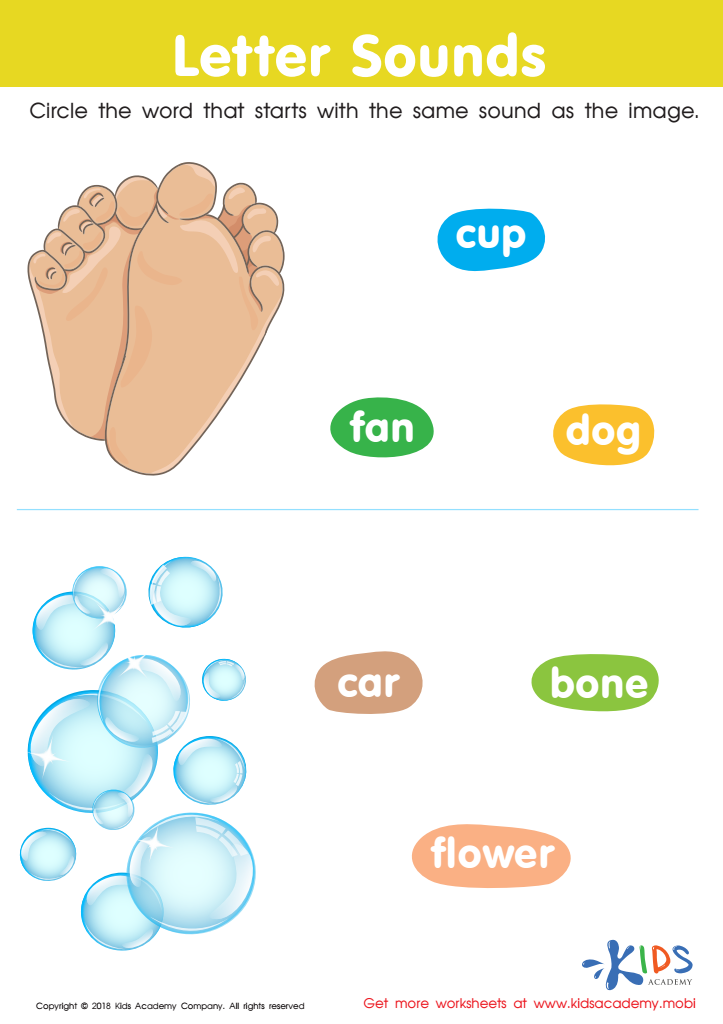
letter sounds Worksheet
 Assign to My Students
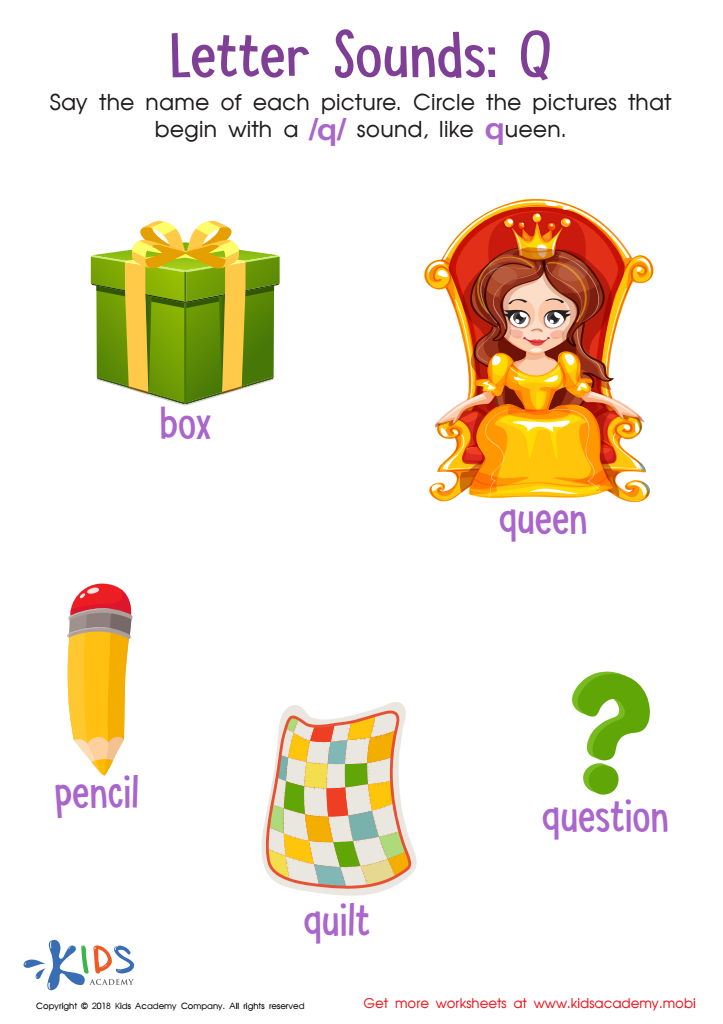
Letter Q Sounds Worksheet
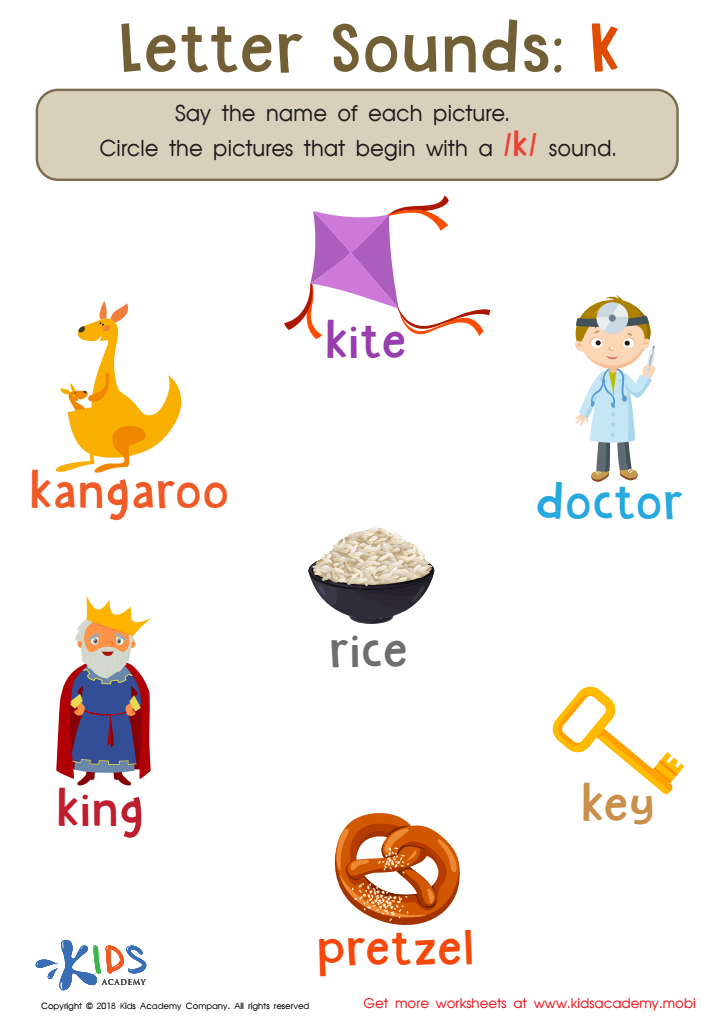
Letter K Sounds Worksheet
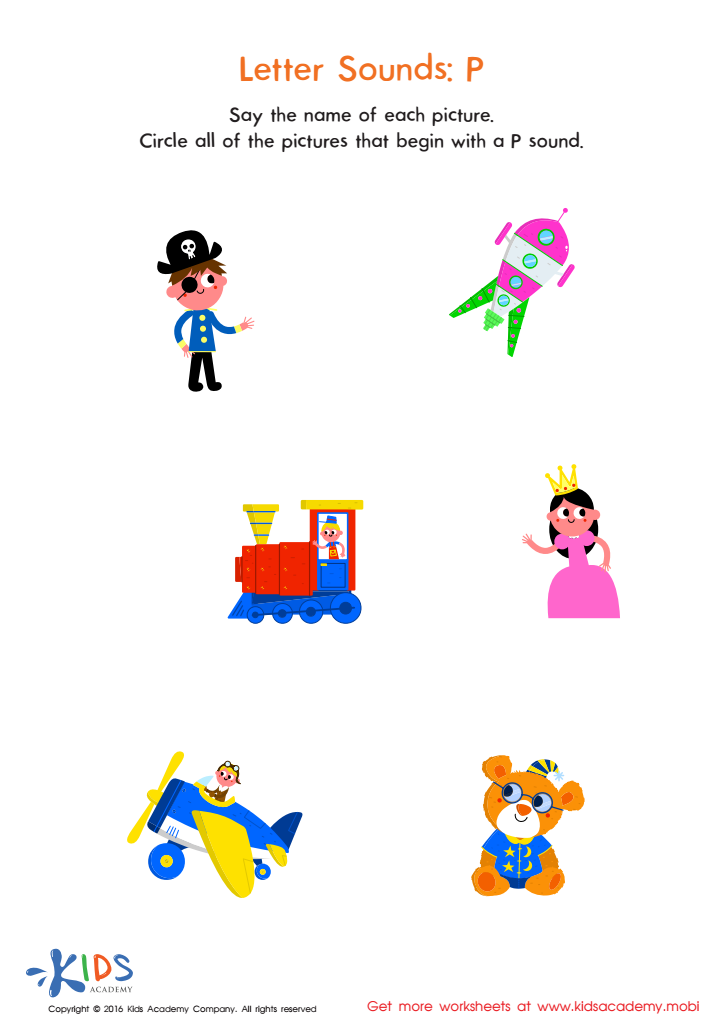
Letter P Sound Worksheet
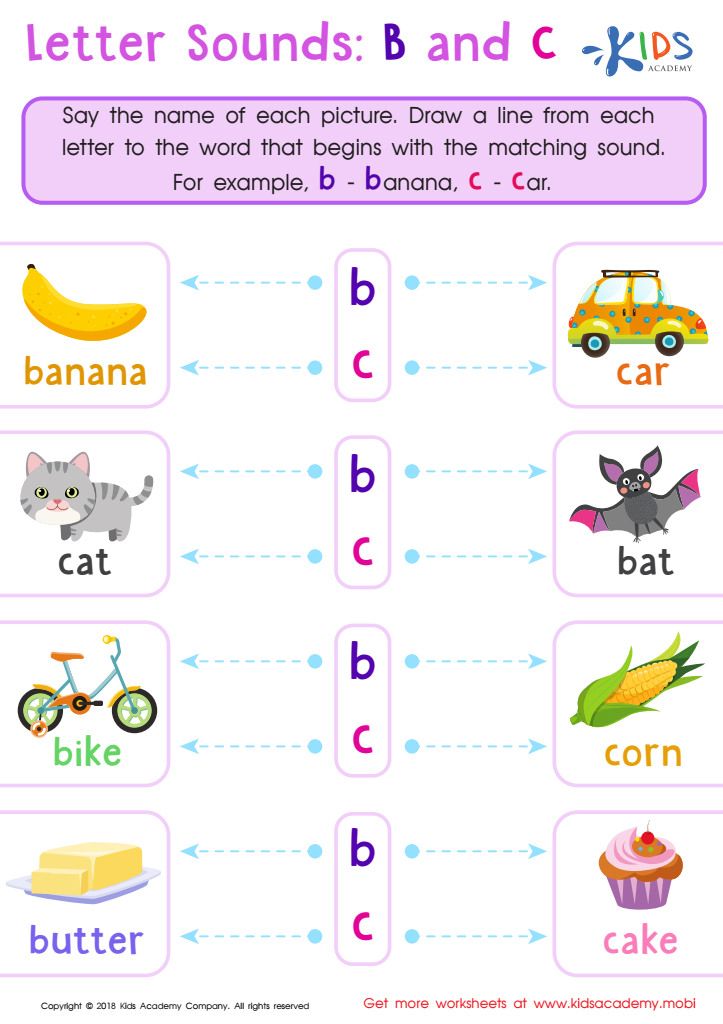
Letter B and C Sounds Worksheet
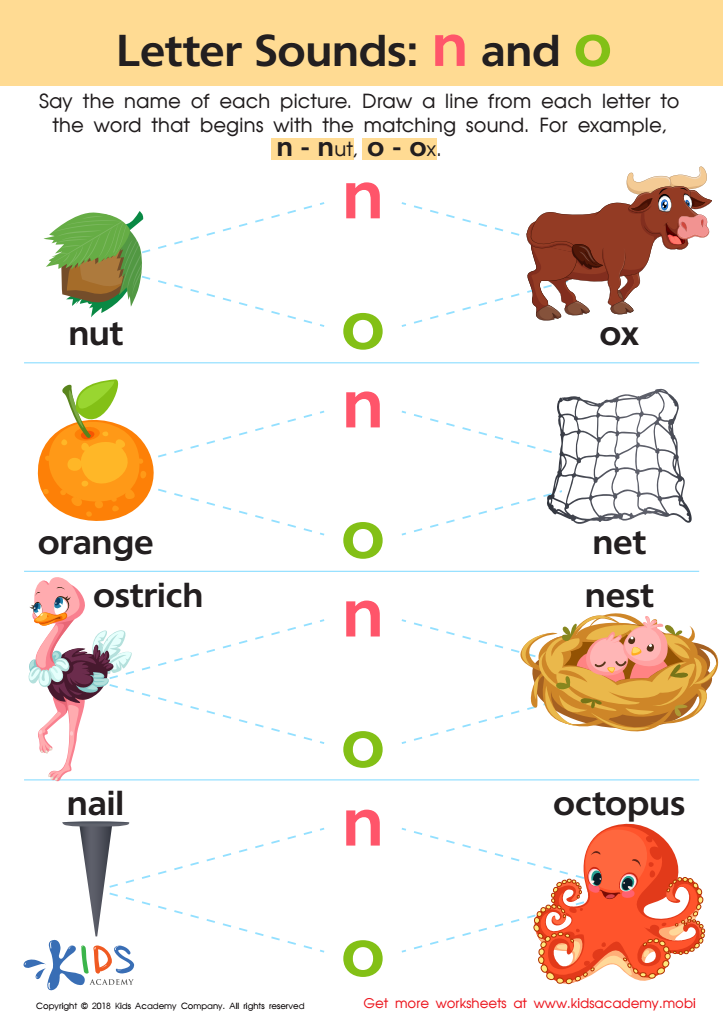
Letter N and O Sounds Worksheet
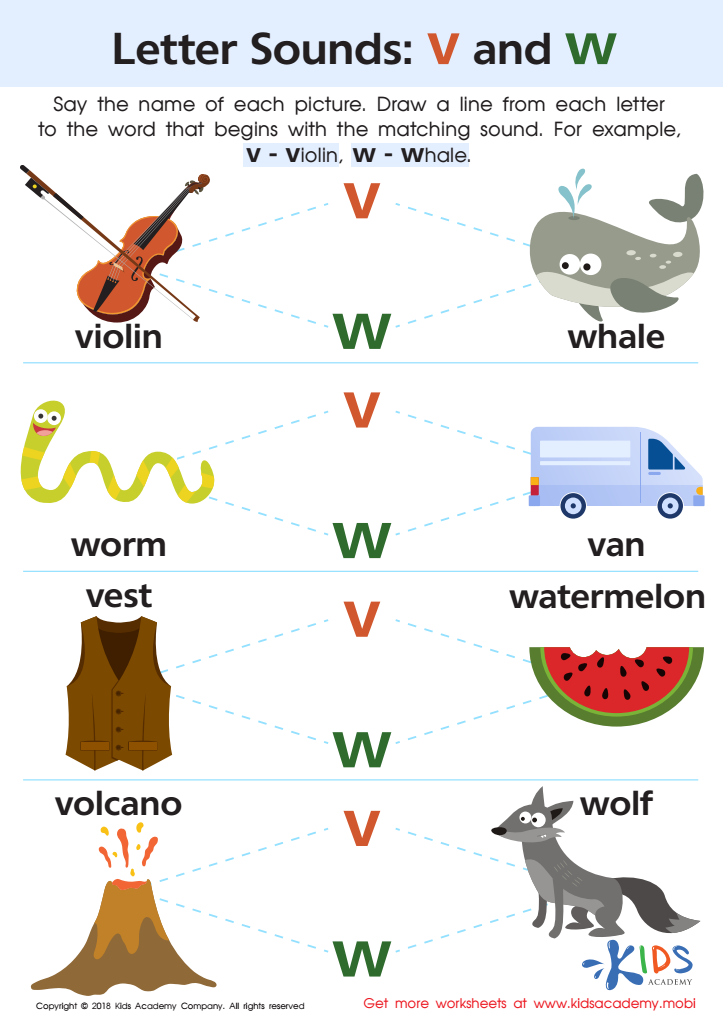
Letter V and W Sounds Worksheet
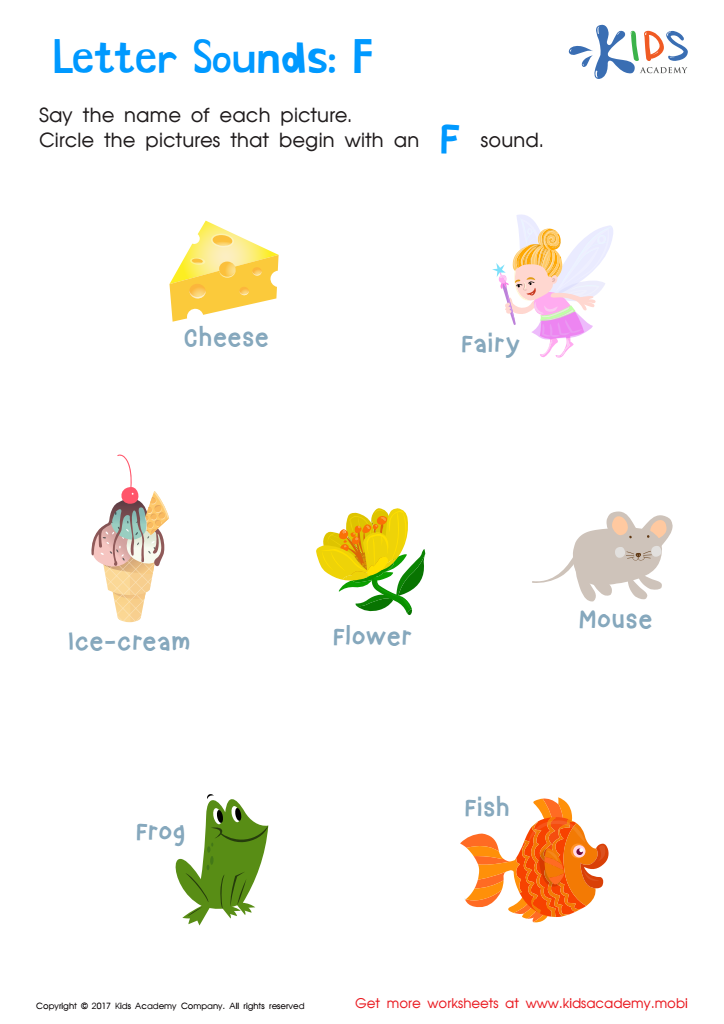
Letter F Sounds Worksheet
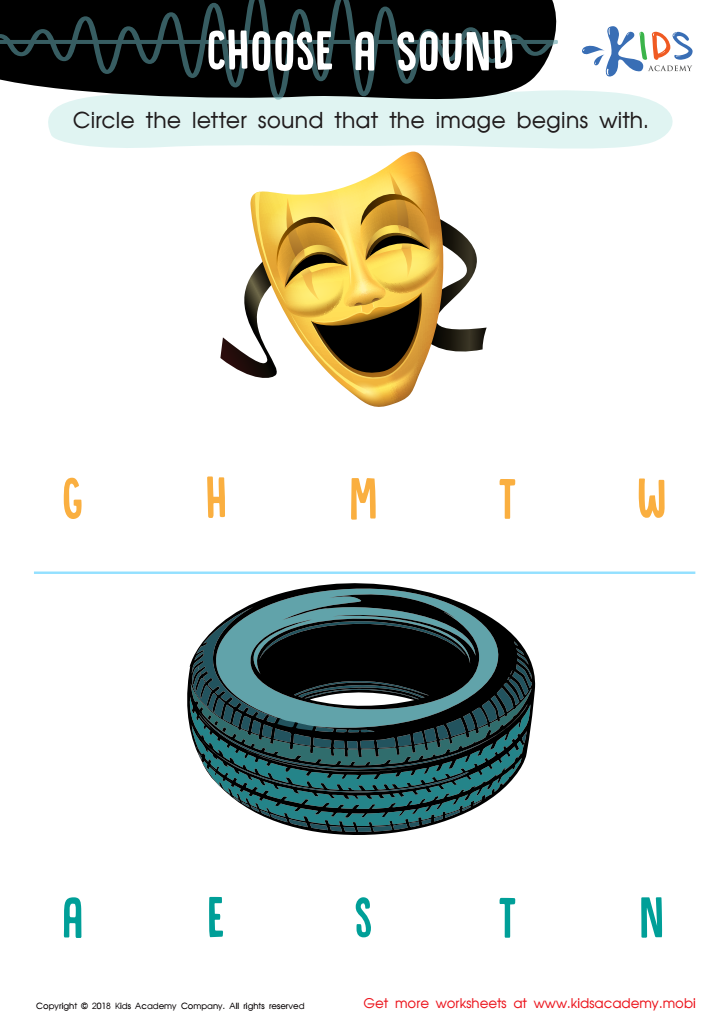
Choose a Sound Worksheet
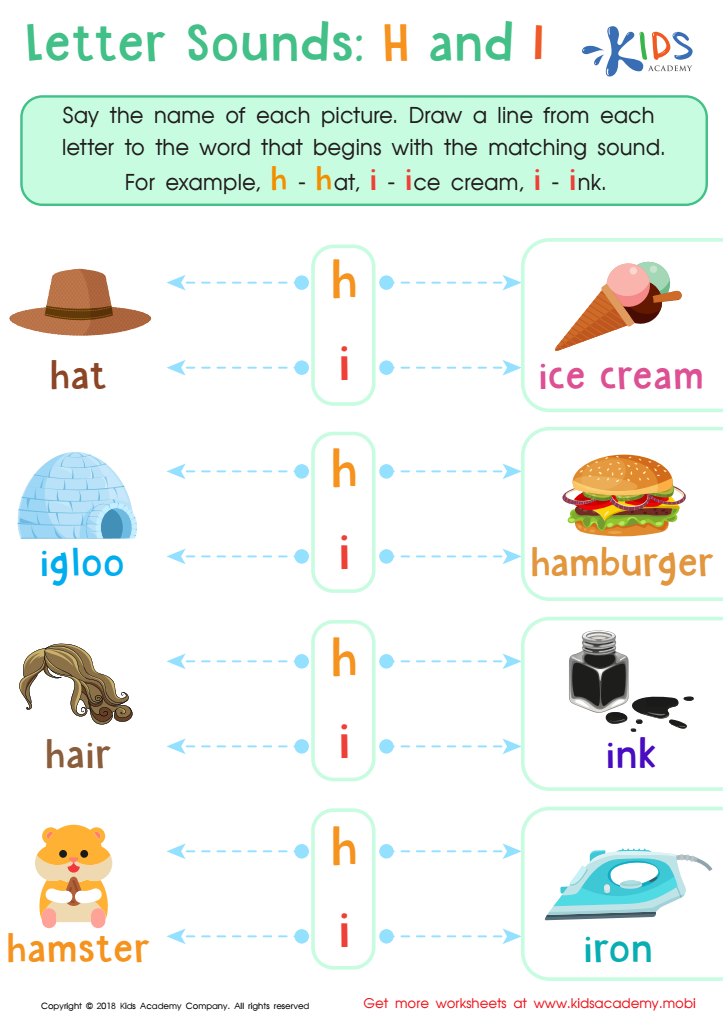
Letter H and I Sounds Worksheet
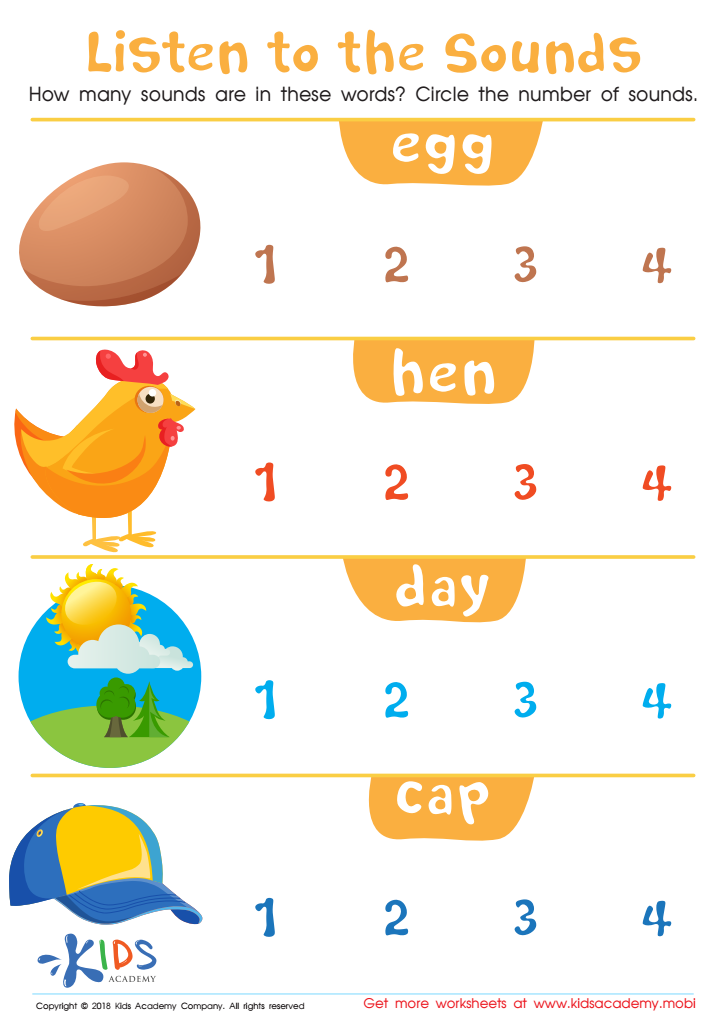
Listen to the Sounds Worksheet
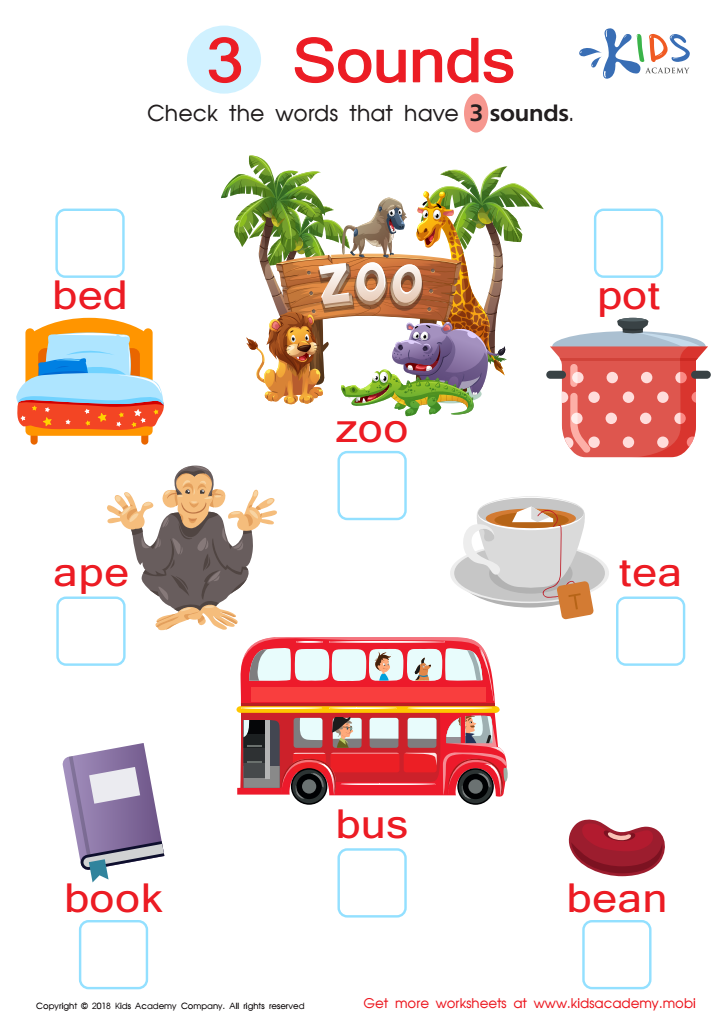
3 Sounds Worksheet
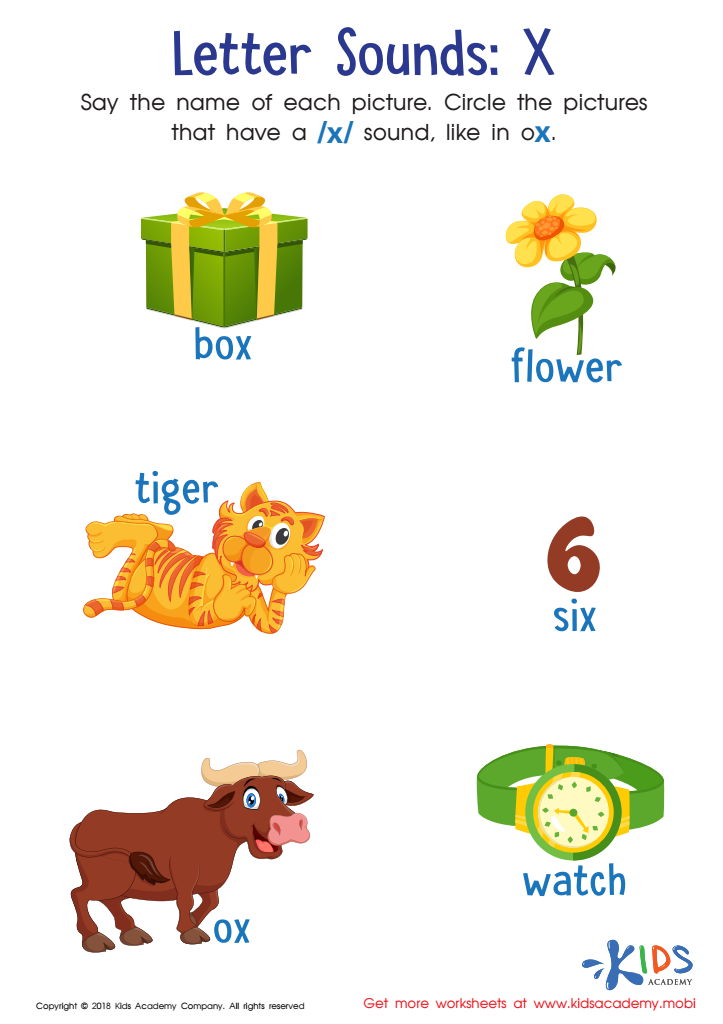
Letter X Sounds Worksheet
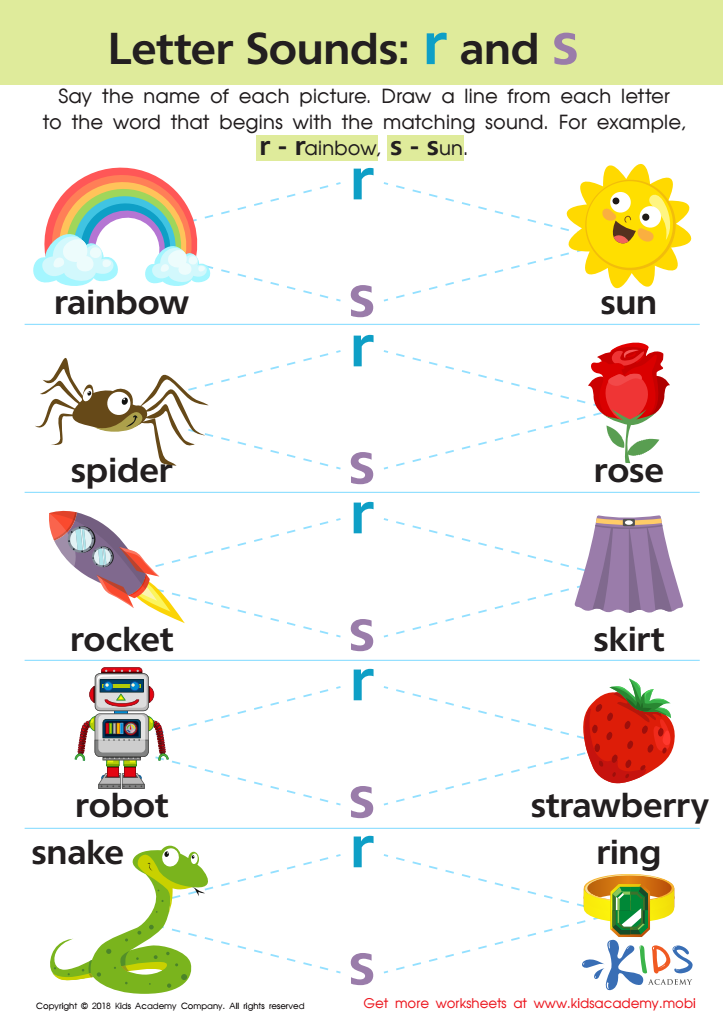
Letter R and S Sounds Worksheet
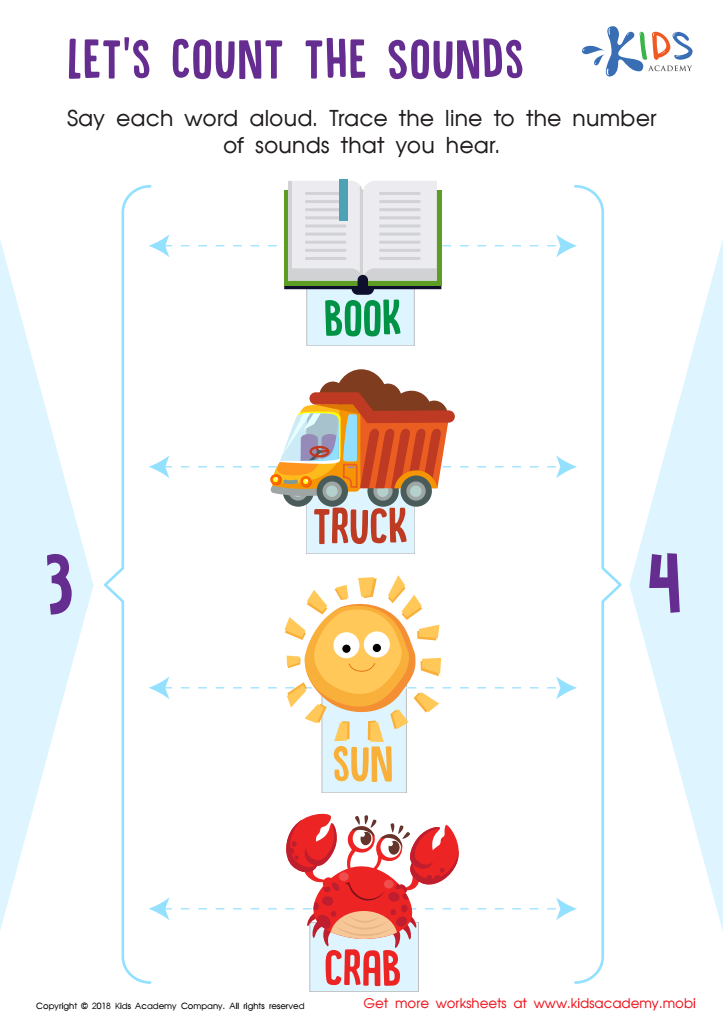
Let's Count the Sounds Worksheet
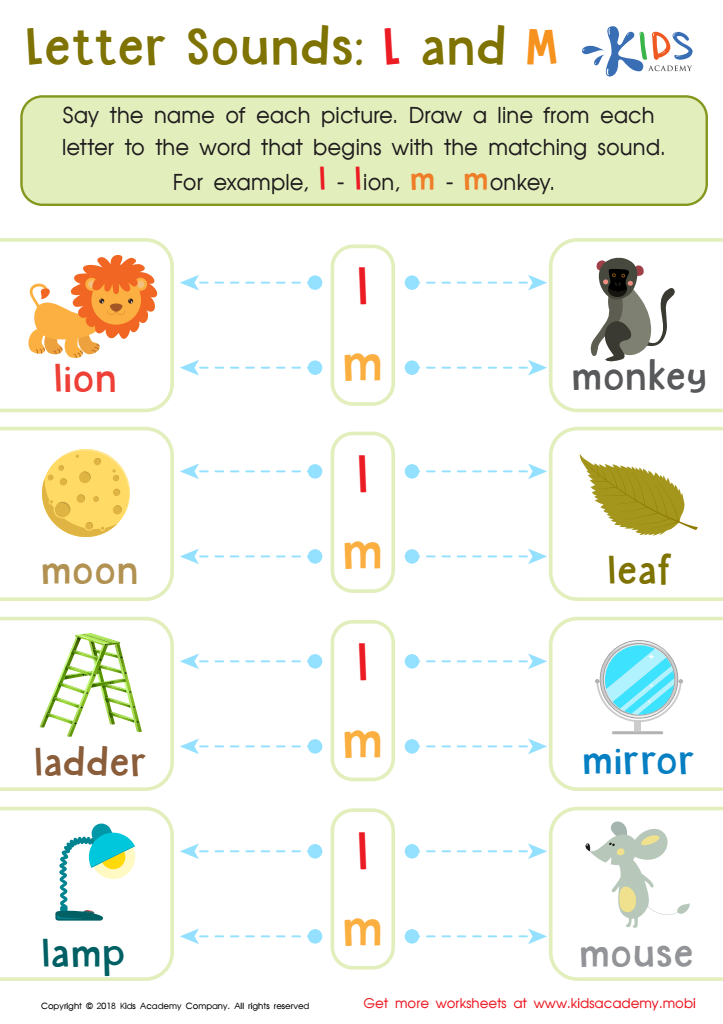
Letter l and M Sounds Worksheet
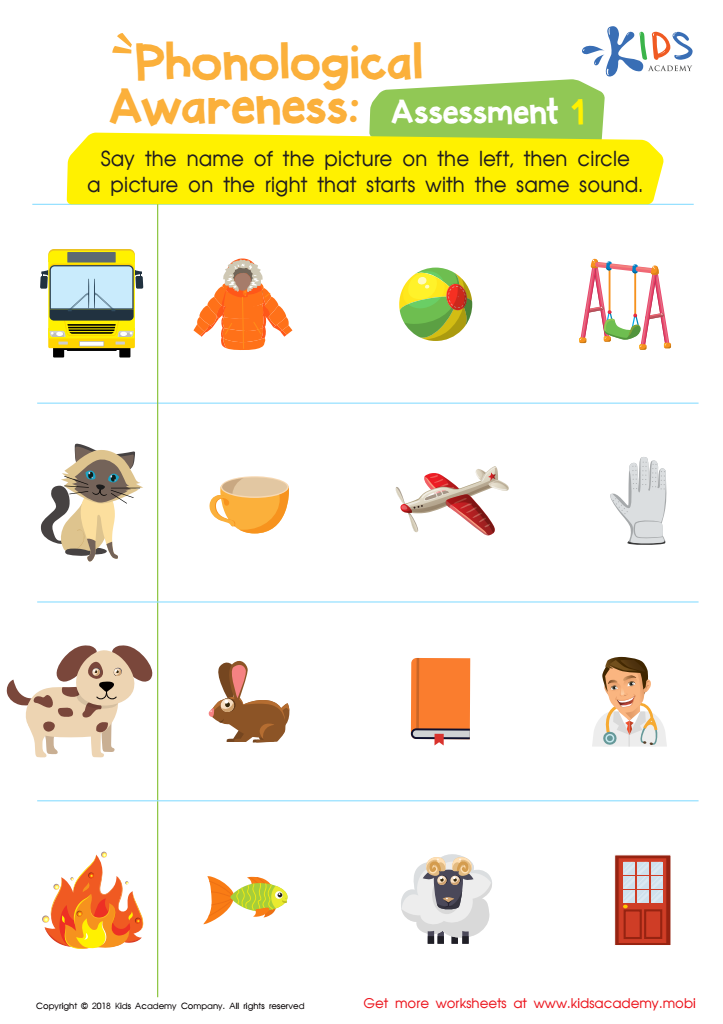
Phonological Awareness: Assessment 1 Worksheet
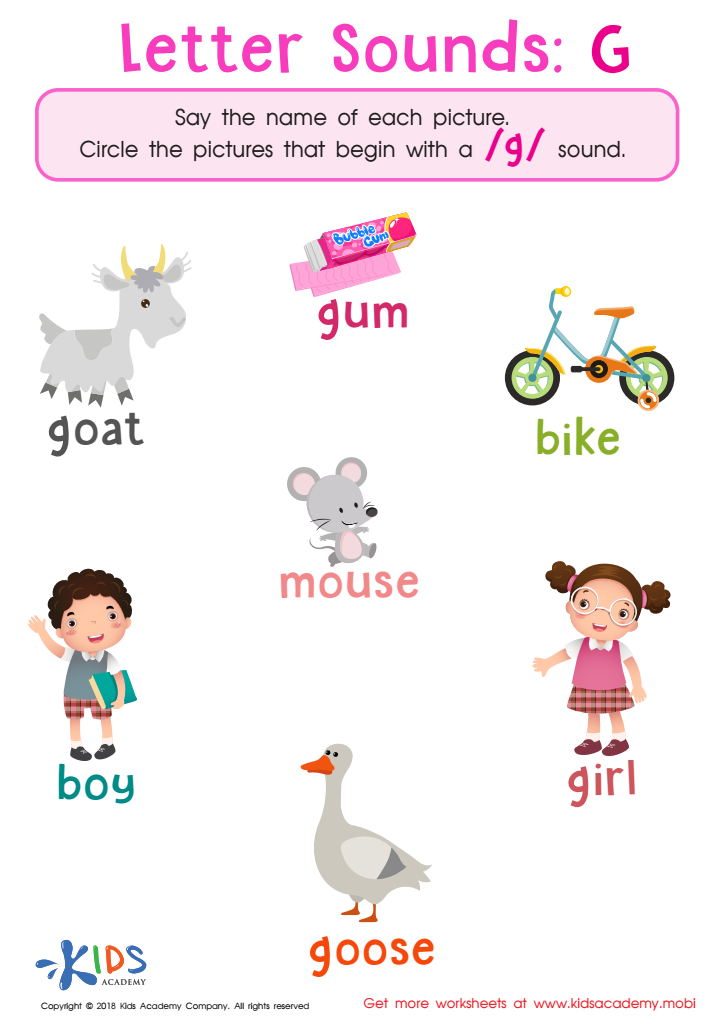
Letter G Sounds Worksheet
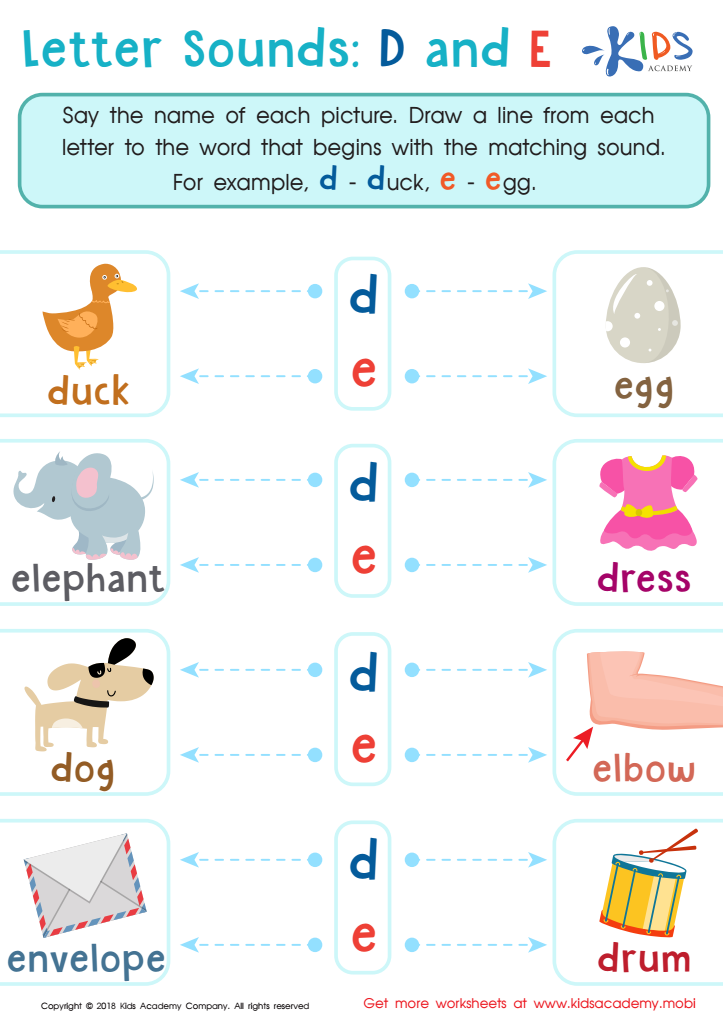
Letter D and E Sounds Worksheet








Sound association, or phonemic awareness, is crucial for children aged 5-7 as it lays the foundation for reading and writing. At this age, kids are typically in kindergarten to 1st or 2nd grade, where they are just beginning to understand the connection between letters and sounds. Introducing letter sounds helps them decode words, an essential skill in reading. Mastery in phonemic awareness helps children read fluently, comprehend text better, and even enjoy reading, setting a positive tone for lifelong learning.
Parents and teachers should care deeply about sound association because difficulties in this area can lead to struggles in all areas of education. Early intervention ensures that children don't fall behind their peers and develop a sense of confidence in their abilities. Moreover, engaging in sound association activities can be fun and strengthens the parent-child or teacher-student relationship. For instance, playing letter-sound matching games, singing phonics songs, or reading aloud interactive books can make the learning process enjoyable and effective.
Furthermore, proficiency in letter sounds also assists children in spelling and writing, as it helps them break down words into their constituent sounds. This foundational skill paves the way for academic success across all subjects, making it a critical focus in early education.







