Fine Motor Skills Letter W Worksheets for Ages 5-7
4 filtered results
-
From - To
Discover our engaging Fine Motor Skills Letter W Worksheets designed specifically for children aged 5-7! These fun and interactive worksheets provide young learners with the opportunity to strengthen their fine motor abilities while exploring the letter W. Each activity encourages essential skills, including hand-eye coordination, letter recognition, and writing practice. From tracing to coloring and cutting, our worksheets promote creativity and independent learning. Perfect for use at home or in the classroom, these resources will keep your little ones entertained and focused as they develop their writing skills. Start your child’s learning journey with our captivating Letter W worksheets today!
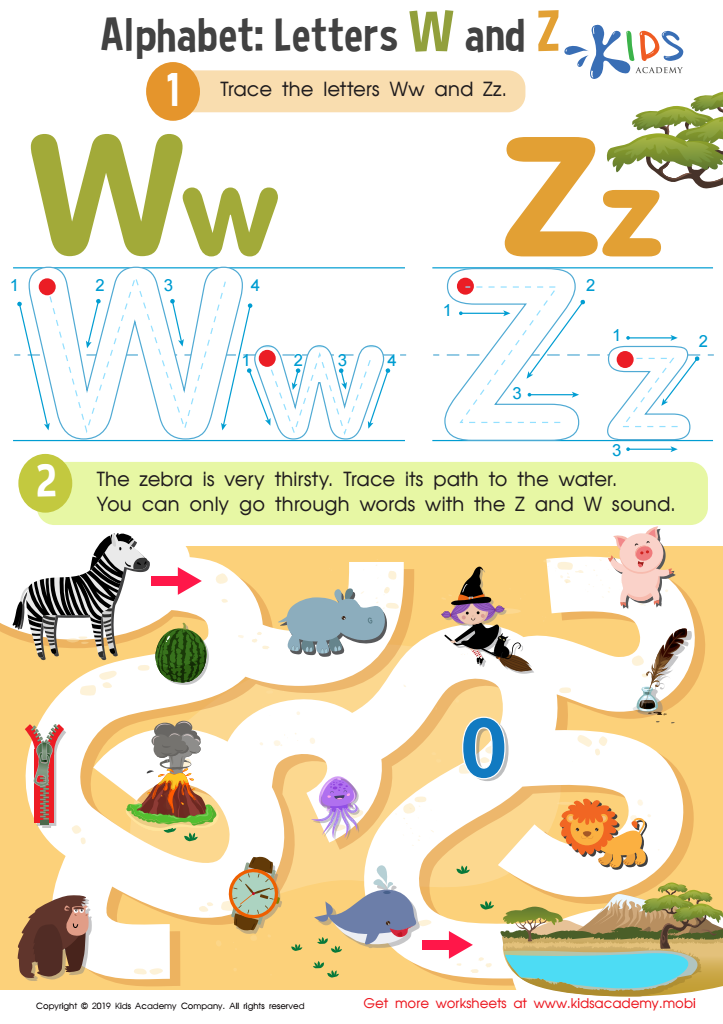
Letters W and Z Tracing Worksheet
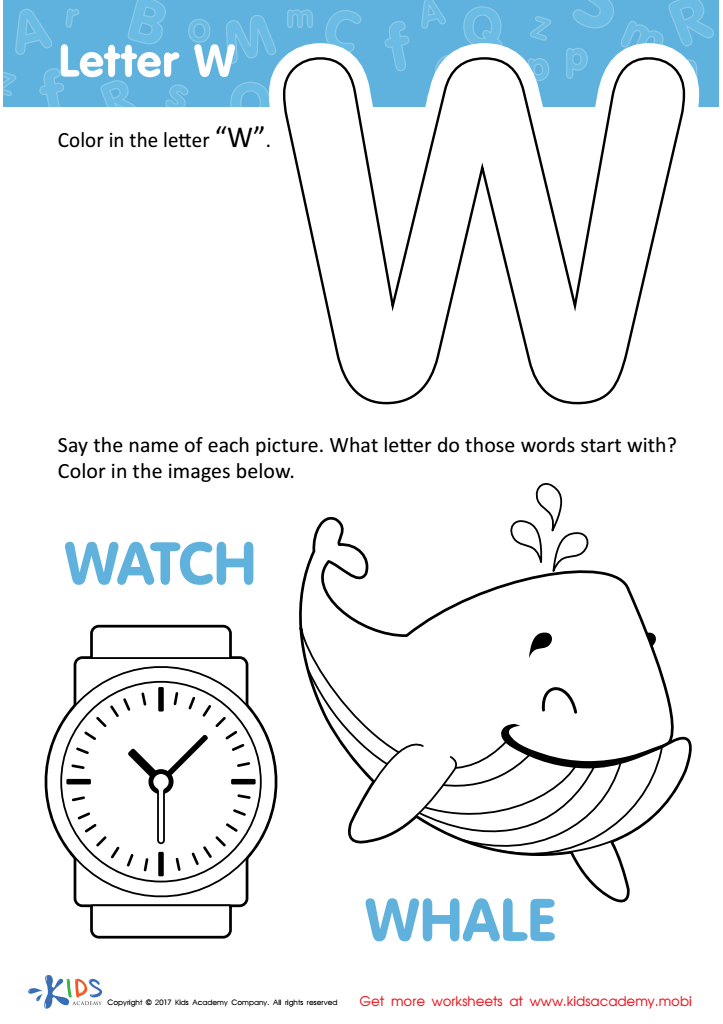
Letter W Coloring Sheet
 Assign to My Students
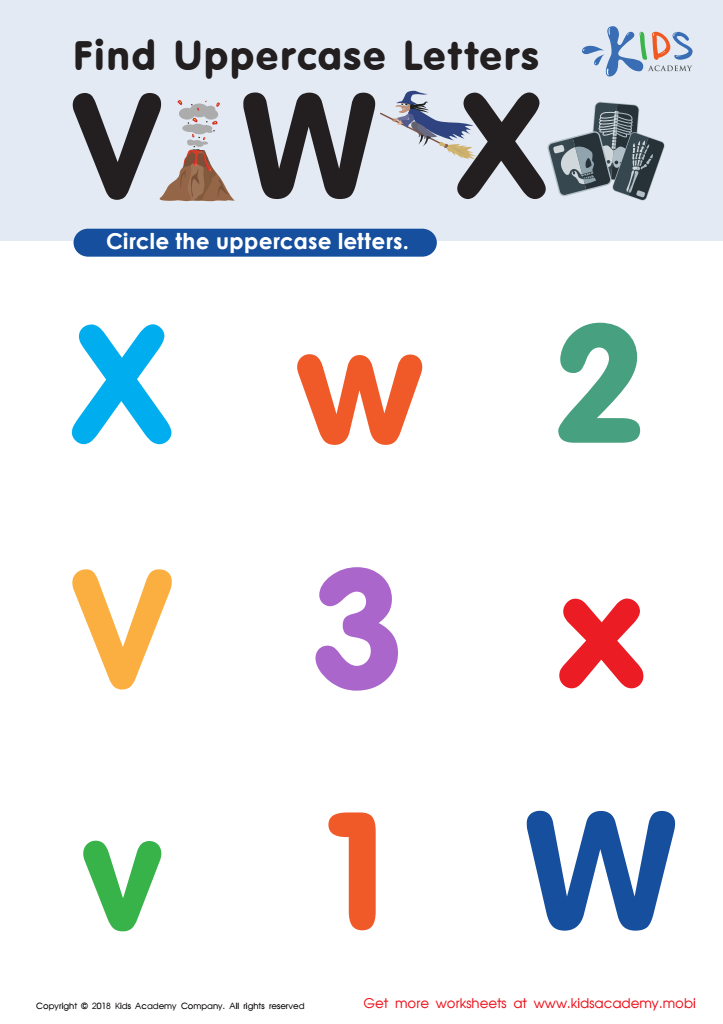
Find Uppercase Letters V, W, X Worksheet
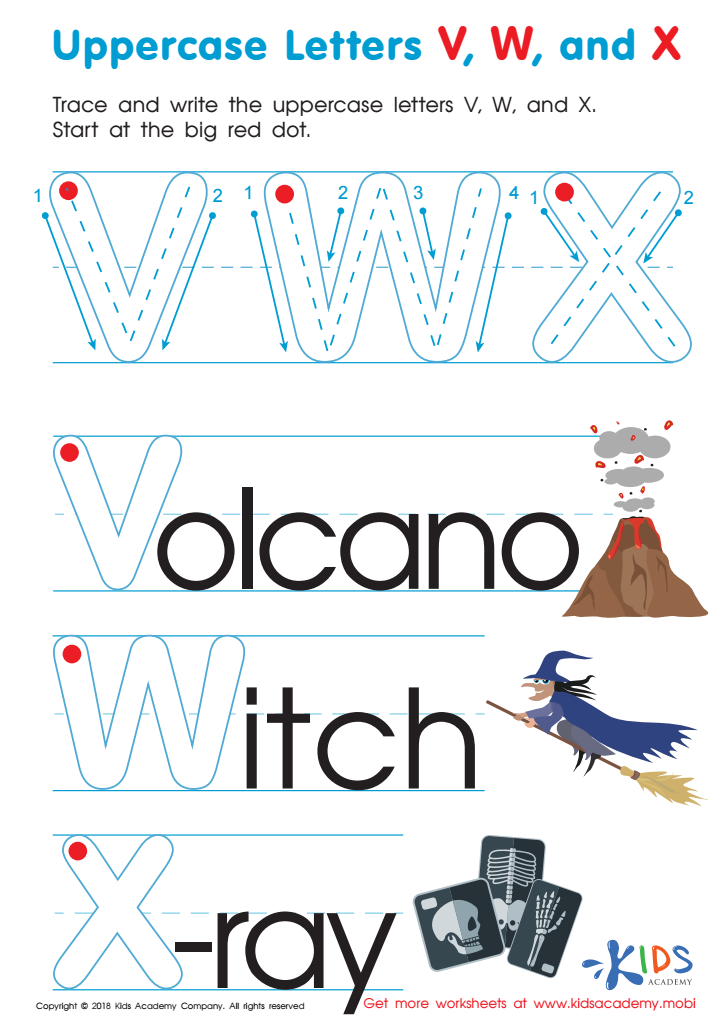
Uppercase Letters V, W, and X Worksheet




Fine motor skills are critical for children ages 5-7 as they lay the foundation for many essential tasks throughout life, from writing to self-care. The development of fine motor skills specifically related to the letter 'W' provides a fun and engaging way to enhance dexterity and coordination. As children learn to form the letter 'W', they strengthen the small muscles in their hands and fingers. This skill is crucial for activities such as drawing, buttoning clothes, and eventually typing.
Moreover, mastering the letter 'W' can boost a child’s confidence in their writing abilities and overall literacy skills. Understanding how to properly form letters contributes to improved handwriting, which is vital for effective communication. Practicing fine motor skills while focusing on the letter 'W' encourages creativity and offers opportunities for parents and teachers to create engaging learning environments through arts and crafts or interactive games.
Additionally, fine motor skills are linked to cognitive development. Children often incorporate counting, shape recognition, and spatial awareness while mastering letter formation. Therefore, focusing on fine motor skill development around the letter 'W' not only improves handwriting but also contributes to holistic growth in young learners. Engaging in these activities helps set a strong foundation for future academic success.