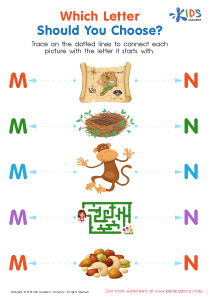
Letter recognition Lowercase/Small Letters Worksheets for Ages 5-7
11 filtered results
-
From - To
Explore our engaging "Letter Recognition Lowercase/Small Letters Worksheets" tailored for children aged 5-7. These interactive resources are designed to enhance young learners’ identification and understanding of lowercase letters through fun activities. Your child will enjoy tracing, matching, and coloring tasks that make learning the alphabet both educational and exciting. Our worksheets cater to diverse learning styles, ensuring all kids can develop their literacy skills at their own pace. Foster a love of reading and writing early on with our comprehensive collection that supports letter recognition, critical for future literacy success. Visit our site to access these valuable educational tools today!
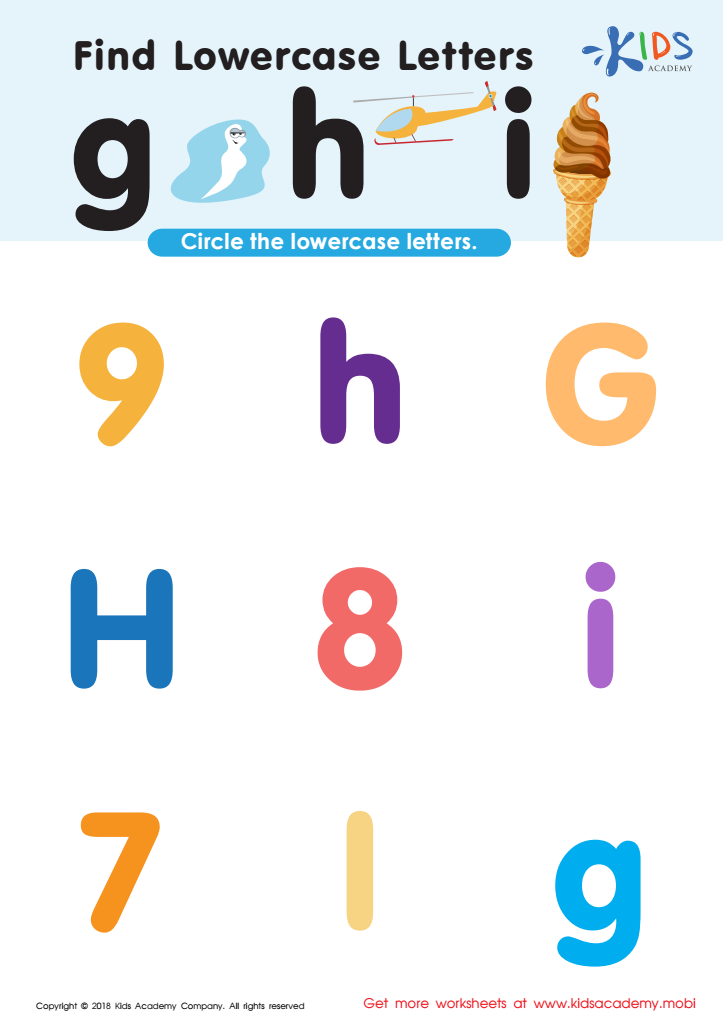
Find Lowercase Letters g h i Worksheet
 Assign to My Students
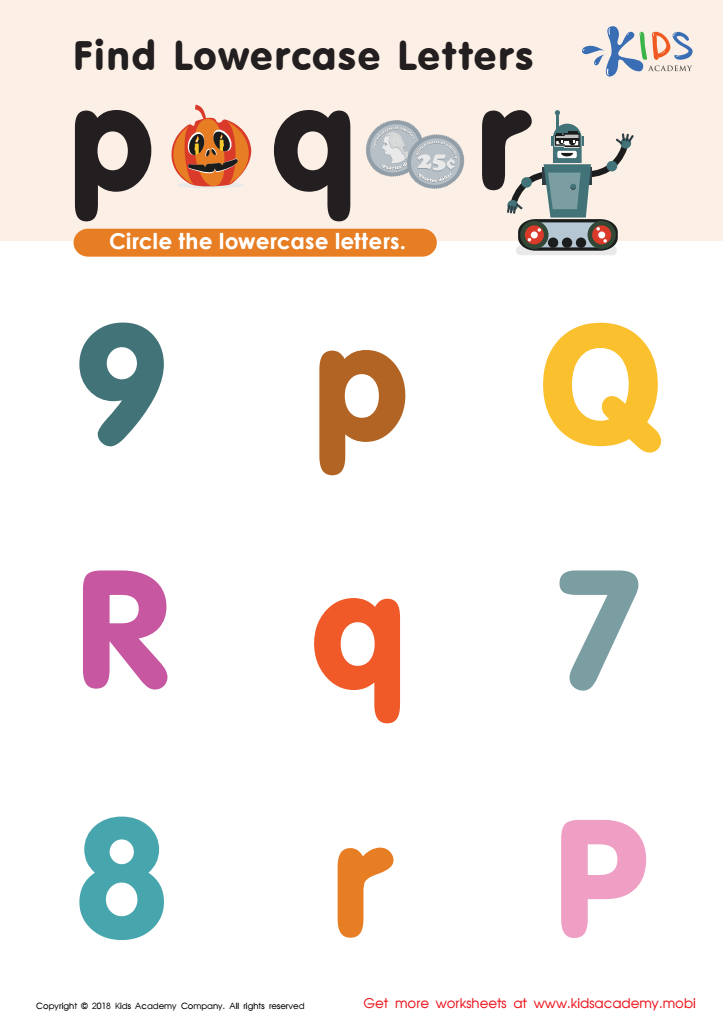
Find lowercase Letters p q r Worksheet
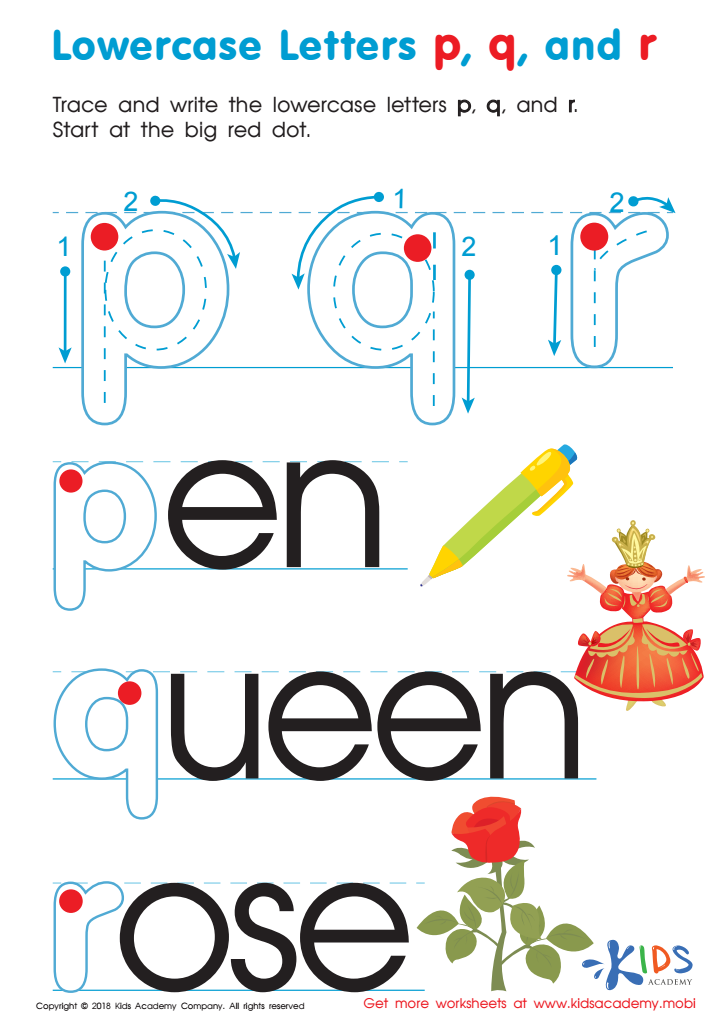
Lowercase Letters p q r Worksheet
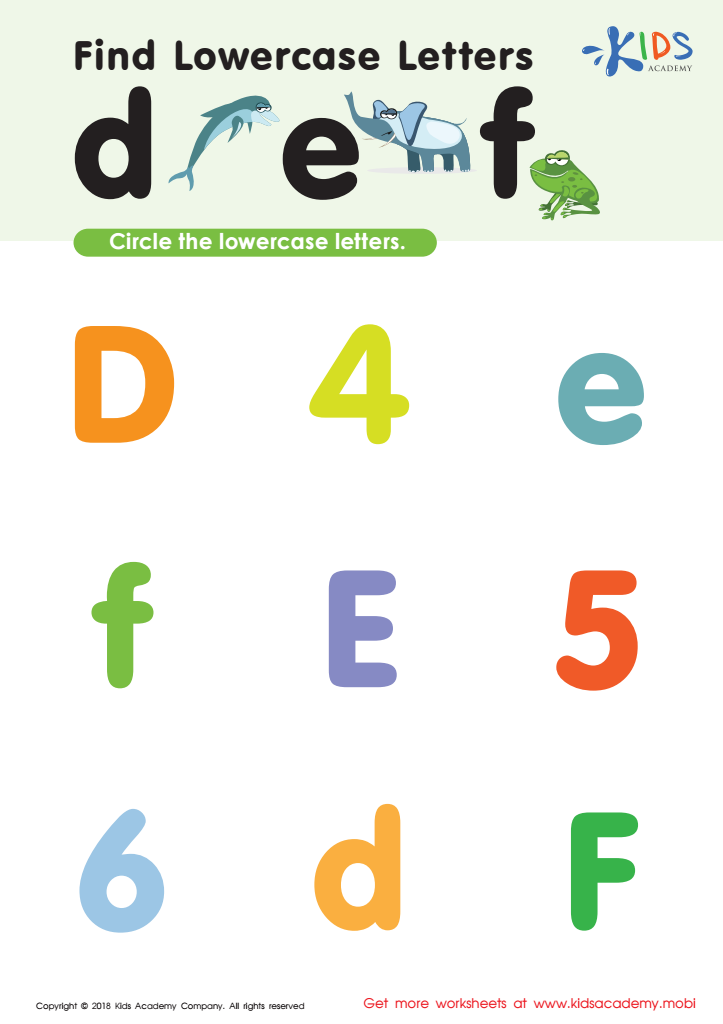
Find Lowercase Letters d e f Worksheet
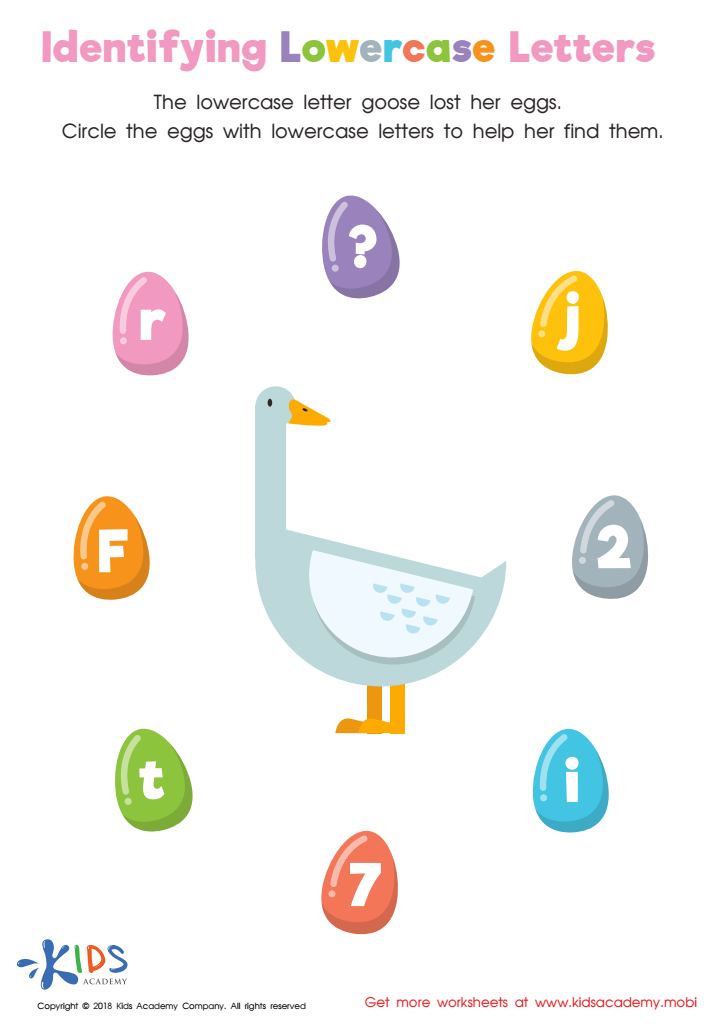
Identifying Lowercase Letters Worksheet
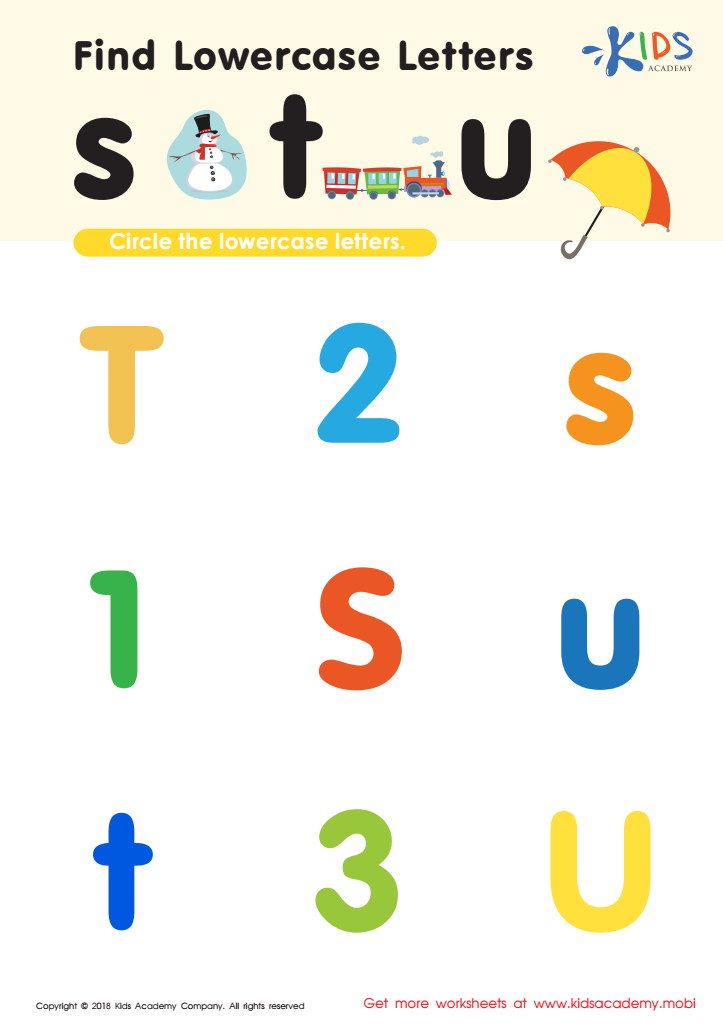
Find lowercase Letters s t u Worksheet
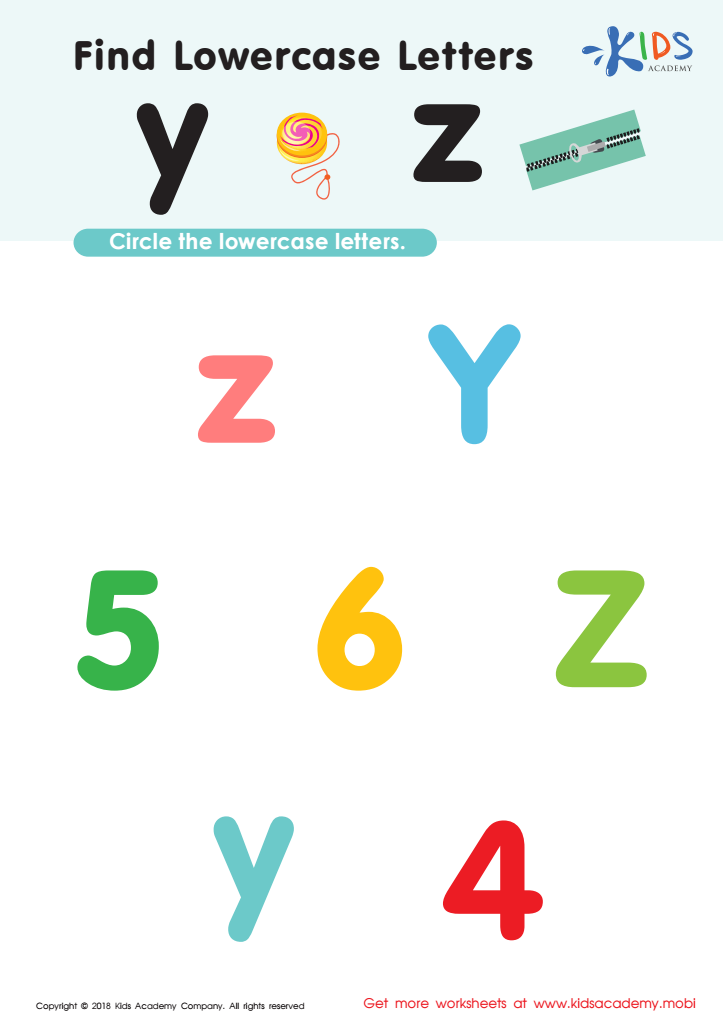
Find Lowercase Letters y z Worksheet
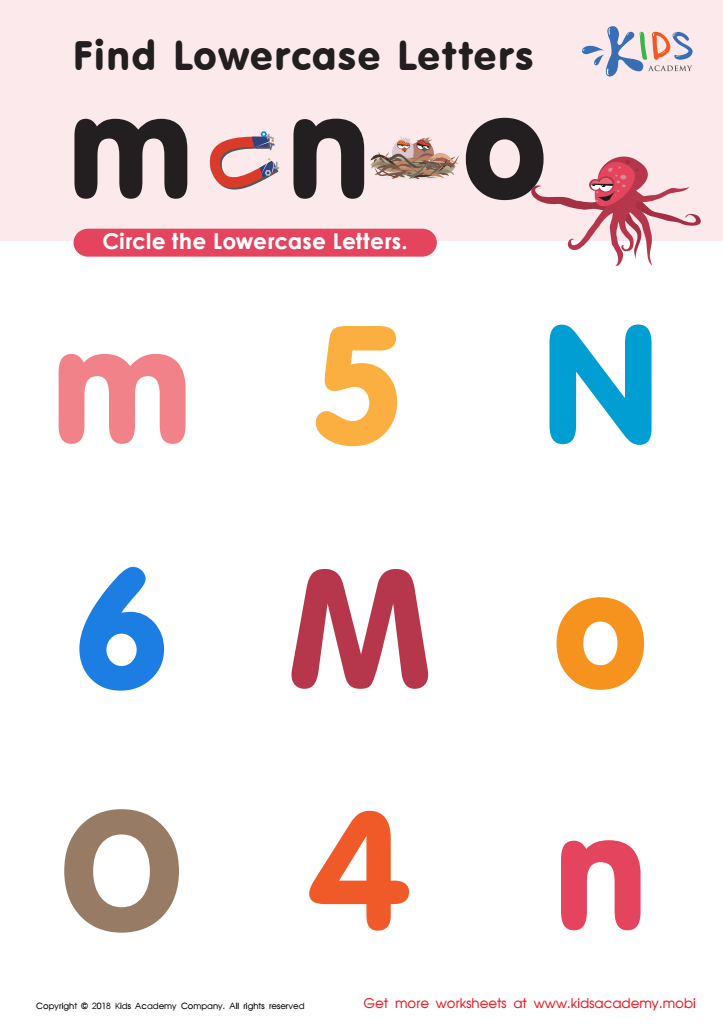
Find Lowercase Letters m n o Worksheet

Find lowercase letters a b c Worksheet
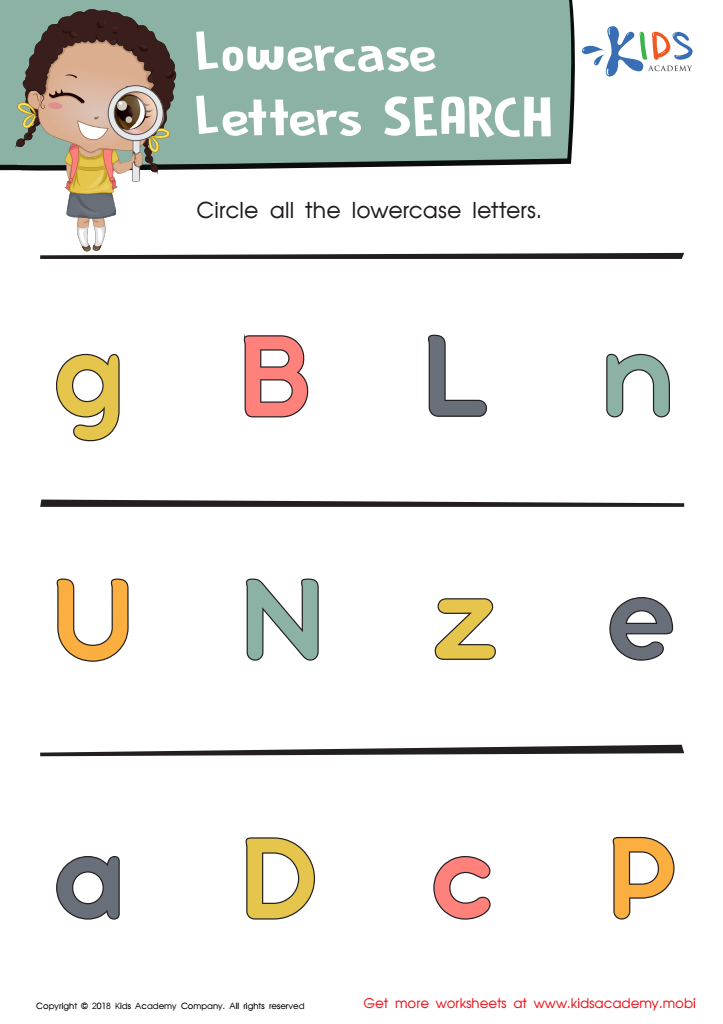
Lowercase Letters Search: Assessment Worksheet

Find Lowercase Letters v w x Worksheet


Letter recognition, particularly of lowercase letters, is foundational for children aged 5-7 as it significantly impacts their literacy development. In the early stages of reading and writing, children encounter lowercase letters more frequently than uppercase letters in books, signs, and everyday writing. Understanding these small letters equips children with the skills necessary to decipher words, facilitating their reading fluency and comprehension.
Moreover, recognizing lowercase letters assists in developing handwriting skills. It helps children learn proper letter formation, which is crucial for effective writing. When students are confident in their letter recognition, they can more easily connect sounds to letters, enhancing their phonemic awareness, a key predictor of successful reading.
Additionally, letter recognition fosters self-esteem and a love for learning. When children can identify and master lowercase letters, they tend to feel empowered, making them more willing to engage with texts and express themselves through writing. Parents and teachers play a critical role in supporting this process through games, books, and interactive activities, creating a rich literacy environment. Ultimately, ensuring that children have a strong grasp of lowercase letters sets the stage for lifelong reading and writing skills, forming a core part of their educational development.