Rhyming skills development Phonics Worksheets for Ages 5-7
5 filtered results
-
From - To
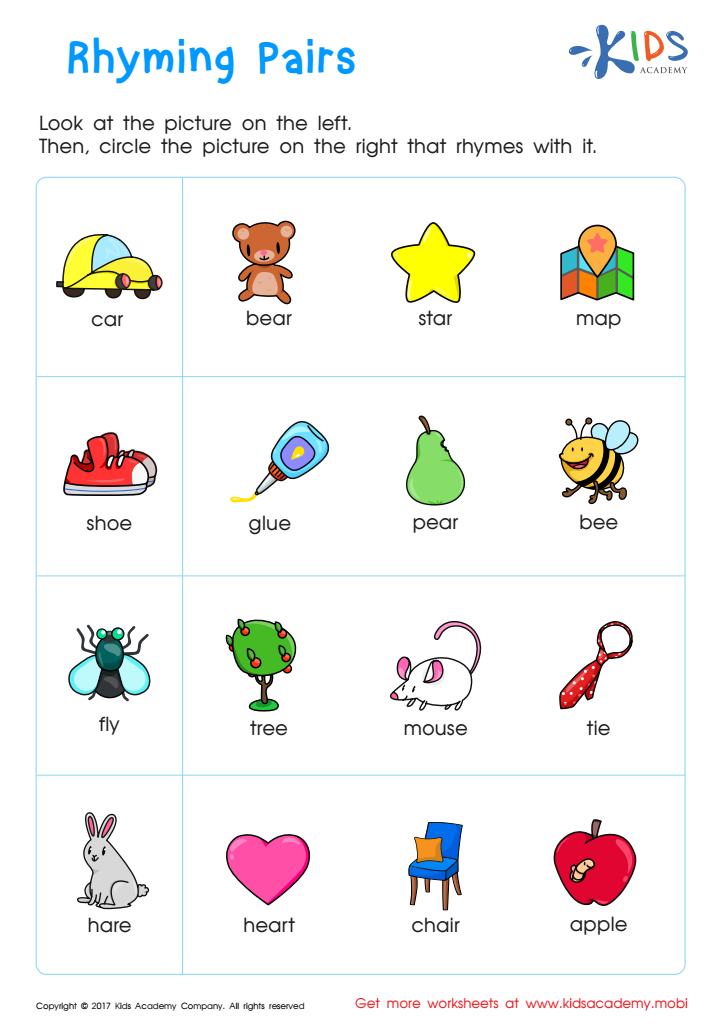
Enhance your child's reading journey with our Rhyming Skills Development Phonics Worksheets, designed specifically for kids ages 5-7. These engaging worksheets help young learners identify and generate rhyming words, a crucial phonics skill that boosts reading proficiency. Our interactive activities not only make learning fun but also improve phonemic awareness, critical for successful decoding and word recognition. Colorful illustrations and creative exercises keep kids motivated and excited to learn. Join us at Kids Academy to unlock your child's potential and make early literacy development an enjoyable experience. Start building a strong phonics foundation today!
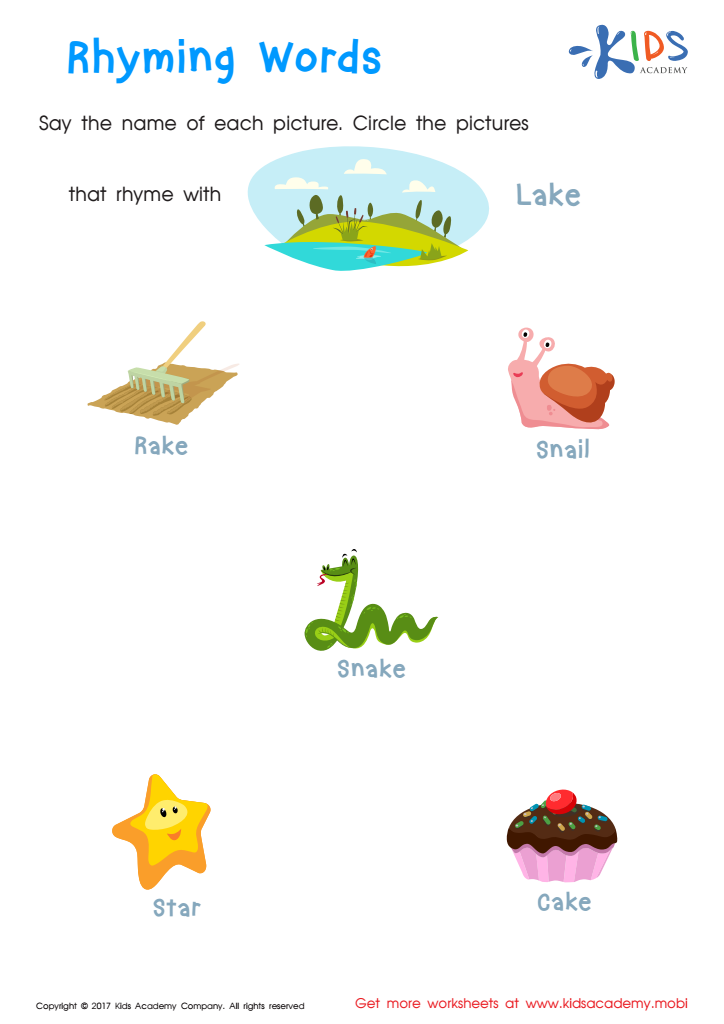
Rhyming Words Rhyming Worksheet
 Assign to My Students
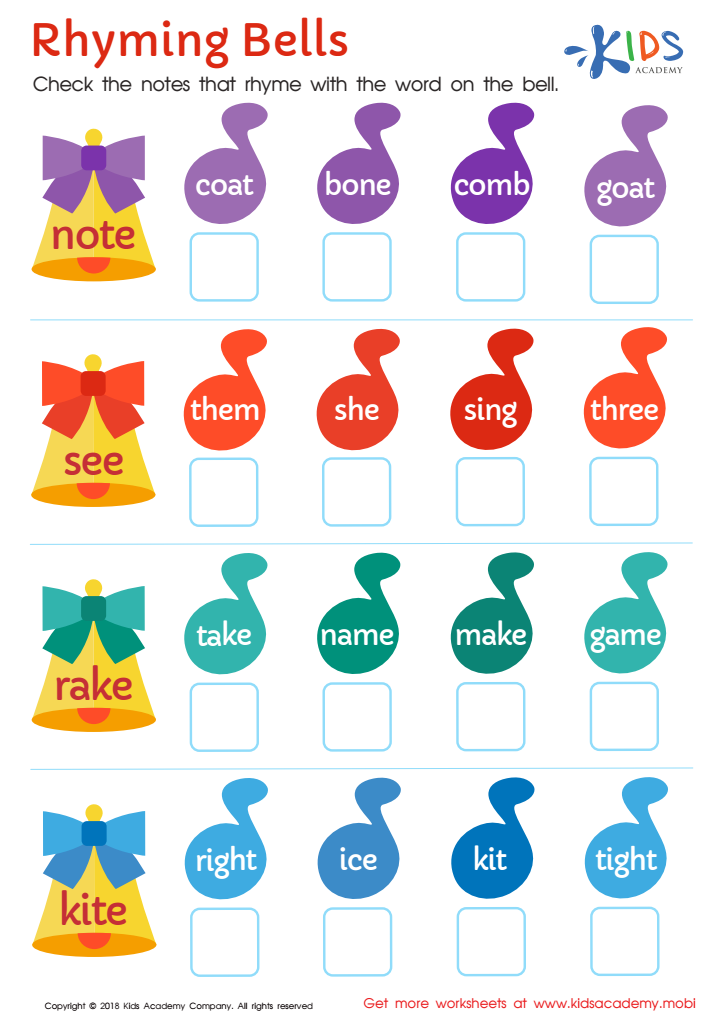
Rhyming Bells Worksheet
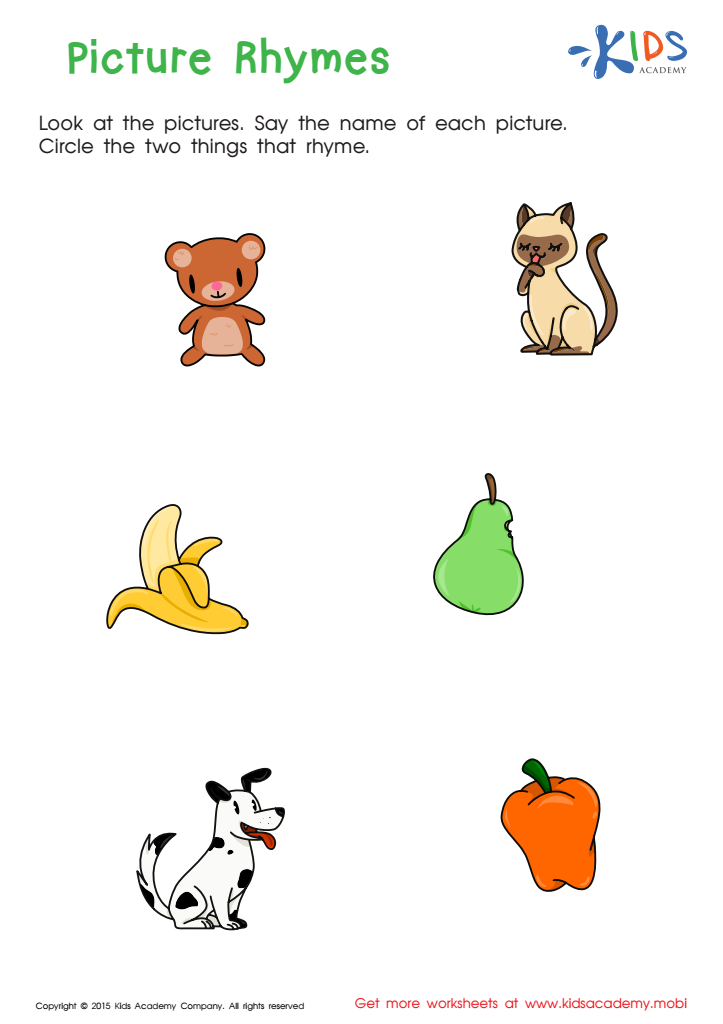
First Words: Picture Rhymes Worksheet
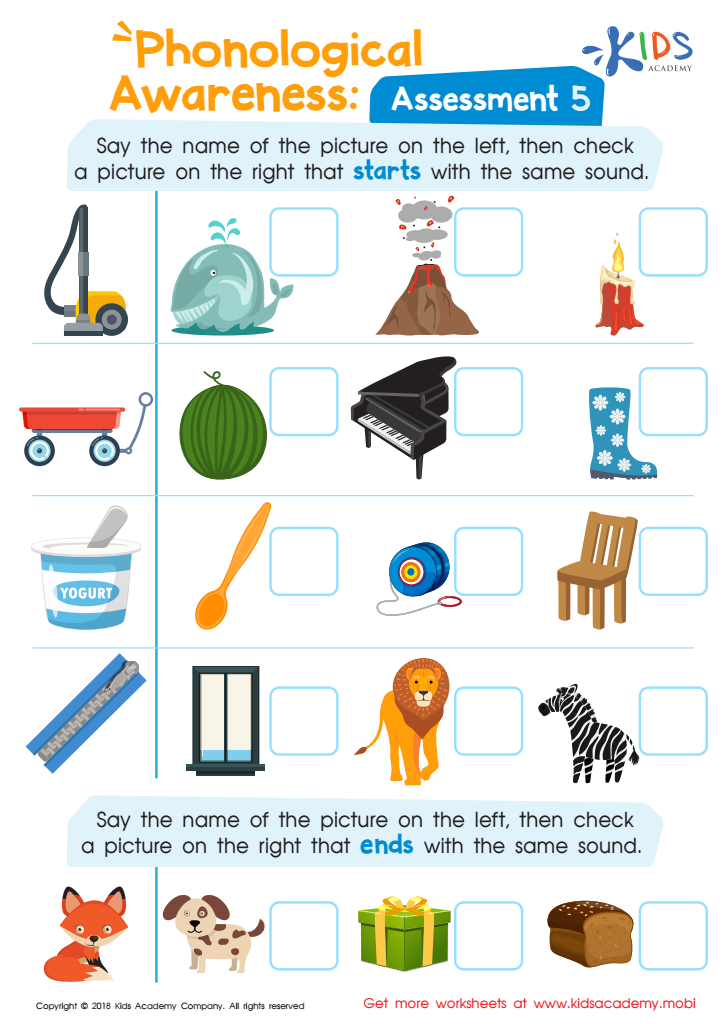
Phonological Awareness: Assessment 5 Worksheet








Rhyme and phonics skills are pivotal cornerstones in early literacy development for children aged 5-7. Rhyming skills enhance phonological awareness—an essential ability to recognize and manipulate sounds within words. This lays the groundwork for decoding words during reading. When children engage with rhymes, they attune their ears to the sound patterns of language, helping them predict, comprehend, and generate words, which ultimately builds their vocabulary and rhyming abilities.
Phonics, on the other hand, bridges the gap between sounds and their written representations. It is critical for young readers to understand that letters symbolize sounds and that combining them creates words. Phonics instruction focuses on teaching the relationship between written letters and spoken sounds, fostering the skills necessary for decoding new words when reading and cultivating a strong base for spelling.
Integrating rhyming challenges and systematic phonics instruction can incredibly boost a child's reading proficiency, setting them on the path for academic success. Strong phonics and rhyming abilities lead to easier, more fluent reading, which often correlates with a lifelong love for books and learning. Therefore, it is crucial for parents and teachers to prioritize developing these skills through engaging, interactive activities to ensure foundational literacy that supports further educational growth.







