Sound identification Phonics Worksheets for Ages 5-7
4 filtered results
-
From - To
Enhance your child’s reading journey with our Sound Identification Phonics Worksheets designed for ages 5-7! These engaging and interactive worksheets help young learners master letter sounds through fun exercises, improving their phonemic awareness and reading skills. Tailored for early grade students, our activities cover a range of phonics basics, offering enjoyable ways to recognize, match, and differentiate sounds. Perfect for classroom use or homeschooling, these resources support both teachers and parents in providing quality education. Empower your child with foundational skills critical for reading success with our expertly crafted phonics worksheets from Kids Academy.
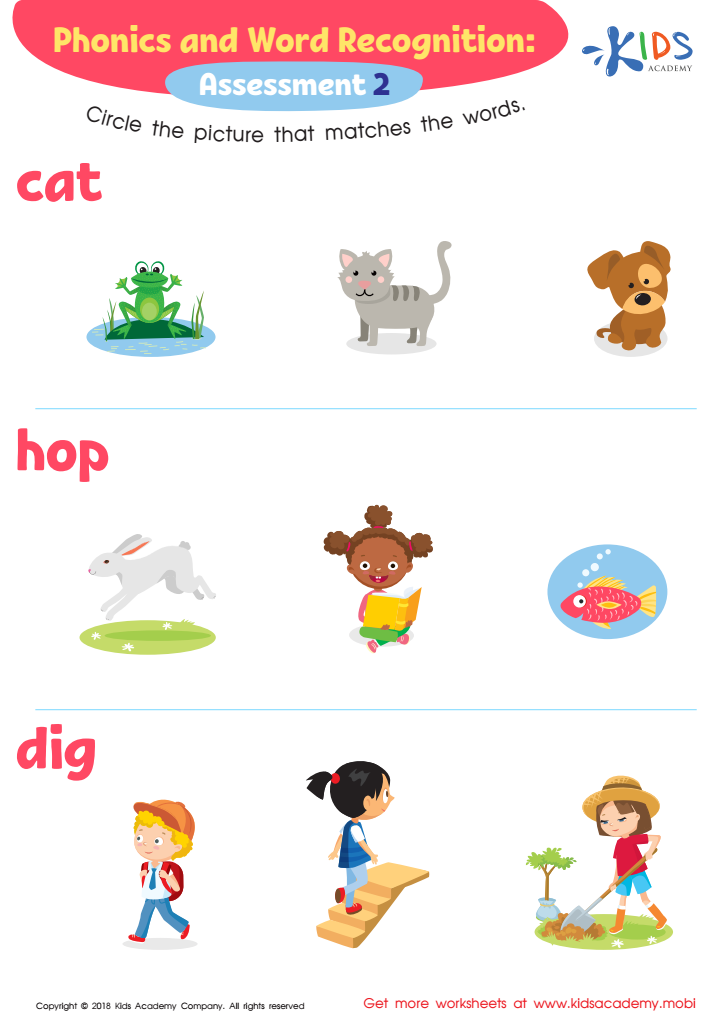
Phonological Awareness: Assessment 2 ELA Worksheet
 Assign to My Students
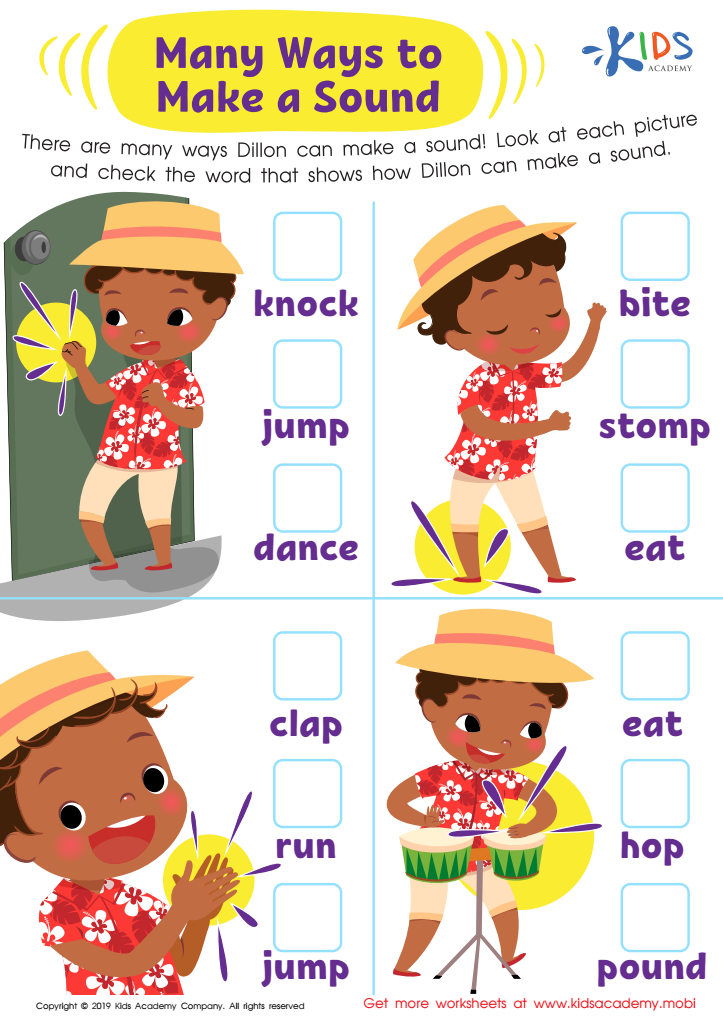
Many Ways to Make a Sound Worksheet
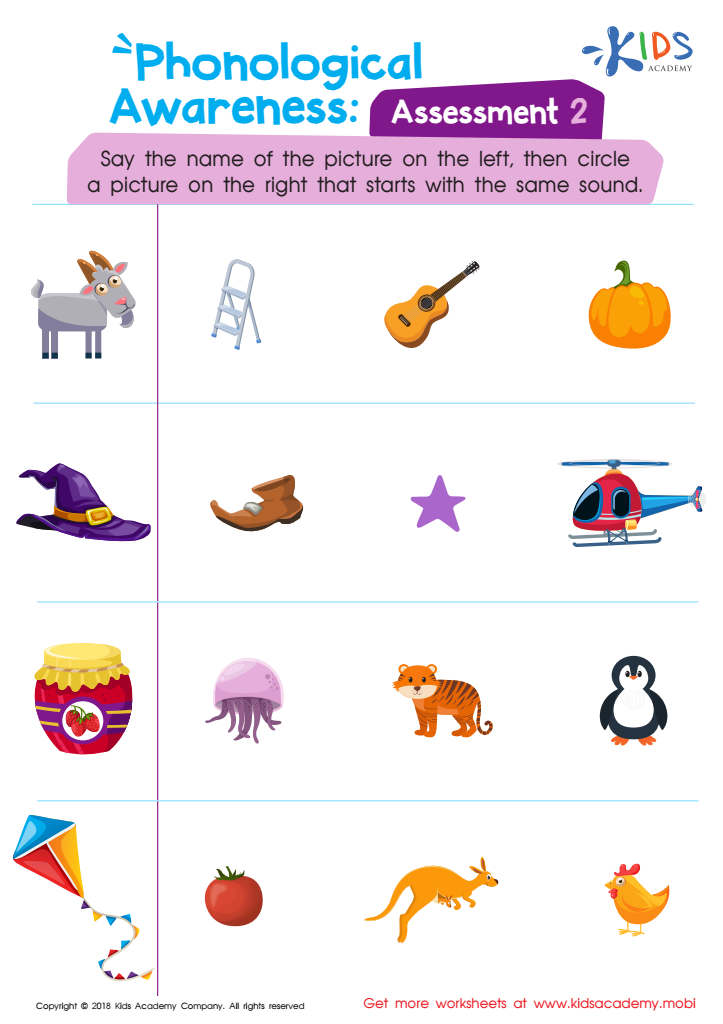
Phonological Awareness: Assessment 2 Worksheet
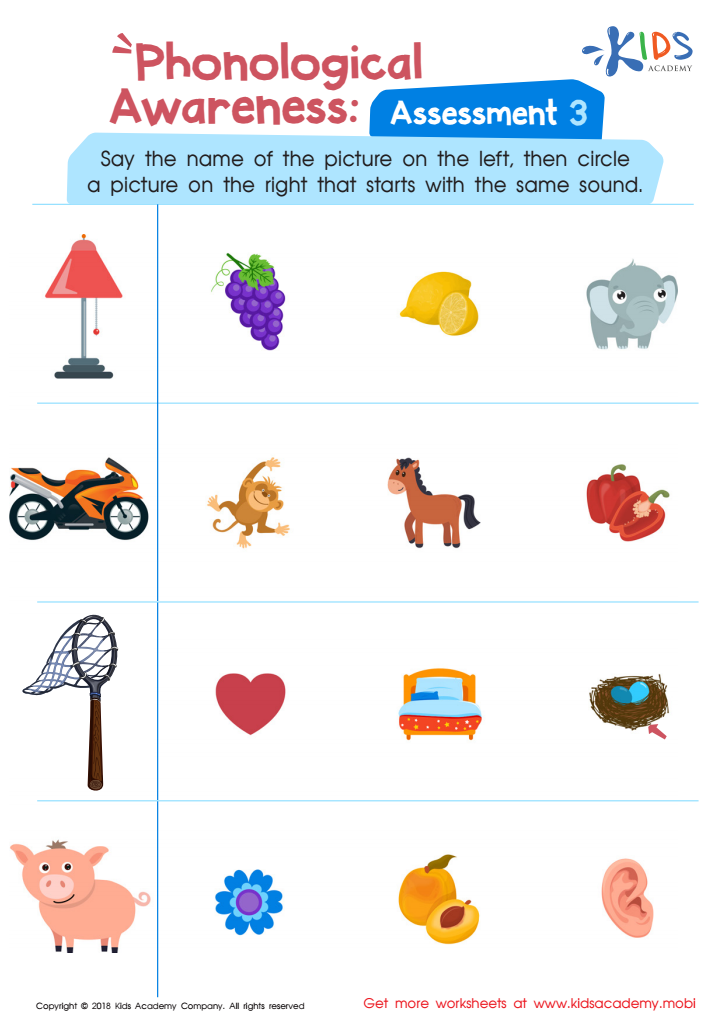
Phonological Awareness: Assessment 3 Worksheet








Sound identification phonics is a critical building block in reading and writing for children ages 5-7. At this stage, young learners are beginning to decode words, and understanding phonics—the relationship between sounds and their corresponding letters or groups of letters—is foundational to their success. For parents and teachers, emphasizing the importance of this skill is crucial.
Firstly, strong phonics skills facilitate accurate and fluent reading. When children can quickly identify and sound out words, reading becomes more enjoyable and less frustrating, promoting a positive attitude towards learning. Phonics knowledge also plays a key role in spelling, enabling children to write words correctly and improve their confidence in written communication.
Furthermore, the ability to decipher words through phonics boosts vocabulary development, as children are more likely to recognize and understand new words they encounter in print. This also enhances comprehension, enabling learners to grasp the meaning of texts and enjoy richer, more complex stories.
In essence, by prioritizing phonics, parents and teachers lay a sturdy foundation for literacy. This early investment pays dividends throughout a child’s educational journey, promoting a more engaged, capable, and confident reader and writer. Supporting phonics learning doesn't just contribute to immediate academic success—it fosters a lifelong love for reading and learning.







