Handwriting practice Tracing Letters Worksheets for Ages 5-7 - Page 2
28 filtered results
-
From - To
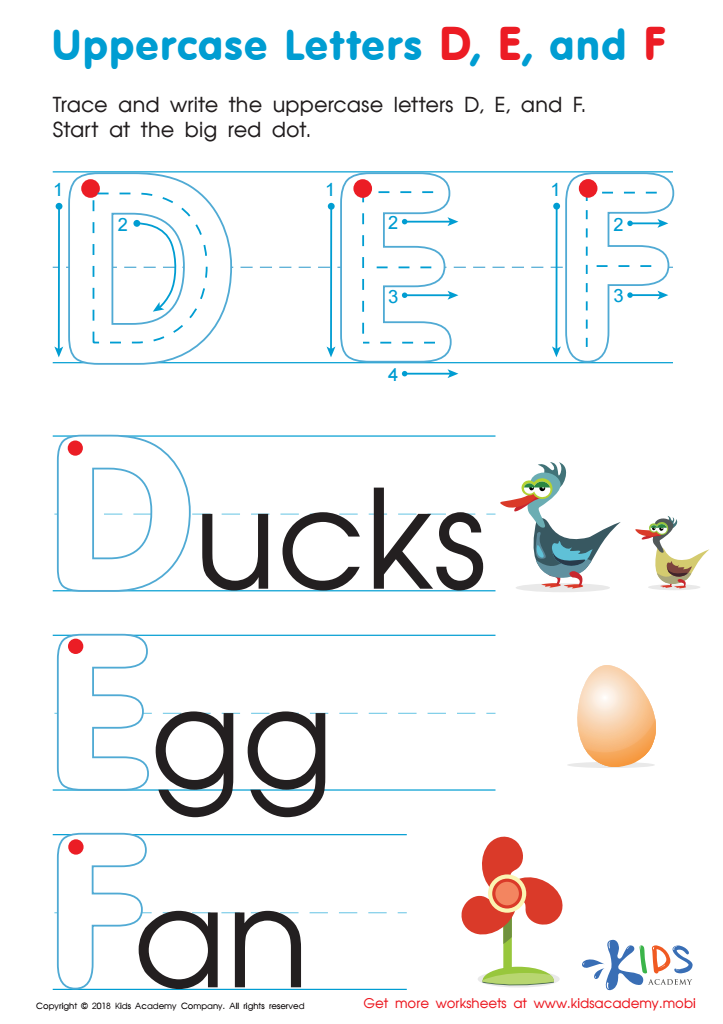
Uppercase Letters D, E, and F Worksheet
 Assign to My Students
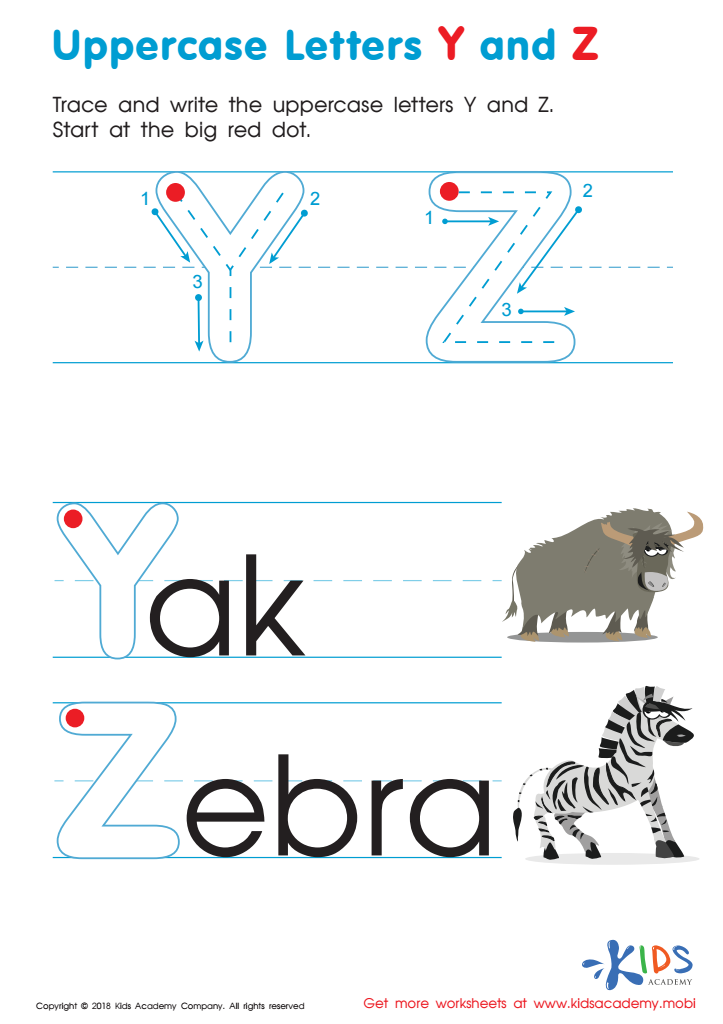
Uppercase Letters Y Z Worksheet
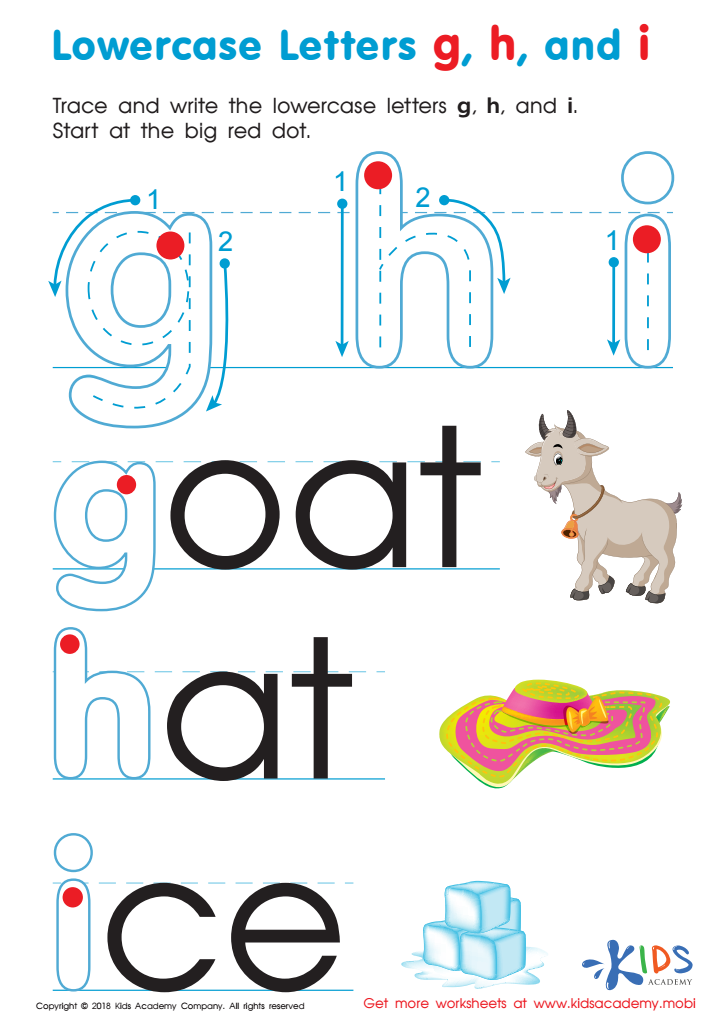
Lowercase Letters g h i Worksheet
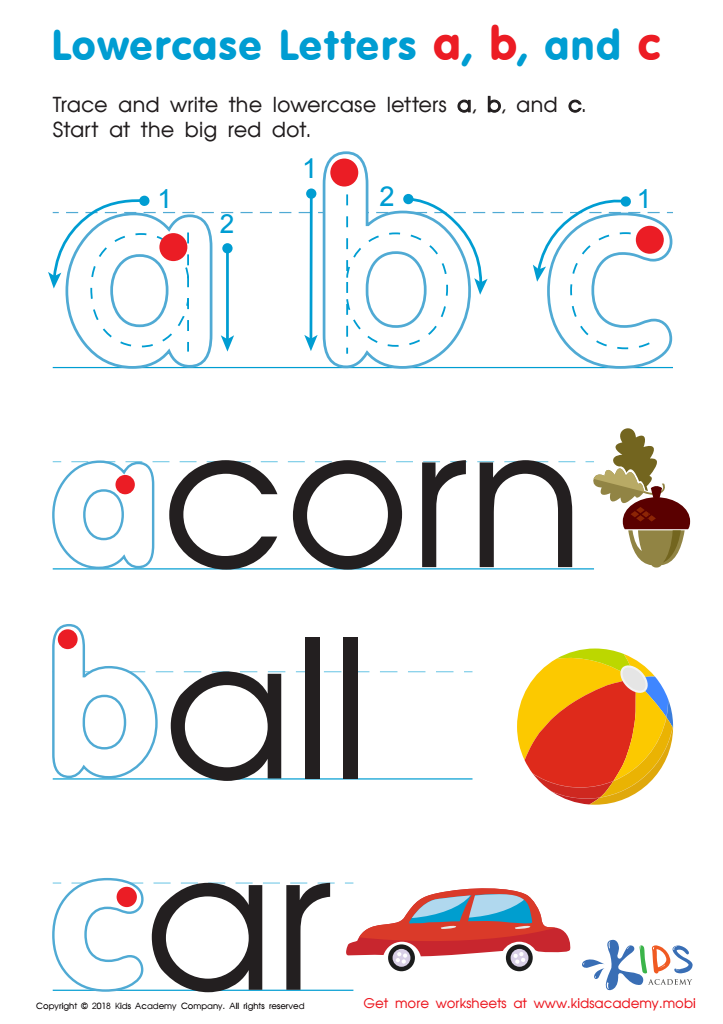
Lowercase Letters a b c Worksheet







Handwriting practice and tracing letters are vital developmental activities for children aged 5-7, laying a foundation for essential literacy skills. At this age, children are refining their fine motor skills, which are crucial for writing. Tracing helps improve hand-eye coordination, as children learn to control their pencil movements, fostering muscle memory that is foundational for writing independently.
Moreover, handwriting practice promotes letter recognition and phonemic awareness, important precursors to successful reading and writing. As children learn to trace letters, they become familiar with their shapes and sounds, enhancing their overall understanding of language. Children also gain confidence in their writing abilities, which can positively affect their enthusiasm for learning.
Additionally, engaging in handwriting practice involves cognitive and emotional development. It encourages focus, perseverance, and a sense of accomplishment when children see their progress. Teachers and parents should care about these formative experiences because they directly influence a child's literacy journey. By encouraging consistent handwriting practice, we empower children to express themselves clearly and effectively through writing, setting the stage for future academic success and communication skills, all while making the learning process enjoyable and interactive.








