Lowercase identification Upper & Lowercase Letters Worksheets for Ages 5-7
5 filtered results
-
From - To
Our "Lowercase Identification: Upper & Lowercase Letters Worksheets for Ages 5-7" are designed to help young learners develop essential literacy skills. These engaging worksheets focus on differentiating and matching uppercase and lowercase letters, aiding in letter recognition and improving reading fluency. Through fun activities, children will strengthen their understanding of letter shapes and sounds, fostering a solid language foundation. Perfect for classroom or at-home practice, these worksheets make learning enjoyable and effective. Boost your child's alphabet mastery and confidence with our expertly crafted resources tailored to support early education development.
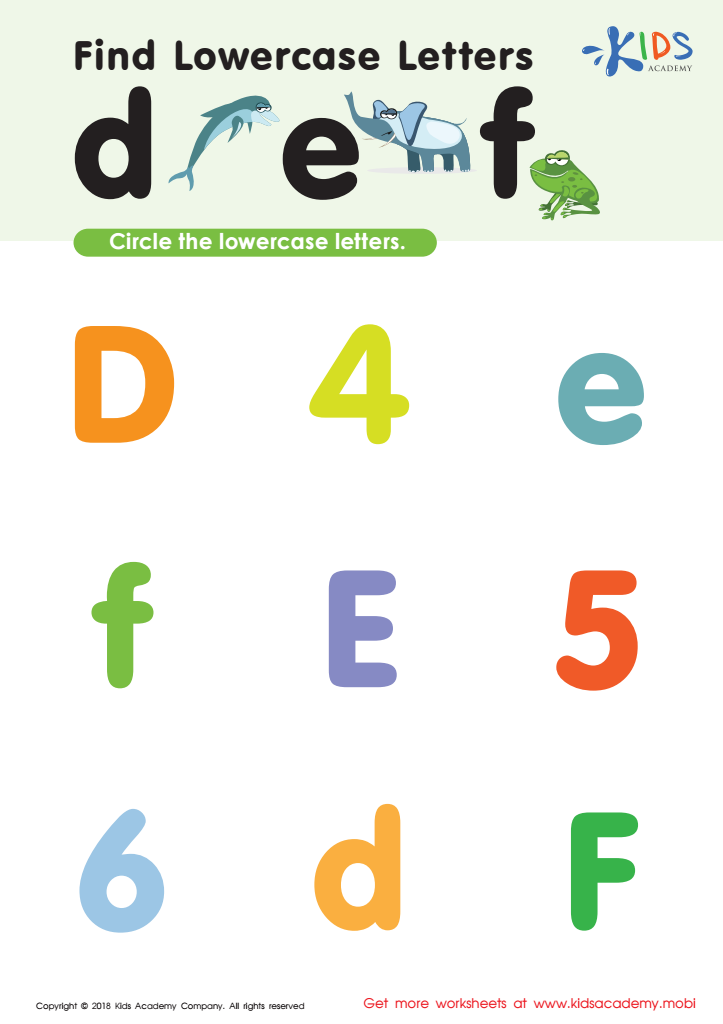
Find Lowercase Letters d e f Worksheet
 Assign to My Students


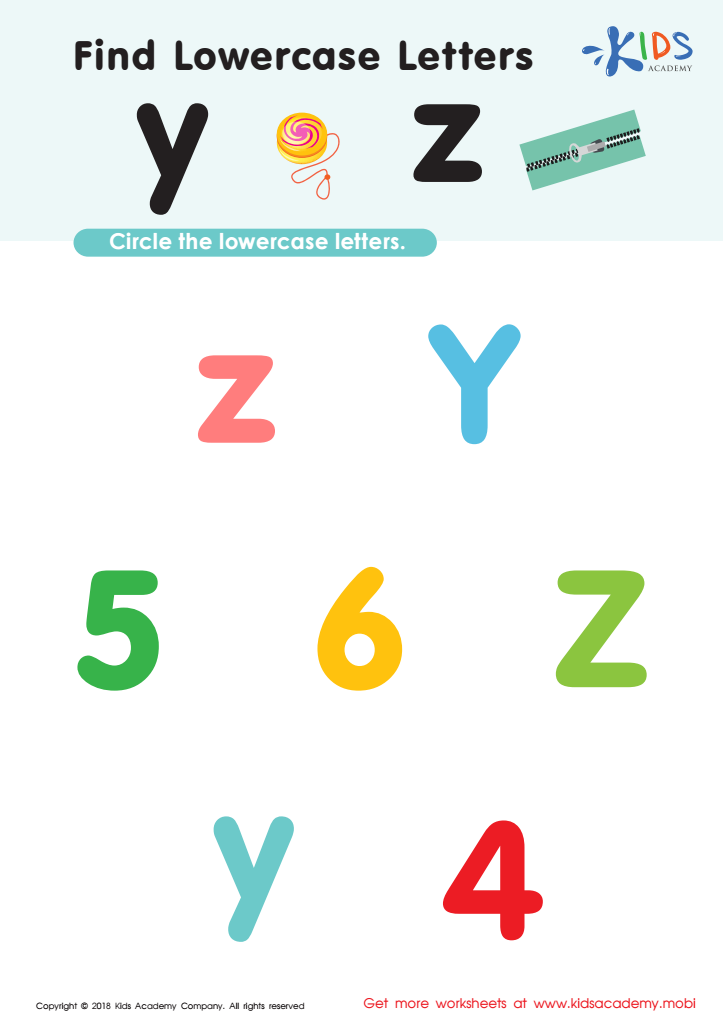
Find Lowercase Letters y z Worksheet
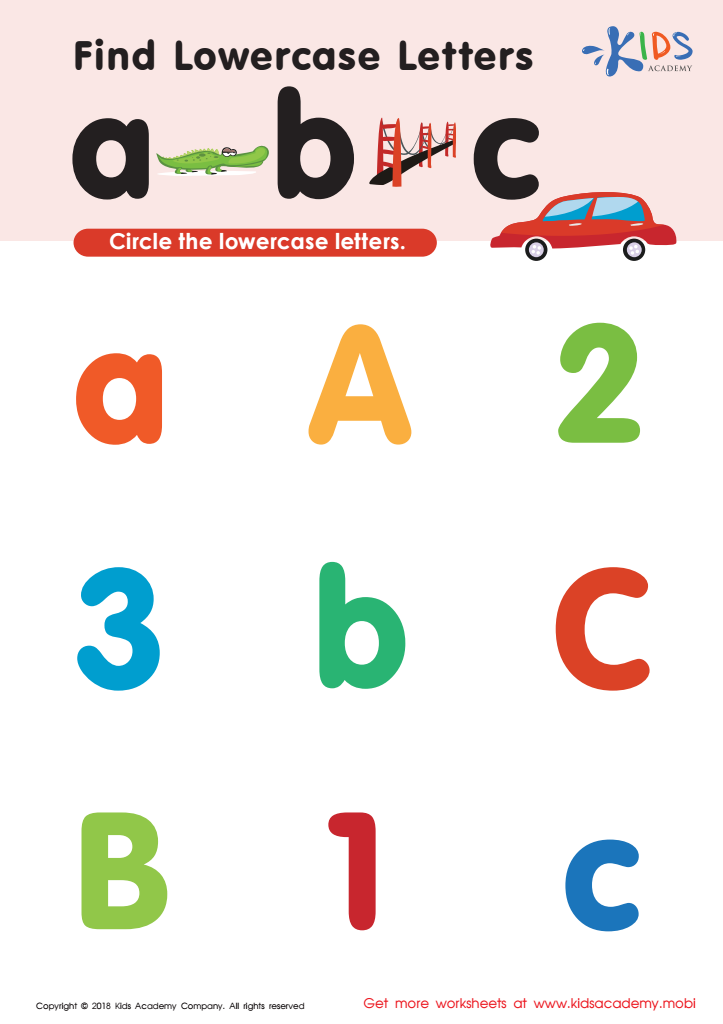
Find lowercase letters a b c Worksheet
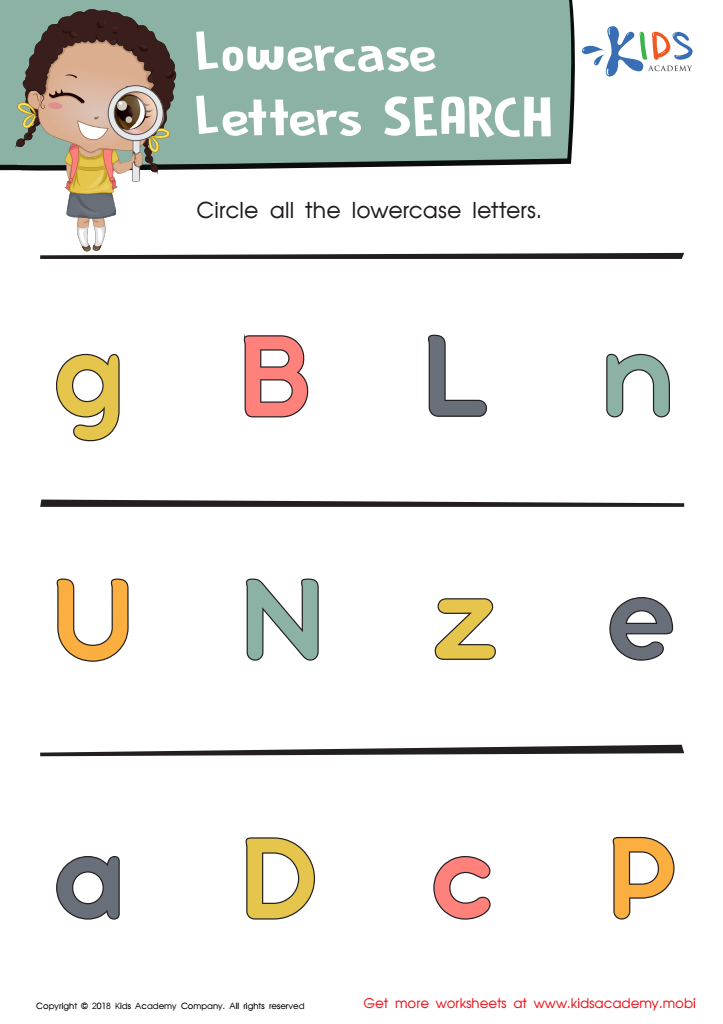
Lowercase Letters Search: Assessment Worksheet
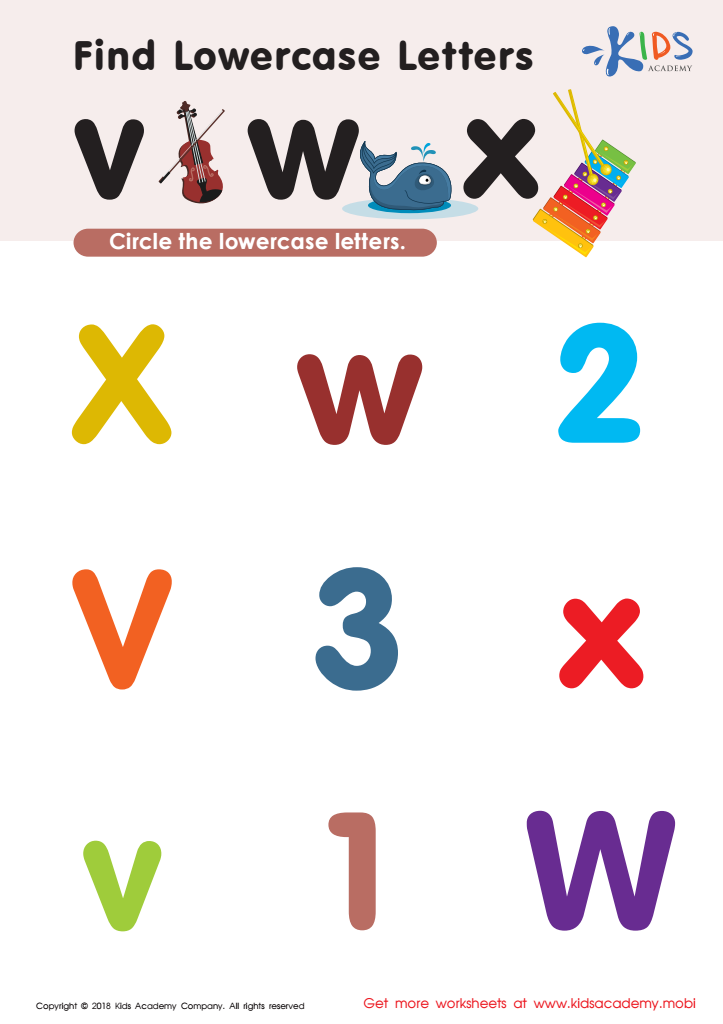
Find Lowercase Letters v w x Worksheet






It's crucial for parents and teachers to focus on the identification of uppercase and lowercase letters in children aged 5-7 because this skill is a foundational component of early literacy development. At this stage, children are beginning to read and write more independently, and recognizing both uppercase and lowercase letters is fundamental for these processes. For instance, while uppercase letters often appear at the beginning of sentences and in proper nouns, lowercase letters are more prevalent in everyday text. This means children must be familiar with both forms to read books, instructions, and even digital text effectively.
Furthermore, the ability to differentiate between uppercase and lowercase letters aids in understanding the alphabetic principle, which is the realization that letters and their patterns represent the sounds of spoken language. This principle is essential not only for decoding words during reading but also for proper spelling and handwriting.
As children grow confident in identifying both upper and lowercase letters, they gain improved cognitive skills related to memory, attention to detail, and visual discrimination. This focus on capitalization rules, sentence structure, and proper noun identification enhances broader language skills, leading to higher literacy rates and setting a solid educational foundation for their future academic endeavors. Therefore, assisting children in recognizing these letter forms is a significant step in nurturing proficient readers and effective communicators.







