Visual discrimination skills Upper & Lowercase Letters Worksheets for Ages 5-7
4 filtered results
-
From - To
Enhance your child’s visual discrimination skills with our engaging Upper and Lowercase Letters Worksheets, specially designed for ages 5-7. These fun, interactive activities help young learners differentiate between uppercase and lowercase letters through various exercises such as matching, sorting, and identification tasks. By boosting their visual processing abilities, children will improve their reading and writing fundamentals. Perfect for homeschooling or classroom environments, our worksheets offer a colorful and stimulating way for kids to connect with letters while enhancing their cognitive skills. Give your child the confidence they need to master the alphabet with our user-friendly resources. Let the learning begin!
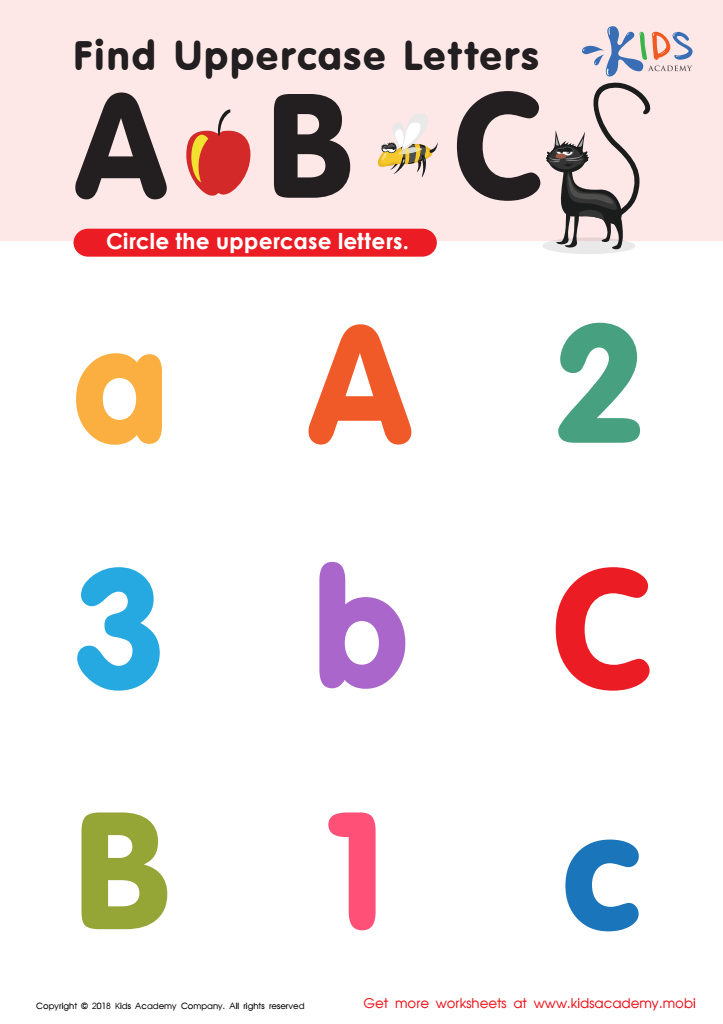
Find Uppercase Letters A, B, and C Worksheet
 Assign to My Students


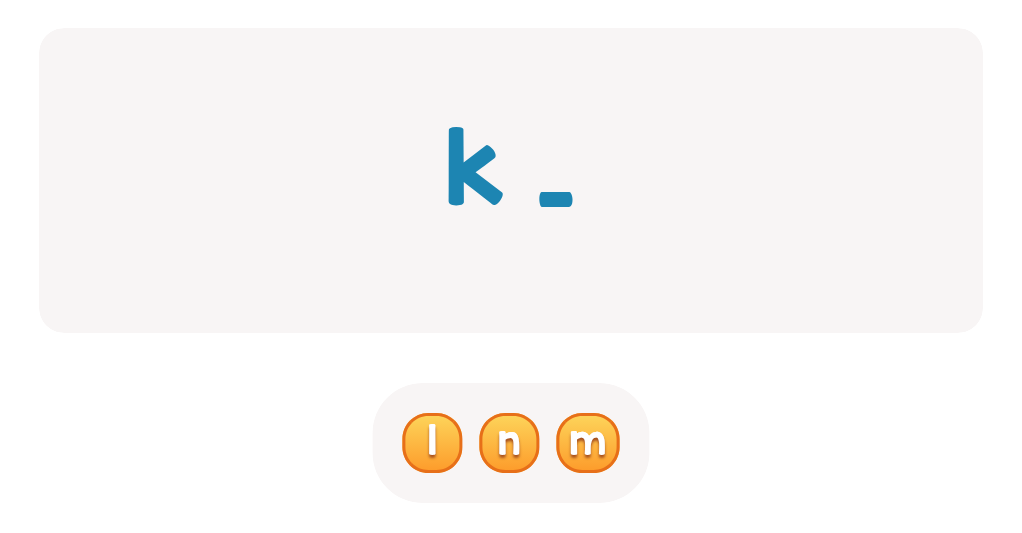
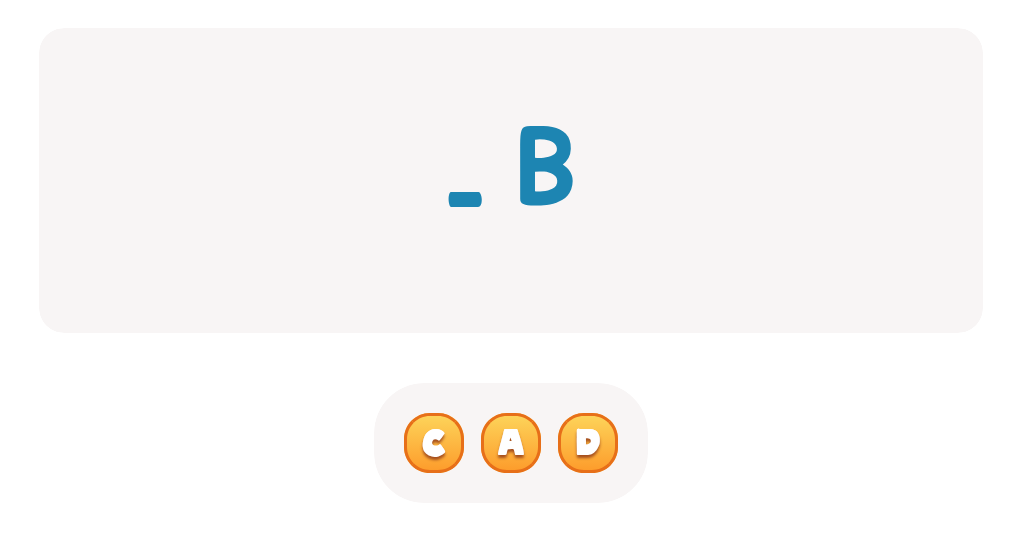
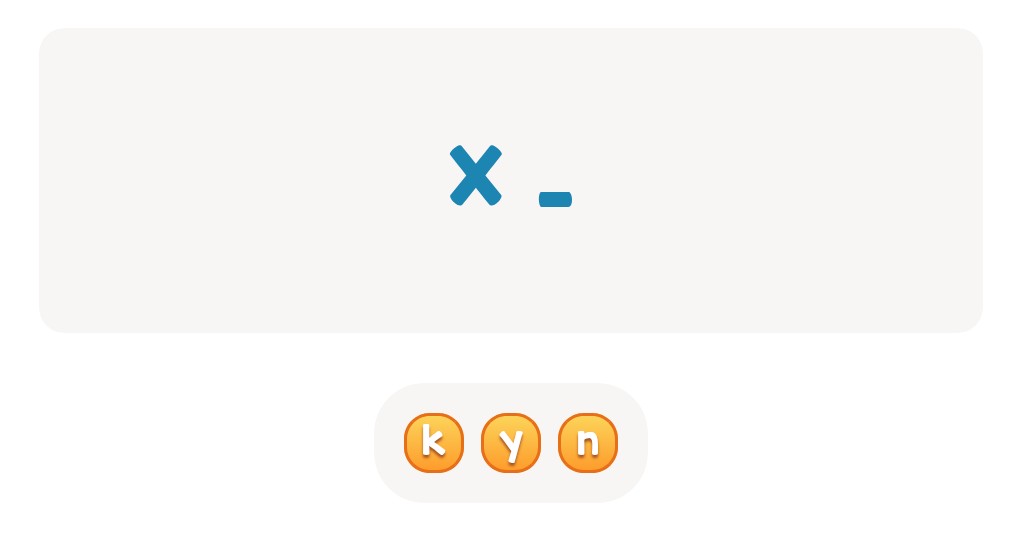
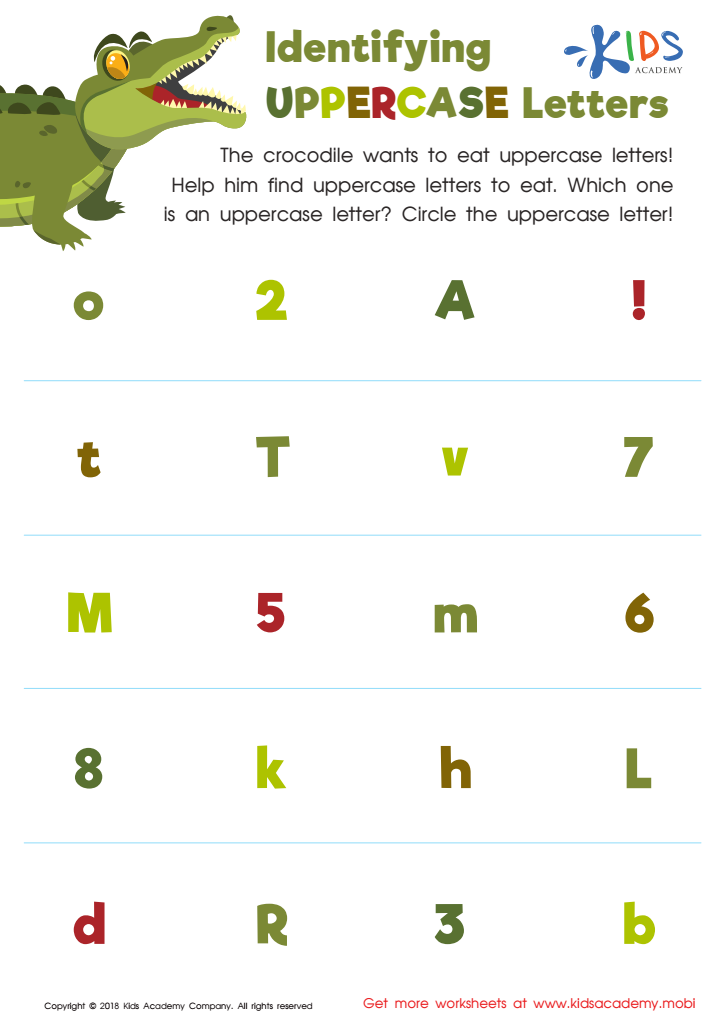
Identifying Uppercase Letters Worksheet
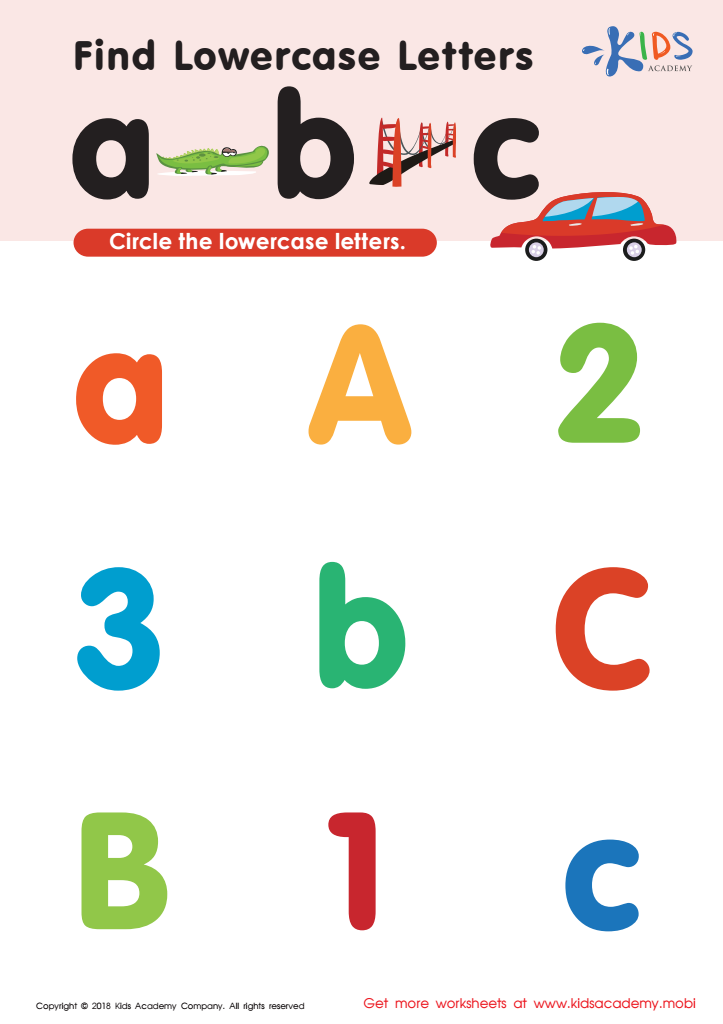
Find lowercase letters a b c Worksheet
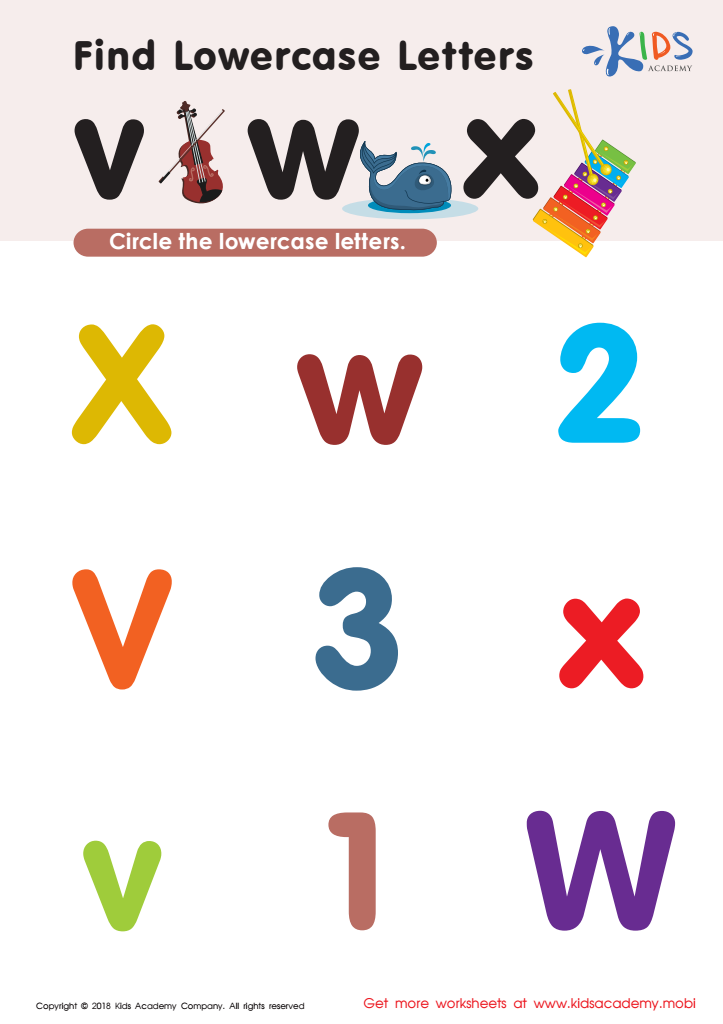
Find Lowercase Letters v w x Worksheet






Visual discrimination skills are crucial for children aged 5-7, especially when it comes to recognizing and differentiating between uppercase and lowercase letters. These skills enable young learners to identify similarities and differences, which are fundamental for reading and writing development. When children can quickly and accurately discriminate between letters, their overall literacy skills improve, fostering a smoother transition into more complex reading and writing tasks.
For parents and teachers, nurturing visual discrimination skills promotes confidence and motivation in young learners. Children who struggle with letter recognition may feel frustrated or anxious, which can hinder their overall academic achievement. By emphasizing these skills early on, educators and families can help children build a solid foundation for literacy.
Moreover, improving visual discrimination supports other critical thinking and perception skills, enhancing a child's ability to process visual information in multiple contexts. Activities such as matching games, tracing letters, and using multisensory tools can engage children and make learning enjoyable. By prioritizing these skills, parents and teachers facilitate a more effective and enriching learning environment, ultimately leading to success in reading and writing, and positively impacting a child's lifelong learning journey.







