Cognitive Development Chess Worksheets for Ages 5-7
5 filtered results
-
From - To
Introduce your child to the intriguing world of chess with our Cognitive Development Chess Worksheets for Ages 5-7! These engaging worksheets are designed to enhance critical thinking, problem-solving, and strategic planning skills in young learners. Each activity stimulates cognitive growth while making learning fun and interactive. Through structured exercises, kids will grasp essential chess concepts and improve their concentration and memory. Perfect for beginners, these worksheets provide a solid foundation for lifelong learning and intellectual development. Unlock your child's potential with Kids Academy's expertly crafted chess worksheets. Start their journey to becoming a chess master today!
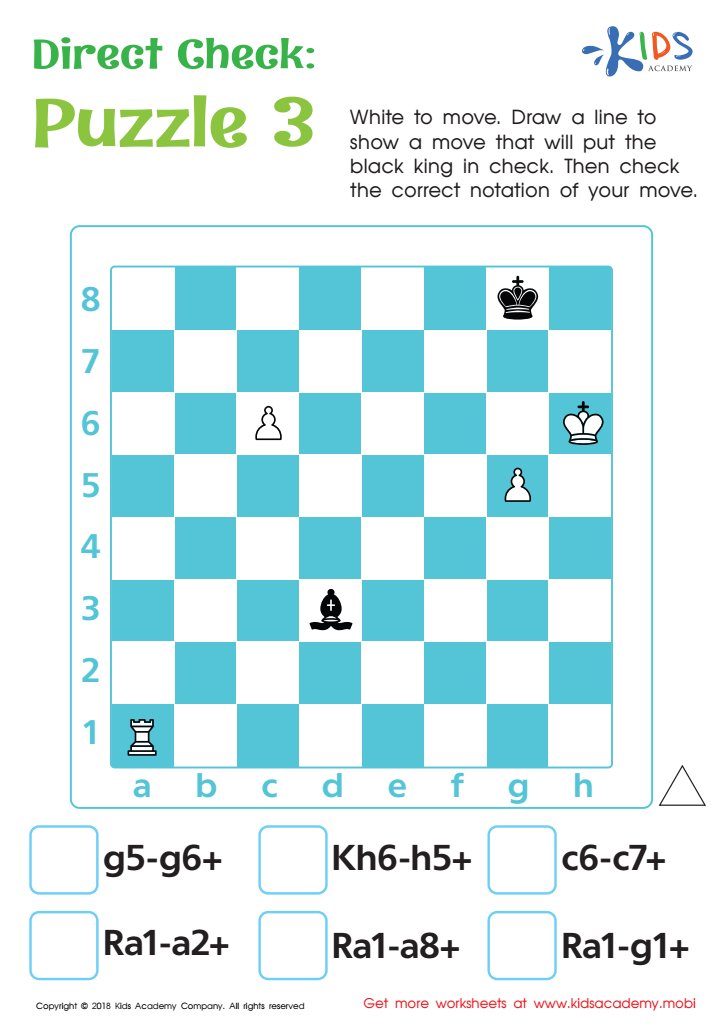
Direct Check: Puzzle 3 Worksheet
 Assign to My Students
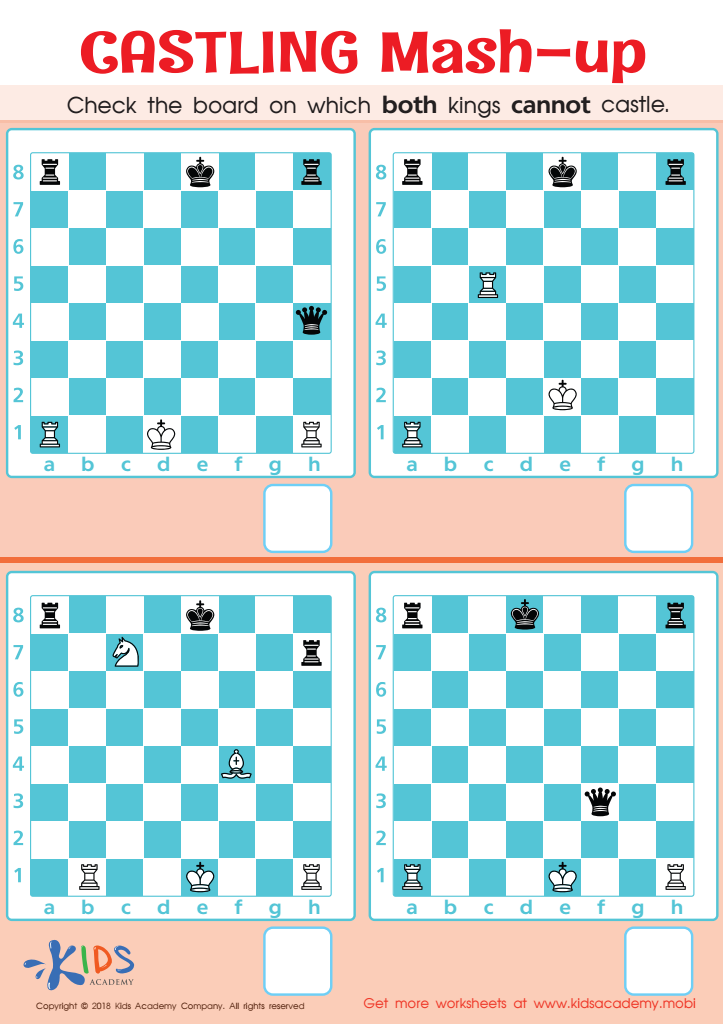
Castling Mash–up Worksheet
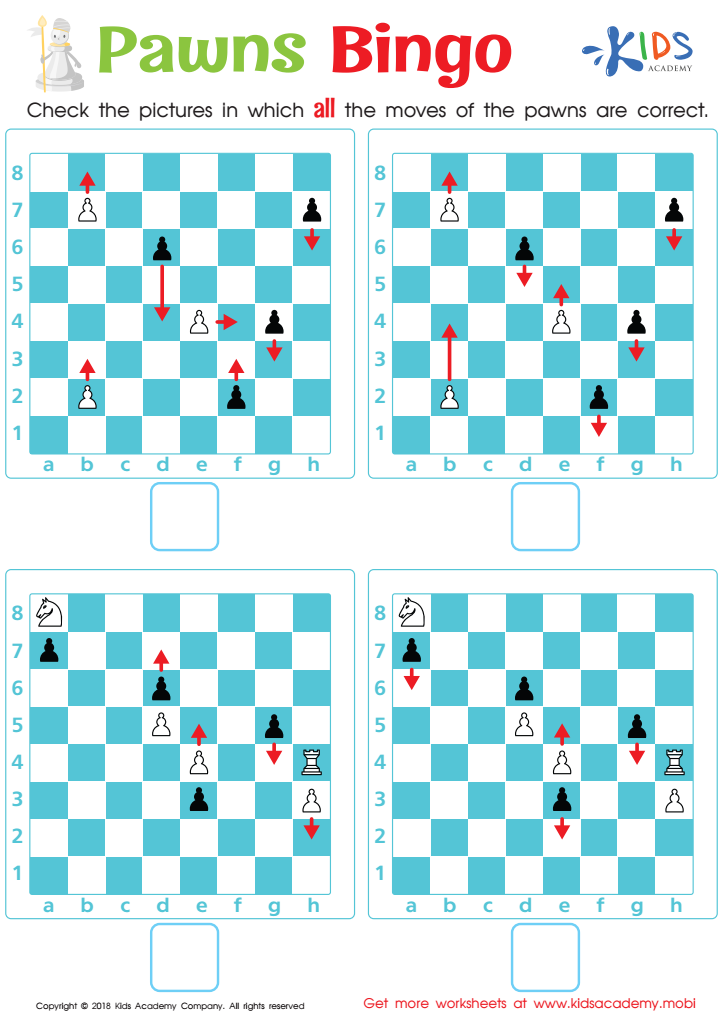
Pawns Bingo Worksheet
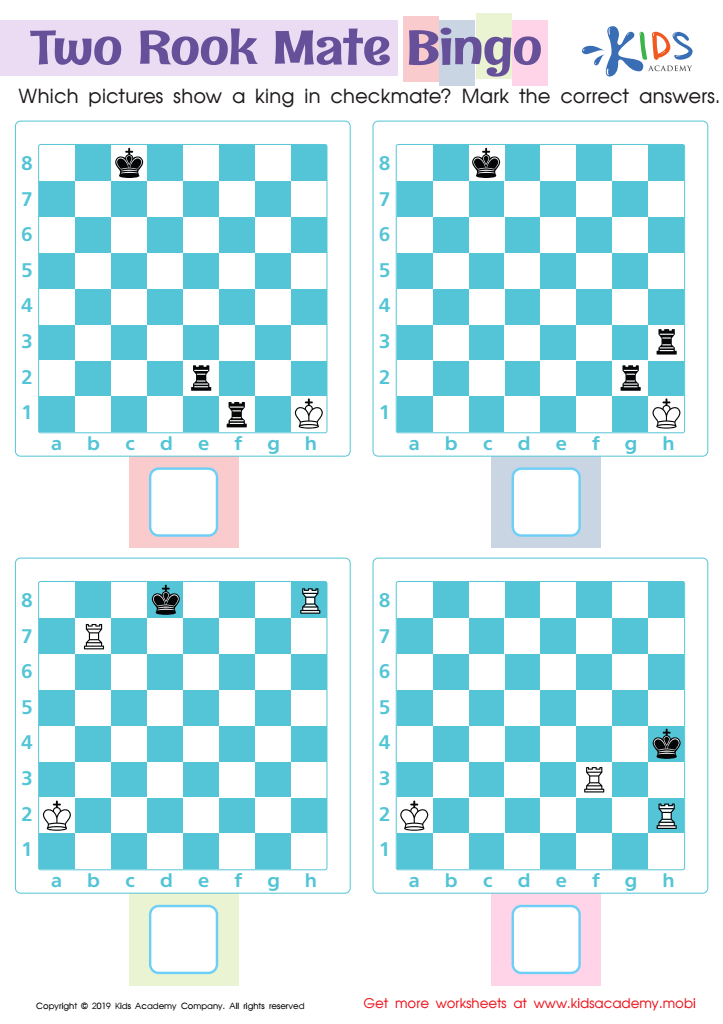
Two Rook Bingo Worksheet
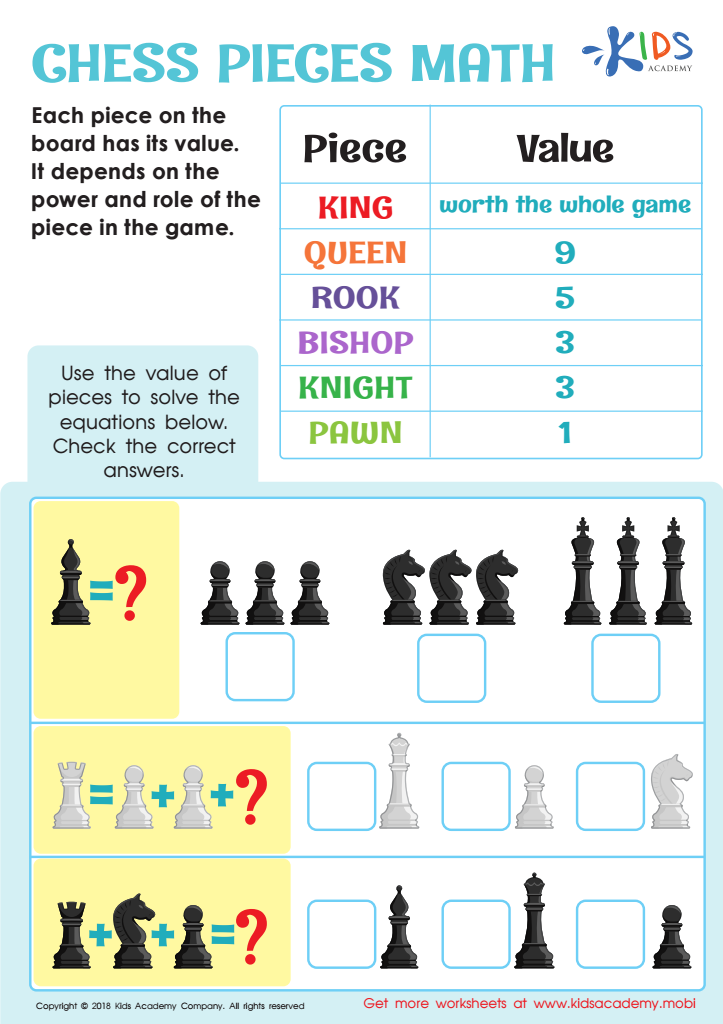
Chess Pieces Math Worksheet








Cognitive development chess for ages 5-7 is a powerful tool that parents and teachers should embrace due to its numerous benefits in the formative years of childhood. Playing chess engages young children's minds in ways that foster critical thinking, problem-solving skills, and advanced cognitive abilities. When children learn to anticipate their opponent’s moves and plan their own strategies, they develop foresight and strategic thinking, which are instrumental in their overall intellectual growth.
Additionally, chess teaches patience and concentration, as the game requires them to stay focused for extended periods. Children learn to recognize patterns, enhancing their mathematical and spatial reasoning skills. These are crucial for later academic success, especially in STEM disciplines. The calm, structured environment of a chess game also promotes emotional maturity by teaching kids to cope with wins and losses, making them more resilient and self-aware.
Importantly, chess is inclusive and non-discriminatory, which means kids of all backgrounds can participate and develop these skills without needing expensive materials or facilities. Overall, chess nurtures a well-rounded, cognitively sharp young mind, making it a valuable addition to any educational program focused on early childhood development. It is an investment in their cognitive and emotional future, stimulating young brains precisely when they are most receptive.